
REVIEW · RICKSHAW TOURS
Asakusa, Tokyo: Rickshaw Experience and Highlights Walking tour
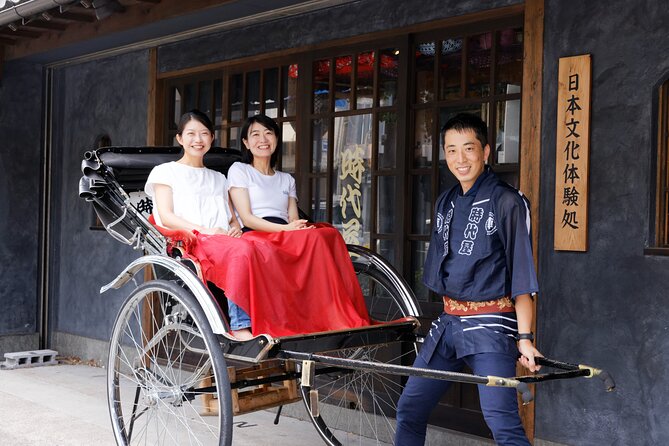
The best part of this Asakusa outing is the change of pace. You spend most of the tour walking through old shopping lanes, temple grounds, and food streets, then settle into a rickshaw for about 20 minutes. From the seat, you can look up at Tokyo Skytree and let someone else handle the traffic.
I like the small group size, capped at eight people, and the way the route combines Asakusa’s famous sights with less formal streets such as Nishi Sando and Hoppy Street. I also like the clear focus on local orientation. A guide such as Yoko can tailor the walk and point you toward other things to do in Tokyo.
The main drawback is that the rickshaw route cannot be chosen, and the ride can be canceled because of weather, traffic, or another operating issue. At $35 per person, the price is fair for a three-and-a-half-hour introduction, but this is not a private tour and the rickshaw portion is brief.
Key points to know before booking
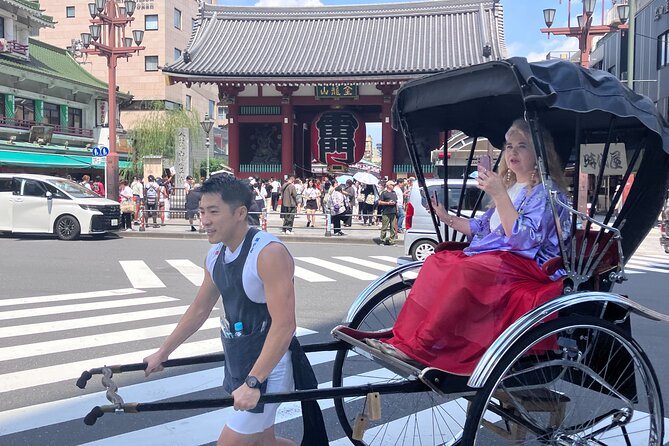
- The rickshaw ride lasts about 20 minutes, with possible Tokyo Skytree views from the east side of Asakusa.
- The walking route covers seven stops, including Kaminarimon, Nakamise, Senso-ji, Nishi Sando, and Hoppy Street.
- The group is limited to eight people, which gives the guide room to answer questions.
- The tour starts and ends at 2-chōme-18-9 Kaminarimon, close to public transportation.
- You need moderate fitness, since most of the experience is on foot and late arrivals cannot receive extra time.
- The tour is rated 4.9 from 47 ratings, with 98 percent of participants recommending it.
Why this tour works well in Asakusa
Asakusa can feel confusing at first. Kaminarimon, Senso-ji, shopping streets, side lanes, food stalls, and the riverfront all sit close together, but the district does not unfold in a neat line for a first-time visitor. This tour gives you a useful map of the area while adding a short ride that you would not get from a standard temple walk.
The balance is sensible. You see the major places, but you also pass through streets with a more local feel. You get time at the temple, chances to browse snacks and crafts, and a look at the food-and-drink side of Asakusa around Hoppy Street.
The tour is also a practical first activity in Tokyo. You can use the guide’s suggestions later in your trip, and one participant specifically appreciated receiving ideas for other things to do around the city. That kind of local advice can be worth as much as the sightseeing itself.
At $35 per person, the value depends on what you want. If you only want a rickshaw ride, the 20-minute portion may feel short. If you want a guided introduction to Asakusa with the ride added on, the price is more appealing. The walking stops make up most of the experience.
More Rickshaw Tours in Japan
- Tokyo Asakusa Rickshaw Tour
★ 5.0 · 1,375 reviews - Kyoto: Arashiyama Customized Rickshaw Tour & Bamboo Forest
★ 5.0 · 432 reviews - Kyoto Arashiyama Rickshaw Tour with Bamboo Forest
★ 5.0 · 354 reviews
Starting beneath the Thunder Gate
The meeting point is at 2-chōme-18-9 Kaminarimon, Taito City. The tour begins near Kaminarimon Gate, one of the easiest landmarks in Asakusa to recognize. Arrive early. This is a group departure, and the guide leaves at the scheduled time.
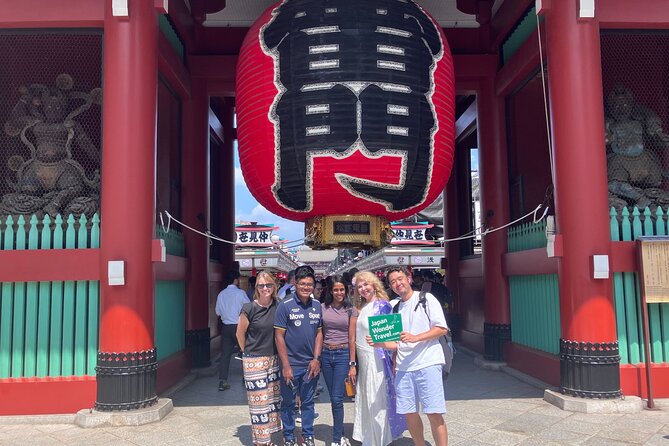
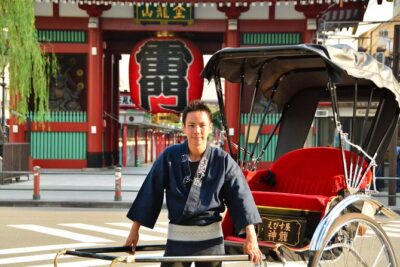
Kaminarimon means Thunder Gate. Its large red lantern hangs between statues of Fujin, the wind god, and Raijin, the thunder god. The gate is one of Tokyo’s most familiar photo spots, but it is more useful than a quick picture. It tells you that you have reached the formal approach to Senso-ji.
You get about 10 minutes here. That is enough for orientation and photos, but not a long historical talk. Expect people, especially around the lantern, and take a moment to look beyond the main photo angle. The gate marks the beginning of the temple approach, with Nakamise stretching ahead.
Nakamise gives you a first taste of Asakusa
The walk continues along Nakamise Shopping Street for about 30 minutes. This is the main commercial approach to Senso-ji, lined with shops selling Japanese snacks, small crafts, souvenirs, and traditional goods.
This stop is useful because it connects sightseeing with everyday browsing. You can see the kinds of items Asakusa presents to visitors, and the guide can help explain what you are looking at. You may find the street crowded, so keep your group in sight and allow time to stop without blocking the flow of people.
Nakamise is not the place for a quiet stroll. It is a busy approach to one of Tokyo’s best-known temples. That energy is part of the experience, but shoppers looking for a calm market may prefer the quieter side lanes later in the tour.
Senso-ji is the heart of the walk
The tour allows about 50 minutes at Senso-ji, the oldest and most famous temple in Tokyo. It is dedicated to Kannon, the goddess of mercy, and the temple grounds give you the clearest sense of Asakusa as a traditional religious center.
This is the longest stop, and rightly so. You have time to move past the gate, see the temple buildings, and take in the setting without treating the entire visit as a hurried photo stop. Your guide can also help explain how the temple fits into the district.
Because Senso-ji is so famous, it can be easy to see only the surface: red buildings, incense, lanterns, and crowds. A guided visit gives the place more shape. Listen for details about customs and the meaning of what you are seeing, then leave yourself a few quiet minutes to look around.
The temple is free to enter, as are the other listed stops. That does not mean the visit lacks value. The fee here pays for the guide’s time and the structure of the walk, not admission tickets.
Same place, a completely different ride:
- Kyoto Rickshaw Tour
★ 5.0 · 210 reviews - Tokyo: Asakusa Sightseeing Tour by Rickshaw
★ 4.9 · 195 reviews - Kyoto: Private Rickshaw Tour of Gion and Higashiyama Area
★ 5.0 · 144 reviews - Otaru Rickshaw Tour
★ 5.0 · 76 reviews
Hanayashiki Street brings in old Tokyo charm
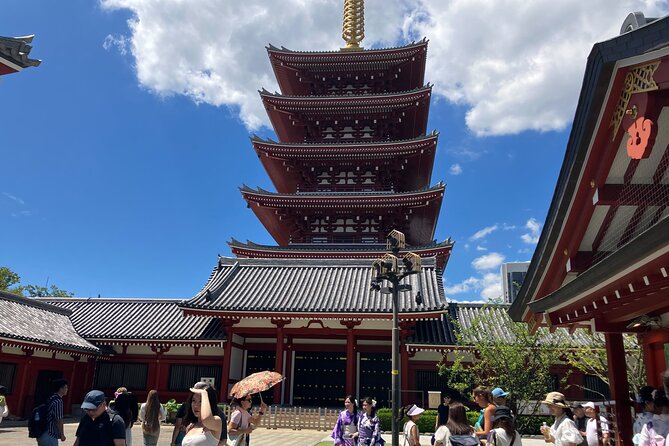
After the temple, the route spends about 20 minutes on Hanayashiki Street. The street takes its name from Hanayashiki, identified as Japan’s oldest amusement park, which is located nearby.
Here you move away from the grand temple approach and into a more nostalgic part of Asakusa. Shops, restaurants, and cafes line the street, with traditional snacks, local food, and souvenirs available along the way.
This is a short stop, so think of it as a neighborhood introduction rather than a full shopping session. If you see something you want to buy, note its location and return later. The walk continues on a schedule, and you should not expect time for a full meal here.
Nishi Sando is a calmer shopping lane
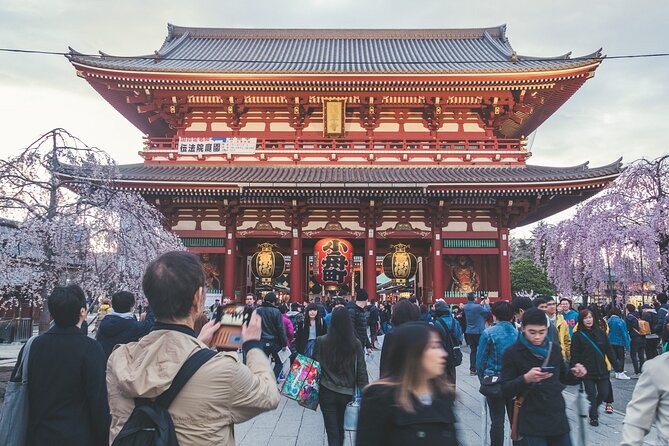
Asakusa Nishi Sando, or the West Approach, gets about 30 minutes. The street leads toward the west side of Senso-ji and has a more old-fashioned look, with wooden storefronts, lanterns, crafts, snacks, and souvenirs.
I like this part of the route because it gives you a second view of Asakusa after the grand entrance and temple grounds. Instead of one famous sight, you get a sense of how the district is stitched together by small commercial streets.
The lantern-lit setting and traditional storefronts make this a good place to ask your guide about local food and crafts. It is also a sensible stop for buying something small, since the shops are part of the tour rather than an optional detour.
Hoppy Street shows Asakusa after dark
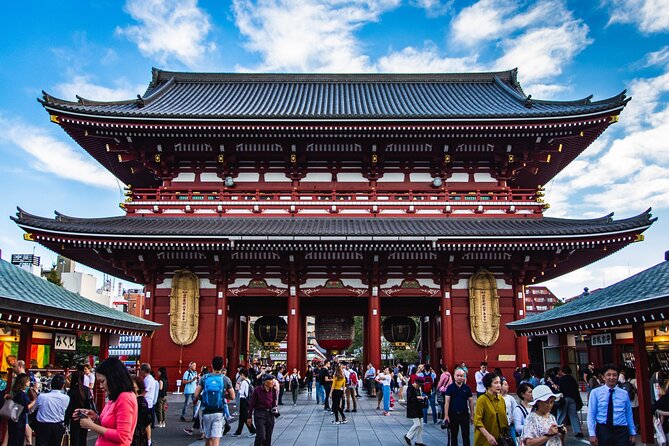
The tour includes about 20 minutes on Hoppy Street, an area known for izakayas and the local drink called Hoppy. The street also serves familiar Japanese pub food such as yakitori and oden.
You will not have much time for a full evening here, but the stop gives you a look at a different side of Asakusa. The temple district is formal and photogenic. Hoppy Street is casual, social, and built around eating and drinking.
Hoppy is a non-beer alcoholic drink often mixed with shōchū, but the supplied tour details only promise the street and its food-and-drink setting, not a tasting. If you want to eat here, ask the guide how to return after the tour. The activity ends back at the starting point, so you can continue exploring on your own.
The rickshaw ride adds a different view
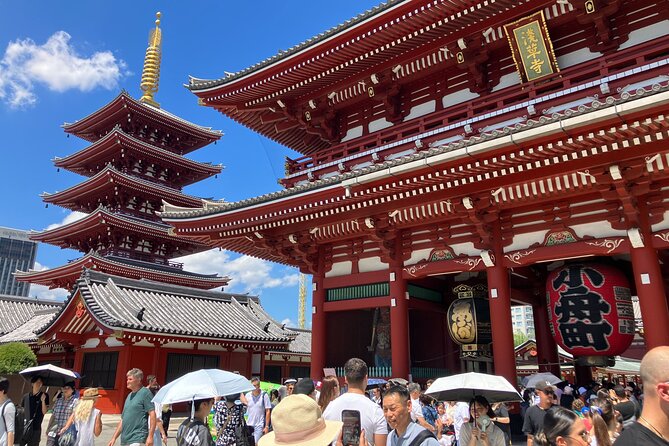
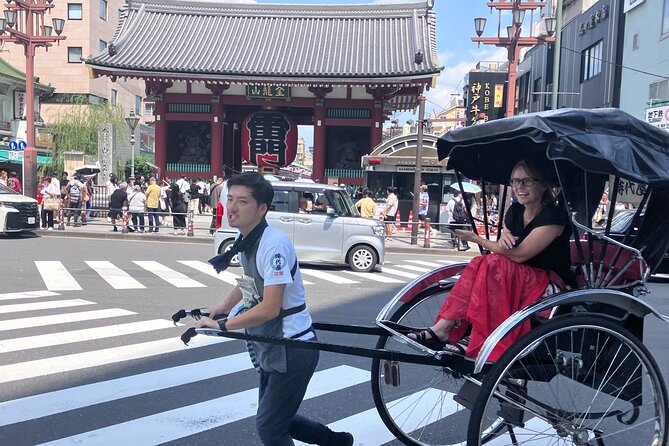
The final listed stop is a roughly 20-minute rickshaw ride through the east area of Asakusa. You can take photos with Tokyo Skytree in the background, and the ride gives your feet a break after the walking portion.
Rickshaws are a familiar sight in Asakusa, and riding in one changes the scale of the neighborhood. You sit above the street and get a moving view of the buildings, lanes, and traffic. It is a simple pleasure, but it feels distinct from walking between major sights.
There are important limits. You cannot choose the rickshaw route, and the vehicle is designed for two people. If you come alone, you ride alone rather than sharing with another participant. The operator assigns the rickshaw according to the number of reservations.
The rickshaw may not run because of weather, traffic, or another issue. In that case, the tour may be canceled. Follow the driver’s instructions during the ride, and do not plan a tight appointment immediately afterward. The end time can run late.
Group size, timing, and physical effort
The tour lasts about three hours and 30 minutes. The listed stop times add up to roughly three hours, with the remaining time allowing for movement, explanations, and the rickshaw arrangement.
You should have moderate physical fitness. The route includes several walking sections, and the experience is not designed as a seated sightseeing tour with only short walks between stops. Comfortable shoes matter more here than formal clothing or special equipment.
The maximum group size is eight. That is small enough for a guide to manage questions and keep the walk personal, though it is still a shared group tour. If you need a fully private pace, this is not the right format.
Arrive on time. The group leaves at departure time, and a late arrival does not extend the tour. If you have a reservation, train, or other appointment afterward, leave extra space because the finish can be delayed.
The activity uses a mobile ticket, and confirmation is provided when you book. It is near public transportation, but the exact transport instructions are not included in the supplied details, so check the confirmation before setting out.
What the guide adds
The guide is the key to getting value from the walking portion. The route itself is easy to follow, but a guide can connect the temple, shopping streets, local food, and neighborhood history into one clear picture.
Yoko has led this walk and received specific praise for adapting the experience to the group’s needs and suggesting other Tokyo activities. If Yoko is your guide, you can ask for practical follow-up ideas. If another guide leads your group, use the same opportunity: ask where to eat, which parts of Asakusa are worth revisiting, and what fits your remaining time in Tokyo.
The strongest guide experience here is likely to be conversational rather than academic. You are moving through a living district, not sitting through a long lecture. Keep your questions ready, especially during the shopping streets and the temple visit.
Who should book this experience
I would choose this tour for a first visit to Asakusa, especially if you want someone to organize the route for you. It suits couples, solo visitors, and small groups who like a mix of famous landmarks, local streets, and a short novelty ride.
It also works well for people who want orientation before exploring alone. After three and a half hours, you will know where Kaminarimon, Senso-ji, Nishi Sando, and Hoppy Street sit in relation to one another.
You may want to skip it if you already know Asakusa well, dislike group schedules, or want a long rickshaw ride. The ride is only about 20 minutes, and the route is set by the operator. You should also reconsider if you need an exact finish time.
The experience has a 4.9 rating from 47 ratings, and 98 percent of participants recommend it. Those numbers point to a well-liked, focused introduction, but they do not change the practical limits: shared group timing, moderate walking, and a nonrefundable booking.
Should you book the Asakusa rickshaw tour?
Book it if you want an easy first look at Asakusa with the major temple sights, old shopping streets, local pub district, and a short rickshaw ride in one outing. At $35, it offers good value when you treat the rickshaw as the finishing touch rather than the whole product.
Skip it if you want a private tour, a guaranteed rickshaw route, or a relaxed day with no fixed schedule. Since the booking cannot be refunded or amended, only reserve when you are confident about your date and arrival time.
FAQ
How much does the Asakusa rickshaw and walking tour cost?
The tour costs $35 per person.
How long does the experience last?
The experience lasts approximately three hours and 30 minutes.
Where does the tour start?
It starts at 2-chōme-18-9 Kaminarimon, Taito City, Tokyo 111-0034, Japan.
Where does the tour end?
The activity ends back at the meeting point.
How long is the rickshaw ride?
The rickshaw ride lasts about 20 minutes.
Can I choose the rickshaw route?
No. The route taken by the rickshaw cannot be specified.
Can a solo participant share a rickshaw with another guest?
No. The rickshaw is a two-person vehicle, but a solo participant rides alone rather than sharing with another guest.
How large is the tour group?
The tour has a maximum of eight participants.
Can the rickshaw ride be canceled?
Yes. The rickshaw may not operate because of weather, traffic, or another reason. In such cases, the tour may be canceled.
More Tuk Tuk City Tours in Japan
- [30 minutes] Rickshaw tour around Asakusa [History, sightseeing, Tokyo Skytree]
★ 5.0 · 38 reviews - Tokyo: Asakusa Highlights Walking (OP : Rickshaw Experience)
★ 3.5 · 4 reviews - Otaru: Private Otaru Sightseeing Tour by Rickshaw
★ 5.0 · 4 reviews - Private Lisbon Sightseeing Tuk-Tuk Tour: Alfama, Belém & More
★ 5.0 · 4,277 reviews
Just added around Japan
- Sushi Making Tokyo with Traditional Rickshaw Ride Tour in Asakusa★ 5.0 · 12 reviews
- Otaru Rickshaw Tour★ 5.0 · 76 reviews
- Hot Spring Capital of Yufuin Rickshaw Tour★ 5.0 · 32 reviews
- Exiting Rickshaw ride and Kimono experience★ 5.0 · 4 reviews
- Kyoto Sagano Insider: Rickshaw and Walking Tour★ 5.0 · 15 reviews
- Private 3-hour Kyoto Arashiyama Rickshaw Tour★ 5.0 · 5 reviews
- Kurashiki Rickshaw Tour★ 5.0 · 39 reviews
- Kamakura Rickshaw Tour★ 5.0 · 53 reviews
Rickshaw Tours, compared.

Old Delhi Food, Heritage&Cultural Walk with Rickshaw ride to Masterji Kee Haveli
Read our review →
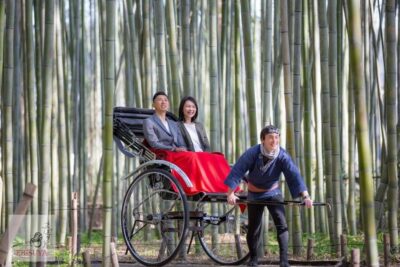
Arashiyama Customized Rickshaw Tour & Bamboo Forest
Read our review →
Split by Private Electric Rickshaw – Palace & Hidden Gems
Read our review →
Where else this ride shows up