
REVIEW · RICKSHAW TOURS
Exiting Rickshaw ride and Kimono experience
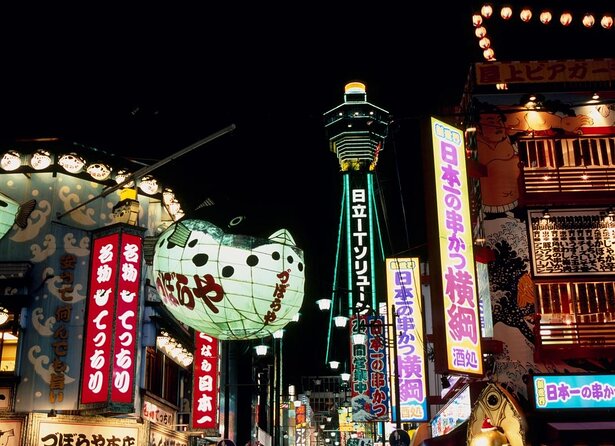
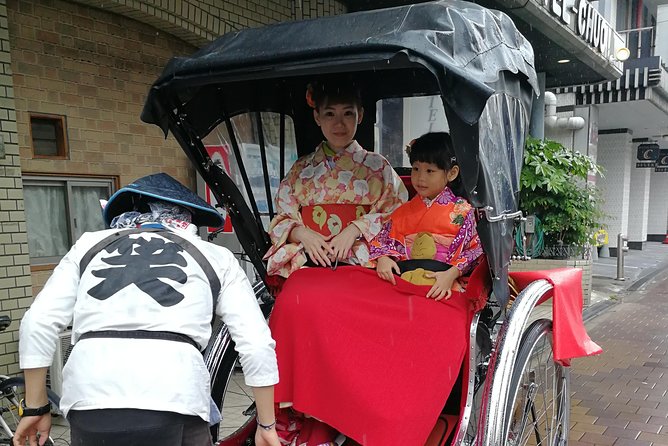
Osaka’s Shinsekai district gets a completely different look from the seat of a rickshaw, especially when you’re dressed in a kimono. You choose from more than 100 kimono collections, get help with dressing and hair, then ride beneath Tsutenkaku Tower while your driver points out interesting places and takes photos.
I like the personal touch of the kimono fitting, and I like that this is a private activity for your group rather than a shared tour. Mayumi is praised for helping guests choose a flattering kimono and fixing their hair. The main drawback is simple: the rickshaw ride lasts only about 20 minutes, so much of the 90-minute experience is dressing and independent time in Shinsekai.
Key points to know before booking
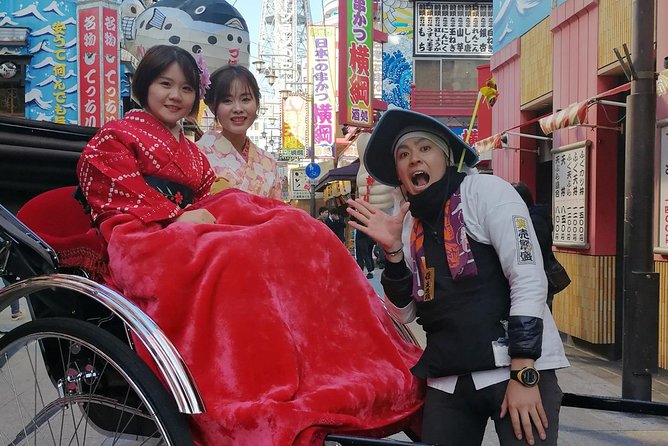
- Choose from more than 100 kimonos: You select your outfit and accessories instead of receiving a preset costume.
- A roughly 20-minute rickshaw ride: The route takes you around Shinsekai and ends beneath Tsutenkaku Tower.
- Free time in kimono: After the ride, you can walk through Shinsekai on your own before returning.
- Private for your group: You do not share the activity with unrelated participants.
- Hair help is included in the experience: Mayumi is specifically praised for helping with hair and finishing touches.
- Weather matters: Poor weather can lead to a different date or a full refund.
Choosing a kimono near Nipponbashi
The experience begins at 3-chōme-6-19 Nipponbashihigashi in Osaka’s Naniwa Ward. The meeting point is near public transportation, which helps because you need to arrive before the dressing and rickshaw portions begin.
The first decision is the fun one. You choose your kimono from more than 100 options, along with accessories. That selection gives this activity more personality than a quick costume rental where the staff simply hands you the next available outfit.
You may spend some time comparing colors, patterns, and accessories. That is part of the appeal, but it also means you should not expect to walk in and be on the road immediately. The dressing process is a real portion of the activity, not a minor step before the main event.
The staff helps you get dressed and handles the details that can be hard to manage on your own. Mayumi receives particular praise for her patience, her help with choosing a kimono, and her work fixing hair. That personal assistance matters because a kimono look depends on the small finishing touches as much as the garment itself.
One useful point: the experience is not limited to sitting in a rickshaw. You remain in the kimono after the ride, so your choice affects the photographs and your walk through Shinsekai. Pick something you will be comfortable wearing for the full activity.
More Rickshaw Tours in Japan
- Tokyo Asakusa Rickshaw Tour
★ 5.0 · 1,375 reviews - Kyoto: Arashiyama Customized Rickshaw Tour & Bamboo Forest
★ 5.0 · 432 reviews - Kyoto Arashiyama Rickshaw Tour with Bamboo Forest
★ 5.0 · 354 reviews
The dressing process and the photo-ready finish
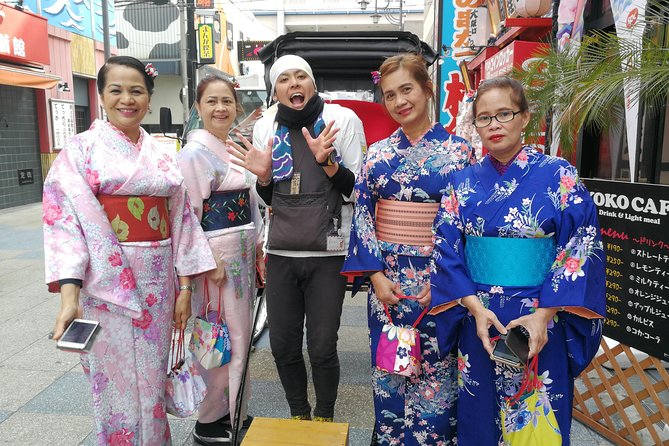
The dressing portion is where this outing feels most personal. You choose your outfit, then the staff dresses you in it. The supplied information does not give a precise dressing time, so allow the experience’s full 90-minute schedule to include this preparation, the ride, and the beginning of your time on foot.
Hair styling is also part of the appeal. One guest specifically notes that Mayumi fixed her hair, and another describes the transformation into a picture-ready kimono look. I would treat this as helpful styling assistance rather than a full salon appointment. The clear purpose is to prepare you for photographs and the ride.
Because this is a private activity, you can make your choices with your own group instead of keeping pace with strangers. That is useful for families, couples, or friends who want a shared photo experience. It also makes the session feel less like a rushed rental counter.
The experience works particularly well for a parent and child. A mother and daughter can choose outfits together, take photos during the ride, and continue the day in Shinsekai. It also suits anyone who wants a cultural activity that is visual and social rather than centered on a long explanation.
A 20-minute rickshaw ride through Shinsekai
Once you are dressed, the rickshaw comes to pick you up. The ride lasts about 20 minutes and takes you around the Shinsekai area. The driver points out interesting places and takes photographs for you, so you are not left trying to manage a phone or camera from the rickshaw.
This is a short ride, and you should book it with the right expectation. It is a scenic introduction to Shinsekai, not a full sightseeing tour of Osaka. One guest found the rickshaw experience fun but a little short, which is a fair reading of the schedule.
The short length does have advantages. Wearing a kimono while seated in a moving rickshaw is a special experience, but you may not want to spend hours in formal clothing. Twenty minutes gives you the memorable part without making the ride the entire day.
The driver’s role adds context to the outing. You get more than a simple transfer from the dressing location to Tsutenkaku. The driver shows you places around the district and takes photos, which helps you stay present in the experience.
Photography is an important part of the value here. A rickshaw ride can be awkward to photograph if everyone in your group is busy holding phones. Having the driver take pictures gives you a chance to enjoy the ride and leaves you with images of the outfit, vehicle, and neighborhood together.
Tsutenkaku Tower marks the handoff
The rickshaw drops you beneath Tsutenkaku Tower. This is the clearest landmark in the activity and the point where the organized portion changes into free time.
Tsutenkaku is closely associated with Shinsekai, so ending beneath the tower puts you in the heart of the area described in the experience. You can use the tower as an easy reference point while looking around, taking photographs, and deciding how to spend the rest of your time in kimono.
The schedule does not include a visit inside Tsutenkaku Tower. You should think of it as the drop-off landmark and photo setting, not a tower admission experience. If you want to go up the tower, that would need to be handled separately, and no admission is listed here.
This arrangement gives you flexibility. You are not kept on a fixed walking route after the ride. If you prefer quick photographs, you can make your way back sooner. If you want to look around Shinsekai in your kimono, you have time to do so before returning on foot.
Same place, a completely different ride:
- Kyoto Rickshaw Tour
★ 5.0 · 210 reviews - Tokyo: Asakusa Sightseeing Tour by Rickshaw
★ 4.9 · 195 reviews - Kyoto: Private Rickshaw Tour of Gion and Higashiyama Area
★ 5.0 · 144 reviews - Otaru Rickshaw Tour
★ 5.0 · 76 reviews
Shinsekai on foot, in kimono
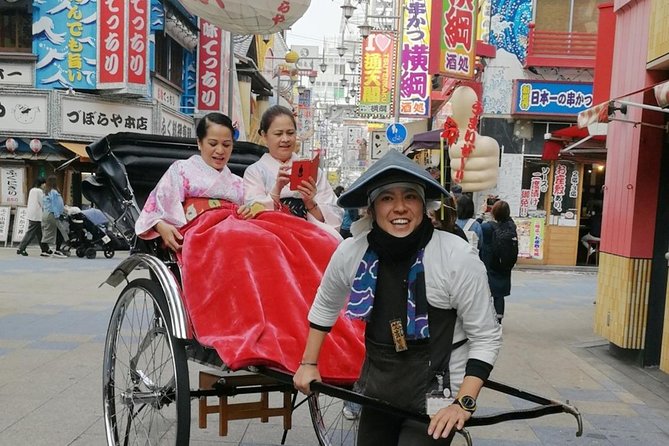
After getting off the rickshaw, you have free time to walk around Shinsekai by yourself. The district is one of Osaka’s popular areas, and seeing it in kimono gives you a different way to experience it than a standard neighborhood walk.
This is also the most independent part of the activity. There is no stated guided walking segment after Tsutenkaku, so you should be comfortable finding your way back to the meeting point on foot. The activity ends back at the original meeting point.
The free time is valuable because it lets you use the kimono beyond the rickshaw ride. You can stop for photographs, browse the streets, and take in the district at your own pace. At the same time, you need to remember that you are responsible for the return walk. The experience does not provide a ride back from Tsutenkaku.
Walking in a kimono may feel different from walking in everyday clothes. You may prefer a slower pace and shorter wandering stops. The activity information does not specify footwear or the exact return route, so ask the staff at the start if you need clear directions back to the meeting point.
For many people, this free time will be the highlight. The rickshaw gives you the special moment, while Shinsekai gives you room to enjoy the outfit without a guide moving you from one stop to the next.
What the $71.54 price includes in practical terms
At $71.54 per person, this is not simply a 20-minute ride. The price covers the combined experience of choosing a kimono, being dressed, receiving styling help, riding the rickshaw, having photographs taken, and spending time in Shinsekai in the outfit.
That makes the value strongest for people who want all of those pieces together. If you only want a rickshaw ride, the short ride may make the price feel high. If you already planned to rent a kimono and pay for styling, the package becomes easier to justify because it joins the clothing, transport, photographs, and neighborhood visit in one activity.
The private format also matters. Only your group participates, so you are paying for a more personal outing rather than joining a larger vehicle or waiting for other parties. Group discounts are available, though the amount is not provided, so larger parties should check the final booking price before deciding.
The experience is also relatively compact at about 90 minutes. That makes it easier to fit into a day of Osaka sightseeing. You can enjoy a cultural activity without giving up half a day, but you should not expect an extended tour of the city.
Who will enjoy this Osaka experience most
I would recommend this for couples, families, and friends who want photographs and a playful cultural activity. It is especially suitable for a mother and daughter or any small group that enjoys choosing outfits together and sharing the moment.
It also suits first-time visitors who want to see Shinsekai in a way that feels different from a normal walk. The rickshaw driver provides a short introduction to the area, while the free time lets you explore without a strict group schedule.
You may want to skip it if your main goal is a long, detailed tour of Osaka. The ride is brief, and the walking portion is self-guided. This is a focused kimono and rickshaw experience, not a broad city tour.
You should also think about the weather. The experience requires good conditions, and poor weather can lead to a different date or a full refund. Since you will be wearing a kimono and riding in an open rickshaw, a rainy day could affect both comfort and photographs.
Timing, cancellation, and practical planning
The experience is booked about 32 days in advance on average, which suggests that planning ahead is sensible, especially if your Osaka dates are fixed. Mobile tickets are available, and confirmation is sent when you book.
Free cancellation is available up to 24 hours before the local start time for a full refund. Changes or cancellations made less than 24 hours before the start are not accepted for a refund.
Most people can participate, and the meeting point is near public transportation. The supplied information does not list special accessibility details, exact dressing times, or a detailed return route. If any of those points matter to you, ask before booking.
Allow enough time to reach the address before your scheduled start. You need time to choose from the kimono collection and get dressed, and the rickshaw pickup follows that preparation.
Should you book the Shinsekai kimono and rickshaw ride?
Book it if you want a compact, photo-friendly Osaka activity with a personal dressing experience and a private rickshaw ride. The wide kimono selection, hair assistance, photographs, and free time beneath Tsutenkaku give the outing more substance than a quick costume photo.
The key question is how you value the 20-minute ride. If that sounds too short for $71.54, choose this only if you also want the kimono fitting and time walking through Shinsekai. If you do, the package offers a memorable way to see one Osaka neighborhood, with enough independence to enjoy it at your own pace.
FAQ
Where does the kimono and rickshaw experience begin?
It begins at 3-chōme-6-19 Nipponbashihigashi, Naniwa Ward, Osaka, 556-0006, Japan.
Where does the activity end?
The activity ends back at the original meeting point. After the rickshaw ride, you walk around Shinsekai independently and then return on foot.
How long does the experience last?
The full experience lasts approximately 1 hour and 30 minutes.
How long is the rickshaw ride?
The rickshaw ride lasts about 20 minutes.
How many kimonos can I choose from?
You can choose from more than 100 kimono collections, along with accessories.
Is the activity private?
Yes. Only your group participates in the private activity.
Does the experience operate in poor weather?
The experience requires good weather. If it is canceled because of poor weather, you can receive a different date or a full refund.
Can I cancel for a full refund?
Yes. You can cancel at least 24 hours before the local start time for a full refund. Cancellations or changes made less than 24 hours before the start are not accepted.
Just added around Japan
- Sushi Making Tokyo with Traditional Rickshaw Ride Tour in Asakusa★ 5.0 · 12 reviews
- Otaru Rickshaw Tour★ 5.0 · 76 reviews
- Hot Spring Capital of Yufuin Rickshaw Tour★ 5.0 · 32 reviews
- Kyoto Sagano Insider: Rickshaw and Walking Tour★ 5.0 · 15 reviews
- Private 3-hour Kyoto Arashiyama Rickshaw Tour★ 5.0 · 5 reviews
- Kurashiki Rickshaw Tour★ 5.0 · 39 reviews
- Kamakura Rickshaw Tour★ 5.0 · 53 reviews
- Kamakura Heritage Bike or Walk Tour with ex-Rickshaw guide★ 5.0 · 11 reviews
Rickshaw Tours, compared.


Old Delhi Food, Heritage&Cultural Walk with Rickshaw ride to Masterji Kee Haveli
Read our review →
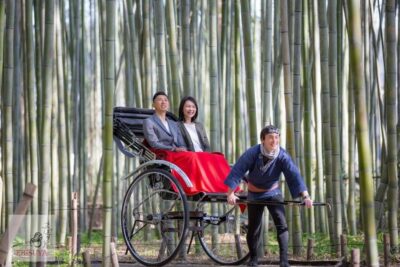
Arashiyama Customized Rickshaw Tour & Bamboo Forest
Read our review →
Split by Private Electric Rickshaw – Palace & Hidden Gems
Read our review →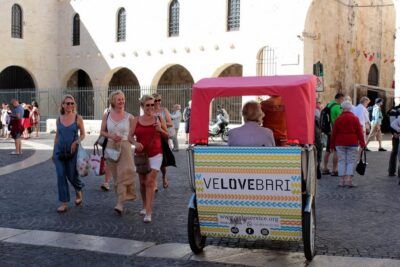
Where else this ride shows up