
REVIEW · RICKSHAW TOURS
Kyoto Rickshaw Tour
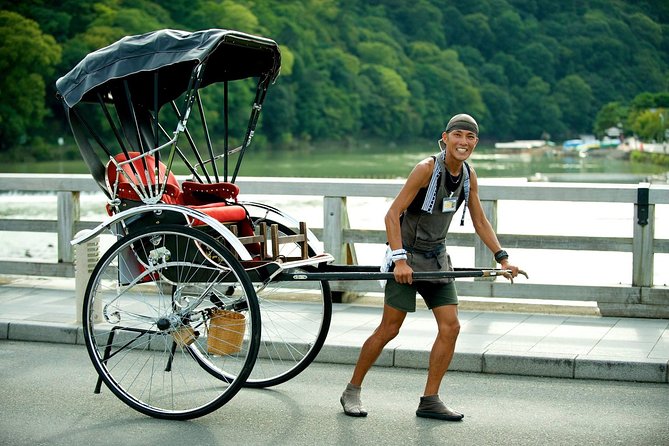
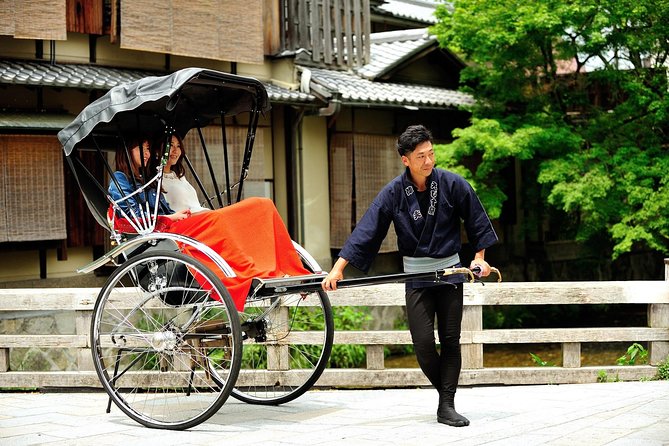
A Kyoto rickshaw ride gives you a front-row view of the city’s old quarters. You sit above the street while a strong local guide pulls you through Higashiyama’s stone lanes, Gion’s wooden houses, temple grounds, and traditional neighborhoods. Guides such as Fumi, Yoshi, Kai, Hina, Kanta, and Kota are often praised for their English, humor, local stories, and ability to take excellent photos.
I like the way this tour lets you cover more ground with less walking, especially if steep lanes or long temple visits are tiring. I also like the private format, which makes it easy to ask questions, adjust the route, or stop for pictures. The main drawback is the narrow seat, only 29.1 inches wide. Two adults may fit, but some couples will be more comfortable booking separate rickshaws.
Key points to know before booking
- Old Kyoto from a raised seat: Roll through Higashiyama, Gion, and traditional lanes without spending the entire tour on foot.
- Private and adjustable: Your group rides together, and the route can be shaped around your interests and tour length.
- Strong English-speaking guides: Guides including Fumi, Yoshi, Kai, Hina, and Kanta are praised for clear explanations, humor, and photography.
- Choose your time carefully: A 30-minute ride offers a taste of Gion, while two or three hours allow temple stops and quieter streets.
- Check the seat width: The rickshaw is 74 centimeters wide, and separate rickshaws may be wiser for some adults.
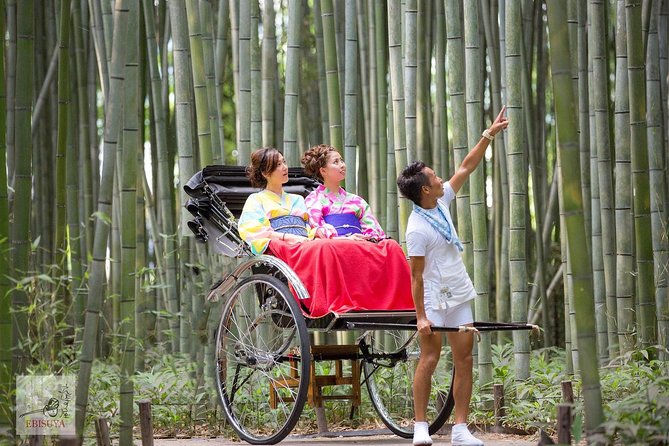
- No Arashiyama bamboo forest: This ticket is valid only at the Higashiyama branch, not the Arashiyama branch.
Why a rickshaw works well in old Kyoto
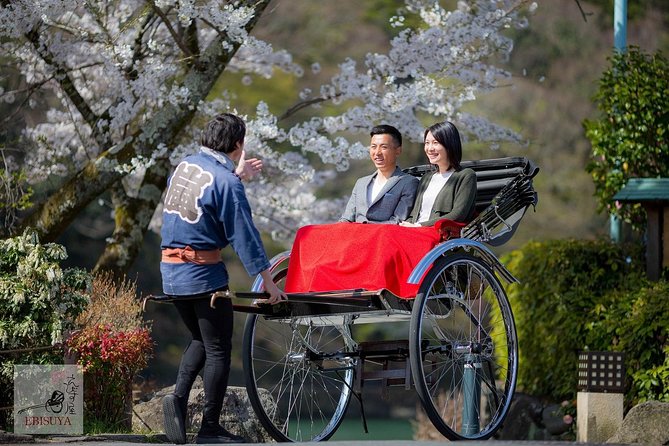
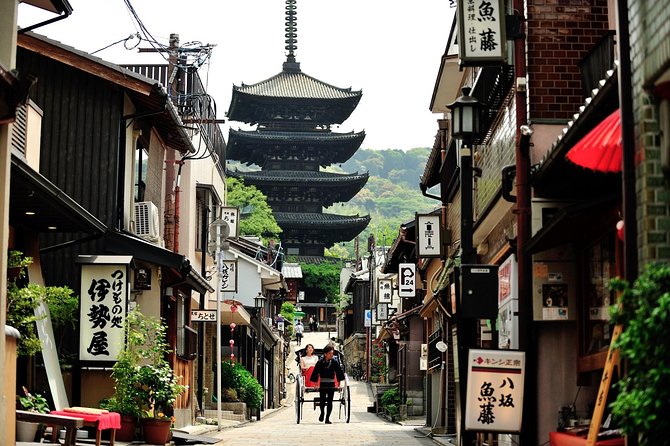
Kyoto’s famous districts are best understood at street level. You see the dark wooden fronts of old townhouses, narrow lanes paved with stone, small bridges, temple gates, and people moving through a neighborhood that still feels tied to older customs.
The rickshaw changes the pace. You are not rushing from one sight to the next with a map in hand. You can look up at tiled roofs, watch the street open around you, and listen as your guide explains what you are seeing.
That is the real value here. This is not simply transport. Your driver is also your guide, local interpreter, photographer, and route planner. Guides such as Fumi, Kai, Yoshi, and Kota are repeatedly praised for combining historical explanations with easy conversation. Several guides are also noted for their stamina, which matters when two adults and a rickshaw must be pulled along Kyoto’s hills and lanes.
I would especially consider this tour early in your Kyoto stay. It gives you a useful first look at Higashiyama and Gion, and it can help you decide which temples or streets deserve a longer visit later.
More Rickshaw Tours in Japan
- Tokyo Asakusa Rickshaw Tour
★ 5.0 · 1,375 reviews - Kyoto: Arashiyama Customized Rickshaw Tour & Bamboo Forest
★ 5.0 · 432 reviews - Kyoto Arashiyama Rickshaw Tour with Bamboo Forest
★ 5.0 · 354 reviews
Higashiyama’s wooden streets and stone alleys
The tour begins at Ebisuya Higashiyama Rickshaw on Shimokawaracho in Kyoto’s Higashiyama Ward. From there, your route moves into one of Kyoto’s most atmospheric areas.
Expect traditional wooden buildings, old paving stones, small lanes, and views toward well-known Higashiyama landmarks. The route depends on your chosen duration, so a short ride will not cover every stop. Before setting off, tell your guide what matters most: temples, photography, Gion streets, local customs, or simply a gentle ride through the old quarter.
The raised seat gives you a different view from a walking tour. You can see over some of the immediate street activity, while the guide points out details that are easy to miss at ground level. If you want pictures, say so early. Guides are used to stopping at attractive corners and taking photos of your group.
The tradeoff is that a rickshaw does not replace walking entirely. You may still get out to visit a shrine, enter a temple, or explore a lane. The ride reduces the distance between those moments, but it is not a fully step-free sightseeing experience.
Gion and the geisha district
Gion is one of the strongest parts of the experience. Its traditional wooden townhouses, quiet side streets, and carefully preserved streetscape give you a clear sense of old Kyoto.
Your guide can explain local customs and the role of the geisha district. You might spot a geisha or maiko, though that should never be treated as a guarantee or a photo opportunity. The best approach is to watch quietly, keep a respectful distance, and let the guide explain what is appropriate.
The small streets are especially appealing from a rickshaw because you can take in the architecture without constantly checking directions. A walking tour can show you the same area, but the rickshaw adds a moving viewpoint and keeps your attention on the surroundings.
A 30-minute option works well if you want a quick introduction to Gion. It is also a practical choice for families or people who want to try a rickshaw without committing to a longer outing. For a fuller look at temples, lanes, and photo stops, I would choose at least 70 minutes or two hours.
Bridges, gardens, and temple stops
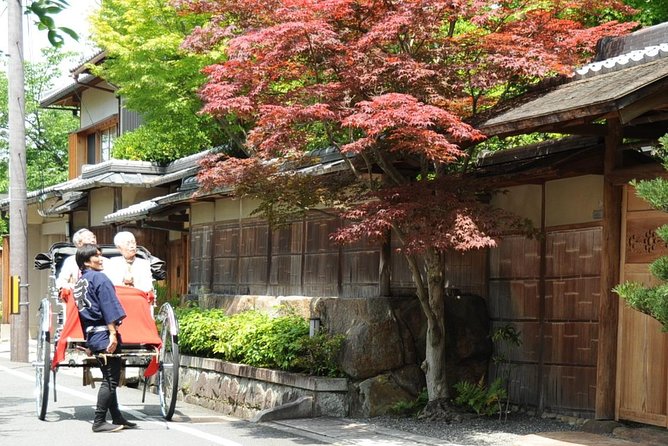
The route includes a small bridge in a traditional district, a beautiful temple with a garden, and a larger temple. These descriptions point to the kind of variety you can expect: not just a ride through one famous street, but a mix of architecture, gardens, religious sites, and local neighborhoods.
Kodaiji and Yasaka are among the places connected with the longer Higashiyama routes. Kennin-ji may also be visited on a longer customized outing, sometimes with an additional admission charge. Ask your guide or the operator in advance if a particular temple is important to you, since the shortest rides cannot include every listed point.
The temple portions add useful context, but they also affect the pace. If you stop to walk through a temple or garden, you spend less time rolling through streets. That is not a problem, but you should choose your priorities before booking.
I would select a longer tour if you want both the ride and meaningful temple visits. If you mainly want photos and a quick sense of Gion, a shorter option may be enough.
Same place, a completely different ride:
- Tokyo: Asakusa Sightseeing Tour by Rickshaw
★ 4.9 · 195 reviews - Kyoto: Private Rickshaw Tour of Gion and Higashiyama Area
★ 5.0 · 144 reviews - Otaru Rickshaw Tour
★ 5.0 · 76 reviews - Kamakura Rickshaw Tour
★ 5.0 · 53 reviews
Yasaka Shrine and old New Year customs
A large shrine in the Gion area is included among the possible sights. Yasaka Shrine is a key local landmark and a sensible place to visit before or after the ride.
The timing matters most around New Year. The shrine is especially worth adding to your plans during the New Year period, when local custom brings large numbers of people to shrines for the first visit of the year. You can combine a shrine visit with the rickshaw ride, but allow extra time outside the tour itself.
The tour finishes back at the Higashiyama meeting point by default. If you want to finish elsewhere, a drop-off fee may apply, so confirm this before the day of the ride rather than assuming the guide can simply change the ending.
How the tour length changes the experience
The available duration ranges from about 30 minutes to three hours. The price shown is $39.79 per person, though the practical value depends heavily on how long you book and whether you need one rickshaw or more than one.
Here is how I would think about the choices:
- 30 minutes: A quick taste of Gion or Higashiyama. Good for a first ride, a family with limited patience, or a packed sightseeing day. You will not cover every landmark.
- 70 minutes: A useful middle ground. You can see several traditional streets, make photo stops, and include more explanation without giving up half a day.
- Two hours: Best for a fuller introduction. You have time for temples, shrine areas, quieter lanes, and questions. This is the duration I would choose for a first visit if your schedule allows.
- Three hours: A broader private outing with room for stops and customization. It suits anyone who wants the rickshaw to be a main Kyoto activity rather than a short add-on.
Several groups enjoyed their longer rides enough to extend them, but you should not count on extra time being available on the day. Book the duration you actually want, especially in busy seasons.
The private format and guide quality
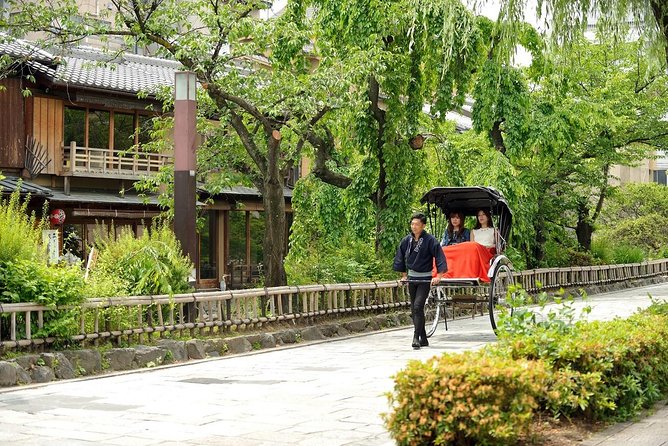
Only your group participates, which is a major advantage. You do not need to match another group’s pace or listen to questions that have nothing to do with your interests.
This also makes the tour more useful for families. Guides have been praised for connecting well with teenagers, keeping children interested, and taking photos for the whole group. Children age five and under may sit on an adult’s lap, with one child per adult. Children using one of the two rickshaw seats must be booked as adults.
The English level varies by guide, but the named guides praised most often include Fumi, Yoshi, Kai, Hina, Kanta, Kota, Daichi, Moto, Shuhei, and Fuji. The common strengths are clear conversation, local explanations, humor, and patience with questions.
The guide’s physical effort is part of the experience, too. Pulling two adults through Kyoto’s streets and uphill sections is demanding work. The strongest guides combine that effort with frequent conversation and photo stops, but you should still be considerate about asking for a realistic route.
Seat width, comfort, and group planning
The rickshaw is 74 centimeters wide, or 29.1 inches. Two adults can ride in one, but the fit may be tight depending on your size and how long you plan to sit.
For comfort, I would consider one rickshaw per passenger if you have any doubt. If two people cannot fit in one rickshaw, an extra rickshaw is required. It may not be available on the day with an English-speaking guide, so arrange it when booking.
A maximum of two adults can ride in each rickshaw. Up to two children age five or younger can ride with two adults, but the children must sit on adult laps. These rules matter for family groups, so count seats carefully rather than assuming everyone can share.
This is also a private activity, not a large bus tour. That helps with comfort and conversation, but the cost can rise when your party needs several rickshaws.
Price and what you are really paying for
At $39.79 per person, the entry price is reasonable for a short private ride with an English-speaking guide. The value improves if you want a quick orientation, professional-looking group photos, and a way to reduce walking between major sights.
For a longer booking, you are paying for time, private guiding, local interpretation, route flexibility, and the physical work of the driver. That can be worthwhile in Higashiyama, where crowded streets and sloping lanes make navigation tiring.
I would not book this solely as a cheap way to move from one attraction to another. Taxis and public transport may be more efficient for transportation. Book it for the combination of sightseeing, stories, photos, and the novelty of riding through old Kyoto in a traditional rickshaw.
Group discounts are available, which may help families or larger parties. Remember that each additional rickshaw can affect the total cost.
Weather, meeting point, and timing tips
The meeting point is Ebisuya Higashiyama Rickshaw at 483 Shimokawaracho, Higashiyama Ward, Kyoto, 605-0825. The activity ends at the same point unless another drop-off is arranged for an added fee.
The operator states that tours run rain or shine, while the cancellation terms also allow a new date or full refund if poor weather causes the experience to be canceled. Bring suitable clothing and ask at the stand if conditions are uncertain.
Arrive early. If you are 10 minutes or more late, the booking is automatically canceled, and any delay is taken from your tour time. Changes or rescheduling requests made after 5 p.m. the day before cannot be accommodated.
The voucher is valid only at the Kyoto Higashiyama branch. It cannot be used at the Arashiyama branch, and the Arashiyama Bamboo Forest is not part of this experience.
Who should book this Kyoto ride?
I would recommend it to first-time Kyoto visitors who want an easy orientation to Gion and Higashiyama. It is also a strong fit for families, couples, photographers, and anyone who cannot comfortably walk for hours.
The tour can help if you use a wheelchair, since one person described it as a way to see Kyoto after becoming unable to walk long distances. Still, ask the operator directly about your exact mobility needs before booking. The rickshaw itself is not described as wheelchair accessible, and getting in and out may require assistance.
You should think twice if you dislike narrow seats, want a completely quiet ride, or prefer to spend most of your time inside temples. The rickshaw gives you a guided overview, not unlimited time at every landmark.
Should you book it?
I would book the Kyoto Rickshaw Tour if you want a memorable introduction to old Kyoto and value a private guide who can explain the streets while taking your photos. Choose 70 minutes for a balanced outing, two hours for temples and a fuller route, and three hours only if you want the ride to be a major part of your day.
Before paying, confirm the seat arrangement, desired landmarks, and whether you need an extra rickshaw. If the bamboo forest is your priority, book the separate Arashiyama branch instead. For Gion, Higashiyama, wooden townhouses, shrines, temples, and old stone streets, this is a practical and entertaining way to begin.
FAQ
Where does the Kyoto Rickshaw Tour begin?
It begins at Ebisuya Higashiyama Rickshaw, 483 Shimokawaracho, Higashiyama Ward, Kyoto, 605-0825, Japan.
Where does the tour end?
The activity ends back at the Higashiyama meeting point. A different drop-off location may be possible for an additional fee payable on the day.
How long is the rickshaw tour?
The available tour lengths range from about 30 minutes to three hours. The landmarks covered depend on the option you choose.
Is the tour private?
Yes. Only your group participates in the activity.
Is an English-speaking guide included?
Yes. A local English-speaking guide and the rickshaw ride are included.
Can I customize the route?
Yes. The tour can be customized around your interests. Ask in advance if you want to include a particular temple, shrine, or district.
Does the tour include Arashiyama Bamboo Forest?
No. The Bamboo Forest is not included, and this voucher is valid only at the Kyoto Higashiyama branch.
How many adults fit in one rickshaw?
A maximum of two adults can ride in one rickshaw. The rickshaw is 74 centimeters wide, so separate rickshaws may be more comfortable for some passengers.
Can young children ride?
Children age five and under may sit on an adult’s lap, with one child per adult. A child using one of the two rickshaw seats must be booked as an adult.
What happens if I am late?
The amount of time you are late is deducted from the tour. A delay of 10 minutes or more results in automatic cancellation.
Can I cancel for a refund?
You can cancel at least 24 hours before the start time for a full refund. Cancellations or changes made less than 24 hours before the start time are not accepted for a refund.
Just added around Japan
- Sushi Making Tokyo with Traditional Rickshaw Ride Tour in Asakusa★ 5.0 · 12 reviews
- Otaru Rickshaw Tour★ 5.0 · 76 reviews
- Hot Spring Capital of Yufuin Rickshaw Tour★ 5.0 · 32 reviews
- Exiting Rickshaw ride and Kimono experience★ 5.0 · 4 reviews
- Kyoto Sagano Insider: Rickshaw and Walking Tour★ 5.0 · 15 reviews
- Private 3-hour Kyoto Arashiyama Rickshaw Tour★ 5.0 · 5 reviews
- Kurashiki Rickshaw Tour★ 5.0 · 39 reviews
- Kamakura Rickshaw Tour★ 5.0 · 53 reviews
Rickshaw Tours, compared.

Old Delhi Food, Heritage&Cultural Walk with Rickshaw ride to Masterji Kee Haveli
Read our review →
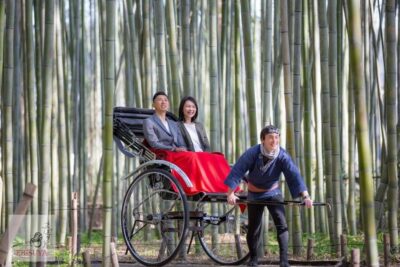
Arashiyama Customized Rickshaw Tour & Bamboo Forest
Read our review →
Split by Private Electric Rickshaw – Palace & Hidden Gems
Read our review →
Where else this ride shows up