
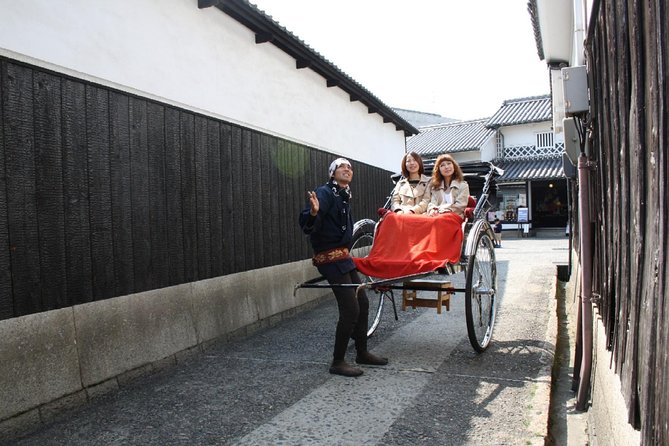
REVIEW · RICKSHAW TOURS
Kurashiki Rickshaw Tour
Kurashiki’s old quarter makes the most sense from a rickshaw seat. You glide beside willow-lined canals, pass white-walled storehouses, and slip into lanes that are easy to miss on foot. The guide does the pulling, the explaining, and often the picture-taking, while you get a comfortable first look at the town’s merchant past.
I like the flexible length and the human touch. A 30-minute ride gives you a useful orientation, while a longer outing can include merchant mansions, Mt. Tsurugata, the old cotton mill, and quieter streets. Guides such as Sho, Kubo, and Ishimatsu have been praised for clear English, local tips, humor, and thoughtful photo stops.
The main consideration is space. A rickshaw can carry two adults, but the seat is only 29.1 inches, or 74 centimeters, wide. Larger passengers may be happier booking one rickshaw each, and that extra vehicle must be reserved ahead if you need an English-speaking guide.
Key points to know before you book
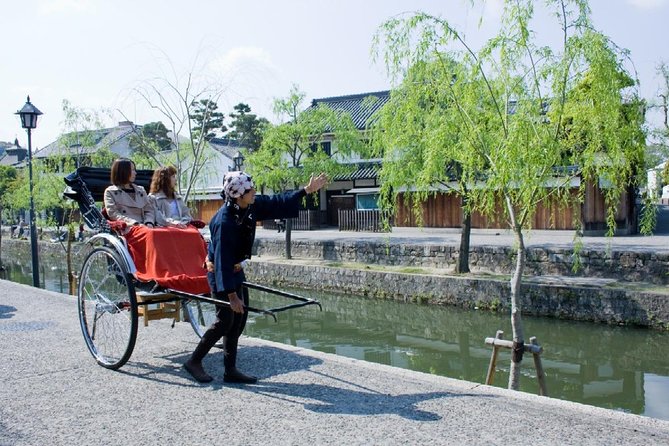
- The canal is the visual centerpiece: White storehouses, wooden buildings, and drooping willow trees make the short route especially photogenic.
- Thirty minutes can be enough: You get a quick tour of the Bikan quarter, useful history, and a better sense of where to walk afterward.
- Longer rides change the experience: The two-hour option reaches merchant homes, Mt. Tsurugata, the old cotton mill, and more of the surrounding quarter.
- Your guide shapes the outing: Ask for English or another language at the departure point, but multilingual service depends on availability.
- The route and finish can be adjusted: You can discuss where to end with your guide, though another drop-off point may cost extra.
- Families need to plan seating carefully: Children age five and under may sit on an adult’s lap without taking a seat. Two adults fit in one rickshaw, but comfort varies.
Why Kurashiki is especially good from a rickshaw
Kurashiki grew prosperous during Japan’s Edo period, from 1603 to 1868, when it served as a shogunate crown colony and a storage center for goods arriving from across the country. That past is still visible in the Bikan Historical Quarter, where white plaster walls, dark timber, tiled roofs, and old warehouses line the waterways.
On foot, you can certainly see the district. But the rickshaw adds two useful things: a moving view and a guide who can explain what you are looking at while you pass. You are not stopping at every building, yet you are getting the story behind the facades instead of simply photographing them.
I especially like this as a first activity in Kurashiki. The ride helps you understand the shape of the old town, points out lanes and shops worth returning to, and saves your legs for museums and browsing later. One useful tip is to book it early in your visit, then use the guide’s suggestions to plan the rest of your day.
The ride also works well when heat or fatigue is a concern. Kurashiki can be very hot in summer, and sitting under the care of a local driver is easier than walking every lane at midday. Rain does not automatically ruin the outing either. The rickshaws can be fitted with rain protection, though severe weather may affect the route or operation.
More Rickshaw Tours in Japan
- Tokyo Asakusa Rickshaw Tour
★ 5.0 · 1,375 reviews - Kyoto: Arashiyama Customized Rickshaw Tour & Bamboo Forest
★ 5.0 · 432 reviews - Kyoto Arashiyama Rickshaw Tour with Bamboo Forest
★ 5.0 · 354 reviews
The 30-minute ride: a smart introduction to the Bikan quarter
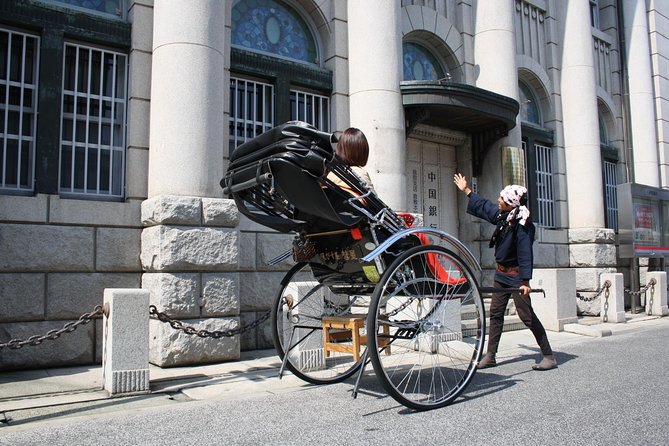
The shortest option begins around Kurashiki Monogatarikan and heads through the old town. You travel beside the canal, where weeping willows hang over the water and traditional buildings create the classic Kurashiki view.
This is the best choice if your schedule is tight or you want to test the experience without committing a large part of the day. Thirty minutes is enough for a guided look at the central streets, the canal path, and nearby back lanes. It is not enough for a broad tour of every listed sight, so think of it as an orientation rather than a full district visit.
The short ride is also useful late in the day. Some visitors arrive in Kurashiki with only a little time left, and a 30-minute trip can still provide a meaningful introduction. A guide can point out places to revisit, recommend shops, and help you avoid spending your limited time wandering without a plan.
You may also be taken close to a parking area or another agreed ending point, depending on the arrangement. Confirm this directly with the guide, since extra drop-off locations can involve an additional fee.
The 45-minute route: merchant homes and quieter details
Add 15 minutes and the ride can continue beyond the main canal and old-town streets toward the mansions once owned by wealthy local merchants. This gives the tour more historical weight. You begin to see Kurashiki not only as a pretty preserved district, but as a place shaped by trade, storage, and business families.
The extra time also allows for more small shops and local streets. These are the moments when a private rickshaw ride can feel more useful than a fixed sightseeing loop. You can ask about a shop, a building, or a detail that catches your eye, then decide if you want to return on foot.
If you enjoy architecture and town history, I think 45 minutes offers a good balance. It remains compact, but it avoids the feeling of rushing straight through the central canal area. It is also a reasonable option for couples who want the experience without spending two hours on one activity.
The one-hour ride: more time to read the old streets
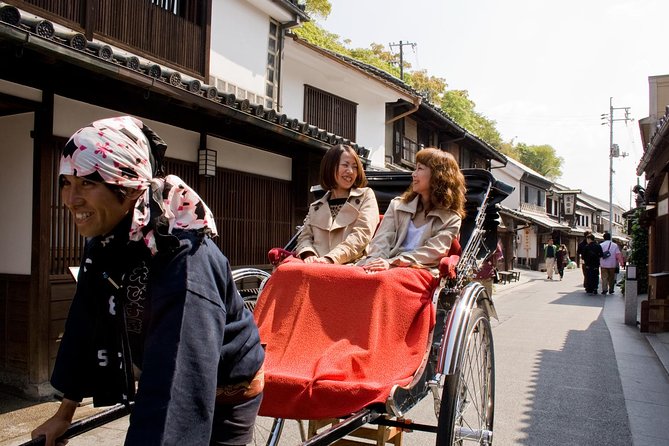
The one-hour option follows the central route but allows a slower look at the old town. That matters in Kurashiki because the appeal is not one single monument. It is the steady change between canal views, merchant houses, narrow lanes, small businesses, and preserved wooden buildings.
A guide can adjust the pace to your interests. If you want more history, ask questions about the merchant families and the town’s Edo-period role. If you care more about photographs, the canal and willow trees provide several attractive angles. If you are trying to choose where to shop or eat afterward, ask for local suggestions before you finish.
This length is a strong pick for a first visit. It gives you enough time to get beyond the standard postcard view without requiring a half-day commitment. The private format also means your group can ask for a little more explanation or a different finish point, subject to the guide’s route and any extra fee.
Same place, a completely different ride:
- Kyoto Rickshaw Tour
★ 5.0 · 210 reviews - Tokyo: Asakusa Sightseeing Tour by Rickshaw
★ 4.9 · 195 reviews - Kyoto: Private Rickshaw Tour of Gion and Higashiyama Area
★ 5.0 · 144 reviews - Otaru Rickshaw Tour
★ 5.0 · 76 reviews
The two-hour ride: the broadest look at Kurashiki
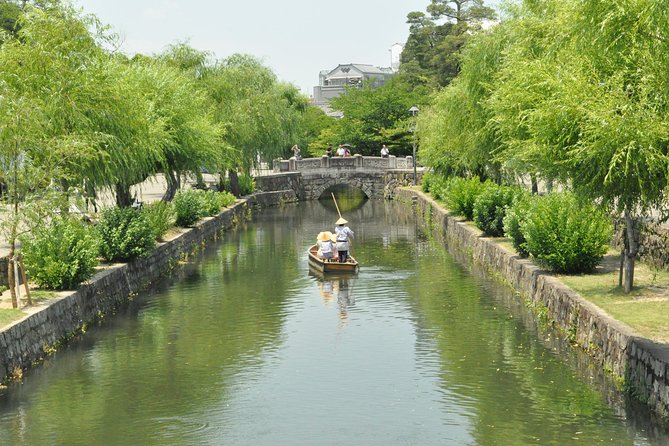
The longest option begins near the historic merchants’ mansions and takes a wider route through the quarter. You see Kurashiki-style warehouses and tiny shops before heading toward Mt. Tsurugata.
The hilltop Buddhist temple area offers a change from the canal district. The information provided identifies it as a temple on a hill, so the main appeal here is the shift in setting and the chance to see more than the flat central streets. The route then returns past the city’s old cotton mill before finishing along the willow-lined canal.
Two hours makes sense if you want the rickshaw itself to be a major part of your Kurashiki day. You get more streets, more context, and a better sense of how the preserved center connects with the wider town. It is also the right choice if you dislike hurried sightseeing.
The tradeoff is simple: two hours costs more than a quick orientation and leaves less time for independent museum visits or shopping. If Kurashiki is only one stop on a packed itinerary, I would choose 30 or 45 minutes instead. If the town is a main destination, the long route gives the guide more room to tailor the experience.
The sights that give the ride its shape
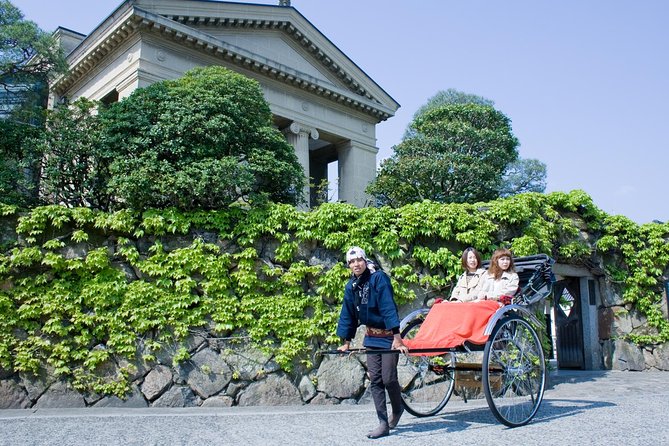
Several Kurashiki sights may appear along the route or make good before-and-after stops. The Ohashi family mansion is a nationally important cultural asset. Built for and by the Ohashi merchant family, it helps explain the wealth behind the district’s grander homes.
The art museum is worth considering before or after the ride. The supplied route information describes it as a striking museum worth checking out, but it does not specify a guaranteed stop or admission arrangement, so treat it as an independent add-on unless your guide confirms otherwise.
Achi Shrine is one of Kurashiki’s major shrines and has an important role in local festivals and events. The suggested visit is about 20 minutes, with free admission. It is a useful complement to the merchant quarter because it adds a religious and community side to the town.
You may also see a large square framed by ivy-covered red-brick walls. That setting provides a visual contrast to the district’s mainly wooden buildings. Another notable contrast is a retro concrete building, one of the modern-looking structures set among the preserved traditional architecture.
The canal remains the star. The small river running through the old district is lined with willows and well-preserved buildings, and the rickshaw gives you a raised, unobstructed view as you pass. Bring your camera, but do not spend the entire ride looking through it. The guide’s explanations are part of what makes the ride worthwhile.
The guide makes the difference
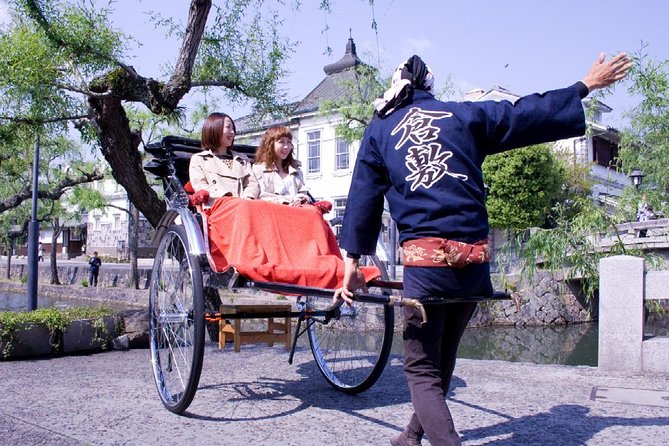
The rickshaw driver is also your local guide, so the quality of the experience depends heavily on communication and personality. English-speaking service is available subject to availability, and you should request your preferred language at the departure point.
Specific guides associated with strong experiences include Sho, Kubo, and Ishimatsu. Sho has been described as friendly and easy to talk with, while Kubo has been praised for making a rainy-day ride feel engaging. Ishimatsu is known for lively conversation, local history, backstreet suggestions, and helping tired passengers get closer to their next stop.
Do not hesitate to explain what you want at the beginning. Tell the guide if you care most about history, photography, shopping, food suggestions, or a gentle pace. The route is not rigid, and a clear request gives the driver a better chance to make the ride suit you.
Photo help is another small but valuable touch. Guides may take pictures for you, which is useful when the whole group wants to appear in the frame. You can also ask questions as you go instead of waiting for a formal stop.
Price, timing, and comfort
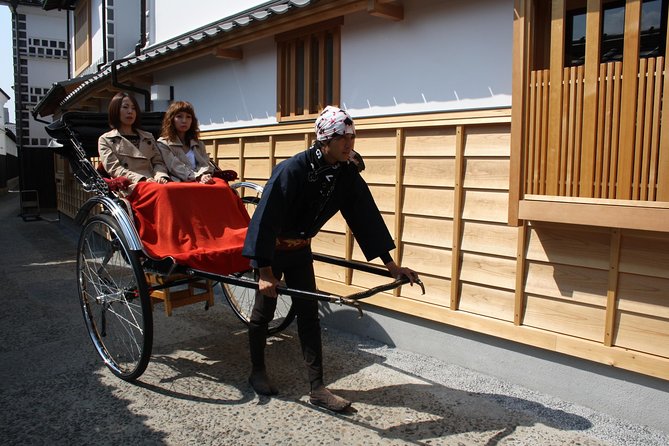
The listed price is $43.04 per person. That is not a cheap way to get from one side of Kurashiki to another, but transport is not really what you are buying. You are paying for a private sightseeing experience, a driver-guide, local interpretation, and a view of the district that would be difficult to recreate on your own.
Value depends on the length you choose. For a first visit, 30 minutes gives a practical return because it combines sightseeing with orientation. Longer options become more worthwhile when you want detailed history, more photographs, and a route beyond the canal.
The tour operates between 9:30am and 5:30pm, but your selected start time is not final until the local operator confirms it by email within 24 hours of booking. Plan a little flexibility into your day.
Adult pricing applies from age six. Children five and under can ride on an adult’s lap without taking a seat. One rickshaw holds a maximum of two adults, plus up to two young children on laps. Since the seat is only 74 centimeters wide, two separate rickshaws may be more comfortable for larger passengers. Reserve the extra vehicle in advance because same-day availability with an English-speaking guide is not guaranteed.
The activity is private, so only your group rides with the guide. Hotel pickup and drop-off are not included, and food and drinks are not included unless specifically arranged. The meeting point is at 1-chōme-1-5 Chūō in Kurashiki, near public transportation.
Who should book this Kurashiki rickshaw tour?
I would recommend it to first-time visitors who want a clear introduction before walking independently. It also suits couples, families with young children, older people, and anyone who finds long walks difficult in hot weather.
It is a particularly good fit for people who enjoy local stories more than a checklist of attractions. The guide can explain merchant houses, point out less obvious lanes, and suggest places to return to later.
You may want to skip it if your budget is very tight or if you prefer to explore every street at your own pace. Walking the Bikan quarter is free, and you will have more time to stop inside museums and shops. The rickshaw earns its cost through convenience, context, and the chance to see the district without doing all the walking yourself.
Should you book it?
Book the 30-minute ride if you want a quick, useful introduction to Kurashiki. Choose 45 or 60 minutes if you want more merchant architecture and time for questions. The two-hour route is best when Kurashiki is a central part of your day and you want Mt. Tsurugata, the old cotton mill, and more of the surrounding streets.
I would book early, especially if you need separate rickshaws or a guide in a specific language. Free cancellation is available up to 24 hours before the start time, but late cancellations and changes are not refunded. For an authentic first look at Kurashiki, with a guide who can help shape the rest of your visit, this is a worthwhile splurge.
FAQ
Where does the Kurashiki rickshaw tour start?
The listed starting point is 1-chōme-1-5 Chūō, Kurashiki, Okayama 710-0046, Japan. Meet your guide in Kurashiki Old Town.
How long does the rickshaw ride last?
You can choose a ride lasting about 30 minutes, 45 minutes, one hour, or two hours. The available route depends on the duration selected.
Can I choose the departure time?
You can request a start time between 9:30am and 5:30pm. The selected time is confirmed by email within 24 hours of booking and is not automatically guaranteed.
Can the tour finish somewhere other than the standard ending point?
Yes. You can discuss the finish point with your guide on the day. A different drop-off location may require an additional fee.
How many people fit in one rickshaw?
A maximum of two adults can ride in one rickshaw. Up to two children age five or under may also ride, but they must sit on an adult’s lap. The rickshaw is 74 centimeters wide, so separate vehicles may be more comfortable for larger passengers.
Are there any restrictions for pregnant passengers?
People in the first 16 weeks of pregnancy are not permitted to ride a rickshaw. Most other participants can take part, and the activity operates near public transportation.
Just added around Japan
- Sushi Making Tokyo with Traditional Rickshaw Ride Tour in Asakusa★ 5.0 · 12 reviews
- Otaru Rickshaw Tour★ 5.0 · 76 reviews
- Hot Spring Capital of Yufuin Rickshaw Tour★ 5.0 · 32 reviews
- Exiting Rickshaw ride and Kimono experience★ 5.0 · 4 reviews
- Kyoto Sagano Insider: Rickshaw and Walking Tour★ 5.0 · 15 reviews
- Private 3-hour Kyoto Arashiyama Rickshaw Tour★ 5.0 · 5 reviews
- Kamakura Rickshaw Tour★ 5.0 · 53 reviews
- Kamakura Heritage Bike or Walk Tour with ex-Rickshaw guide★ 5.0 · 11 reviews
Rickshaw Tours, compared.

Old Delhi Food, Heritage&Cultural Walk with Rickshaw ride to Masterji Kee Haveli
Read our review →
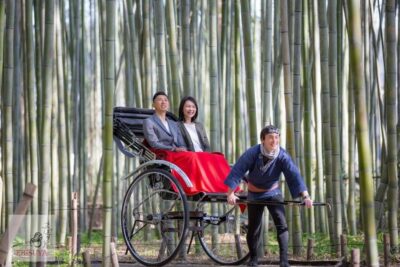
Arashiyama Customized Rickshaw Tour & Bamboo Forest
Read our review →
Split by Private Electric Rickshaw – Palace & Hidden Gems
Read our review →
Where else this ride shows up