
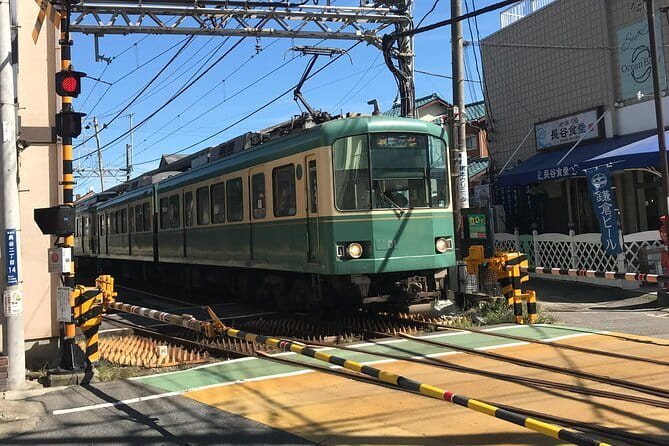
REVIEW · RICKSHAW TOURS
Kamakura Heritage Bike or Walk Tour with ex-Rickshaw guide
Kamakura is easiest to understand when you connect its famous temples and shrines rather than visit them as isolated stops. This private tour does that by putting you with Ichi, a former rickshaw guide who spent five years showing people around these streets. You can ride a bike, possibly an e-bike, or walk at a slower pace.
I like the broad route, which links the Great Buddha, Hachimangu Shrine, Hokokuji, Hasedera, and the coast in four hours. I also like the personal touch: Ichi takes photos throughout the outing and explains the beginnings of the Kamakura shogunate in clear, manageable pieces. The main consideration is pace. With many stops and some time on roads between them, this is not a long, quiet temple meditation.
Key points to know before booking
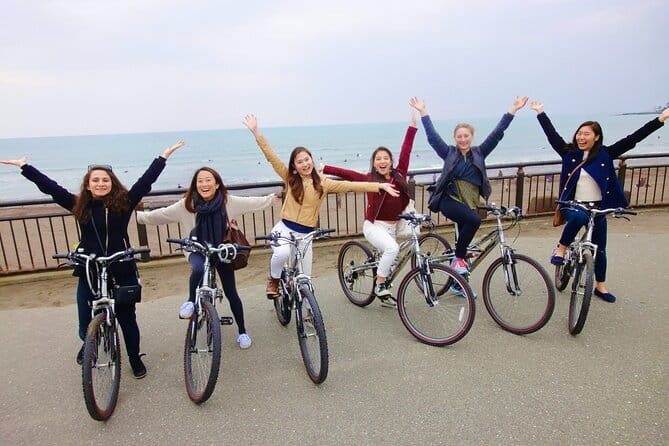
- A private route through central and western Kamakura: Your group visits major sights without being folded into a large tour.
- Two ways to explore: Choose a bike or walking tour, with some flexibility to adjust the plan during the four-hour session.
- A guide with rickshaw experience: Ichi knows how to tell Kamakura’s complicated political and religious story in plain English.
- Several paid sights are covered: Admission to the Great Buddha and Hokokuji Temple is included.
- A good mix of famous and quieter places: The route pairs major landmarks with Egara Tenjin Shrine, the Minamoto no Sanetomo grave, and a seaside road.
- Weather matters: The tour requires good weather, and children under 13 who cannot ride an adult-sized bike are not recommended for the bike option.
Why this route makes Kamakura easier to understand
Kamakura can feel scattered on a first visit. The Great Buddha is in the Hase area, Hasedera is nearby, Hachimangu Shrine is closer to the station, and Hokokuji sits farther east. A private bike route helps tie these places together. You spend less time wondering how the pieces fit and more time asking why they matter.
The city was the seat of Japan’s first warrior government, the Kamakura shogunate. That political shift changed the country, and the tour uses shrines, graves, temples, and old roads to explain it. Ichi has a useful advantage here: his background as a rickshaw guide means he has spent years turning a moving city tour into a story people can follow.
The private format matters too. Only your group participates, so the pace can respond to your interests. You can ask for more explanation at a shrine, spend less time at a stop that does not grab you, or switch between walking and biking within the tour period. The tour description presents that flexibility, though four hours still puts a natural limit on how long you can linger.
More Rickshaw Tours in Japan
- Tokyo Asakusa Rickshaw Tour
★ 5.0 · 1,375 reviews - Kyoto: Arashiyama Customized Rickshaw Tour & Bamboo Forest
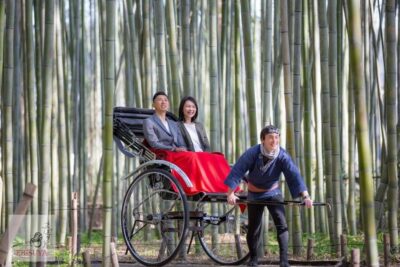
★ 5.0 · 432 reviews - Kyoto Arashiyama Rickshaw Tour with Bamboo Forest
★ 5.0 · 354 reviews
Meeting at Kamakura Station and choosing your pace
The tour begins at Kamakura Station, at 1-chōme-1-15 Onarimachi. This is a practical meeting point because the station is near the central sights and public transportation. The tour ends back at the same meeting point, so you do not need to arrange a separate ride home from another part of town.
At the start, you choose between walking and biking. Walking is the safer choice if you want to focus on stories, photos, and temple details without thinking about traffic or hills. Biking lets you cover more ground and makes the seaside stretch at Yuigahama easier to include.
The bike option is aimed at people comfortable on an adult-sized bicycle. Young children under 13 who cannot ride one are not recommended for this experience. If you are booking for a mixed-age group, clarify the bike arrangements before paying. The experience is private, but the information provided does not specify the number or type of bicycles for every booking.
Great Buddha at Kotoku-in: Kamakura’s essential first stop
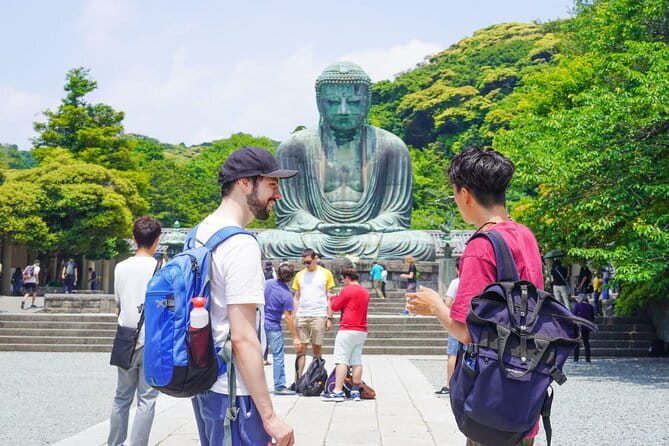
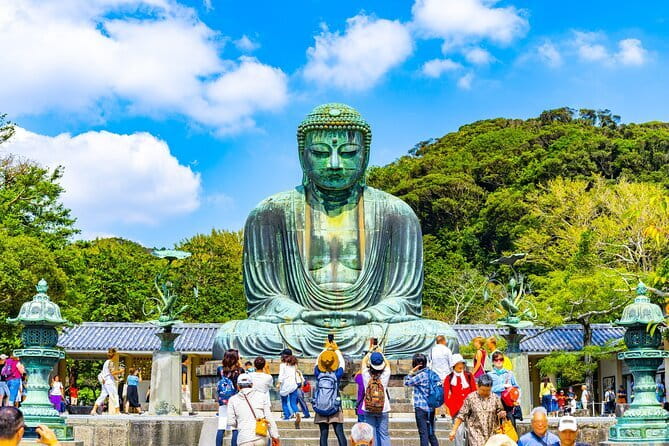
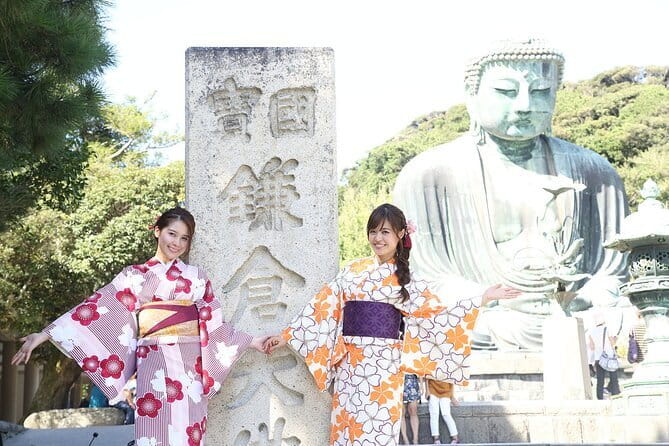
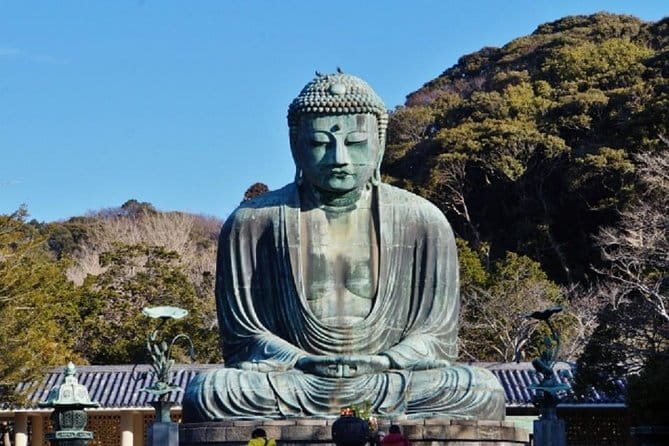
The Great Buddha of Kamakura is the most recognizable sight on this route. At Kotoku-in Temple, you get about 30 minutes to see the huge bronze figure and hear how it fits into Kamakura’s religious and political past. Admission is included, which keeps the visit simple.
Thirty minutes is enough for a focused introduction, photos, and a look around the temple grounds. It is not enough for a long visit if you want to inspect every detail. That is not necessarily a weakness. The tour has a lot of ground to cover, and the Great Buddha works well as an opening landmark before moving into smaller religious sites.
This stop can be busy, especially during popular visiting hours, so having Ichi explain the figure while you take in the setting is useful. He is also there to photograph your group, a practical benefit if you want more than quick self-timer pictures.
Hachimangu Shrine and the story of the samurai government
Tsurugaoka Hachimangu is the spiritual center of Kamakura. The shrine is dedicated to the god of war and samurai, making it an important place for understanding why Kamakura became the home of warrior rule.
You have about 30 minutes here. That gives you time to walk through the grounds, look at the architecture, and hear about the shrine’s role in the city. The stop is free, so the included cost is mainly your guide’s explanation and the ability to place the site in the wider route.
This is one of the places where Ichi’s storytelling seems especially useful. The history of the Kamakura shogunate includes unfamiliar names, shifting alliances, and complicated titles. His strength, based on the experience described by past customers, is explaining the Bakufu and its importance without turning the visit into a lecture.
Same place, a completely different ride:
- Kyoto Rickshaw Tour
★ 5.0 · 210 reviews - Tokyo: Asakusa Sightseeing Tour by Rickshaw
★ 4.9 · 195 reviews - Kyoto: Private Rickshaw Tour of Gion and Higashiyama Area
★ 5.0 · 144 reviews - Otaru Rickshaw Tour
★ 5.0 · 76 reviews
The Sanetomo and Hojo Masako graves
The grave area connected with Minamoto no Sanetomo and Hojo Masako is a much shorter stop, about 10 minutes. It offers a quieter counterpoint to the major shrine and temple visits.
Minamoto no Sanetomo was the third shogun of the Kamakura shogunate. Hojo Masako was a major political figure in the same period. Even with limited time, this stop gives you a direct link to the people behind the names and dates in Kamakura’s story.
Do not expect a long sightseeing session here. Ten minutes is enough for a brief visit and explanation, not a detailed exploration. The value comes from the context. After seeing grand religious buildings, you get a more personal reminder of the leaders and family struggles that shaped the city.
Hokokuji Temple and its bamboo grove
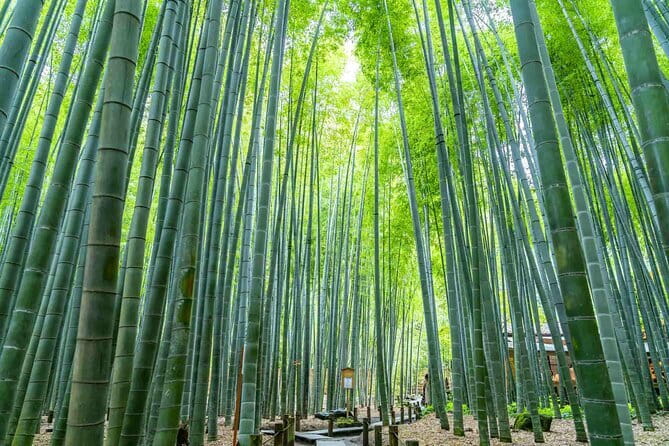
Hokokuji is one of the most appealing stops on the tour. Its bamboo grove gives you a calm change of mood after the larger shrine grounds and busy central streets. You have about 30 minutes to walk through the temple area and, if you choose, order matcha tea at the temple cafe.
Admission to Hokokuji is included. Green tea costs an additional 500 yen, about $3. The tea is optional, but it can make this the most restful part of the tour. If you want a quiet pause, use the time here well rather than treating the grove as a quick photo stop.
Hokokuji is also a good example of why a private tour can be useful. Ichi can explain why this modest temple matters while giving you room to appreciate the bamboo. The route description calls it a hidden gem, but I would keep expectations sensible: it is a compact garden experience, not a full-day retreat. Thirty minutes passes quickly.
Yuigahama Beach and the coastal road
The tour also reaches Yuigahama Beach, where you ride or walk along a seaside road. The beach adds a completely different side of Kamakura. Instead of temple roofs and wooded paths, you get open views, sand, and the Pacific.
This part works best on a pleasant day. In summer, the beach area is busier, so do not expect the same quiet mood described for other stretches. The tour requires good weather, and that is sensible for a route that includes outdoor movement and a coastal section.
For bike riders, this may be one of the most enjoyable links between stops. You see how Kamakura functions as a real coastal town, not just an open-air history museum. For walkers, it is a chance to slow down and change the rhythm before the final temple visits.
Hasedera: gardens, views, and Kannon
Hasedera Temple, also called Hase Temple, is known for gardens, views toward the coast, and a 9.18-meter wooden statue of Kannon, the Goddess of Mercy. The planned visit lasts about 20 minutes.
That is enough to see the main features and hear why the temple is important, but it is another tightly timed stop. Hasedera has several visual elements competing for attention, so you may leave wishing for more time. If this is the place you most want to explore, tell Ichi early. The private format may allow some adjustment, but the tour still has to return to the station.
The temple adds a strong visual finish to the western side of the route. You get religious art, gardens, and coastal views in one stop. Admission is listed as free for this visit, while the tour specifically includes entrance fees for the Great Buddha and Hokokuji.
Egara Tenjin and the quieter eastern side
Egara Tenjin Shrine is dedicated to Sugawara no Michizane, a deity associated with scholarship and learning. The stop lasts about 10 minutes and offers a peaceful change from the city’s more famous sights.
It is especially useful for people who have already seen the headline attractions in Kamakura. The shrine helps show that the city is not only about the Great Buddha and Hachimangu. You get another example of how Japanese religious sites connect daily hopes, local traditions, and historical figures.
Ten minutes is brief, so think of this as a short, well-placed stop rather than a major destination. Its value lies in variety and in Ichi’s ability to point out details you might otherwise pass without understanding.
What the guide adds to the day
The guide is the heart of this experience. Ichi speaks English well and brings five years of experience as a rickshaw driver guide in Kamakura. That background matters because he knows how to present the city while moving through it, not just repeat dates at a single monument.
The strongest praise focuses on his storytelling, cultural explanations, friendly manner, and ability to make complicated Japanese history concise. He explains the origins of the Bakufu, Japanese customs, and the meaning of major sites. He also knows less familiar corners of the city, which can help the route feel more personal than a simple checklist.
Photography is another useful extra. Ichi takes plenty of photos during the tour, with one account noting more than 20 good pictures from a walking outing. You should still bring your own camera, but this service means your entire group can appear in the frame.
Bike or walk, which should you choose?
Choose the bike tour if you want to cover the most territory and like the idea of seeing Kamakura’s central, eastern, western, and seaside areas in one outing. E-bikes have been described as a bonus, but confirm what is provided when you book rather than assuming an electric bike is guaranteed.
Choose walking if you care more about conversation and temple atmosphere than distance. A walking group may move more slowly and require accepting fewer or shorter transitions. The activity allows changes within the tour time, so you can discuss the best mix with Ichi.
Neither option turns this into a strenuous athletic outing by definition, but biking requires confidence on an adult-sized bicycle. Good weather is important for both choices.
Is $150.24 a fair price?
At $150.24 per person, this is not a budget way to see Kamakura. The price makes more sense for a private group that values a guide, a flexible route, transport by bike, and help with photography. For a larger private group, the personal format may offer better value than hiring separate taxis or piecing together several self-guided visits.
The two included admissions are the Great Buddha and Hokokuji. Lunch is not included, and the optional tea at Hokokuji costs 500 yen. You should also budget for any other personal expenses.
I would not choose this tour simply to save money. Kamakura’s major sights can be visited independently for less. I would choose it if you want the city’s political and religious story explained as you move between sites, or if you have only half a day and want a sensible route rather than a collection of disconnected stops.
Who will get the most from this tour?
This is a strong match for first-time visitors to Kamakura, couples, friends, and families with older children who can manage an adult-sized bike. It also suits people who have visited the Great Buddha before but want a wider look at Hachimangu, Hokokuji, Egara Tenjin, Hasedera, and the beach.
It is less suitable if you want to spend an hour or more at each temple. The route has six main stops plus the coastal section, so the day feels active and varied. It may also disappoint anyone expecting a fully fixed sightseeing schedule, because the option to adjust the route is part of the appeal.
The experience has received a five-star rating from 11 listed ratings and a 100 percent recommendation rate. That is a small sample, but it points to a clear pattern: Ichi’s guide work, the bike format, the broad coverage, and the personal attention are the main reasons to book.
Should you book this Kamakura tour?
Book it if you want a private, story-led introduction to Kamakura and like the idea of connecting temples, shrines, graves, and the beach by bike or on foot. I would especially recommend it for a first visit, a short stay in the Tokyo area, or a group that wants photos and an English-speaking guide.
Skip it if your priority is the lowest possible cost, a very slow temple day, or a fully indoor plan for uncertain weather. Before booking, decide whether you prefer walking or biking, ask about the bike type if an e-bike matters, and remember that the route moves quickly. For the right group, this is an efficient and personal way to see why Kamakura is more than its famous bronze Buddha.
FAQ
How long does the Kamakura Heritage Bike or Walk Tour last?
The tour lasts approximately four hours.
Where does the tour begin?
It begins at Kamakura Station, at 1-chōme-1-15 Onarimachi, Kamakura, Kanagawa 248-0012, Japan.
Where does the tour end?
The activity ends back at the meeting point at Kamakura Station.
Is the tour private?
Yes. Only your group participates in the tour.
Are admission fees included?
Admission to the Great Buddha at Kotoku-in and Hokokuji Temple is included.
Is green tea at Hokokuji included?
No. Green tea is optional and costs 500 yen, or about $3.
Can children join the tour?
Most travelers can participate, but children under 13 who cannot ride an adult-sized bike are not recommended for the bike option.
What happens if the weather is poor?
The tour requires good weather. If it is canceled because of poor weather, you will be offered a different date or a full refund. You can also cancel for a full refund up to 24 hours before the start time.
More History Rides in Japan
- [30 minutes] Rickshaw tour around Asakusa [History, sightseeing, Tokyo Skytree]
★ 5.0 · 38 reviews - Kamakura: Private History and Heritage Tour by Rickshaw
★ 4.9 · 7 reviews - Nara: Cultural Heritage Tour by Rickshaw
★ 5.0 · 5 reviews - Rickshaw Tour of Kagoshima’s Historical and Cultural Sites
★ 5.0 · 4 reviews
Just added around Japan
- Sushi Making Tokyo with Traditional Rickshaw Ride Tour in Asakusa★ 5.0 · 12 reviews
- Otaru Rickshaw Tour★ 5.0 · 76 reviews
- Hot Spring Capital of Yufuin Rickshaw Tour★ 5.0 · 32 reviews
- Exiting Rickshaw ride and Kimono experience★ 5.0 · 4 reviews
- Kyoto Sagano Insider: Rickshaw and Walking Tour★ 5.0 · 15 reviews
- Private 3-hour Kyoto Arashiyama Rickshaw Tour★ 5.0 · 5 reviews
- Kurashiki Rickshaw Tour★ 5.0 · 39 reviews
- Kamakura Rickshaw Tour★ 5.0 · 53 reviews
Rickshaw Tours, compared.
Old Delhi Food, Heritage&Cultural Walk with Rickshaw ride to Masterji Kee Haveli
Read our review →
Arashiyama Customized Rickshaw Tour & Bamboo Forest
Read our review →
Split by Private Electric Rickshaw – Palace & Hidden Gems
Read our review →
Where else this ride shows up