
REVIEW · RICKSHAW TOURS
Rickshaw Tour of Kagoshima’s Historical and Cultural Sites
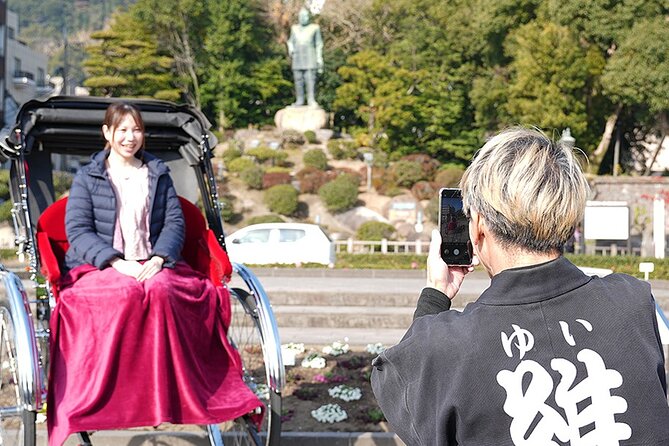
Kagoshima’s central sights come quickly from the seat of a traditional Japanese rickshaw. In just 30 minutes, your guide takes you past Reimeikan, Kagoshima Castle ruins, Terukuni Shrine, and Saigo Takamori’s statue, adding short stops for photos and stories along the way.
I like the private format, since the ride is limited to your group of one or two people. I also like the human touch: guides such as Kyoichi and Yui bring humor, personal conversation, and useful historical context, rather than simply pointing out buildings. The main drawback is the short running time. At $71.53 per person, this is a special way to get your bearings, but it is not a full sightseeing tour.
Key points before you book
- Four central stops in 30 minutes: Reimeikan, Kagoshima Castle ruins, Terukuni Shrine, and Saigo Takamori’s statue.
- A private ride for one or two people: You do not share the rickshaw with another booking.
- Guides add personality: Kyoichi and Yui are noted for humor, conversation, and clear explanations of Kagoshima’s past.
- Photo stops are built in: Your guide can take pictures at attractive points along the route.
- Good for a short first look: The ride helps you get oriented before visiting museums or other sights on foot.
- Weather matters: Poor conditions can lead to a new date or a full refund.
A quick ride through Kagoshima’s story
This tour works because Kagoshima’s key cultural sights are close together. You are not spending most of your time in a vehicle getting from one distant district to another. Instead, the rickshaw moves through the city center, where the castle grounds, shrine, museum, public park, and major statue form a compact introduction to local history.
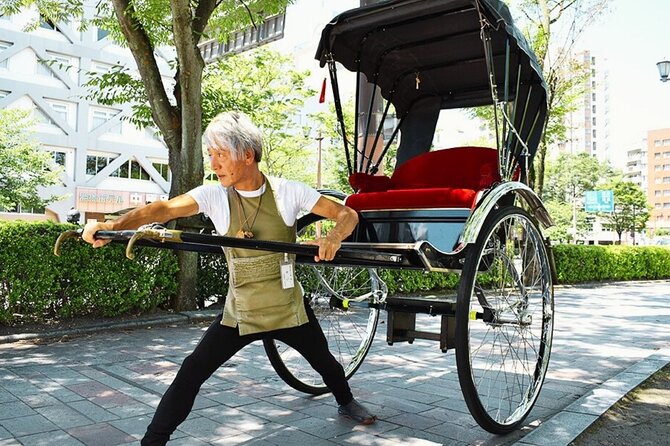
The rickshaw itself is part of the appeal. You sit above street level, move at a relaxed pace, and have a direct conversation with the person guiding you. That makes the experience feel more personal than a standard bus ride. You can ask about a shrine, a historical figure, or a building as it comes into view.
The guide’s personality matters here. Kyoichi is described as using running commentary and humor during the ride, while Yui has connected with passengers over music, local history, and seasonal sights such as cherry blossoms. You should expect a social experience, not a silent circuit of monuments.
The tour is private, but the booking is designed for only one or two people. That makes it a good choice for a couple, two friends, or a parent traveling with a child. Children under six ride free. Larger groups would need to check how the operator can accommodate them rather than assuming one booking covers everyone.
More Rickshaw Tours in Japan
- Tokyo Asakusa Rickshaw Tour
★ 5.0 · 1,375 reviews - Kyoto: Arashiyama Customized Rickshaw Tour & Bamboo Forest
★ 5.0 · 432 reviews - Kyoto Arashiyama Rickshaw Tour with Bamboo Forest
★ 5.0 · 354 reviews
Reimeikan: Kagoshima’s starting point
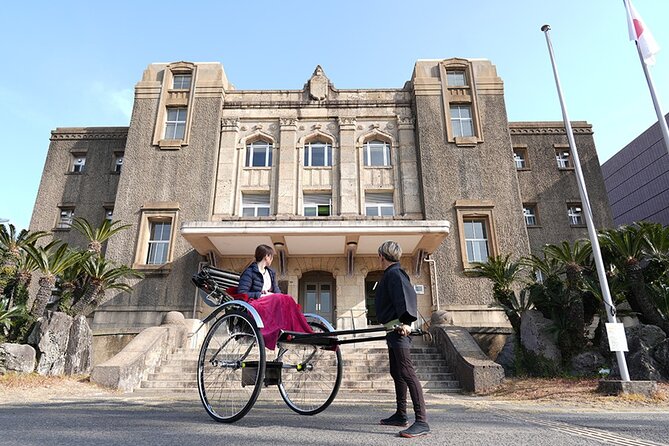
The first stop is Reimeikan, Kagoshima History Museum and Fine Arts Center. This is an important place to begin because it connects the city’s older Satsuma identity with Japan’s rapid modernization during the Meiji period.
You will have about five minutes here, which is enough for a brief look and a photograph but not enough for a proper museum visit. Admission is not included, although no admission ticket is required for the rickshaw stop itself. If you want time with the museum’s collections, plan to return on your own after the ride.
Reimeikan is especially useful for putting the rest of the tour into context. The route touches the Satsuma domain, the Meiji Restoration, and the Satsuma Rebellion. A guide can give you a short explanation of how those events shaped Kagoshima, then leave you with a clear reason to explore the museum later.
I would treat this stop as an introduction rather than the main event. The short pause gives you a visual marker and a little background. The real value comes from hearing the guide connect the museum to the buildings and figures you see next.
Kagoshima Castle ruins and the Goromon
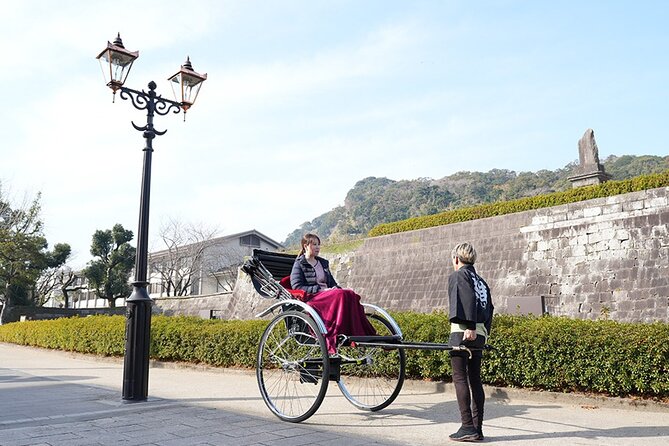
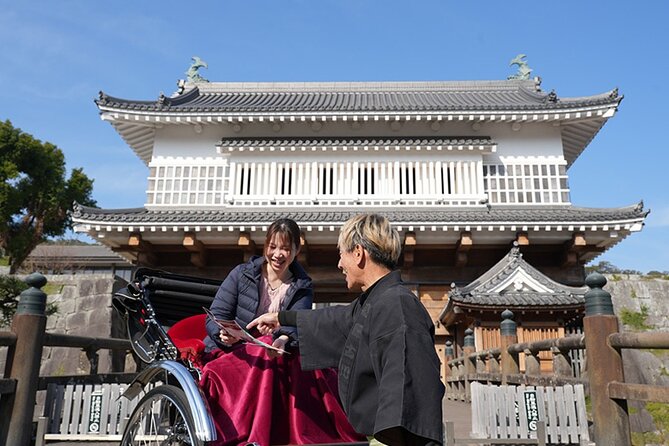
Kagoshima Castle, also known as Tsurumaru Castle, was built between 1602 and 1606. What remains today includes the original stone walls and moat, with the wooded slopes of Shiroyama Hill behind them.
The five-minute stop focuses on the surviving structure rather than a fully restored castle interior. That distinction matters. If you expect a complete castle complex with rooms, towers, and extensive exhibits, this may feel modest. If you enjoy reading a place through its remaining walls, the stop gives you a more honest sense of how the site has changed.
The Goromon, or gate area, helps you picture the entrance to the former stronghold. Your guide can point out the defensive features and explain the castle’s place in Satsuma’s political story. You will not have time to wander far, so use the stop for a quick look and a few questions.
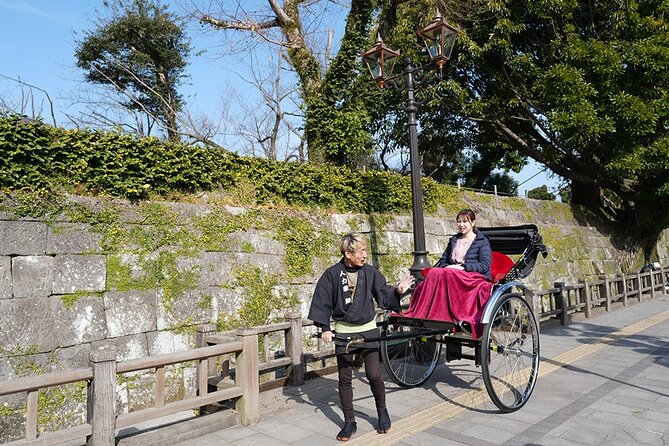
The setting also makes this one of the better photo points. Stonework, greenery, and the hill behind the ruins give the scene more depth than a single monument in an open square. Ask your guide to take a picture if you are traveling alone or want both people in the frame.
Terukuni Shrine and the Shimazu connection
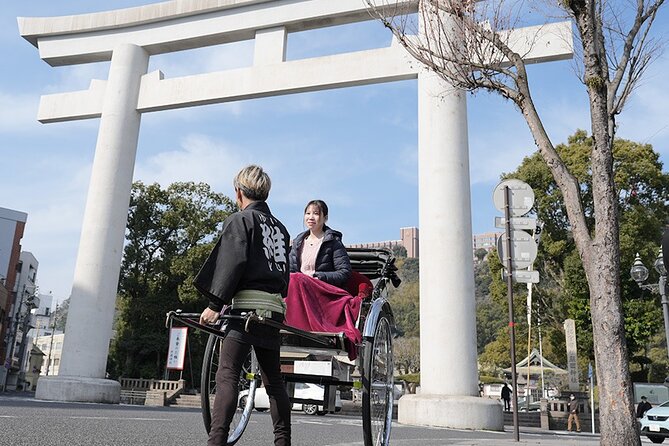
Terukuni Shrine is dedicated to Shimazu Nariakira, the 28th feudal lord of the Satsuma domain. Nariakira is remembered as an important figure in Japan’s modernization during the late Edo period.
This stop brings the political story into a religious setting. Instead of seeing only a former castle and museum, you get a sense of how local leadership and Shinto tradition meet in Kagoshima. The shrine also gives the ride a change of mood, moving from stone fortifications to a place of worship.
Again, the planned stop is about five minutes. That is enough for a quick visit and explanation, but not a long shrine experience. You should not expect time for a slow approach, extended prayer, or a detailed look at every feature.
The guide’s commentary is important here. Names and dates can blur during a fast city tour, but a personable guide can make the connection easier to remember. Kyoichi and Yui are associated with an easygoing style that includes jokes and conversation, so you can ask for a simple explanation rather than trying to absorb a formal lecture.
Same place, a completely different ride:
- Kyoto Rickshaw Tour
★ 5.0 · 210 reviews - Tokyo: Asakusa Sightseeing Tour by Rickshaw
★ 4.9 · 195 reviews - Kyoto: Private Rickshaw Tour of Gion and Higashiyama Area
★ 5.0 · 144 reviews - Otaru Rickshaw Tour
★ 5.0 · 76 reviews
Saigo Takamori’s statue and the city’s modern past
The final named stop is the bronze statue of Saigo Takamori in Central Park. Saigo was a major leader in the Meiji Restoration and later led a rebellion against the Meiji government. In Kagoshima, he remains one of the most recognizable figures from the city’s past.
This is a strong closing stop because Saigo’s life captures the tension in Kagoshima’s history. He helped shape the new Japan, then opposed the government that emerged from that change. A short explanation at the statue gives you a useful way to understand why the Satsuma region occupies such an important place in accounts of modern Japan.
The statue also makes a natural photo stop. Your guide can take pictures, which is a practical advantage if you are traveling alone or as a couple. One passenger specifically appreciated being returned to the art museum afterward without an added charge, but you should confirm any special drop-off request in advance rather than assume it is part of every ride.
What the guide adds to a 30-minute tour
A short tour depends heavily on the person leading it. Four stops can otherwise become a rushed list of names. The strongest feature here is the chance to ask questions while the sights are directly in front of you.
Kyoichi is associated with detailed running commentary and an entertaining manner. His conversations have included Kagoshima’s history, local conditions, and even the activity of Sakurajima volcano. Yui is also described as warm and playful, with the ability to connect through shared interests as easily as through formal sightseeing.
That personal exchange can make the ride memorable. One guide and passenger found common ground through heavy metal music, including an obscure song they both knew. You should not book the tour expecting a particular conversation, of course, but this gives you a good sense of the relaxed tone.
The guides also appear willing to adapt within reason. You can contact the operator before the tour to suggest places of interest. This does not mean the route can become a custom half-day tour, since the experience lasts about 30 minutes, but it may help the guide focus on what interests you most.
Is $71.53 per person good value?
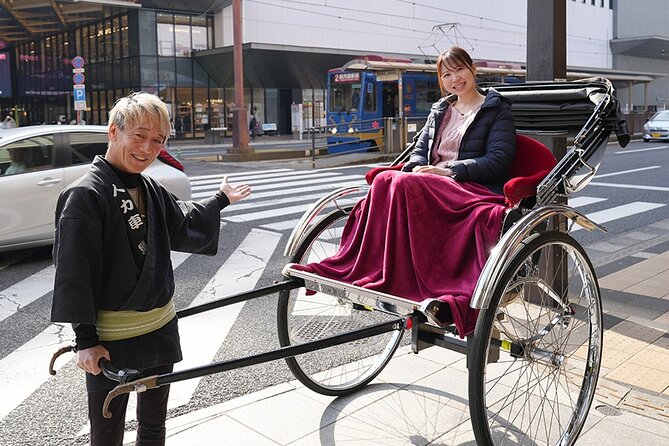
At $71.53 per person, this is not the cheapest way to see four city sights. You are paying for the rickshaw, the private setting, the guide’s time, and the novelty of traveling through Kagoshima in a traditional vehicle.
The value is strongest when you want something personal and brief. A couple can share the experience without joining a large group. A solo visitor gets a guide who can take photos and provide a moving introduction to the city. For a first afternoon in Kagoshima, the tour can help you decide which places deserve a longer visit.
The value is weaker if your main goal is to spend serious time inside Reimeikan or explore the castle ruins at length. Five minutes per stop goes quickly. You will see the main points, hear an explanation, and continue moving.
I would compare the price with the cost of a private guide rather than with the fare for ordinary local transport. The rickshaw is the experience, not merely a way to cover distance. If you enjoy unusual transport, face-to-face guiding, and a few well-chosen photo stops, the price is easier to justify.
Timing, meeting point, and practical details
The tour starts and ends at Hotel & Residence Nanshukan, at 19-17 Higashisengokuchō, Kagoshima. The operating hours listed are 10:00 a.m. to 6:00 p.m., from January 20, 2025, through December 9, 2026.
You should arrive 10 minutes before your scheduled pickup time. A missed departure is not refundable, so allow extra time to reach the meeting point. The location is near public transportation, which helps if you are coming from elsewhere in central Kagoshima.
Luggage can be left at the hotel pickup point during the tour. That is useful if you are carrying bags between accommodations, but you should still confirm the arrangement with the operator before arrival and keep valuables with you.
The tour runs only in suitable weather. If poor weather forces a cancellation, you will be offered another date or a full refund. For your own booking, cancellation is free up to 24 hours before the start time. Cancellations or changes made within 24 hours are not refunded or accepted.
Mobile tickets are available, and confirmation is sent within 48 hours, subject to availability. Most people can participate, but the supplied information does not give detailed accessibility specifications for the rickshaw itself. If you have mobility concerns, ask the operator before booking.
Who will enjoy this rickshaw ride most?
I would recommend it most to people who want a short, friendly introduction rather than an exhaustive sightseeing day. It fits well into a first visit, a port stop, or a day when you want to keep your walking to a minimum.
It also suits couples. The private two-person format gives you a shared experience, and the photo stops remove the usual problem of finding someone to take your picture. Families can also consider it, especially since children under six are free, though parents should be comfortable with the brief, outdoor nature of the stops.
Solo visitors may get especially good value from the personal guiding and photo help. The tour gives you someone to talk with while you see the city, and the guide can help explain what you should revisit later.
I would be less likely to recommend it to someone who wants long museum visits, extensive castle exploration, or a detailed academic lecture. The ride is quick, social, and selective. That is its strength, but it also sets a firm limit on what you can see.
Should you book the Kagoshima rickshaw tour?
Book it if you want to see several central sights in a relaxed way and enjoy meeting a guide with a sense of humor. The private format, photo help, and chance to hear about figures such as Shimazu Nariakira and Saigo Takamori give the ride more substance than a simple city loop.
Skip it if $71.53 feels high for 30 minutes or if you want enough time to tour Reimeikan and the castle area properly. In that case, use the rickshaw as a quick orientation only if the novelty appeals to you.
For the right visitor, this is a compact and personable way to begin Kagoshima. Arrive early, keep your expectations focused on an introduction, and ask in advance if you want the guide to emphasize a particular sight.
FAQ
How long does the Kagoshima rickshaw tour last?
The tour lasts approximately 30 minutes.
What sights are included?
The route includes Reimeikan, Kagoshima Castle ruins and the Goromon, Terukuni Shrine, and Saigo Takamori’s statue.
Where does the tour start and finish?
It starts at Hotel & Residence Nanshukan, 19-17 Higashisengokuchō, Kagoshima, and returns to the same meeting point.
How many people can book?
The experience is available for bookings of one or two people, and it is a private activity for your group.
Are children allowed on the tour?
Yes. The experience is suitable for all ages, and children under six are free.
Are admission tickets included?
Admission fees are not included, but they are not required for the rickshaw tour stops.
Can I request particular places?
Yes. You can contact the operator in advance to suggest places of interest. The tour still lasts about 30 minutes, so requests should fit within that time.
What happens if the weather is poor?
The experience requires good weather. If it is canceled because of poor conditions, you will be offered another date or a full refund.
What is the cancellation policy?
You can cancel up to 24 hours before the start time for a full refund. Cancellations and changes made less than 24 hours before the tour are not accepted or refunded.
More History Rides in Japan
- [30 minutes] Rickshaw tour around Asakusa [History, sightseeing, Tokyo Skytree]
★ 5.0 · 38 reviews - Kamakura Heritage Bike or Walk Tour with ex-Rickshaw guide
★ 5.0 · 11 reviews - Kamakura: Private History and Heritage Tour by Rickshaw
★ 4.9 · 7 reviews - Nara: Cultural Heritage Tour by Rickshaw
★ 5.0 · 5 reviews
Just added around Japan
- Sushi Making Tokyo with Traditional Rickshaw Ride Tour in Asakusa★ 5.0 · 12 reviews
- Otaru Rickshaw Tour★ 5.0 · 76 reviews
- Hot Spring Capital of Yufuin Rickshaw Tour★ 5.0 · 32 reviews
- Exiting Rickshaw ride and Kimono experience★ 5.0 · 4 reviews
- Kyoto Sagano Insider: Rickshaw and Walking Tour★ 5.0 · 15 reviews
- Private 3-hour Kyoto Arashiyama Rickshaw Tour★ 5.0 · 5 reviews
- Kurashiki Rickshaw Tour★ 5.0 · 39 reviews
- Kamakura Rickshaw Tour★ 5.0 · 53 reviews
Rickshaw Tours, compared.


Old Delhi Food, Heritage&Cultural Walk with Rickshaw ride to Masterji Kee Haveli
Read our review →
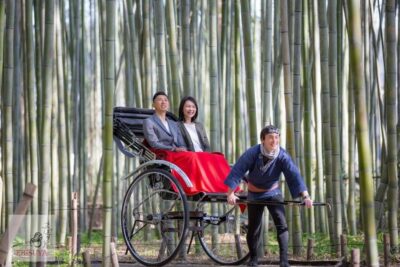
Arashiyama Customized Rickshaw Tour & Bamboo Forest
Read our review →
Split by Private Electric Rickshaw – Palace & Hidden Gems
Read our review →
Where else this ride shows up