
REVIEW · RICKSHAW TOURS
Tokyo Asakusa Rickshaw Tour
Asakusa is one of the few parts of Tokyo where an Edo-era house, a Buddhist temple, a raccoon-themed street, and the gold flame of Asahi beer can all appear in the same afternoon. This private rickshaw ride gives you a human-scale view of old Tokyo, with a local guide handling the streets while you watch the neighborhood unfold.
I like the flexible route and the chance to reach small shrines that are easy to miss on foot. I also like the guides’ personal touch. Drivers such as Koko, Micchy, Taisei, Nene, Yusuke, and Takumi have been praised for their humor, local explanations, and willingness to take photos. The main drawback is space: a rickshaw is only 74 centimeters wide, so two adults may find it snug.
Key points to know before you book
- A private ride through Asakusa: Only your group rides with the guide, so you can ask questions and request a preferred finish point.
- The route changes with the clock: A 30-minute ride cannot cover the same ground as a three-hour outing.
- Small shrines are the real reward: Ushijima, Imado, and Honryuin Matsuchiyama Shoden offer unusual details beyond the famous Sensoji complex.
- Two adults fit, but space is tight: Book separate rickshaws if comfort or personal space matters.
- The ride works in light rain: Rugs and coverings can help keep you warm and dry, but poor weather may cancel the experience.
- The best value comes from a longer option: Short rides give you an overview, while two or three hours allow time for history, photos, and quieter corners.
Why a rickshaw is a smart way to see Asakusa
Asakusa rewards slow sightseeing, but Tokyo can make slow sightseeing hard. Streets change quickly from tourist-heavy shopping lanes to quiet residential corners. A rickshaw solves that problem without putting you behind a bus window.
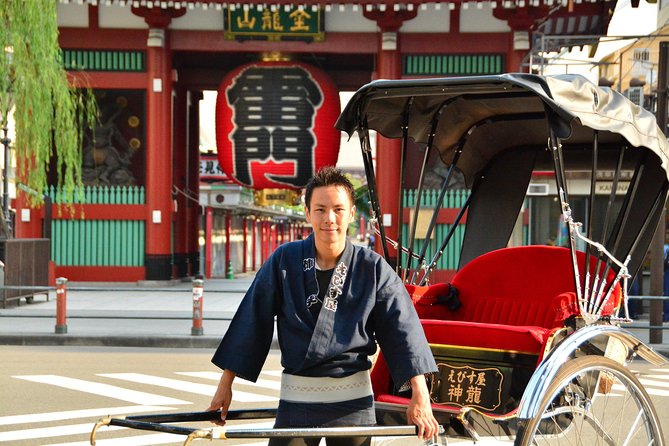
You sit high enough to see over some street traffic, yet close enough to notice wooden facades, shrine gates, garden trees, and small details along the road. Your driver pedals, steers, explains the area, and often helps with photographs. Several guides have also shared food suggestions and local tips, which adds value after the ride ends.
The tour is private, not a large group outing. That matters in Asakusa, where your interests may differ from another group’s. You can ask for shrines, photo stops, Edo-era streets, anime-related sights, entertainment history, or a general introduction to the neighborhood.
The advertised price is $42.90 per person. That is fair for a private short ride with a local driver, especially if you choose a compact introduction to Asakusa. For the best value, I would choose a longer option if your budget allows. The ride itself is only part of what you pay for. You are also paying for route planning, local context, photography help, and the ability to move between scattered sights without walking every block.
More Rickshaw Tours in Japan
- Kyoto: Arashiyama Customized Rickshaw Tour & Bamboo Forest
★ 5.0 · 432 reviews - Kyoto Arashiyama Rickshaw Tour with Bamboo Forest
★ 5.0 · 354 reviews - Kyoto Rickshaw Tour
★ 5.0 · 210 reviews
Meeting near Asakusa Station
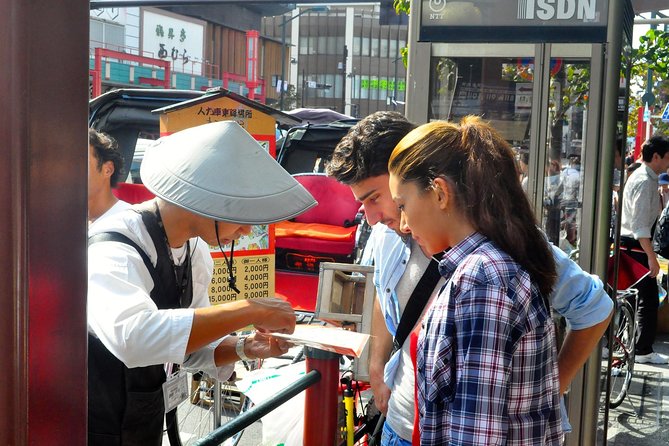
You make your own way to 1-chome-1-4 Asakusa, near Asakusa Station. The exact meeting point is worth checking carefully before you leave your hotel, since Asakusa has several railway and subway exits and the district can feel confusing on a first visit.
At the start, you meet your driver and tell the guide what matters most to you. English and Japanese-speaking guides are available, depending on the day, so request your preferred language during booking. The experience is usually scheduled well ahead, with bookings averaging 54 days in advance. That suggests you should reserve early if you need a particular date, language, or extra rickshaw.
The ride finishes at a nearby location. You can discuss the end point with your guide on the day, but a destination outside the usual rickshaw stand may bring an extra drop-off charge. If you want to end near a restaurant, station, or hotel, ask before the ride begins.
Edo streets, raccoon figures, and old entertainment
The first part of the ride may take you through historic streets lined with shopfronts and housing facades inspired by the Edo period. This is where the rickshaw earns its keep. You can cover more ground than you would on foot, while still seeing the small features that give Asakusa its character.
One unusual stop is a street built around raccoon imagery. Little raccoon figures appear every few meters, making this a fun break from the usual temple route. It is the sort of local detail you might pass without noticing if you were following a standard checklist of major sights.
The route can also include Japan’s oldest operating amusement park. This gives you another side of Asakusa, a district long tied to entertainment as well as religion. Nearby Rokku Street was once Tokyo’s leading entertainment quarter before the war, filled with cinemas and theaters. Today it forms part of the area’s retro district.
Another entertainment stop may be a venue still linked to Japanese comedy and stage shows. Your guide can explain how Asakusa served as a center for popular entertainment, not just a place for temple visits. If you have a special interest in old Tokyo, film, comedy, or anime, say so at the beginning. One guide showed a Demon Slayer-related scene to a 12-year-old rider, adding a modern pop-culture layer to the older streets.
Ushijima Shrine and the three-part gate
Ushijima Shrine is one of the most interesting possible stops because it rewards questions. The shrine has a gate with three entrances, unlike the more common single opening. Your guide can explain why that design matters and how the shrine fits into local Shinto tradition.
You have about 15 minutes here, and admission is not included, though the supplied details do not give a separate admission price. This is a useful pause after the movement of the ride. You can look around, ask about religious customs, and take photographs without trying to keep pace with a walking group.
The shrine also helps explain a key feature of Asakusa. Religion here is not kept apart from daily life. Shrines, temples, shops, homes, parks, and entertainment venues sit close together, and the rickshaw lets you move between them without treating each one as an isolated attraction.
Same place, a completely different ride:
- Tokyo: Asakusa Sightseeing Tour by Rickshaw
★ 4.9 · 195 reviews - Kyoto: Private Rickshaw Tour of Gion and Higashiyama Area
★ 5.0 · 144 reviews - Otaru Rickshaw Tour
★ 5.0 · 76 reviews - Kamakura Rickshaw Tour
★ 5.0 · 53 reviews
Sumida River views and the Asahi beer flame
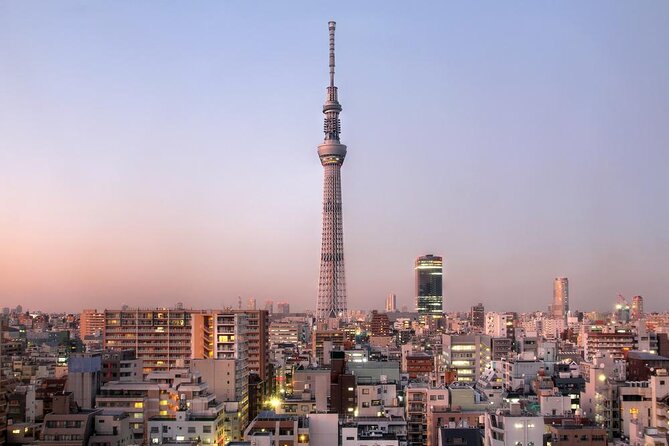
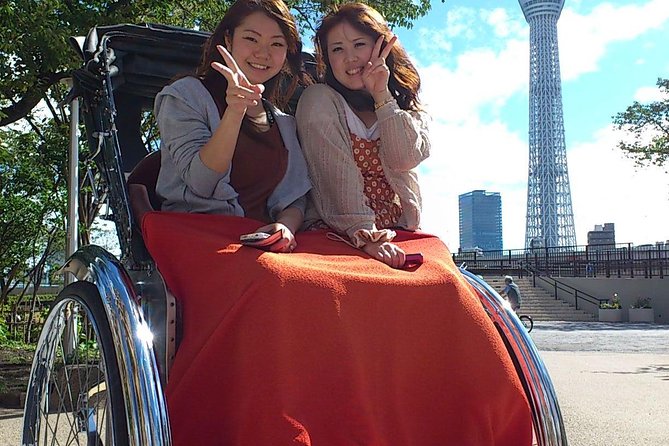
Across the Sumida River, you get one of the clearest photo views of Tokyo Skytree. The riverfront setting makes a useful contrast with the narrow streets near Sensoji. You see the city’s older neighborhood on one side and its modern height on the other.
The Asahi Beer Headquarters adds another unmistakable Tokyo landmark. Its golden flame-shaped feature is visible above the building and makes a memorable photograph. You may not spend much time at the headquarters itself, but its place on the route shows how easily Asakusa shifts between traditional and modern design.
Sumida Park runs along the river and is especially appealing in spring, when cherry trees bloom. It also gives you a place to pause and rest. If you are planning a longer ride, this is one of the better sections for a photo stop and a quiet look at Skytree.
Sensoji, Asakusa Shrine, and the limits of the ride
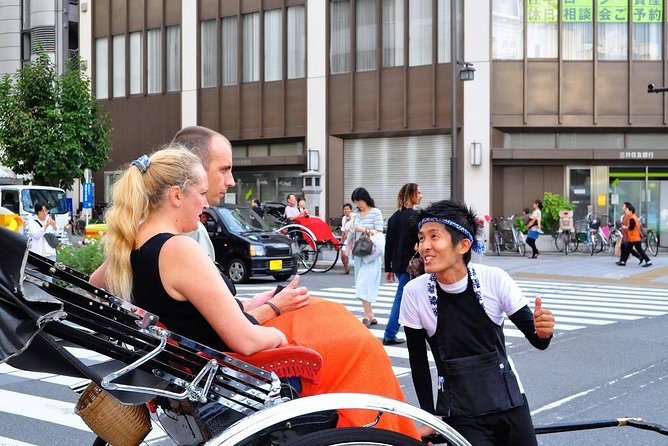
The colorful gate leading toward Sensoji and Asakusa Shrine is one of the district’s signature sights. The route may also include the Shinto shrine located within the wider Sensoji temple grounds. Here your guide can explain how Shinto and Buddhism coexist in Japan.
That explanation is more useful than simply taking a picture at the gate. Sensoji is famous, but the religious setting can be confusing if you do not know which customs belong to Buddhism and which belong to Shinto. A good guide can help you read the space with more respect and understanding.
There is an important restriction: rickshaws cannot ride inside the Sensoji and Asakusa Temple area, including the temple buildings, grounds, and Nakamise shopping street. You may be taken close to the area, then continue on foot for part of the visit. This is not a flaw, but you should know that the rickshaw is transport and sightseeing, not a way to roll through every major temple zone.
Nakamise is also one of the busiest parts of Asakusa. A short ride may need to focus on the main gate and nearby streets rather than attempting every temple-area sight. Tell your guide if Sensoji is your priority, especially if you book only 30 or 45 minutes.
Honryuin Matsuchiyama Shoden and the mystery of the radishes
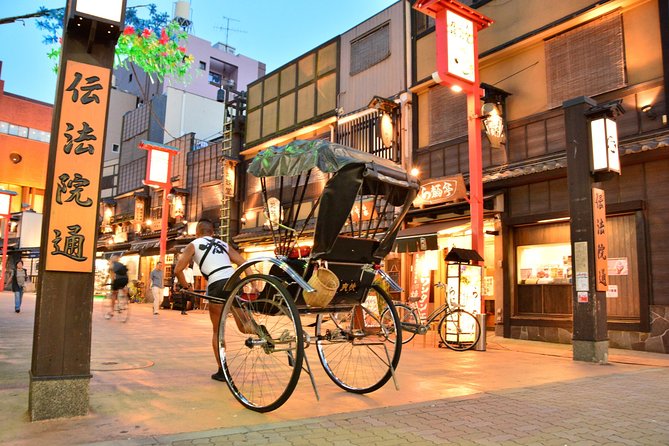
Honryuin Matsuchiyama Shoden is a Buddhist temple connected with the Sensoji temple complex. Its unusual visual detail is the number of radishes found at the temple and painted on its lanterns.
That detail gives the stop a stronger sense of place than a standard temple visit. Instead of hearing only dates and names, you get a symbol to look for and a local explanation to remember. The stop is scheduled for about 15 minutes, and admission is not included.
This is the sort of place I would prioritize on a longer ride. It is less obvious than Sensoji, yet it offers a distinctive story and a quieter setting. The route may also include a temple on a hill, depending on the duration and the guide’s plan.
Imado Shrine and its beckoning cats
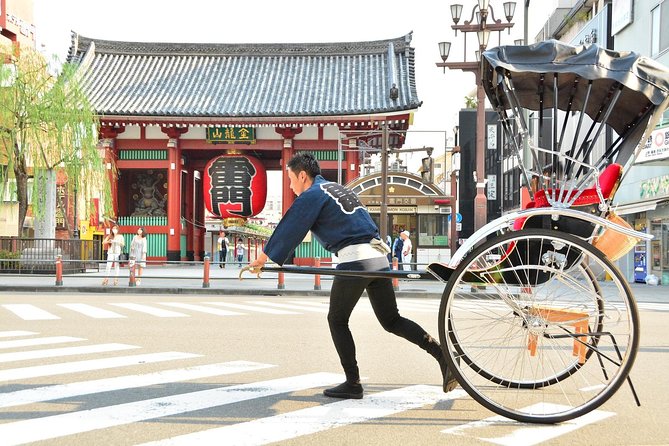
Imado Shrine offers a different mood. It is known for cat figures, especially manekineko, the beckoning cat associated with good fortune. If you like Japanese folk symbols, small shrines, or unusual photo subjects, this is a strong request to make.
The stop lasts about 15 minutes, with admission not included. It can also appeal to families, since the cat figures give children an easy detail to spot while the guide explains the shrine.
Imado is a good example of why customization matters. You cannot assume every listed stop will fit into the shortest ride. If you want both Imado Shrine and Honryuin Matsuchiyama Shoden, choose a longer option or ask ahead of time if the route can include them.
Choosing between 30 minutes and three hours
The available duration ranges from about 30 minutes to three hours. The right choice depends less on fitness than on how much context you want.
A 30-minute ride works as a first look at Asakusa. You can enjoy the novelty of the rickshaw, see a few key streets, and get your bearings without giving up half a day. It is also a sensible choice if you have a tight schedule or plan to visit Sensoji on foot afterward.
A 45-minute or one-hour ride gives you more room for photos and conversation. You may be able to include a shrine, a river viewpoint, and some older streets without rushing every stop.
A two or three-hour ride suits you if Asakusa is a main part of your Tokyo day. You can request several shrines, spend time learning local customs, visit riverfront viewpoints, and still have room for the raccoon street or entertainment district. The longer option also makes the private format more valuable because your guide can shape the outing around your questions.
Do not expect every landmark to fit into a short booking. The route depends on your chosen duration, traffic, your requested finish point, and the sights you prioritize.
Comfort, children, and booking the right number of seats
Each rickshaw can carry up to two adults. Children age five and under can ride free on an adult’s lap, with up to two young children riding alongside two adults. A child using one of the two seats must be booked as an adult.
The rickshaw is 74 centimeters wide. Two adults can fit, but the seat may feel snug, particularly on a longer ride. If either passenger wants more room, book one rickshaw per person. If you need separate rickshaws for two adults, arrange that during booking because an extra English-speaking rickshaw may not be available later.
This is also worth considering for larger-bodied riders. The ride is meant to be comfortable, not a test of endurance. A separate rickshaw costs more, but it can make a long outing far more pleasant.
The ride requires good weather. Some guides can keep you warm and dry in rain with rugs and coverings, but the experience may be canceled if conditions are poor. You receive free cancellation if you cancel at least 24 hours before the start time. If bad weather causes the provider to cancel, you are offered another date or a full refund.
Which guide experience can you expect?
The individual guide makes a real difference. The strongest experiences described here involve guides who combine safe driving with humor, clear explanations, and an easy back-and-forth.
Koko has been praised for his friendly manner, photography, and attention to safety. Micchy brought years of rickshaw experience, while Taisei was described as energetic and funny. Nene, Yusuke, BUCHI, Kei, Takumi, and Kazumasu-san have also been singled out for warmth, cultural explanations, or useful local suggestions.
Names are not guaranteed, and guide language depends on availability. Still, the pattern is clear: this is not just a ride from one address to another. Your driver is expected to act as a local interpreter, photographer, and route partner. Ask questions. Mention your interests. The more specific you are, the more useful the private format becomes.
Should you book the Asakusa rickshaw tour?
Book it if you want a fun introduction to Asakusa, prefer personal guidance to a fixed group route, or need to cover a lot of ground without spending hours on foot. It is especially good for couples, families, first-time Tokyo visitors, and anyone who enjoys local stories as much as major sights.
I would choose at least 45 minutes if you want more than a quick ride. Choose two or three hours if shrines, history, photographs, and quieter streets all matter to you. I would skip it only if you dislike confined seating, want to explore every temple area on foot, or need a fully fixed itinerary with guaranteed stops.
For most people, the ride offers a memorable way to meet Asakusa: part transport, part history lesson, part photo tour, and part conversation with a local guide.
FAQ
Where does the Tokyo Asakusa rickshaw tour start?
The meeting point is at 1-chome-1-4 Asakusa, Taito City, Tokyo, near Asakusa Station. You make your own way there.
Where does the tour finish?
The usual end point is near Kan’non-dori, 1-chome-2-11 Asakusa. You can discuss a finishing location with your guide on the day, though another drop-off point may involve an extra fee.
How long does the rickshaw ride last?
Available options run from about 30 minutes to three hours. The sights you can visit depend on the time you book.
Is the tour private?
Yes. Only your group participates in the rickshaw activity.
Can the route be customized?
Yes. Tell your guide what you want to see, such as shrines, temples, Edo-era streets, river views, entertainment areas, or photo stops.
How many people fit in one rickshaw?
A maximum of two adults can ride in one rickshaw. Up to two children age five and under may ride on an adult’s lap with two adults.
Is the rickshaw suitable for children?
Children age five and under may ride free on an adult’s lap. A child using one of the two seats must be booked as an adult. Adult pricing applies from age six.
What happens if the weather is poor?
The experience requires good weather. If the provider cancels because of poor weather, you can choose another date or receive a full refund. You can also cancel for a full refund up to 24 hours before the start time.
Just added around Japan
- Sushi Making Tokyo with Traditional Rickshaw Ride Tour in Asakusa★ 5.0 · 12 reviews
- Otaru Rickshaw Tour★ 5.0 · 76 reviews
- Hot Spring Capital of Yufuin Rickshaw Tour★ 5.0 · 32 reviews
- Exiting Rickshaw ride and Kimono experience★ 5.0 · 4 reviews
- Kyoto Sagano Insider: Rickshaw and Walking Tour★ 5.0 · 15 reviews
- Private 3-hour Kyoto Arashiyama Rickshaw Tour★ 5.0 · 5 reviews
- Kurashiki Rickshaw Tour★ 5.0 · 39 reviews
- Kamakura Rickshaw Tour★ 5.0 · 53 reviews
Rickshaw Tours, compared.

Old Delhi Food, Heritage&Cultural Walk with Rickshaw ride to Masterji Kee Haveli
Read our review →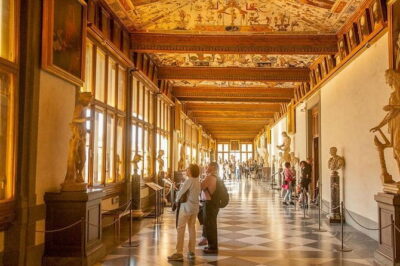
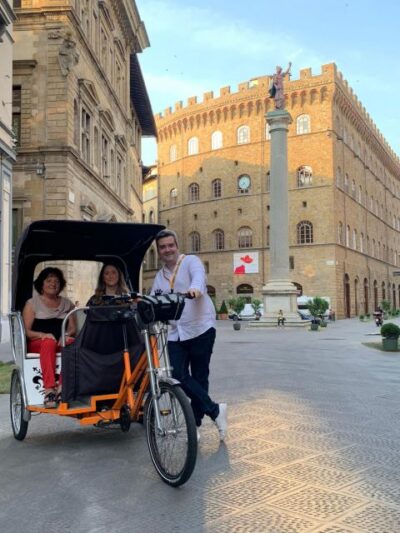
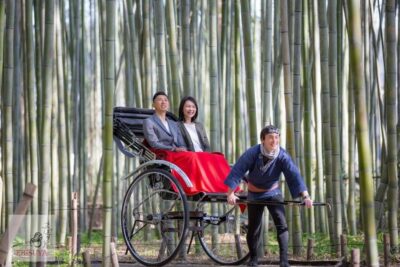
Arashiyama Customized Rickshaw Tour & Bamboo Forest
Read our review →
Split by Private Electric Rickshaw – Palace & Hidden Gems
Read our review →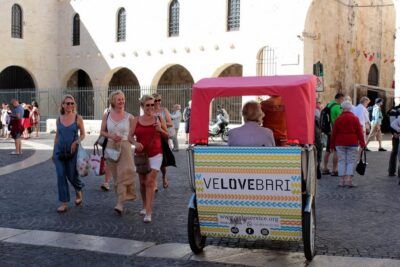
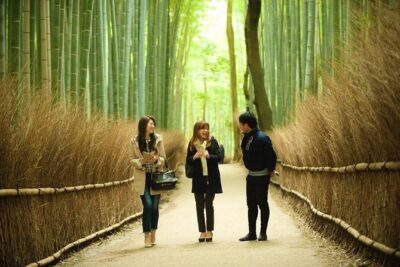
Kyoto Arashiyama Rickshaw Tour with Bamboo Forest
Read our review →Where else this ride shows up