
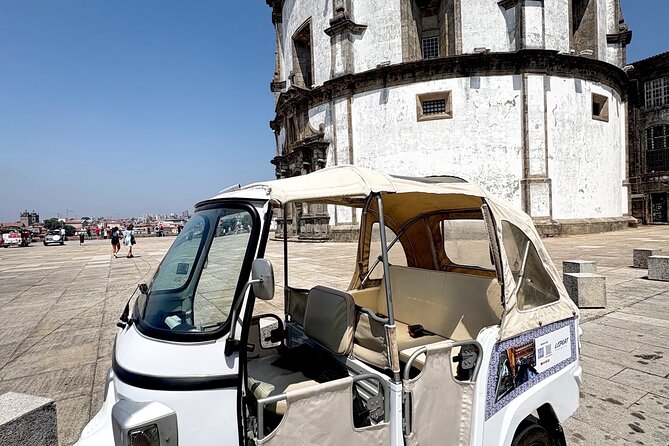
REVIEW · PORTO TUK TUK TOURS
Tours in the Port DE Tuk Tuk
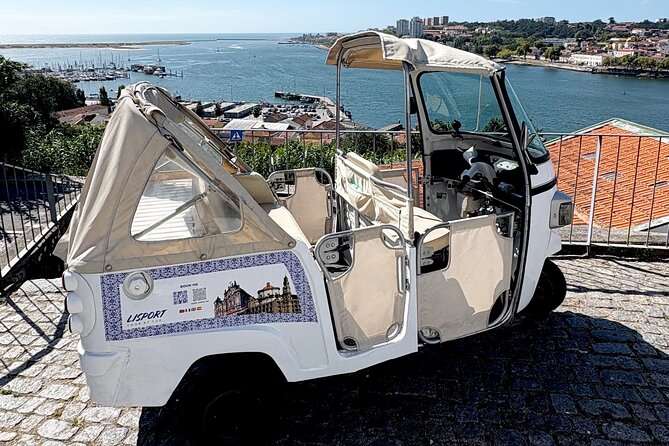
Porto’s hills, tight lanes, and scattered sights make a private tuk tuk a smart way to get your bearings fast. In about an hour, you can reach São Bento Station, the cathedral, the Dom Luís I Bridge, Clérigos, Carmo, and the riverfront without wearing out your legs on the climbs.
I like the flexible guiding, especially with Bruno, who adjusts the route to your interests and offers practical tips for restaurants, bars, trains, and later sightseeing. I also like the small, personal setup: this is only your group, and guides have proved willing to slow down for families, work around rain, or spend extra time when the schedule allows.
The main consideration is time. The listed duration is only one hour to one hour and ten minutes, so many stops are likely photo pauses or narrated drive-bys rather than full visits. The $42.05 price is listed per group of up to one person, so confirm the final cost if you are booking for more than one rider.
Key points to know before booking
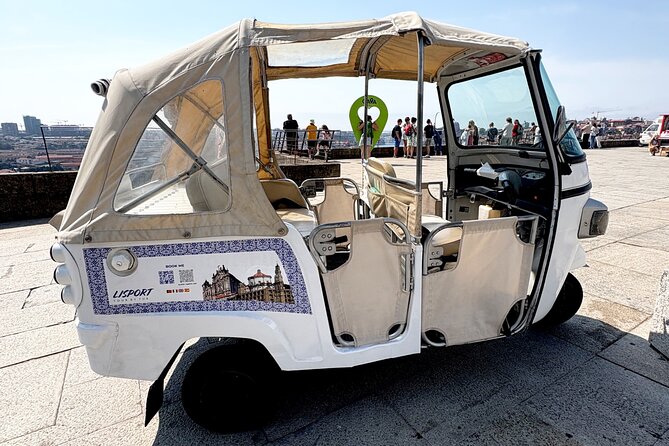
- Praça da Batalha starting point: Meet beside the Monument to King Dom Pedro IV in the old centre, close to São Bento and the cathedral.
- Porto and Gaia in one ride: The route reaches the Dom Luís I Bridge and gives you a look toward Vila Nova de Gaia and its port-wine warehouses.
- Flexible local guiding: Bruno has tailored rides for couples, families, and visitors seeking food, transport, or sightseeing advice. Hugo is also named as a guide.
- A useful hill-saving shortcut: The tuk tuk helps connect sights around Batalha, Aliados, Clérigos, Cordoaria, and the river without making you walk every slope.
- Mostly an orientation tour: Expect many landmarks in quick succession. Paid entries, such as climbing Clérigos Tower, are not included in the listed route.
- Weather matters: The experience requires good weather. If poor weather cancels the ride, you can choose another date or receive a full refund.
Why a tuk tuk works well in Porto
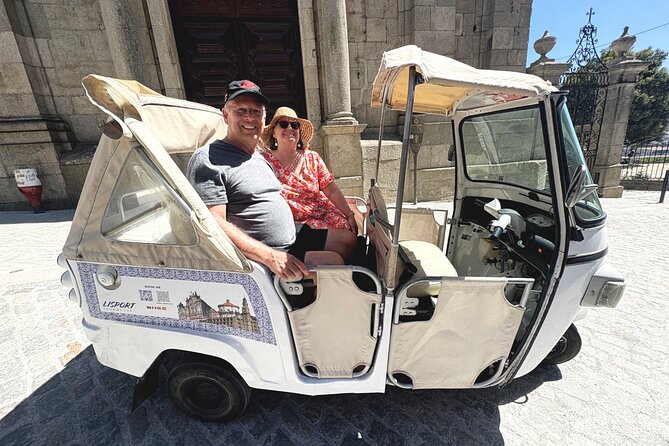
Porto is compact on a map but tiring on foot. The centre rises and falls sharply between Praça da Batalha, the river, Clérigos, and the university quarter. Cobblestones add another challenge, and many of the best views come after a climb.
A tuk tuk gives you a quick visual map of the city. You can see how Batalha connects to São Bento, how the cathedral sits above the Douro, and how the bridge links Porto with Vila Nova de Gaia. That basic orientation is useful before you choose where to return for a longer visit.
The private format also matters. You are not sharing the ride with a large group, and the guide can shape the commentary around your interests. Bruno has adapted rides for people focused on architecture, families with young children, and couples looking for a sunset outing. That flexibility is more useful than a fixed script when you have limited time.
The ride is not a substitute for walking. Porto’s tiled churches, narrow lanes, gardens, and river views deserve time on foot. Think of this tour as a moving introduction, with a few photo stops and enough local context to help you plan the rest of your stay.
More Tuk Tuk Tours in Porto:
- Porto: Guided Tour by Tuk-Tuk & Optional Douro River Cruise
★ 4.5 · 5,980 reviews - Discover Porto’s Highlights on a 2-Hour Private Electric Tuk Tuk
★ 4.5 · 1,860 reviews - Porto: Guided Tuk Tuk Tour
★ 4.6 · 1,390 reviews
Praça da Batalha, São Bento, and Porto Cathedral
The meeting point is at the Monument to King Dom Pedro IV in Praça da Batalha. This is a practical location in the old centre, near São Bento Railway Station, the National Theatre São João, Rua de Santa Catarina, and Porto Cathedral.
The National Theatre São João is one of the square’s major landmarks. It opened in 1798 as the Royal Theatre of São João, burned in 1908, and reopened in 1920 after a design by José Marques da Silva. Its neoclassical and Beaux-Arts facade has columns, sculptures, and inscriptions, while the interior is decorated with painted ceilings, golden details, and theatrical boxes.
You can visit the theatre during a performance or on a scheduled guided tour, but the tuk tuk ride itself does not promise admission. The useful part here is the architectural explanation and the chance to place the building within Porto’s cultural centre.
São Bento Railway Station is one of Porto’s essential quick stops. The station opened in 1916 on the site of the former Convent of Saint Benedict of Ave Maria. José Marques da Silva designed it in a French-influenced Beaux-Arts style.
The main atrium contains more than 20,000 historic tiles painted by Jorge Colaço between 1905 and 1908. The panels show scenes from Portuguese history, rural life, transport, and important events. Look high in the hall for the names Douro and Minho, two major rivers of northern Portugal.
Admission to the station is free, but five minutes is not enough for a careful look. If the tuk tuk gives you only a brief stop, return later and spend time studying the panels.
Porto Cathedral, or Sé, began in the twelfth century as a Romanesque church. Later work added Gothic, Baroque, and Mannerist features. The rose window and heavy towers give the exterior a defensive look, while the Gothic cloister is decorated with eighteenth-century tiles.
The cathedral also connects with key moments in Portuguese history. Dom Pedro IV attended Mass here before beginning the siege of Porto during the Liberal Wars, and royal weddings took place at the cathedral. The tuk tuk can provide the setting and story, but you will need a longer visit to appreciate the cloister and interior details.
Crossing the Dom Luís I Bridge to Gaia
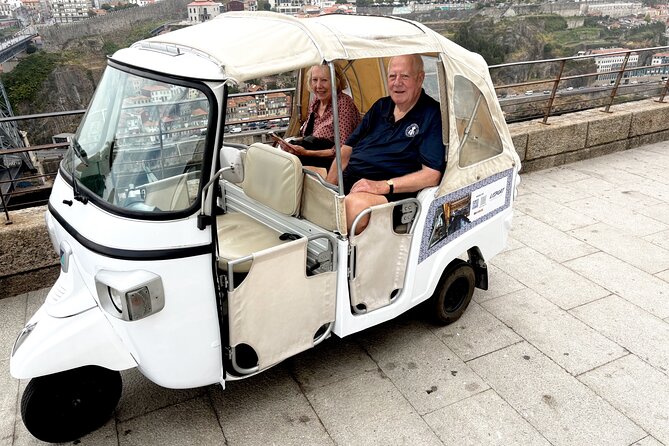
The Dom Luís I Bridge is the tour’s clearest link between Porto and Vila Nova de Gaia. It opened in 1886 and was designed by Théophile Seyrig, a partner of Gustave Eiffel. The bridge replaced an earlier suspension bridge and was a major engineering achievement in its day.
It has two levels. Metro trains and pedestrians use the upper deck, while cars and pedestrians use the lower deck. The central iron arch spans 172 metres, and the bridge rises about 45 metres above the Douro.
From the bridge, you can look down toward Ribeira in Porto and across to the port-wine warehouses of Gaia. It is one of the best places to understand the city’s two-sided character: Porto on the north bank, Gaia on the south.
The bridge has been a National Monument since 1982. It is also a working transport route, so the experience is not a quiet sightseeing stop. Traffic, pedestrians, and metro trains share the structure. Still, the tuk tuk makes it easy to connect the two cities in a short ride.
Medieval walls and the riverfront
The Fernandina Wall was built in the fourteenth century under King Ferdinand I. It replaced and enlarged an older Romanesque wall that no longer protected the growing city. The granite fortification once had towers, gates, and defensive openings around the old centre.
Much of the wall disappeared during nineteenth-century urban expansion. The remaining sections are scattered, including stretches near the cathedral, the route between Largo do Muro dos Bacalhoeiros and Ribeira, and the Postigo do Carvão. The Postigo is the only medieval gate still surviving.
This is a good example of why a tuk tuk helps. The wall is not one single monument with a clear entrance. A guide can point out surviving pieces as you move between the upper centre and the Douro.
The riverfront views are among the most photogenic parts of the route. You may see the Dom Luís I Bridge, the Ribeira area, Gaia, and the old walls in one frame. If photography matters to you, ask the guide for a little extra time at a viewpoint. The normal duration is short, so do not assume every scenic point becomes a full stop.
Same place, a completely different ride:
- Historic Porto by Private Electric Tuk Tuk to Top Landmarks
★ 4.5 · 735 reviews - Porto Guided Tour to the Historical Center on a Tuk Tuk
★ 4.5 · 418 reviews - Porto: Private Sightseeing Tour by Electric Tuk Tuk
★ 4.8 · 305 reviews - Oporto Tuk-Tuk Tour: Fast, Fun & Flexible – 1H to Full Day!
★ 4.7 · 280 reviews
Blue-and-white tiles along Rua de Santa Catarina
The Church of Saint Ildefonso sits near Batalha and São Bento. Built between 1709 and 1739, it has a Baroque facade of granite, two towers, and a curved upper section. About 11,000 blue-and-white tiles cover the exterior, showing scenes from the life of Saint Ildefonso and episodes from the Gospel.
Jorge Colaço created the tile panels in 1932, the same artist associated with the murals inside São Bento. The church is especially striking from the staircase in front, where the blue tiles contrast with the grey granite. At night, lighting brings out the design.
Rua de Santa Catarina begins near Batalha and runs toward the Marquês area. It is Porto’s main shopping street, with international chains, local clothing and shoe shops, souvenir stores, cafés, and ViaCatarina Shopping.
The street is also useful for everyday Porto. Café Majestic offers Belle Époque decoration, the Chapel of Souls is covered in blue-and-white tiles, and Bolhão Market is close by. The tuk tuk gives you a quick look at this busy commercial area, but you will want to return on foot if you plan to shop, visit the market, or sit at a café.
Aliados, the Lions, and Porto’s student quarter
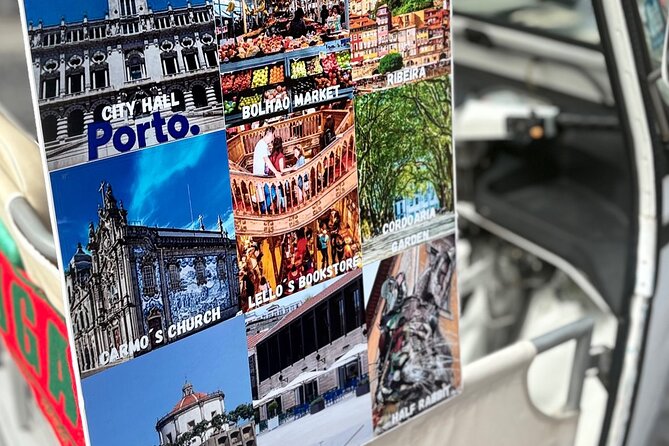
Porto City Hall anchors the top of Avenida dos Aliados. Construction began in 1920 and ended in 1957, following a design by Correia da Silva. The neoclassical building has a central clock tower about 70 metres high, a granite facade, sculptures, marble stairs, and artistic glazing.
The building still houses the municipal government, including the mayor’s offices and administrative departments. Interior access is generally limited to guided visits or special public events, so treat this as an exterior stop unless your booking includes something different.
Nearby Praça de Gomes Teixeira is commonly called Praça dos Leões because of its nineteenth-century fountain with four bronze winged lions. The square sits beside the University of Porto’s historic rectorate and close to Livraria Lello, the Carmo churches, and Clérigos.
This is a good place to feel the city’s student side. Cafés, bars, pastries, and street activity fill the area, especially after dark. The square also makes a useful bridge between Porto’s shopping centre and its university district.
The Carmelite Church and Carmo Church sit side by side. The Carmelite Church dates from 1616 to 1628 and has a more restrained Baroque exterior with golden altars inside. Carmo was built between 1756 and 1768 in a more decorative Baroque and Rococo style.
A very narrow house separates the two churches. It is only about one metre wide and was built to follow an old rule that kept nuns and monks from having direct contact. Carmo’s side wall carries a blue-and-white tile panel added in 1912, showing the Imposition of the Scapular to Saint Simon Stock.
These churches are easy to photograph from outside. If you want to enter, inspect the altars, or study the tile panel, plan a separate visit.
Clérigos, Cordoaria, and the old prison
The Garden of Cordoaria, officially Praça de João Chagas, occupies a former rope-making area. Ropes were once stretched and twisted here before the space became a garden in the nineteenth century. Émile David, who also worked on the Crystal Palace gardens, reshaped it as a green public space.
Today, mature trees, paths, benches, and shade make it a welcome pause from Porto’s stone streets. Bronze human figures by Juan Muñoz are scattered around the garden in unusual poses, and a sculpture honours the Portuguese writer Ramalho Ortigão. It is also used for book fairs, performances, and other cultural events.
Beside the garden is the Portuguese Centre for Photography, housed in the former Chain of the Relation. The eighteenth-century building began as a prison and courthouse. Camilo Castelo Branco was held here in the nineteenth century.
The prison closed in 1974, and the building was restored in the 1990s. Today it contains photography exhibitions, historic cameras, negatives, portraits, and a national photographic archive. You can also see old cells and iron bars. Admission is free, though the tuk tuk ride does not allow time for a full museum visit.
The Church of Clérigos and its tower are close by. Nicolau Nasoni designed the Baroque church between 1732 and 1750, with the tower completed in 1763. The church has an unusual oval plan, ornate decoration, golden altars, and Baroque organs.
The tower rises 76 metres and requires 225 steps. At the top, you get a 360-degree view over Porto and the Douro. Entry is paid and includes the tower, museum, church, and sacred art collection. Because the ascent takes time, treat Clérigos as a landmark on the tuk tuk route, then return if you want the view.
Who will get the most from this ride
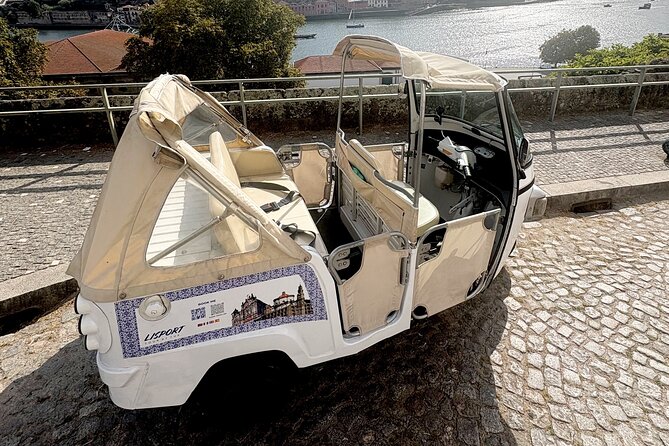
I would choose this experience for a first morning or afternoon in Porto. It covers enough ground to help you decide where to return, and the private format lets you ask for food, transport, or sightseeing advice.
It also fits couples, solo visitors, and families. One family outing was shaped around two young children, with stops near cafés and playgrounds. That does not guarantee the same route, but it shows why you should tell Bruno or Hugo what your group needs before setting off.
The ride suits anyone who finds Porto’s slopes difficult. Most people can participate, service animals are allowed, and the meeting point is near public transport. A security belt is provided.
The short duration is less useful if you want long museum visits or interior tours. It is also weather-dependent, and the open nature of a tuk tuk means rain can affect the experience. If poor weather cancels it, you are offered a different date or a full refund.
Is the $42.05 price good value?
The listed price is $42.05 per group of up to one person, with a private ride and a duration of about one hour to one hour and ten minutes. Because the party-size wording is unusual, check the total price carefully if you are booking for two or more people.
The value comes from the guide and the ground covered, not from admissions. The ride does not include a full climb of Clérigos Tower, a detailed visit to São Bento, or entry to the churches and museums. You are paying for transport between sights, local explanation, and the ability to shape the route.
That can be worthwhile early in a Porto visit. A good guide can save you time, point out places you would miss, and recommend restaurants, bars, train services, and later stops. Bruno has also been praised for staying calm, communicating clearly, and sometimes continuing beyond the scheduled end when the route ran over.
Free cancellation is available up to 24 hours before the start time. Changes or cancellations inside that window are not accepted for a refund.
Should you book this Porto tuk tuk tour?
Book it if you want a quick private introduction to Porto and Gaia, especially if steep streets, limited time, children, or mobility concerns make a long walking tour less appealing. Ask for the route to match your priorities, such as tiles, churches, viewpoints, shopping, food, or family stops.
Skip it if your main goal is slow museum visits, extended church interiors, or a full afternoon of photography. In that case, use the tuk tuk as an orientation ride only, then return on foot to São Bento, the cathedral, Carmo, Clérigos, and the Douro.
For many visitors, the best plan is to take this ride near the start of a Porto stay. You will see the city’s shape, learn which sights deserve more time, and get practical advice before exploring on your own.
FAQ
Where does the Porto tuk tuk tour start?
It starts at the Monument to King Dom Pedro IV, Praça da Batalha 66, in Porto’s historic centre.
Where does the tour end?
The activity ends back at the same meeting point.
How long does the experience last?
The listed duration is approximately one hour to one hour and ten minutes.
What language is offered?
The tour is offered in English.
Is this a private tour?
Yes. Only your group participates in the activity.
Which Porto sights are included in the route?
The route covers sights including São Bento Railway Station, Porto Cathedral, Dom Luís I Bridge, the Fernandina Wall, Saint Ildefonso Church, Rua de Santa Catarina, Porto City Hall, Praça dos Leões, the Carmelite churches, Santo António Hospital, Cordoaria Garden, the Portuguese Centre for Photography, and Clérigos.
Are entrance tickets included?
The listed experience does not include paid entrance tickets. São Bento Station is free to enter, while Clérigos Tower requires paid admission.
Can the tour be canceled because of rain?
Yes. The experience requires good weather. If poor weather causes cancellation, you will be offered another date or a full refund.
Just added around Porto
- 3 Hour Tuk tuk Tour in Porto★ 4.5 · 60 reviews
- 2 Hour Private Tuktuk Tour in Porto to Monastery and Cellars★ 4.5 · 7 reviews
- Discover Porto on a 2-Hour Shared Electric TukTuk★ 4.5 · 11 reviews
- Explore Porto Aboard A Classic Tuk-Tuk tour 1h★ 5.0 · 22 reviews
- 2 Hour Discover Gaia on a Private Eco-Friendly Tuk Tuk Tour★ 4.0 · 4 reviews
- Private 4 Hour Tuk Tuk Tour with Port Wine Cellar Visit & Tasting★ 5.0 · 6 reviews
- Private Port: Tuk Tuk and boat with local guides★ 5.0 · 4 reviews
- Cruise Shore Excursion – Private Tuk Tuk Tour to the Historic Center★ 4.5 · 47 reviews
Porto Tuk Tuk Tours, compared.
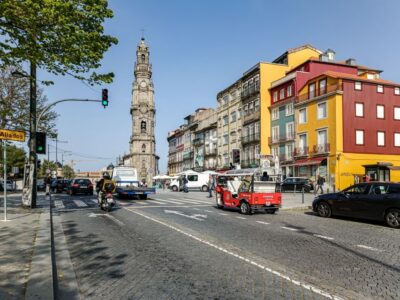
Guided Tour by Tuk-Tuk & Optional Douro River Cruise
Read our review →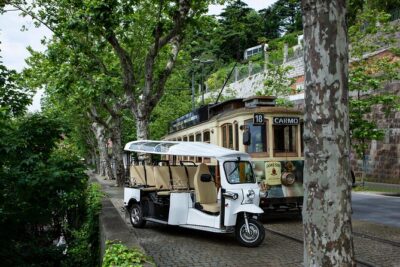
Discover Porto’s Highlights on a 2-Hour Private Electric Tuk Tuk
Read our review →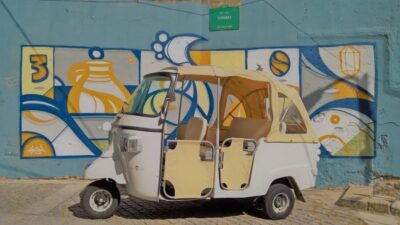
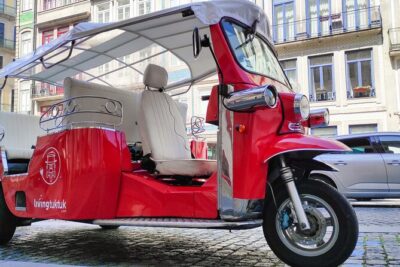
Historic Porto by Private Electric Tuk Tuk to Top Landmarks
Read our review →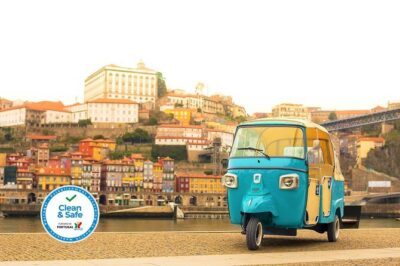
Porto Guided Tour to the Historical Center on a Tuk Tuk
Read our review →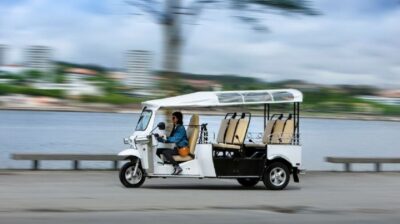
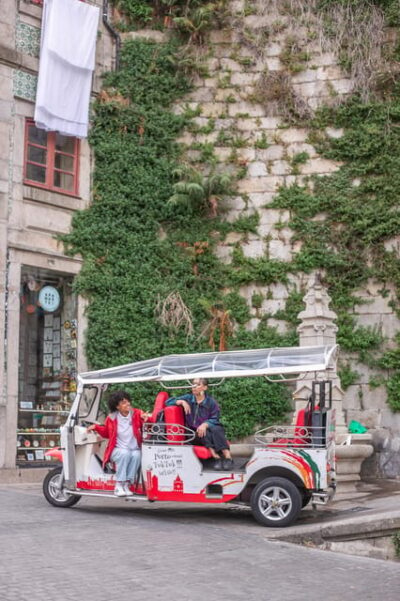
Oporto Tuk-Tuk Tour: Fast, Fun & Flexible – 1H to Full Day!
Read our review →
Where else this ride shows up