REVIEW · OLD TOWN TUK TUK TOURS
Cruise Shore Excursion – Private Tuk Tuk Tour to the Historic Center
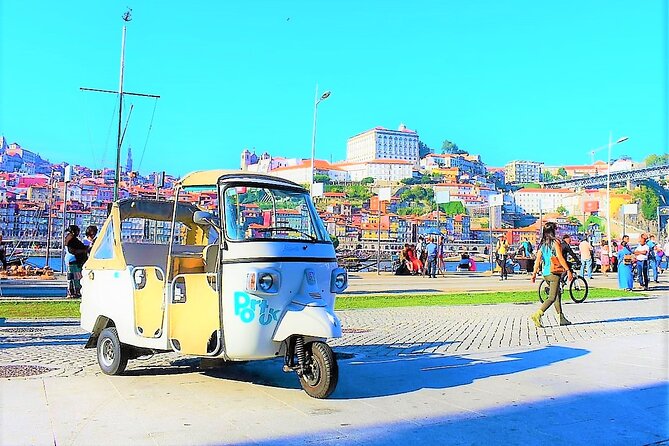
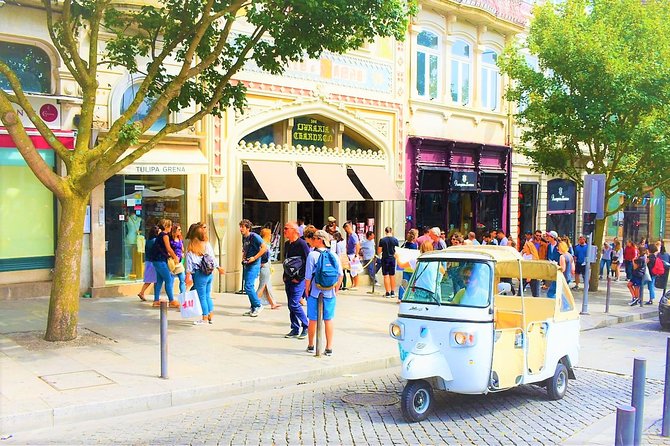
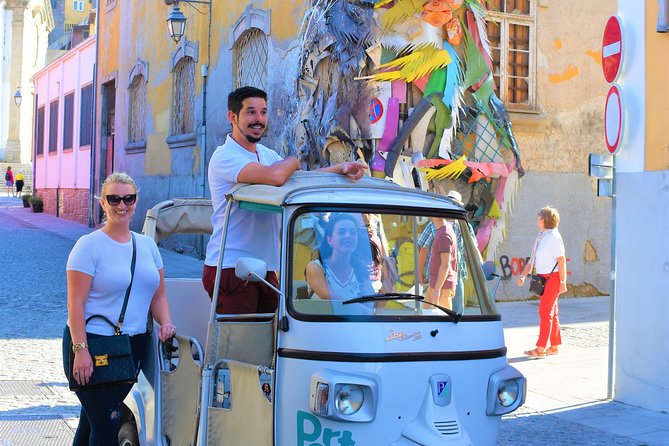
Porto’s steep streets and tight lanes are made for a tuk tuk. This three-and-a-half-hour private ride takes you from the cruise port into the old center, up to viewpoints, across the river area, and down streets too narrow for a tour bus. You get a quick feel for Porto without spending your shore day climbing hills.
I like the easy port pickup and the way guides such as Ana, Fabio, Gonçalo, and Gabriella turn the ride into a useful introduction to the city. I also like the flexibility of a small vehicle, which can reach places larger vans cannot. The main caution is uneven communication about pickup times, along with a few reports of late pickup, last-minute cancellation, or a supposedly private tuk tuk being shared.
Key points at a glance
- Port pickup saves valuable shore time: Meet at the outdoor gate of Leixões Port, Matosinhos Port, or Doca Norte, rather than making your own way into Porto.
- The tuk tuk handles Porto’s hills: You can see viewpoints and historic streets without walking every steep slope.
- The route covers a lot: Expect Clérigos Tower, Livraria Lello, the Carmo churches, São Francisco, Ribeira, the Dom Luís I Bridge, Gaia, and more.
- Port wine comes with the ride: The tasting is usually poured from a bottle at a viewpoint, not served as a stop inside a wine bar.
- It is designed as an overview: You see many places, but entrance tickets and long interior visits are not part of the price.
- Check the details before sailing: The tour requires at least two people, depends on good weather, and has a 24-hour cancellation deadline.
Why a tuk tuk works so well in Porto
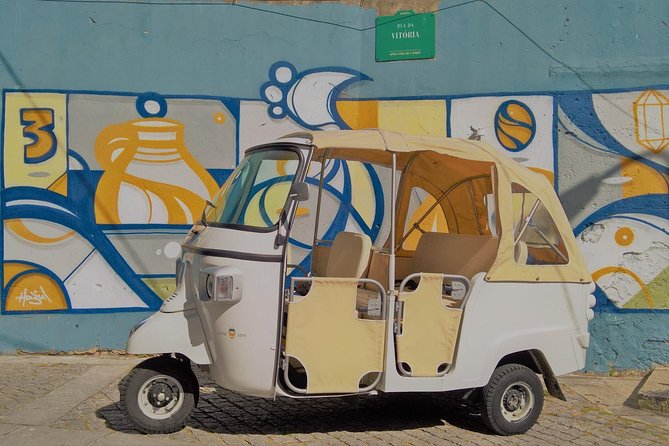
Porto is compact, but it is not easy on foot. The historic center rises and falls sharply, and its cobbled lanes can make a short map distance feel much longer. A tuk tuk lets you cover the upper viewpoints, central monuments, riverfront, and Gaia side without turning your shore day into an endurance test.
The small vehicle is also practical. It can enter streets that buses and larger vans cannot, and it gives you a better sense of the city than watching it through a coach window. You will still need to get out and walk at several stops, but the ride takes care of the worst hills between them.
This is not a quiet, slow sightseeing carriage. Porto’s cobbles can make the ride bumpy, and the tuk tuk is most comfortable for two people. One review specifically warned that three people felt cramped. If your party is larger, ask the operator for a bigger vehicle before booking.
The experience is private in principle, meaning only your group should participate. One booking, however, was shared with another couple because of an overbooking problem. That appears to be an exception, but it is worth confirming the arrangement in writing.
More Old Town Tuk Tuk Tours in Portugal
- Porto: Historic Center Tuk-Tuk Tour
★ 4.5 · 244 reviews - Porto: tuk tuk adventure tours old town 1h
★ 5.0 · 33 reviews - Private Lisbon Sightseeing Tuk-Tuk Tour: Alfama, Belém & More
★ 5.0 · 4,277 reviews
Starting at the cruise port
The tour begins at the outdoor gate of Leixões Port, Matosinhos Port, or Doca Norte. Porto’s cruise ships do not dock in the historic center, so this pickup is more useful than it may first appear. You avoid arranging a taxi or finding a city meeting point after disembarking.
The tour is scheduled to begin no later than one hour after the ship arrives. At booking, you need to provide your ship name, docking time, disembarkation time, and re-boarding time. Keep your phone available on the morning of the tour, and make sure you know the exact terminal and gate.
Communication has been the weakest part of the operation. Some bookings received clear instructions the night before, while others involved repeated unanswered messages about pickup times. A few guides did excellent work once contact was made, including waiting through a long disembarkation delay, but you should not assume every timing request will be accepted.
If your ship changes terminals, contact the operator as soon as possible. One guide, Ana, adjusted smoothly when a ship moved to another terminal. That kind of direct contact is especially important because missing the tour due to a late or absent ship does not qualify for a refund.
Foz and the Atlantic side of Porto
The opening part of the route includes sights connected with Porto and nearby Matosinhos. One sculpture uses three supports painted like industrial chimneys and lighthouses, with a net structure recalling the fishing trade. It is a quick visual introduction to the area’s working seafaring character.
The route also includes a small granite lighthouse tower with a red balcony and lantern. The itinerary does not give it a named stop, but its compact form and setting make it a pleasant photo pause.
You may also pass through a late nineteenth-century garden designed with help from Emile David. Palm trees, a granite fountain from the former São Francisco convent, two obelisks from Quinta da Prelada, and a small nineteenth-century chalet give the park a relaxed feel. A miniature golf course, bandstand, and Art Nouveau public bathroom add unusual details that most quick city tours skip.
This first stretch helps explain that Porto is more than its central churches and wine lodges. It connects the city to the Atlantic, industry, fishing, and public parks before the tuk tuk turns toward the historic center.
Views from Passeio das Virtudes and Arrábida Bridge
Passeio das Virtudes is one of the most useful stops on the route. From this lane, you look down toward the Douro River mouth, the Fountain of Virtues, the terraces leading to Miragaia, and the former Customs House along the river.
The stop is listed at about 10 minutes, which is enough for photos and a quick orientation. Do not expect a long café break or time to wander through the surrounding streets. This is a viewpoint stop, and it works best if you use it to understand Porto’s layered hills and riverfront.
The tuk tuk also gives you views of the Arrábida Bridge, the reinforced-concrete bridge linking Porto and Vila Nova de Gaia. Designed by engineer Edgar Cardoso, it opened in 1963 with a 270-meter main span, then the largest concrete-arch bridge of its kind in the world.
Porto’s bridges are not just background scenery. They explain how the city connects to Gaia and why the river remains central to its daily life. The ride later brings you closer to the famous Dom Luís I Bridge, but the Arrábida Bridge gives you a useful contrast in design and scale.
More Private Tuk Tuk Tours in Porto
- Discover Porto’s Highlights on a 2-Hour Private Electric Tuk Tuk
★ 4.5 · 1,860 reviews - Historic Porto by Private Electric Tuk Tuk to Top Landmarks
★ 4.5 · 735 reviews - Porto: Private Sightseeing Tour by Electric Tuk Tuk
★ 4.8 · 305 reviews - Porto Half Day Private Tuk Tuk Tour
★ 4.5 · 246 reviews
Clérigos, Cordoaria, and the city’s upper center
The Cordoaria Garden, officially Jardim de João Chagas, occupies a former rope-making area. Emile David’s nineteenth-century design includes palms, statues, modern sculpture, and an old bandstand. It is a pleasant pause between major monuments, especially when you want a little open space after narrow streets.
Nearby, the former prison building now houses the Portuguese Centre for Photography. Its granite structure dates from the sixteenth century and was rebuilt in the eighteenth century. The building has 103 windows and a striking polygonal form. The entrance itself is often more interesting than a rushed attempt to see an exhibition.
Clérigos Tower is one of Porto’s defining landmarks. Nicolau Nasoni’s Baroque tower rises above the center, and the top is reached by 240 steps. The tour allows about 20 minutes, but admission is not included. That makes an interior climb unrealistic unless you arrange tickets and accept less time elsewhere.
The tower is still worth seeing from street level. If you have the stamina and want the view, ask your guide whether the schedule can accommodate an entrance. The building now also includes a multi-sensory installation that lets visitors experience the climb in a more accessible format, but the tour does not include that ticket.
Livraria Lello and the Carmo churches
Livraria Lello is famous for its Art Nouveau exterior, neo-Gothic details, carved-looking interior, stained-glass skylight, and grand red staircase. It is a beautiful building, but the crowds can be just as memorable as the architecture.
The planned stop is about 20 minutes, and admission is not included. You need a ticket in advance if you want to go inside. The regular line can be too long for this tour, so a pre-booked skip-the-line ticket is the practical choice. Without one, you may only have time to admire the façade and photograph the queue.
The nearby Fountain of the Lions is a short free stop. Made by a French company and cast at the Val d’Osne foundry, it is modeled largely on a fountain in Leicester, England. It is a small detail, but your guide can help you notice how Porto’s public spaces borrow from outside influences.
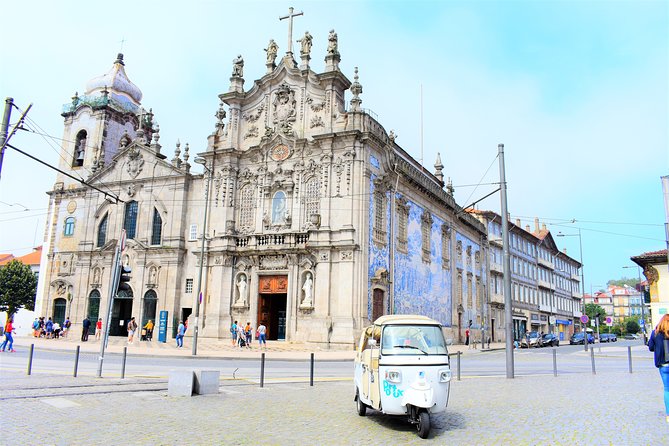
The Carmo Church and the neighboring Carmelitas Church show two sides of Porto’s religious architecture. Carmo is known for its Rococo interior and blue-and-white side tiles added in 1912. Carmelitas has a classical façade and a Porto Rococo altarpiece. The Carmo entrance is not included, while Carmelitas is listed as free.
These stops reward a few minutes of focused looking. You do not need a long lecture to appreciate the tile panels on Carmo or the narrow separation between the two churches. Still, the schedule favors exterior viewing rather than a full study of every interior.
Bolsa, São Francisco, and the riverfront
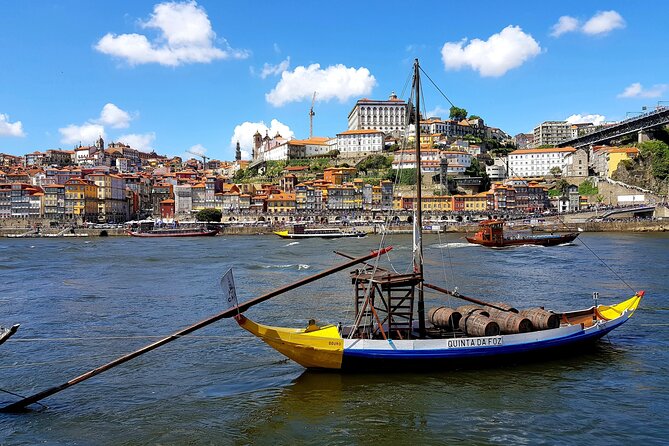
The tour continues through the area around Praça do Infante D. Henrique. Here you see the Palácio da Bolsa, Mercado Ferreira Borges, and a monument to Prince Henry the Navigator. The square ties Porto’s commercial life to Portugal’s age of ocean voyages.
The Palácio da Bolsa is a neoclassical building owned by Porto’s Commercial Association. Its celebrated Arabian Room is the main reason people enter, but admission is not included. A visit usually requires a separate ticket and enough time for the guided interior visit, so treat the palace as an optional addition rather than a guaranteed part of this excursion.
Mercado Ferreira Borges is an elegant iron market building from 1885. It later became an entertainment venue, now associated with Hard Club. It is a good example of how Porto reuses old commercial spaces rather than leaving them frozen in the past.
São Francisco Church is one of the tour’s strongest stops. The Gothic structure began in the fourteenth century, while its interior was later covered in elaborate gilded woodwork. The effect is dramatic, and the Tree of Jesse and catacombs add detail beyond the bright gold.
The stop lasts about 15 minutes, but admission is not included. If you want to see the interior, budget for the ticket and make sure the timing works. The church is a National Monument and part of Porto’s UNESCO-listed historic area, so this is one place where paying separately can feel worthwhile.
Dom Luís I Bridge, Ribeira, and Gaia
The Dom Luís I Bridge is the city’s signature crossing. Designed by Teófilo Seyrig, a student of Gustave Eiffel, it opened in 1886 with two iron decks. Its great arch remains one of the most memorable sights in Porto.
The upper deck now carries the Metro, while the lower level handles road traffic. The route also passes through Ribeira, one of Porto’s oldest squares and a key riverfront area. Ribeira is full of historic façades, restaurants, and evening activity, but vehicles are currently barred from the square itself. Your guide may need to drop you nearby and have you walk a short distance.
Across the river, the Monastery of Serra do Pilar provides one of the best high viewpoints. Its round church and circular cloister are unusual in Portugal, and its terrace looks back toward Porto’s cathedral, Dom Luís I Bridge, the riverfront, and the Arrábida Bridge.
This is also where the Port wine tasting fits naturally. The included drink is generally a small pour from a bottle carried by the guide, enjoyed at a lookout rather than inside a wine lodge. That is not a full cellar visit, but it is a pleasant local touch and a good excuse to pause for the view.
You may also see the São João Bridge, a later crossing with a high concrete arch. The route uses the bridges and viewpoints to give you a clear sense of Porto’s geography, something that is hard to grasp from a single street-level walk.
Batalha, São Bento, and Bolhão
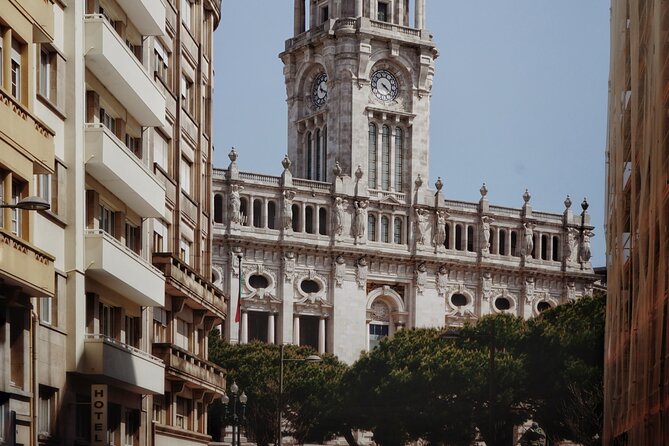
Praça da Batalha marks another important upper-center area. The square includes the São João National Theatre, Cine-Teatro Batalha, and a monument to D. Pedro V. The surrounding buildings reflect changes brought by the demolition of the old city wall and later civic development.
The Chapel of Souls is one of Porto’s most recognizable tile-covered buildings. Its exterior panels show scenes from the lives of Saint Francis of Assisi and Saint Catherine. The tiles date from 1929 and were restored in 1982, so this is a good place to slow down for a close look.
Bolhão Market is one of the city’s best-known food markets, with sections traditionally devoted to fish, meat, produce, and flowers. It is currently closed for refurbishment, so do not count on shopping there during this tour.
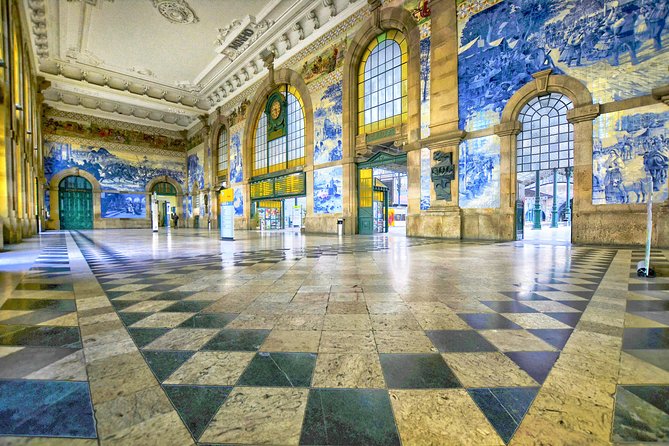
The route may also include São Bento Station or an indoor market, depending on your guide and timing. Several guides have used these flexible additions well, especially when the group wanted a quick look at the station’s famous interior or a little shopping time. Ask early if there is one extra place you especially want to see.
Timing, price, and what you actually receive
The price is listed at $106.93 per person, with a minimum booking of two people. For a couple on a one-day cruise stop, that is a fair price if you value port pickup, a private vehicle, local commentary, and the ability to cover difficult hills quickly.
You are paying for access and time efficiency, not a bundle of entrance tickets. Clérigos Tower, Livraria Lello, Carmo Church, Palácio da Bolsa, and São Francisco Church may all require separate admission. The value improves if you mainly want an outside overview and plan to return to one or two interiors later.
The strongest part of the price is the vehicle. A taxi could move you between a few areas, but it would not give you continuous commentary or the same access to narrow lanes. A large bus would cover the route, but it would lose the small-scale feel that makes this experience useful.
The weak point is consistency. Most of the praise centers on friendly, punctual guides who explain Porto clearly and offer lunch or restaurant tips. Ana, Fabio, Gonçalo, Gabriella, and others have been singled out for patience, timing, and local suggestions. Yet late pickup, poor email response, one cancellation, and one overbooked private tour are serious concerns.
Book at least 24 hours ahead if you want a full refund option. Cancellations inside 24 hours are not refunded, and bad weather may lead to a rescheduled tour or full refund. The operator also does not refund a missed activity caused by a late or non-arriving ship.
Who should book this Porto shore excursion?
I would choose this tour if you are visiting Porto for the first time, have only one cruise day, and want a broad introduction before deciding where to spend your remaining hours. It is also a strong fit if hills, cobbles, or limited walking stamina make a full self-guided day hard.
Couples will likely find the tuk tuk most comfortable. Families should confirm vehicle size, especially if more than two people are riding. The tour can accommodate most participants, and service animals are allowed, but the ride is not ideal if you need a very smooth journey or have back problems.
I would not choose it if your main goal is a slow interior tour of Livraria Lello, São Francisco, Clérigos Tower, and the Palácio da Bolsa. The route visits many places, but the schedule is built around seeing the city, not spending an hour inside each monument.
Should you book it?
Book this Porto tuk tuk tour if easy port pickup, broad coverage, and local guidance matter more to you than long visits inside monuments. The route gives you viewpoints, bridges, churches, gardens, riverfront streets, Gaia, and a taste of Port wine in a short shore window.
Before paying, send a clear message confirming the pickup gate, start time, vehicle size, and private arrangement. Buy Livraria Lello tickets separately if you want to enter, and tell the guide which interior matters most. With those expectations in place, this can be a lively and efficient first look at Porto, especially with a strong guide such as Ana, Fabio, Gonçalo, or Gabriella.
FAQ
Where does the Porto tuk tuk tour pick up cruise passengers?
Pickup is offered at the outdoor main gate of Leixões Port, Matosinhos Port, or Doca Norte. The guide meets you outside the pier gate.
How soon after the ship arrives does the tour start?
The tour starts no later than one hour after the ship arrives. You must provide your ship name, docking time, disembarkation time, and re-boarding time when booking.
How long does the tour last?
The experience lasts approximately three hours and 30 minutes.
Is the tuk tuk tour private?
It is advertised as a private activity for your group only. Because one booking reported an overbooking problem and a shared vehicle, confirm the private arrangement before your cruise.
What is included in the price?
A driver-guide, live commentary, local guiding, pickup, and a Port wine glass are included.
Are monument entrance fees included?
No. Entrance tickets are not included. This applies to places such as Clérigos Tower, Livraria Lello, Carmo Church, Palácio da Bolsa, and São Francisco Church.
Can I visit Livraria Lello during the tour?
You can stop at Livraria Lello, but admission is not included. A separate ticket is required, and advance skip-the-line booking is recommended because the regular line may take too long for the tour schedule.
How many people are needed to book?
A minimum of two people per booking is required.
What is the cancellation policy?
You can cancel at least 24 hours before the start time for a full refund. Cancellations or changes made less than 24 hours before the tour are not accepted for a refund. If poor weather cancels the experience, you will be offered another date or a full refund.
More Old Town Tuk Tuk Tours in Porto
- Lisbon: Old Town TukTuk Tour and Scenic Viewpoints in Alfama
★ 5.0 · 974 reviews - Funchal: Guided Tuk Tuk Tour to Toboggan Rides & Old Town
★ 4.8 · 690 reviews - Express Lisbon | City Center and Old Town Tuk Tuk Tour
★ 5.0 · 606 reviews - Private tuk tuk tour in old city Lisbon (Standard-1h30)
★ 5.0 · 442 reviews
More Private Tuk Tuk Tours in Portugal
- Porto: Fun Private Tuk Tuk Tour
★ 5.0 · 90 reviews - Porto: Fun Private Tuk Tuk Tour
★ 4.9 · 76 reviews - Porto Half-Day Private Tour with Tuk Tuk and Lello Bookstore
★ 5.0 · 50 reviews - Full-Day Private Tuk Tuk All Around Porto
★ 4.5 · 29 reviews
Just added around Porto
- 3 Hour Tuk tuk Tour in Porto★ 4.5 · 60 reviews
- 2 Hour Private Tuktuk Tour in Porto to Monastery and Cellars★ 4.5 · 7 reviews
- Tours in the Port DE Tuk Tuk★ 5.0 · 38 reviews
- Discover Porto on a 2-Hour Shared Electric TukTuk★ 4.5 · 11 reviews
- Explore Porto Aboard A Classic Tuk-Tuk tour 1h★ 5.0 · 22 reviews
- 2 Hour Discover Gaia on a Private Eco-Friendly Tuk Tuk Tour★ 4.0 · 4 reviews
- Private 4 Hour Tuk Tuk Tour with Port Wine Cellar Visit & Tasting★ 5.0 · 6 reviews
- Private Port: Tuk Tuk and boat with local guides★ 5.0 · 4 reviews
Old Town Tuk Tuk Tours, compared.
Private Lisbon Sightseeing Tuk-Tuk Tour: Alfama, Belém & More
Read our review →
Old Town TukTuk Tour and Scenic Viewpoints in Alfama
Read our review →
Express Lisbon | City Center and Old Town Tuk Tuk Tour
Read our review →
Private tuk tuk tour in old city Lisbon (Standard-1h30)
Read our review →