
REVIEW · HISTORICAL TOURS
Porto Guided Tour to the Historical Center on a Tuk Tuk
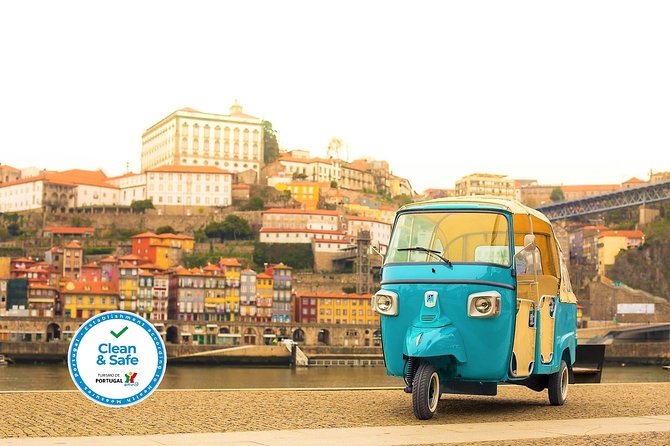
Porto’s steep streets and tight lanes make a tuk tuk a smart way to get oriented fast. In about two hours, you move from the cathedral and São Bento Station to the Douro, Gaia, and the Serra do Pilar viewpoint without wearing out your legs. The high point is the view across the river, especially if this is your first day in town.
I like two things here: the small private format, which lets you ask questions and request a useful photo stop, and the mix of famous sights with places you might skip on foot. The included glass of Port wine is a pleasant local touch. Guides such as Ana, Anna, Victor, and Gonçalo have been praised for their warmth, humor, and local tips.
The main concern is sound. Wind, traffic, and the open-sided vehicle can make commentary hard to hear while you are moving. The tour also depends on traffic and weather, and a few poor experiences involved late guides, limited commentary, or cancellations caused by road closures.
Key points to know before booking
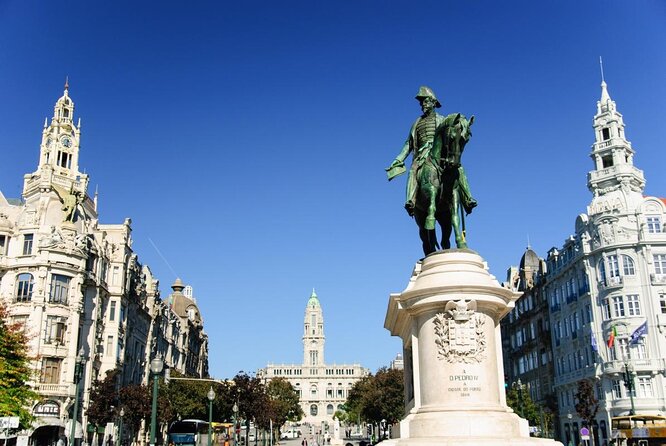
- Serra do Pilar delivers the best view: You look over Porto, Vila Nova de Gaia, the Douro, the cathedral, and the Dom Luís I Bridge from one powerful vantage point.
- The route covers both sides of the river: You see Porto’s historic center, then cross toward Gaia for a broader view back at the city.
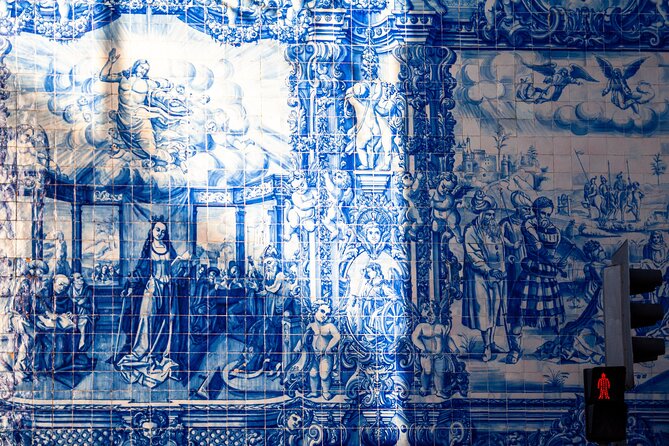
- São Bento Station is a real stop: You get about 10 minutes to see its famous blue-and-white tile hall.
- You will not tour every monument inside: Entrance fees are not included, and many places are photo stops or brief exterior visits.
- The tuk tuk suits short visits: It reaches narrow cobbled streets and covers hilly ground quickly, but it is not the quietest place for a history lecture.
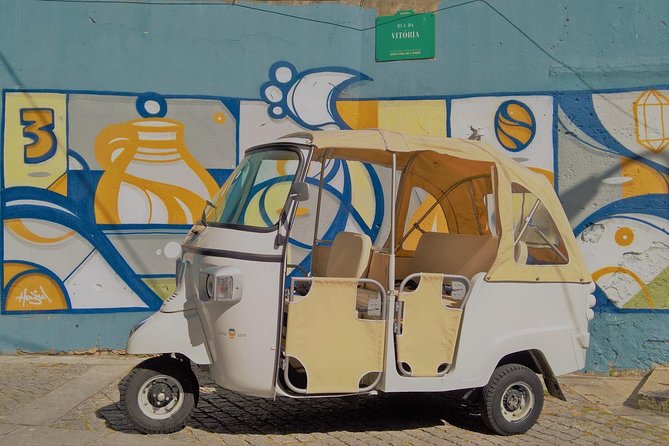
- The vehicle is small: Each tuk tuk holds two, three, or four adults of average height, up to 75 kilograms each.
A fast way to understand Porto’s shape
This is not a deep museum tour. It is a moving introduction to Porto, with short stops where the guide gives you the main story and points out what deserves a longer visit later.
That format works well because Porto is not flat. The historic center rises and falls sharply, and the river divides Porto from Vila Nova de Gaia. A tuk tuk handles much of that effort while giving you a quick sense of how the cathedral, the central streets, the Douro, and the bridges fit together.
You meet at Rua de Augusto Rosa 180, close to the cathedral area, and return there at the end. The activity lasts about 1 hour 50 minutes, though local traffic can change the timing. I would book it near the start of your stay, then use the guide’s advice to choose which sights deserve your independent time.
More history rides in Porto:
- Historic Porto by Private Electric Tuk Tuk to Top Landmarks
★ 4.5 · 735 reviews - Porto: Historic Center Tuk-Tuk Tour
★ 4.5 · 244 reviews - Cruise Shore Excursion – Private Tuk Tuk Tour to the Historic Center
★ 4.5 · 47 reviews
The cathedral and Porto’s medieval core
The first major stop is Porto Cathedral, or Sé do Porto. Construction began in the 12th or 13th century, and the building has been altered many times. Its present form is partly an idealized reconstruction of a medieval cathedral, so you see Romanesque foundations mixed with later work.
You get about 10 minutes here, and admission is not included. That is enough for a quick look and orientation, but not enough for a detailed visit to the church and its surrounding areas. If you want to explore the cathedral properly, plan to return on foot.
Nearby, the stone Pelourinho marks a later recreation of Porto’s old civic symbol. The present monument was made in 1945 from an earlier drawing. The open terrace around the cathedral was also created after buildings near the Sé were demolished in 1940 under the Estado Novo government. That gives the square a more complicated story than its medieval appearance first suggests.
The Episcopal Palace is another quick exterior stop. It likely began in the 13th century and was remodeled in the 18th century, with the design often linked to Nicolau Nasoni. Its broad façade, pilasters, decorated pediment, and formal windows make it a fine example of Porto’s grand religious architecture. Admission is not included, and the five-minute pause is mainly for seeing the building and hearing its background.
São Bento Station and the city’s tile story
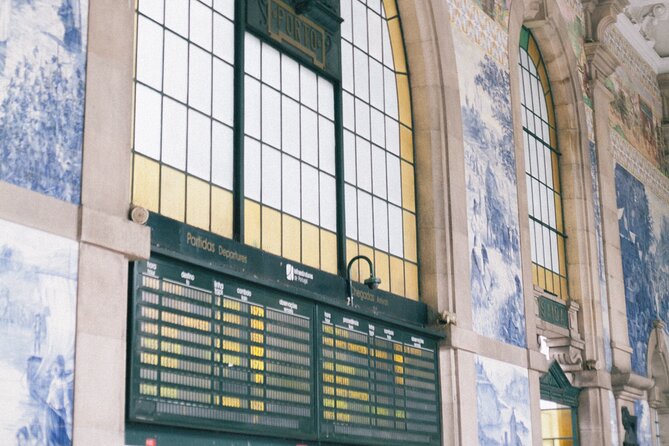
São Bento Railway Station is one of the strongest parts of the route. The station opened in the early 20th century, but its entrance hall feels like a history book in tile. Painter Jorge Colaço created around 20,000 narrative tiles showing scenes from Portuguese history and daily life.
You get about 10 minutes and free entry. That is useful because the station is easy to visit without a ticket, but the stop is short. Go straight to the main hall, look up and around, and let the guide explain what you are seeing before the group moves on.
The station also helps you understand Porto’s design character. The glass and cast iron roof are by Marques da Silva, the same architect connected with other important city projects. Here, engineering and decoration work together instead of being kept apart.
The route then passes through central squares that changed shape over time. One began as Praça Nova in the early 18th century, while another was once known as Praça dos Ferradores, or Blacksmiths’ Square. The latter was later named after King Charles Albert of Sardinia, who lived in exile in Porto. Its garden includes a monument to Portuguese soldiers who died in the First World War.
Clérigos, rococo churches, and Cordoaria Garden
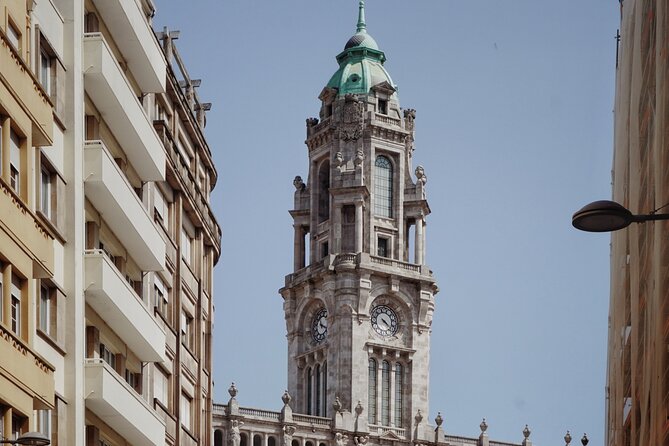
The Clérigos area is one of Porto’s most recognizable city scenes. The tall bell tower rises above the rooftops and can be spotted from many parts of town. The church is Baroque, and the tower has become one of Porto’s main symbols.
The stop is about five minutes, and the tower admission is not included. You can photograph it, hear the background, and decide if you want to return to climb it separately. Do not expect to go up during this tour.
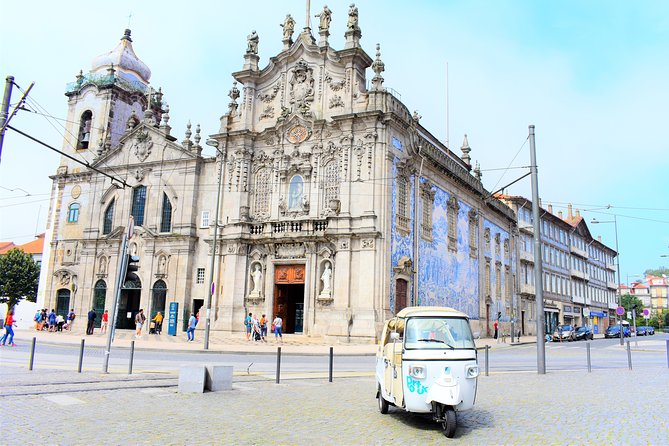
The route also brings you past two important churches. One is a 17th-century church with a later classical façade and a Porto rococo altarpiece linked to Nicolau Nasoni. The other dates from the second half of the 18th century and is known for its carved interior and side façade covered in figurative tiles in 1912.
These brief passes are valuable if you enjoy church art, but they have a limit. You will not have time to study every carving, tile panel, or altar. Take note of the names and return later if one catches your eye.
Cordoaria Garden offers a change of pace. The space began as an area used by rope makers and became a public garden in the 19th century. The design came from German landscaper Emile David, and later additions include statues and modern sculptures. It is a good reminder that Porto is not only stone streets and churches.
More Guided Tours in Porto:
- Porto: Guided Tour by Tuk-Tuk & Optional Douro River Cruise
★ 4.5 · 5,980 reviews - Porto: Guided Tuk Tuk Tour
★ 4.6 · 1,390 reviews - Porto: Tuk tuk vip guided tour – 1.30h
★ 4.5 · 16 reviews - Lisbon: Private Guided Tuk-Tuk Tour with Hotel Pickup
★ 4.9 · 4,552 reviews
Bolsa Palace, the old market, and São Francisco
The route continues toward the river and the former commercial heart of the city. The Palácio da Bolsa, or Stock Exchange Palace, is a 19th-century neoclassical building and the headquarters of Porto’s Commercial Association. Its famous Arabian Room is the major interior attraction.
This is an important distinction: the tour points out the palace, but entrance is not included. If you want to see the Arabian Room, you need to arrange a separate visit. The tuk tuk stop gives you useful context and a chance to decide if the paid interior tour fits your schedule.
Nearby, Mercado Ferreira Borges is an iron building from 1885. It replaced an older market but did not remain a market for long. It now serves as an entertainment venue, with Hard Club operating inside. The building is a good example of how Porto has reused old industrial structures.
The square outside includes a garden and a monument to Infante Dom Henrique, linked to Portugal’s maritime past. You are close to the Douro here, so the city begins to open toward the water.
São Francisco Church is one of the most dramatic interiors in Porto. Construction began in the 14th century, but the building is best known for the extraordinary quantity of gilded woodwork added in the 17th and 18th centuries. The Tree of Jesse and the catacombs are particular points of interest.
Again, the tuk tuk tour does not include monument admission. The guide can show you where to go, but you should plan extra time if you want to see the interior. Five or ten minutes on a city tour cannot do justice to a church of this scale.
Alfândega and Porto’s Douro waterfront
The former Alfândega Nova do Porto customs house is a large 19th-century neoclassical building with one façade facing the river and another facing the city. Its construction uses iron alongside stone, brick, and wood, reflecting the practical demands of a working customs facility.
The building now houses the Museum of Transport and Communications and a congress center. The tuk tuk gives you an exterior look and helps connect Porto’s commercial past with the riverfront in front of you.
This section of the route is especially useful for orientation. The Douro was not just a pretty backdrop. It shaped trade, transport, port wine, and the growth of both Porto and Gaia. The included Port tasting ties neatly into that story, though the provided details do not specify the exact tasting location or the brand served.
Crossing to Gaia for the Serra do Pilar view
The tour’s most memorable stop is usually the Serra do Pilar viewpoint in Vila Nova de Gaia. The monastery began in 1538 and took more than a century to finish. Its circular church and circular cloister are unusual, and the monastery later played a military role during Portugal’s civil war.
You get about 15 minutes here, with free admission. The real reward is the terrace. From it, you can see Porto’s riverside, the cathedral, the Dom Luís I Bridge, the Arrábida Bridge, the Fontainhas area, and the Douro running between Porto and Gaia.
I would pay close attention to this stop. A city can be confusing when you see it one street at a time, but the Serra do Pilar view puts the whole arrangement together. You understand why the bridge is so important, why Gaia sits opposite Porto, and how the historic center climbs away from the river.
The Dom Luís I Bridge is part of that view. Planned by engineer Teófilo Seyrig, a disciple of Gustave Eiffel, it opened in 1886 with two iron decks. The upper deck now carries Porto Metro trains, linking the cathedral area with Gaia.
You also see the newer Infante Bridge, opened in 2003. It replaced road traffic on the upper deck of Dom Luís I Bridge and connects the Fontainhas area with Oliveira do Douro. The two bridges show different stages of Porto’s growth and make an excellent final chapter to the city overview.
What the tuk tuk is like in practice
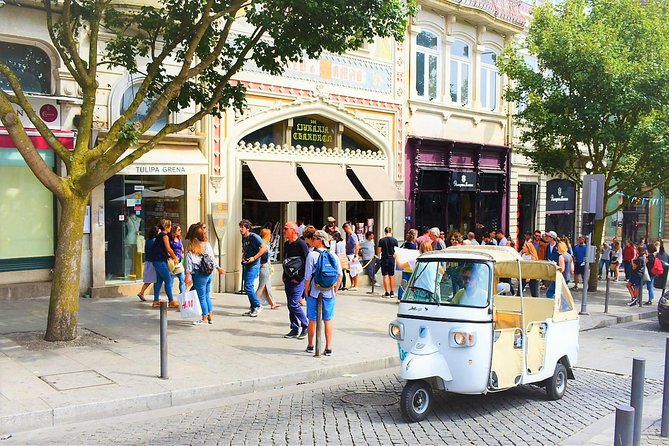
A tuk tuk can enter narrow lanes that are awkward for larger vehicles. That is a real advantage in Porto, where old streets twist through the center and steep sections can take more effort than expected.
Each vehicle holds two, three, or four adults of average height, up to 75 kilograms per person. Larger parties use several vehicles but travel together and make the same stops. If your group is larger, confirm the seating arrangement before you go.
The open design also creates drawbacks. Wind and road noise can make it difficult to hear the guide while the vehicle is moving. One useful tactic is to save questions for the stops and sit where you can face the guide clearly.
Take a raincoat. The tour requires good weather, but Porto can turn wet and windy, and poor weather can affect comfort even when the trip still operates. The vehicle offers exposure to the city, not full protection from the elements.
The experience is private, so only your group participates. That gives you more freedom than a large bus tour, and guides have sometimes adjusted the route for a requested view or a family’s interests. Still, the quality depends heavily on the individual driver-guide. Guides such as Ana, Anna, Victor, Bernardo, Fabian, and Gonçalo have been praised for energy, humor, clear planning, and strong local tips, but the commentary may be less engaging with a less experienced guide.
Is $42.33 a fair price?
At $42.33 per person, the value depends on how you use the tour. You are paying for a private vehicle, a driver-guide, a local guide, roughly two hours of transport, several stops, and a glass of Port wine. You are not paying for entry to the cathedral, Clérigos Tower, Bolsa Palace, São Francisco Church, or other monuments.
For a first look at Porto, that is a reasonable price, especially if you have limited time or do not want to tackle the hills immediately. It is less attractive if you prefer slow walks, long museum visits, or detailed architectural talks at every stop.
The best value comes from booking it early in your stay. Use the ride to mark places for later, then return on foot to São Bento, Clérigos, Bolsa, São Francisco, or the cathedral. It works less well as your only Porto sightseeing activity.
Who should book this Porto tuk tuk tour?
I would choose this for a first day in Porto, a short stay, families, older visitors, and anyone who wants a clear sense of the city’s layout. It is also useful for people who want photos from several viewpoints without spending the morning climbing hills.
Families can do well with it, and children must be accompanied by an adult. Service animals are allowed, and most people can participate, but the small vehicles may not suit every mobility need.
I would be more cautious if you need a quiet ride, want long historical explanations, or dislike weather exposure. The tour moves quickly, and the quality of spoken commentary can change from one guide to another.
Should you book it?
Book it if you want a fast, private introduction to Porto with strong views, narrow streets, and a taste of Port wine. The Serra do Pilar viewpoint and São Bento Station alone make the route useful, while the tuk tuk saves time on the city’s steep streets.
Skip it if you want to spend your time inside monuments or explore every neighborhood slowly on foot. For the best result, schedule it near the beginning of your visit, bring a raincoat, and treat the tour as an orientation, not a replacement for Porto’s major interiors.
Free cancellation is available up to 24 hours before the start time. If poor weather cancels the experience, you are offered another date or a full refund. Road works and unexpected closures can also affect operations, so keep a little flexibility in your schedule.
FAQ
How long does the Porto tuk tuk tour last?
The experience lasts approximately 1 hour 50 minutes. Traffic can affect the timing.
Where does the tour start and finish?
It starts at Rua de Augusto Rosa 180, 4000-528 Porto, Portugal, and ends back at the same meeting point.
Is the tour private?
Yes. Only your group participates in the activity.
How many people fit in one tuk tuk?
Each tuk tuk holds two, three, or four adults of average height, with a maximum stated weight of 75 kilograms per adult. Larger groups use multiple vehicles and travel together.
Are monument entrance fees included?
No. Entrance fees are not included. The route includes exterior views and short stops at places such as Porto Cathedral, Clérigos Tower, Bolsa Palace, and São Francisco Church.
Is Port wine included?
Yes. A glass of Port wine is included.
What happens if the weather is poor?
The experience requires good weather. If it is canceled because of poor weather, you are offered a different date or a full refund. You can also cancel for a full refund if you do so at least 24 hours before the start time.
Just added around Porto
- 3 Hour Tuk tuk Tour in Porto★ 4.5 · 60 reviews
- 2 Hour Private Tuktuk Tour in Porto to Monastery and Cellars★ 4.5 · 7 reviews
- Tours in the Port DE Tuk Tuk★ 5.0 · 38 reviews
- Discover Porto on a 2-Hour Shared Electric TukTuk★ 4.5 · 11 reviews
- Explore Porto Aboard A Classic Tuk-Tuk tour 1h★ 5.0 · 22 reviews
- 2 Hour Discover Gaia on a Private Eco-Friendly Tuk Tuk Tour★ 4.0 · 4 reviews
- Private 4 Hour Tuk Tuk Tour with Port Wine Cellar Visit & Tasting★ 5.0 · 6 reviews
- Private Port: Tuk Tuk and boat with local guides★ 5.0 · 4 reviews
Historical Tours, compared.
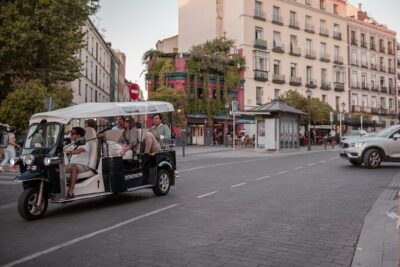
Madrid Historical Tour with Local Guide in Eco Tuk Tuk Private
Read our review →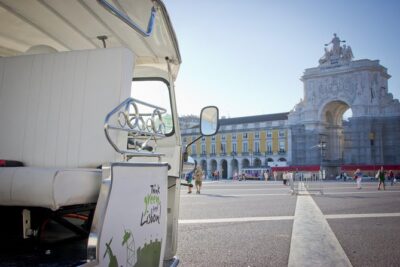
Explore Lisbon by Tuk Tuk: History and Viewpoints
Read our review →
Old Delhi Food, Heritage&Cultural Walk with Rickshaw ride to Masterji Kee Haveli
Read our review →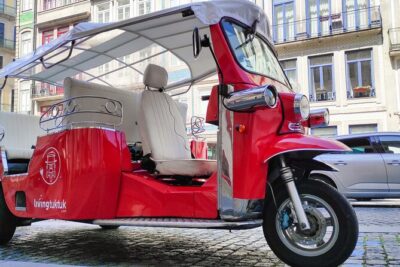
Historic Porto by Private Electric Tuk Tuk to Top Landmarks
Read our review →
Private Tuk Tuk Tour Through Lisbon’s Historical Streets
Read our review →
Guided Tuk-Tuk Tour Along the Historic Tram Line 28
Read our review →
Historic Lisbon Tour with Local Guide in Private Eco Tuk Tuk
Read our review →Where else this ride shows up