

REVIEW · HISTORICAL TOURS
Agra: Heritage Walking Tour of Agra 2 Hours by Tuk-Tuk
Agra’s old city comes alive in its markets, temples, mosques, spice stalls, and narrow food lanes. This two-hour walking tour gives you a quick look at that everyday side of Agra, with tuk-tuk transport handling the longer stretches between neighborhoods.
I like the small time commitment and the mix of religious sights with local shopping streets. I also like that guide Farman is specifically praised for giving plenty of detail and taking care of guests, including one person who was feeling unwell. The main drawback is pace: two hours is enough for an introduction, not a leisurely market wander.
Key points to know before you book
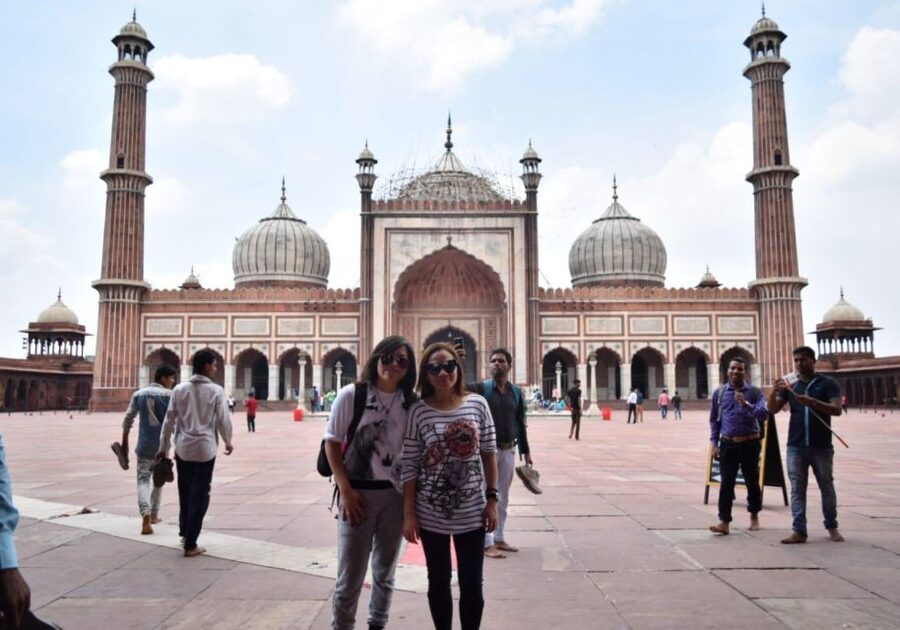
- Jama Masjid begins the cultural tour: See Agra’s large mosque near Agra Fort Railway Station, with a guided visit of about 15 minutes.
- Mankameshwar Temple adds a different perspective: The old Shiva temple requires clothing that covers your shoulders and knees.
- Rawatpara is the spice and petha stop: Expect the smell of spices and a chance to see where Agra’s famous ash gourd candy is sold.
- Kinari Bazaar and Seth Gali show working Agra: These are market and food streets rather than polished sightseeing zones.
- Tuk-tuk transport saves time: Pickup, drop-off, and the two longer transfers are handled by tuk-tuk, auto rickshaw, or e-rickshaw.
- The price is low for a private local guide: At $15 per person, this works best as a short orientation tour, not a full-day Agra experience.
Why this short Agra tour is worth considering

Most people come to Agra for the Taj Mahal and Agra Fort, then leave with only a polished version of the city. This tour points you toward the older streets where worship, trade, sweets, spices, and daily errands all share the same tight quarters.
You begin with a pickup in Agra by tuk-tuk, auto rickshaw, or e-rickshaw. Pickup is available from a hotel, railway station, or another desired location in the city. The first ride takes about 15 minutes, followed by a walking route through several connected parts of old Agra.
The arrangement makes practical sense. Agra’s markets are easier to explore on foot, while the tuk-tuk keeps you from spending precious time walking between distant starting points. You should still expect a compact, active outing. The route includes about an hour and 15 minutes of visits and walking, plus 30 minutes of tuk-tuk travel.
The tour includes bottled water and a private local guide, with English and Spanish available. That personal guide matters here because the value is less about collecting entrance tickets and more about understanding what you are seeing. The markets can look like a jumble of goods and people if you do not know what matters.
More history rides in New Delhi:
- Old Delhi Food, Heritage&Cultural Walk with Rickshaw ride to Masterji Kee Haveli
★ 5.0 · 742 reviews - 3-hour Old Delhi Heritage Walking tour with Rickshaw Ride
★ 5.0 · 240 reviews - 3-Hour Old Delhi Heritage Walking tour with Rickshaw ride
★ 4.6 · 158 reviews
Jama Masjid near Agra Fort Railway Station
Your first sight is Jama Masjid, the large mosque opposite Agra Fort and close to Agra Fort Railway Station. You have about 15 minutes for a guided visit.
This is a useful first stop because it places you right in one of Agra’s busiest historic areas. The mosque is not treated as a quick photo stop alone. Your guide can help explain its place in the city’s religious and architectural life, while also helping you handle the etiquette of entering a working mosque.
Keep your clothing conservative from the start. The tour asks you to wear clothes covering your knees and shoulders because you will visit both a mosque and a temple. Comfortable shoes are also important, since you will soon leave the monument area and continue through market streets.
Fifteen minutes is a short visit. You may get an introduction to the building and its setting, but you should not expect a long architectural study or extended quiet time. That is part of the bargain with a two-hour tour. You see the place, get context, and move on before the route becomes too demanding.
The location also gives you an immediate sense of the contrast that defines this experience. A major religious building sits beside railway movement, commercial streets, and the traffic of central Agra. This is not a neatly separated museum district. It is part of the city’s working core.
Shri Mankameshwar Temple and respectful visits
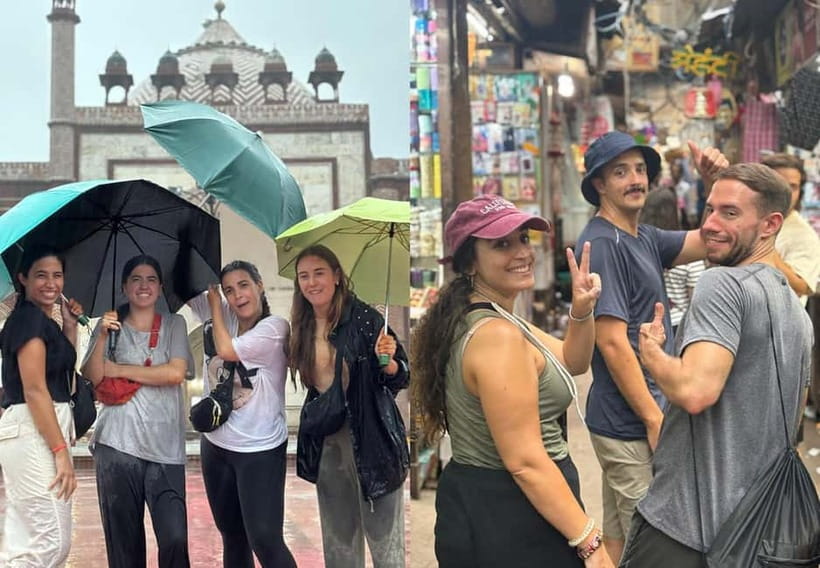
Next comes Shri Mankameshwar Mandir, an old temple dedicated to Lord Shiva. The guided visit lasts about 15 minutes.
I like the pairing of Jama Masjid and Mankameshwar Temple. You are not being shown only one side of Agra’s religious identity. Instead, the route moves from a major mosque to a Hindu temple, giving you a more useful picture of the city’s religious spaces and customs.
The short stop is best approached as an introduction. Your guide can explain the temple’s role and help you understand how to behave respectfully. You should be prepared for a visit shaped by worship rather than tourism. Dress appropriately, follow instructions, and avoid treating the space as a simple backdrop for photographs.
The clothing rule is not a minor detail. Shoulders and knees must be covered during the tour, and the same outfit needs to work for both religious sites. You will also want footwear that can handle walking through market areas, since the temple stop is followed by several streets rather than another vehicle ride.
The tour information recommends a moderate level of physical fitness and says it is not suitable for people with pre-existing medical conditions. That warning likely reflects the walking, traffic, heat, uneven street surfaces, and quick transitions typical of a short old-city route. If you are feeling unwell, tell the guide early. Guide Farman is specifically noted for being considerate when a guest was not feeling well, which is a useful sign for anyone worried about keeping up.
Rawatpara, spices, and Agra petha
After the temple, you walk to Rawatpara, described as a wholesale spice market. This is one of the most distinctive parts of the tour because it takes you away from monument viewing and into the trade that keeps old Agra supplied.
A spice market is experienced as much through smell as sight. You might notice sacks, powders, and the sharp scents of different seasonings as you move through the area. The point is not to buy a prepared attraction. It is to see a market doing its ordinary work.
Rawatpara is also known for Agra petha, a sweet made from ash gourd. Petha is one of the city’s best-known food specialties, and this stop gives the candy a local setting rather than presenting it as a generic souvenir. You can ask your guide about the sweet and look for the shops associated with it, though personal purchases are not included in the tour price.
The visit is scheduled for about 15 minutes, so do not count on a long tasting session or a full shopping trip. The market stop is better for orientation and a quick look at local products. If you see something you want, remember that personal expenses are separate.
The walking route also changes the rhythm of the experience. You are not simply driven to a shop, shown a product, and driven away. You move through the streets with a guide who can point out what you might otherwise miss. That is where the $15 price begins to make sense.
More Two-Hour Experiences in New Delhi:
- Heritage Delhi Photography Walk (2 Hours Guided Walking Tour with Rickshaw Ride)
★ 5.0 · 3 reviews - Discover Porto’s Highlights on a 2-Hour Private Electric Tuk Tuk
★ 4.5 · 1,860 reviews - Valencia: Full 2-Hour Tuk Tuk Tour
★ 4.7 · 733 reviews - Valencia: 2-hour City Highlights Guided Tour by Tuk Tuk
★ 4.5 · 388 reviews
Kinari Bazaar’s crafts and commercial energy

Kinari Bazaar is the next market visit. It is presented as an arts and crafts market, with about 15 minutes to look around.
This is the kind of stop that suits curious shoppers more than serious souvenir hunters. The time is short, but it gives you a taste of Agra’s commercial side and lets you see how craft goods fit into the city’s market culture. Your guide can help explain what you are looking at and where the market fits into the old-city route.
You should not expect a quiet gallery or a carefully arranged retail street. Market visits come with noise, movement, tight spaces, and interruptions. That is also the reason to go. You get a more direct look at local commerce than you would from a hotel shop or a tourist showroom.
If you are buying anything, keep the schedule in mind. Fifteen minutes disappears quickly, especially if you want to compare prices or ask questions. The tour is designed to show you several districts, not to leave you in one bazaar for an afternoon.
Kinari Bazaar is also a good place to notice the difference between sightseeing and observing. The market is not only something to photograph. It is a place where people shop, sell, carry goods, and move through their day. A good guide can turn those details into a clearer picture of Agra.
Seth Gali and the food-street finish

The longest stop is Seth Gali, with about 30 minutes for walking, a guided visit, and time in the food market. This is the tour’s best chance to slow down slightly and take in the street-level character of Agra.
Seth Gali is a food street, but the tour does not include food or personal spending. The description refers to drinks served with dinner as not included, yet this is not presented as a dinner tour. Plan to pay for anything you choose to eat or drink, and do not book this experience expecting a provided meal.
The half-hour allocation is more generous than the earlier stops. You can look around, ask your guide questions, and watch the movement through the food area without feeling quite as rushed. Still, it remains a short visit. You may find yourself choosing between browsing, tasting, and listening to the guide.
I would treat Seth Gali as a final snapshot rather than a complete food tour. It gives you a sense of local eating habits and street commerce, but it does not promise a series of tastings or a full culinary lesson. If food is your main reason for booking, you may want to arrange a separate meal or food experience.
This part of the route also helps tie the tour together. You have seen worship at the mosque and temple, goods in the spice and craft markets, and now food being prepared and sold in the street. In a short time, the tour touches several parts of ordinary city life.
Why the tuk-tuk transfers matter
The two vehicle sections are each about 15 minutes, one at the beginning and one at the end. You may ride in a tuk-tuk, auto rickshaw, or e-rickshaw, depending on the arrangement available.
This is more than a novelty ride. Agra’s central streets can be tiring on foot, especially if you are also visiting the Taj Mahal or Agra Fort on the same day. The included transport lets you save your legs for the markets, where walking is the point.
Pickup and drop-off are included from your Agra hotel, railway station, or another desired city location. That makes the tour useful after arriving by train, though you should confirm the exact pickup point when booking. At the end, you return to your original departure point.
The vehicle is practical rather than luxurious. Auto rickshaws are open, exposed to street sounds, and compact. If you prefer a sealed, quiet vehicle, this may not be your favorite way to move around. If you want a direct taste of local transport, it fits the character of the route.
What $15 buys you in Agra
At $15 per person, the tour is inexpensive for a private local guide, city pickup and drop-off, bottled water, and two short vehicle transfers. You are paying for access to a guided introduction, not for a large monument package.
Entrance tickets are not included, although the listed stops are primarily religious sites and markets rather than major ticketed monuments. Personal expenses, food, and drinks are also extra. I would bring some money if you want petha, spices, crafts, or something from Seth Gali.
The strongest value comes from the guide. The route itself is easy to copy on a map, but the context is harder to supply on your own. The guide can explain religious customs, identify market goods, and help you move through unfamiliar streets with more confidence.
The limited duration is the tradeoff. You will not have time for long shopping stops, extensive temple visits, or a relaxed food crawl. For the price, that is fair, as long as you see it as a compact orientation rather than the main event of your Agra visit.
Who should book this two-hour route

I would choose this tour if you want to see more than Agra’s headline monuments and have only a short window. It fits especially well on an arrival day, a departure day, or an afternoon when you want local streets without committing to a full-day program.
It also suits you if you enjoy markets, religious architecture, and short guided walks more than formal museums. The English and Spanish guide options make it accessible to a wider range of visitors, and the ability to start from a hotel or railway station adds useful flexibility.
You may want to skip it if you dislike walking, find crowded market streets tiring, or need a very relaxed pace. The tour asks for moderate physical fitness, and the schedule leaves little room for delays. It is also not suitable for people with pre-existing medical conditions according to the activity information.
Wear comfortable shoes and conservative clothing. Leave pets at home, since they are not allowed. I would also avoid scheduling this immediately before a critical train departure, because city traffic can be unpredictable even when the route itself is short.
Should you book it?
Book this Agra walking tour if you want a low-cost, guided introduction to the city’s religious life and old markets. The pairing of Jama Masjid, Mankameshwar Temple, Rawatpara, Kinari Bazaar, and Seth Gali gives you more local texture than a monument-only outing.
Do not book it expecting a full food tour, an extended shopping session, or deep time at each sight. Its real strength is efficiency: a considerate local guide, short tuk-tuk transfers, and a compact look at Agra beyond the Taj Mahal. At $15, that is a sensible addition to a larger Agra itinerary.
FAQ
How long does the Agra walking tour last?
The tour lasts two hours, including the tuk-tuk, auto rickshaw, or e-rickshaw transfers.
Where can pickup take place?
Pickup is offered from your Agra hotel, railway station, or another desired location in Agra. Drop-off returns you to the original departure point.
Which sights and markets are included?
The route includes Jama Masjid, Shri Mankameshwar Mandir, Rawatpara, Kinari Bazaar, and Seth Gali.
Is transportation included?
Yes. Pickup, drop-off, and transfers are provided by tuk-tuk, auto rickshaw, or e-rickshaw. The activity also includes bottled water.
Are entrance tickets included?
No. Any entrance tickets are not included in the price.
What should I wear?
Wear comfortable shoes and clothing covering your knees and shoulders, since the tour visits a mosque and a temple.
Which languages are available?
Live guidance is available in English and Spanish.
Just added around New Delhi
- Old Delhi Chandi Chowk Food Tour with Rickshaw Ride – 4-5 Hours★ 5.0 · 8 reviews
- Taj Mahal Sunrise View With Tuk-Tuk★ 5.0 · 10 reviews
- Old Delhi Tour by Tuk-Tuk Street Food and Shopping Experience★ 5.0 · 12 reviews
- Old Delhi Street Food Tour with TUK-TUK Adventures★ 5.0 · 4 reviews
- Tuk Tuk Delhi Experience★ 4.5 · 3 reviews
- Private Rickshaw Tour of Old Delhi Heritage with Food Tasting★ 5.0 · 2 reviews
- Private Full-Day Tour visit Old and New Delhi with Rickshaw Ride★ 4.5 · 5 reviews
- Old Delhi Heritage Walk with Rickshaw Ride★ 5.0 · 68 reviews
Historical Tours, compared.

Madrid Historical Tour with Local Guide in Eco Tuk Tuk Private
Read our review →
Explore Lisbon by Tuk Tuk: History and Viewpoints
Read our review →
Old Delhi Food, Heritage&Cultural Walk with Rickshaw ride to Masterji Kee Haveli
Read our review →
Historic Porto by Private Electric Tuk Tuk to Top Landmarks
Read our review →
Private Tuk Tuk Tour Through Lisbon’s Historical Streets
Read our review →
Guided Tuk-Tuk Tour Along the Historic Tram Line 28
Read our review →
Porto Guided Tour to the Historical Center on a Tuk Tuk
Read our review →
Where else this ride shows up