REVIEW · RICKSHAW TOURS
Heritage Delhi Photography Walk (2 Hours Guided Walking Tour with Rickshaw Ride)
Delhi rewards the camera, but its best pictures are not always found at the main monuments. This two-hour walk takes you from the domed Safdarjung Tomb through Lodhi Garden and on to the painted walls of Lodhi Art District, with a cycle-rickshaw ride adding a classic Delhi touch.
I like the small group limit of 12 and the focus on places you could easily pass by on your own. I also like the flexible approach to timing. Guide Saumya has helped photographers choose golden hour, while Shika has worked with guests to find a time that suited them. The main drawback is that entrance fees are extra, and two hours gives you only a quick look at each stop.
Key points at a glance
- Three very different photo settings: A Mughal-style tomb, a leafy historic park, and a modern street-art district.
- A short cycle-rickshaw ride: You travel between sights in a traditional Indian vehicle rather than an air-conditioned van.
- Guides can help with timing: Saumya has suggested golden hour and noted that Safdarjung Tomb is illuminated at night.
- A compact group of up to 12 people: Small enough for conversation and occasional photography help.
- A low price for a private-feeling route: At $18.62 per person, the value comes from local access and guidance rather than included admissions.
- A two-hour city sampler: Useful early in a Delhi visit, but too brief if you want detailed monument visits or slow photography.
Why this Delhi photo walk works
Delhi can feel hard to read through a camera. There is too much movement, too much color, and too many possible directions. A guide gives your eyes a starting point and helps turn a general sightseeing walk into a search for shapes, details, faces, walls, and light.
This route also has a pleasing rhythm. You begin with formal architecture at Safdarjung Tomb, move into the trees and old tombs of Lodhi Garden, then finish with bold modern murals. That change of subject keeps the two hours from feeling repetitive.
I especially like the balance between old and new. The first two stops connect you with Delhi’s earlier centuries, while Lodhi Art District shows the city using public walls for contemporary expression. You are not simply collecting monument pictures. You are building a small visual record of how different parts of Delhi sit side by side.
The guide is also there to add stories and context. The experience promises conversations about the places, their culture, and daily life. That matters when you are photographing ordinary lanes, homes, markets, and people. A camera can record a face or a doorway, but a local explanation helps you understand what you are looking at.
More Rickshaw Tours in India
- Old Delhi Food, Heritage&Cultural Walk with Rickshaw ride to Masterji Kee Haveli
★ 5.0 · 742 reviews - 3-hour Old Delhi Heritage Walking tour with Rickshaw Ride
★ 5.0 · 240 reviews - 3-Hour Old Delhi Heritage Walking tour with Rickshaw ride
★ 4.6 · 158 reviews
Safdarjung Tomb: a strong opening frame
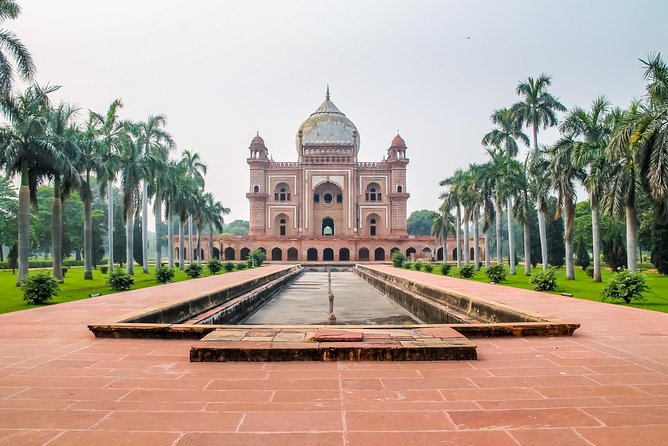
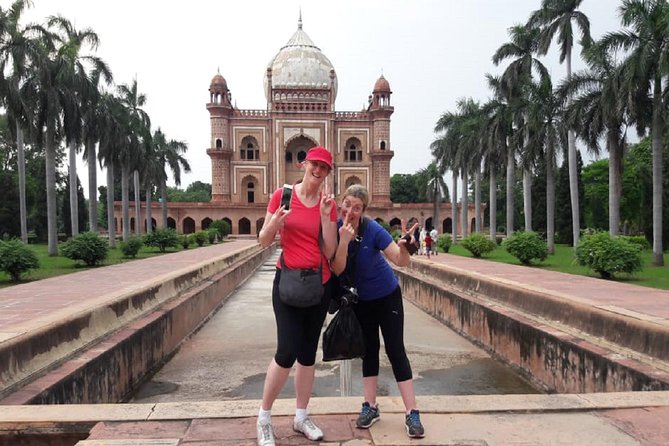
The walk begins at the ticket counter for Safdarjung Tomb, near the Airforce Golf Course and Delhi Race Club in New Delhi. The tomb was built in the late 18th century as the mausoleum of Safdarjung. Its formal setting makes it a natural first stop for architectural photographs.
You have about 30 minutes here. That is enough for a quick look at the exterior, the main lines of the building, and some careful compositions. It is not enough for a slow architectural study, especially if you want to photograph every angle or spend time inside.
The tomb gives you a more controlled start than a crowded market would. You can begin by looking at symmetry, arches, domes, walls, and open space. Your guide can offer photography tips and help you notice details you might otherwise rush past.
Admission is not included, so bring money for the entrance fee. The exact charge is not provided here, and the tour price should not be treated as covering monument entry. That extra cost is worth remembering when you compare the total expense with other Delhi activities.
Timing may matter more than the short visit. Saumya, one of the guides associated with this experience, has helped set a photo walk during golden hour. That softer light can make the tomb more attractive than a harsh midday visit. Saumya has also pointed out that the site is illuminated at night, which could be useful if you plan to return independently.
The practical point is simple: ask about the start time before you book. The published duration is about two hours, but the best light can change the feel of the first stop. If your main aim is photography rather than a standard sightseeing walk, timing is one of the most valuable parts of the conversation with your guide.
The cycle-rickshaw connection between old Delhi views
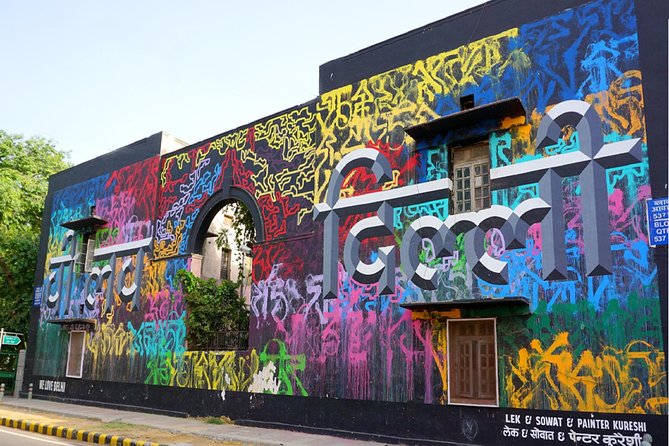
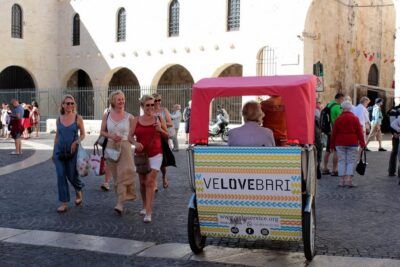
A cycle rickshaw ride is included as part of the route. It is not described as a long ride, and you should think of it as transport between sights rather than a separate rickshaw tour.
That short ride adds something a vehicle transfer cannot. You are moving at street level, with more time to notice the city around you. It also fits the theme of the experience: you are photographing Delhi as a lived-in place, not only as a collection of monuments.
The vehicle is not air-conditioned, and there is no hotel pickup or drop-off. You meet at Safdarjung Tomb and finish at Lodhi Gardens, with the route ending around Lodhi street art. Plan your own way to the starting point and onward from the end.
For some people, this is part of the charm. For others, the lack of private transport may feel less convenient, especially in hot or wet weather. The experience requires good weather, and poor conditions can lead to a new date or a full refund. That policy is helpful, but you still need to keep your day flexible.
Lodhi Garden: trees, tombs, and a slower camera
The longest part of the walk is Lodhi Garden, with about one hour set aside for the park. This is the heart of the route for anyone who enjoys mixing nature with architecture.
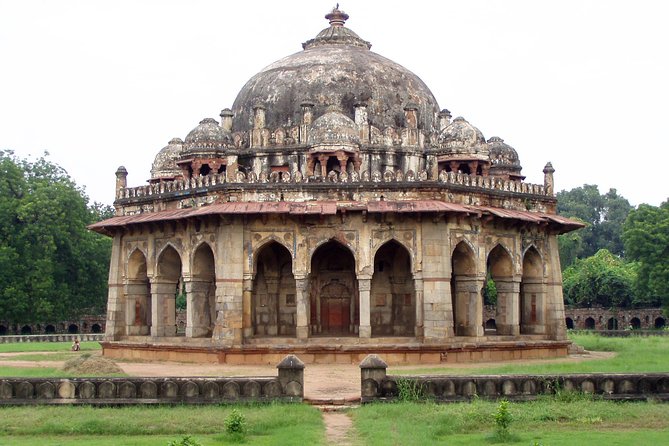
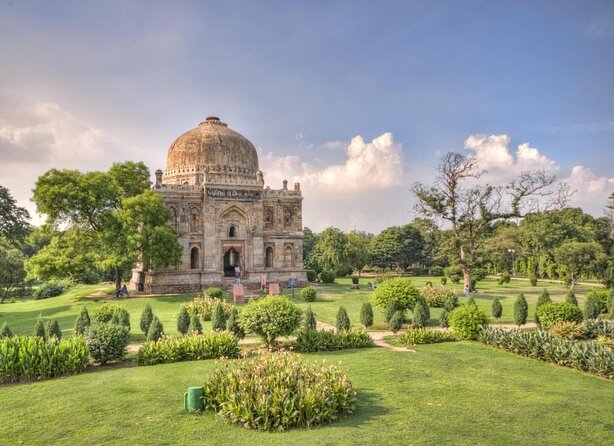
The garden includes a Rose Garden, the tomb of Sikandar Lodi, and the Shah Sayyid Tomb. You can photograph trees and flowers, then shift your attention to stonework and historic structures. The changing subjects give you more than one type of picture without requiring a long journey across the city.
I like this stop because it lets you slow down. Safdarjung Tomb encourages formal views, while Lodhi Garden offers smaller details and changing backgrounds. Look for the contrast between old masonry and plants, broad paths and shaded areas, and the way the tombs sit within the park.
The guide’s role is useful here. A good photo walk does not need to turn every stop into a lecture. It should help you decide where to stand, what to notice, and when to stop taking wide shots and look for a detail. The included photography tips are meant to support that process.
Still, one hour can pass quickly. If you want long exposure experiments, portraits, or repeated attempts in different light, you may feel rushed. The route covers several points in a short period, so this is better for variety than for a single carefully planned photograph.
You should also remember that entry fees are not included here either. The supplied information does not give the individual charges for Safdarjung Tomb or any other historic site, so check the current cost when planning your budget.
More Rickshaw Tours in New Delhi
- Old Delhi: 3-Hour Tuk-Tuk/Rickshaw Tour
★ 4.7 · 137 reviews - Luxury Rickshaw Tour of Old Delhi
★ 5.0 · 106 reviews - Old Delhi Heritage Walk with Rickshaw Ride
★ 5.0 · 68 reviews - Old Delhi – Hidden Gems Tour on Rickshaws with Guide & Audio Headsets
★ 5.0 · 54 reviews
Lodhi Art District: a modern finish
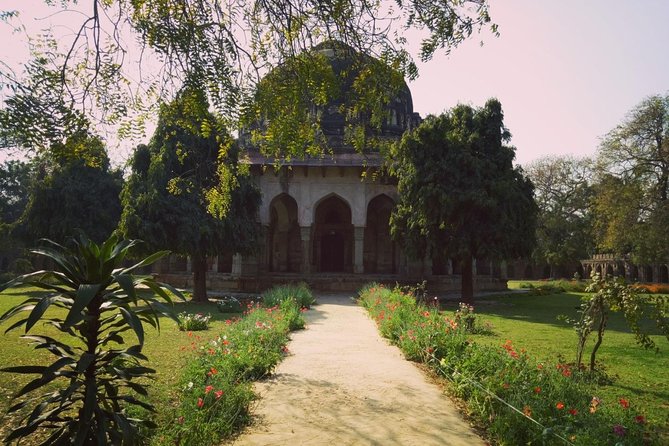
The final 30 minutes take you to Lodhi Art District, where painted walls bring a sharp change of mood. The murals cover subjects such as nature, the origins of the world, life, and death. They give you strong color, large shapes, and plenty of room for creative framing.
This section is likely to appeal to photographers who enjoy street art and urban details. You can work with full-wall compositions, close-up textures, people passing through the frame, or the contrast between painted surfaces and nearby buildings. The tour description also points to colorful lanes, houses, markets, and local people, so your guide may help you notice more than the murals themselves.
The street-art stop also explains why this is not only a heritage walk. Delhi’s past is part of the route, but the ending looks at how the city presents newer ideas in public space. That makes the experience more useful for anyone who wants pictures that show present-day Delhi rather than only famous monuments.
The route ends at Lodhi Gardens, with the tour finishing around Lodhi street art. Make sure you understand that this is not a hotel-to-hotel activity. The end point is useful if you want to continue exploring, but you are responsible for your next journey.
What the guides add to the experience
The tour includes an English-speaking storyteller or guide, with other languages available. The guide is meant to combine local stories with practical photography help, not simply lead you from gate to gate.
The strongest evidence of that approach comes from the specific guide experiences. Saumya has been praised for choosing a good golden-hour time and for explaining the different look of Safdarjung Tomb after dark. She has also helped with food tours, which suggests that you may find her a useful contact if you want more local experiences in Delhi.
Shika has been described as pleasant company and has communicated about the best starting time before the walk. That kind of contact is valuable because light, heat, and your personal photo goals all affect the route.
Guide assignments can change, so you should not book on the assumption that a particular person is guaranteed. Still, the named guides give you a useful idea of the service style to expect: friendly conversation, help with timing, and an effort to shape the walk around your interests.
The group can have up to 12 people. That is not a private tour, but it is small enough to keep the guide within reach. If several people stop to take pictures at once, the pace may slow slightly. On the other hand, a small group usually makes it easier to ask questions than a large sightseeing party.
The $18.62 price and what it really buys
At $18.62 per person, this is an inexpensive way to add structure to a Delhi visit. You are paying for a two-hour guided route, photography suggestions, local conversation, and the rickshaw connection between sights.
You are not paying for a private vehicle, hotel transfers, or monument admission. Those exclusions matter. The final cost will be higher once you add entry fees and your transport to Safdarjung Tomb.
The value is strongest if you are new to Delhi and want help finding a sensible photo route. It is also good for solo visitors who would rather have conversation and local direction than walk alone. If you already know the area and are comfortable arranging your own timing, you may prefer to visit the three locations independently.
Booking demand appears steady, with reservations made about 18 days ahead on average. That does not mean you must book nearly three weeks early, but it is a sensible warning for fixed travel dates. A mobile ticket and free cancellation up to 24 hours before the start make advance planning easier.
The booking terms are straightforward. Cancel at least 24 hours before the local start time for a full refund. Changes made inside that window are not accepted, and late cancellations are not refunded. Poor weather is handled separately, with a different date or a full refund offered if the activity is canceled.
Who should book this walk
I would choose this experience if you want a short introduction to Delhi photography without committing to a full day. It suits:
- First-time visitors who want help finding less obvious photo points.
- Amateur photographers looking for practical guidance and varied subjects.
- Solo visitors who want a small group and conversation.
- People interested in both historic buildings and modern street art.
- Anyone who likes walking but appreciates a traditional rickshaw ride between stops.
- Visitors who can arrange their own transport to the starting point and from the end point.
It is less suitable if you want a private photo lesson, a long visit inside each monument, or a fully managed day with hotel pickup. It may also feel short if you prefer to wait for perfect light at every stop.
Bring a phone or camera with enough battery for two hours, and leave room for a few extra minutes if the group pauses for pictures. Since the route depends on the weather, check the forecast and keep some flexibility in your Delhi schedule.
Should you book the Heritage Delhi Photography Walk?
Book it if you want an affordable, compact route that links three very different sides of New Delhi. The combination of Safdarjung Tomb, Lodhi Garden, and Lodhi Art District gives you architectural, natural, historic, and modern subjects in one outing.
The best reason to book is the guide’s help with timing and local detail. Saumya’s golden-hour advice and Shika’s pre-tour communication show why a guided walk can produce better pictures than simply arriving at the monuments and hoping for good light.
Skip it if you need hotel transport, included entrance fees, or several hours at one site. At two hours, this is a well-shaped introduction rather than a full photography workshop. For $18.62, though, it offers a practical way to get your bearings, take varied pictures, and see Delhi through more than its most famous sights.
FAQ
How long is the Heritage Delhi Photography Walk?
The experience lasts approximately two hours.
Where does the tour begin?
It begins at the Safdarjung Tomb ticket counter, at H6Q6+WR5, Airforce Golf Course, Delhi Race Club, New Delhi, Delhi 110021, India.
Where does the tour end?
The walk ends at Lodhi Gardens, and the route finishes around Lodhi street art.
Is a cycle-rickshaw ride included?
Yes. A cycle rickshaw ride between sights is included.
Are entrance fees included in the price?
No. Admission fees for historic sites such as Safdarjung Tomb are not included.
How many people can join the tour?
The maximum group size is 12 people.
Can I cancel for a full refund?
Yes. You can cancel at least 24 hours before the local start time for a full refund. Cancellations made less than 24 hours before the start are not refunded.
More History Rides in New Delhi
- 3-4 Hour Old Delhi Heritage Walk Tour with Tuk Tuk Ride Wherever Required
★ 5.0 · 55 reviews - Old & New Delhi Tour : Monuments , Rickshaw Ride & Local Heritage
★ 5.0 · 21 reviews - Private Rickshaw Tour of Old Delhi Heritage with Food Tasting
★ 5.0 · 2 reviews - Agra: Heritage Walking Tour of Agra 2 Hours by Tuk-Tuk
★ 5.0 · 2 reviews
More Photo Stops in New Delhi
- Old Delhi Photography & Food Tour with Rickshaw Ride to Masterji Kee Haveli
★ 5.0 · 22 reviews - Lisbon: Private Tuk Tuk Tour with Polaroid Photos
★ 4.9 · 138 reviews - Express Tuk-Tuk Tour in Malaga: Gibralfaro Viewpoint and Photography
★ 4.1 · 56 reviews - Marrakech Tuk-Tuk Tour with Photography Museum+Secret Garden
★ 4.4 · 12 reviews
Just added around New Delhi
- Old Delhi Chandi Chowk Food Tour with Rickshaw Ride – 4-5 Hours★ 5.0 · 8 reviews
- Taj Mahal Sunrise View With Tuk-Tuk★ 5.0 · 10 reviews
- Old Delhi Street Food Tour with TUK-TUK Adventures★ 5.0 · 4 reviews
- Tuk Tuk Delhi Experience★ 4.5 · 3 reviews
- Old Delhi Tour by Tuk-Tuk Street Food and Shopping Experience★ 5.0 · 12 reviews
- Private Rickshaw Tour of Old Delhi Heritage with Food Tasting★ 5.0 · 2 reviews
- Private Full-Day Tour visit Old and New Delhi with Rickshaw Ride★ 4.5 · 5 reviews
- Old Delhi Heritage Walk with Rickshaw Ride★ 5.0 · 68 reviews
Rickshaw Tours, compared.


Old Delhi Food, Heritage&Cultural Walk with Rickshaw ride to Masterji Kee Haveli
Read our review →
Arashiyama Customized Rickshaw Tour & Bamboo Forest
Read our review →
Split by Private Electric Rickshaw – Palace & Hidden Gems
Read our review →