
REVIEW · RICKSHAW TOURS
Rickshaw Tour-Cruise Ship guests arrive 9.30 upto 11.30 am Berlin
Berlin’s central sights are spread across a surprisingly large area, and a private rickshaw gives you a clever way to cover them without spending the day on foot. You can move from Alexanderplatz to Brandenburg Gate, the former Wall strip, and the government district while your guide explains what you are seeing. Flexible pickup and frequent photo stops make this especially useful for a first look at the city.
I like two things here. First, the rickshaw can use routes that a sightseeing bus cannot, including parts of Tiergarten Park. Second, guides such as Levent, Gregor, and Levi tailor the ride to your interests and walking ability. The main consideration is space: the listed price covers up to two people, while larger parties need multiple rickshaws. A three-hour ride also offers views and explanations, not lengthy museum visits.
Key points at a glance
- See Berlin’s central landmarks in one private ride: Alexanderplatz, Museum Island, Bebelplatz, Gendarmenmarkt, Checkpoint Charlie, Potsdamer Platz, the Holocaust Memorial, Brandenburg Gate, and the Reichstag area are all part of the planned route.
- Start where it suits you: Hotel or designated meeting-point pickup is available, including arrangements for cruise ship arrivals between 9:30 and 11:30 a.m.
- Ride close to the sights: The rickshaw can stop near monuments and lets you take pictures without long walks between them.
- Choose a guide with a personal style: Levent, Gregor, and Levi are named guides connected with the experience, each offering historical detail, humor, and route flexibility.
- Expect a private outing: The price is $264.35 per group of up to two, and only your party takes part.
- Useful for limited mobility: You enter in a few steps, and a walker can be taken along.
Why a Berlin rickshaw works so well
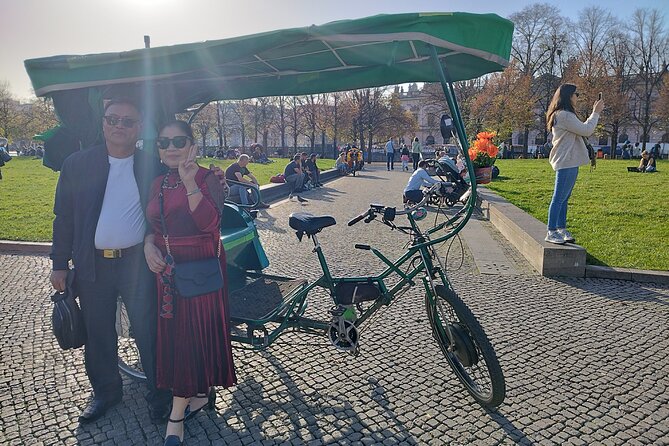
Berlin is not a city you can neatly cover from one square. Alexanderplatz, Museum Island, the Wall sites, Potsdamer Platz, and the Brandenburg Gate area are all within central Berlin, but walking between them takes time and energy. Public transport works well, yet it can interrupt your sightseeing with stations, stairs, and route changes.
The rickshaw solves that problem in a more personal way. You sit close to street level, hear your guide as you go, and can stop when a building or memorial catches your eye. You are not sealed behind glass, and you do not need to keep up with a large group.
The route is also adaptable. A short version focuses on the historic center. A four-hour outing adds Tiergarten Park and the River Spree, while a full-day booking can include places such as the East Side Gallery, museum visits, or less familiar parts of Berlin. For this three-hour experience, think of the ride as a well-packed introduction rather than a series of full site visits.
A cozy blanket, bottled water, Berlin beer, Berlin sparkling wine, or soft drinks are included. That small touch matters on a chilly day, and one account describes a particularly cold and icy outing where the blanket and careful driving made the ride comfortable.
More Rickshaw Tours in Germany
- Berlin: Private Guided E-Rickshaw Tour
★ 4.9 · 157 reviews - Individual City Tour – Rickshaw Sightseeing in Berlin
★ 5.0 · 120 reviews - Berlin Express: Private 1-Hour E-Rickshaw Ride
★ 5.0 · 116 reviews
Alexanderplatz and Museum Island
The tour begins at the Berliner Fernsehturm, Berlin’s tall television tower, in Alexanderplatz. This is a practical starting point because the tower is easy to recognize and gives the route an immediate sense of place.
From there, you pass the Red Town Hall, St. Mary’s Church, and Neptune Fountain before reaching Museum Island. Your guide can point out how the area changes from the broad modern space of Alexanderplatz to the formal architecture along the River Spree.
Museum Island is one of Berlin’s major cultural centers and a UNESCO World Heritage Site. From the rickshaw, you can see the Berlin Cathedral, the reconstructed City Palace, the Old Museum, the Old National Gallery, the Pergamon Museum, and the Bode Museum.
The scheduled stop is about 10 minutes, so you should not expect to enter the museums during this ride. Admission is not included at the television tower, and the tour is mainly about seeing the buildings from outside. If you want museum time, ask about a longer or full-day version when arranging the route.
Unter den Linden and Bebelplatz
The ride continues along Unter den Linden, Berlin’s grand royal avenue. This is one of the best stretches for understanding the old Prussian center, with major buildings set along a broad ceremonial street.
At Bebelplatz, your guide introduces the Forum Fridericianum. The area includes the State Opera, Humboldt University, the State Library, the Law Faculty, and St. Hedwig’s Cathedral, Berlin’s first Catholic church.
The square also carries a painful memory. On May 10, 1933, Nazi-organized book burning took place here. A memorial below ground marks the event with empty bookshelves, a stark reminder of the attack on free expression and culture.
The stop lasts about 10 minutes. That is enough for an explanation and photographs, though not for a long examination of every building. I would pay close attention here, since this is the kind of place that can look like a handsome square until its meaning is explained.
The itinerary also includes the Opera House and a later stop at the Berlin Cathedral. These are useful additions for anyone who wants to see Berlin’s royal and religious architecture without adding long walks.
Gendarmenmarkt and Checkpoint Charlie
Gendarmenmarkt is one of Berlin’s most impressive squares. The former Royal Concert Hall sits between the German Cathedral and the French Cathedral, creating a balanced architectural scene that feels very different from the open spaces around Alexanderplatz.
You have about 10 minutes here. That gives you time to look across the square and take pictures, but restoration work or temporary restrictions can affect what you see on the day.
The next stop is Checkpoint Charlie, the best-known former crossing between East and West Berlin. The site is closely tied to Cold War tension and the 1961 standoff between American and Soviet forces. Your guide can explain why this small crossing became such a powerful symbol.
Checkpoint Charlie is also one of the more commercialized historic sites in central Berlin. The reconstructed guardhouse and surrounding souvenir businesses can make the setting feel less solemn than its history deserves. That is not a reason to skip it, but it helps to know that the value here comes mainly from the explanation and location, not from a preserved border complex.
More Rickshaw Tours in Berlin:
- Rickshaw Tours Berlin – Groups of up to 16 people with several rickshaws
★ 4.0 · 97 reviews - Rickshaw Sightseeing City Tours Berlin – Rikscha Tours
★ 4.0 · 55 reviews - Berlin: Private Sightseeing Tour in an E-Rickshaw
★ 4.9 · 44 reviews - One Up to 3 Rickshaws(6 GUESTS)-Taylor Made Rickshaw Berlin Tour
★ 5.0 · 20 reviews
The Wall strip and Topography of Terror
The ride follows part of the former Berlin Wall border strip to the Topography of Terror. Original sections of Wall remain in this area, and the documentation center occupies the former headquarters of the SS and Gestapo.
This is one of the most important historical stops on the route. The site focuses on the machinery of Nazi persecution, so it adds context to the earlier stop at Bebelplatz and the later Holocaust Memorial.
Nearby are Martin-Gropius-Bau, known for major international exhibitions, and the former Prussian Parliament. The scheduled stop is about five minutes, which means you will get an introduction and a view rather than a full visit to the documentation center.
If this subject is central to your trip, consider booking extra time. The rickshaw ride helps you connect the locations, but the exhibitions require more than a quick stop.
Potsdamer Platz and the Holocaust Memorial
Potsdamer Platz shows a different side of Berlin. Once divided by the Wall and later rebuilt, it became a major construction zone after reunification. Today, the area is marked by tall modern buildings and the Sony Center.
The contrast is useful. Within a short ride, you move from Nazi-era sites and Cold War borders to a rebuilt commercial district. Berlin often tells its story through these sharp changes rather than through one preserved old center.
The route then reaches the Memorial to the Murdered Jews of Europe, usually called the Holocaust Memorial. Its field of concrete blocks covers a large open area near the Brandenburg Gate and commemorates the murder of more than six million Jews under National Socialism.
You can view the memorial from the rickshaw and walk among the blocks if you wish, depending on the time and your comfort. The stop is listed at about 10 minutes, so the route gives you an orientation rather than a long visit to the underground information center.
This is a place where a calm, respectful explanation matters. The memorial is intentionally open to interpretation, and your guide can provide the historical setting without turning the stop into a rushed checklist.
Brandenburg Gate and the government district
Brandenburg Gate is the classic Berlin photo stop. Once a city gate and later a symbol of division, it became a powerful image of German reunification after the Wall fell.
The rickshaw can bring you close to the gate, which is useful if you want pictures without crossing a large open area on foot. Crowds and traffic conditions can affect exactly where the vehicle stops, but the location is central and unmistakable.
From there, the route moves toward the Reichstag and the government district. You may see the Reichstag building, the Bundestag, the Chancellery, and the Memorial to the Murdered Sinti and Roma.
The Reichstag is an exterior sight on this outing. Entry to the dome is not part of the stated tour, so arrange a separate visit if that is important to you. The same applies to the nearby government buildings, where the main benefit here is seeing how modern German politics occupies the old capital district.
The itinerary also includes the former Führerbunker site. There is no preserved bunker interior to visit as part of this ride. The stop is primarily a chance to understand where the bunker was located and how the area looks today.
What the three-hour format really gives you
The stop timings add up to more than a simple three-hour schedule if every location receives a full visit. That tells you something important: the route is designed as a moving overview, with short pauses, commentary, and photographs.
You will see many major places in a limited time, but you will not have an extended visit at each one. The rickshaw is at its best when you want orientation, context, and efficient movement. It is less suitable if you want to enter several museums or spend half an hour at each memorial.
The route can also be adjusted at the beginning. The operator says the guide will shape the ride around your interests, the available time, and the distance you can comfortably cover. If you care more about Cold War Berlin than royal architecture, say so before setting off.
The four-hour option makes more sense if you want Tiergarten Park and the River Spree between the main sights. A full-day booking is the better choice for the East Side Gallery, museum access, or a route built around particular interests.
Guides, comfort, and mobility
The named guides connected with this experience include Levent, Gregor, and Levi. Their approach combines driving with informal storytelling. One guide is praised for humor, another for careful attention to a passenger with mobility problems, and another for covering more of Berlin’s central sights than a standard bus tour could manage in four hours.
That does not mean every ride will feel identical. Your experience depends on the guide assigned and the route you request. Still, the format gives the guide room to respond to your questions instead of delivering a fixed speech to a large group.
The rickshaw is also a practical choice for people who find long walks difficult. You enter in a few steps, and the vehicle can carry a walker. The driver can stop close to a monument so you do not need to cross long distances between transport and sightseeing.
You should still mention mobility needs when booking. The information says most people can participate, but it does not give detailed vehicle dimensions or limits. A quick conversation before the ride is sensible.
Price, group size, and pickup details
The listed price is $264.35 for a private group of up to two people. That is not a cheap way to get from one place to another, but it is a reasonable comparison with a private guide, especially if you value door-to-door pickup, a custom route, and minimal walking.
For three or four people, the operator provides two rickshaws and drivers. Groups of five or six use three rickshaws. Contact the operator for larger arrangements. Since the price is presented per group of two, confirm the total cost for a larger party before booking.
Pickup is offered from a hotel or another designated meeting point. Cruise ship passengers arriving in Berlin between 9:30 and 11:30 a.m. should give the operator their arrival details so the start can be arranged clearly.
The ride ends back at the meeting point. Included drinks and a blanket add comfort, while tips are not included. English is the stated language.
Free cancellation is available up to 24 hours before the start time. Cancellations or changes inside that period are not accepted for a refund.
Who should book this ride?
I would choose this for a first day in Berlin, a short stay, or an arrival day when you want to see the main sights before deciding where to return. It also fits couples, older visitors, and anyone who wants a private route with less walking.
It is a good match for history-minded visitors who appreciate explanations at the place where events happened. The sequence links Prussian Berlin, Nazi persecution, the Cold War, reunification, and the modern capital in a single outing.
I would not book it as your only museum experience. You will see Museum Island and the Topography of Terror from the outside, but the three-hour format cannot replace time inside those institutions.
My verdict on the Berlin rickshaw tour
Book it if you want a personal overview of Berlin Mitte, flexible pickup, close access to major sights, and a guide who can adjust the pace. Levent, Gregor, and Levi are associated with a warm, informative style, and the rickshaw format is particularly helpful when walking is difficult.
Skip it if you prefer to spend most of your day inside museums or want a low-cost public transport tour. For everyone else, this is an efficient and enjoyable way to connect Berlin’s scattered landmarks, especially at the start of a longer visit. Ask for the route you want, allow time for photographs, and treat the ride as your map for what to explore next.
FAQ
How long is the Berlin rickshaw tour?
The listed experience lasts approximately three hours. Two-hour, four-hour, and full-day arrangements are also described, depending on the route and the time you book.
Where does the tour start?
The planned route begins at the Berliner Fernsehturm in Alexanderplatz, but pickup can be arranged from your hotel or a designated meeting point.
Can cruise ship passengers book this experience?
Yes. Cruise ship passengers arriving between 9:30 and 11:30 a.m. can arrange pickup by sharing the relevant arrival and meeting details.
How many people can ride for the listed price?
The listed price of $264.35 covers a private group of up to two people. Larger groups use additional rickshaws, with two rickshaws for three or four people and three rickshaws for five or six.
Is the tour suitable for people with limited mobility?
The experience is described as suitable for less mobile participants. You enter the rickshaw in a few steps, and a walker can be carried. The vehicle can stop close to sights for photographs.
Are museum admissions included?
No. The tour mainly provides exterior views and explanations. Admission is not included at the Berliner Fernsehturm, and museum entry is not part of the stated three-hour route.
What is included in the price?
A cozy blanket and drinks are included. The drink choices listed are bottled water, Berlin sparkling wine, Berlin beer, and soft drinks. Tips are not included.
What is the cancellation policy?
You can cancel up to 24 hours before the local start time for a full refund. Cancellations or changes made less than 24 hours before the start are not accepted for a refund.
More Shore Excursions in Berlin
- Kochi Sightseeing Tuk-Tuk Tour with Pickup From Cruise Ships
★ 5.0 · 194 reviews - Kochi Tuk-Tuk Sightseeing Tour with Cruise Ship Pickup
★ 5.0 · 190 reviews - Kochi Tuk-Tuk Private Tours with Pickup from Cruise Ships
★ 5.0 · 181 reviews - Kochi Tuk-Tuk Tour with Pickup From Cruise Ships
★ 5.0 · 155 reviews
Just added around Berlin
- Romantic Berlin Rickshaw City and Photo Tour – incl. pick-up★ 4.0 · 9 reviews
- Rickshaw Sightseeing Tours Berlin – Highlights Berlin – Rickshaw city tour★ 3.5 · 3 reviews
- Berlin Rickshaw Tours Historical & Photo City Tour 120min – Sightseeing★ 4.5 · 11 reviews
- Rickshaw Sightseeing City Tours Berlin – Rikscha Tours★ 4.0 · 55 reviews
- Private Up to 12 Guests-ONE RICKSHAW, E-Bikes, E-Scooters★ 5.0 · 2 reviews
- One Up to 3 Rickshaws(6 GUESTS)-Taylor Made Rickshaw Berlin Tour★ 5.0 · 20 reviews
- Private Guide Up to Group 6 – ONE Rickshaw, (E)Bikes, E-Scooters★ 5.0 · 3 reviews
- Daily First Rickshaw promotion in Combi Vehicle public Group 90€★ 5.0 · 11 reviews
Rickshaw Tours, compared.

Old Delhi Food, Heritage&Cultural Walk with Rickshaw ride to Masterji Kee Haveli
Read our review →
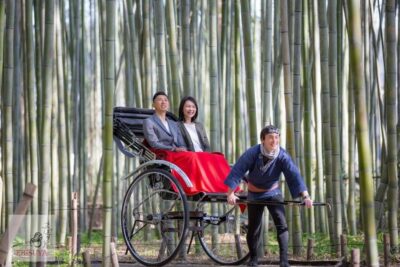
Arashiyama Customized Rickshaw Tour & Bamboo Forest
Read our review →
Split by Private Electric Rickshaw – Palace & Hidden Gems
Read our review →
Where else this ride shows up