
REVIEW · RICKSHAW TOURS
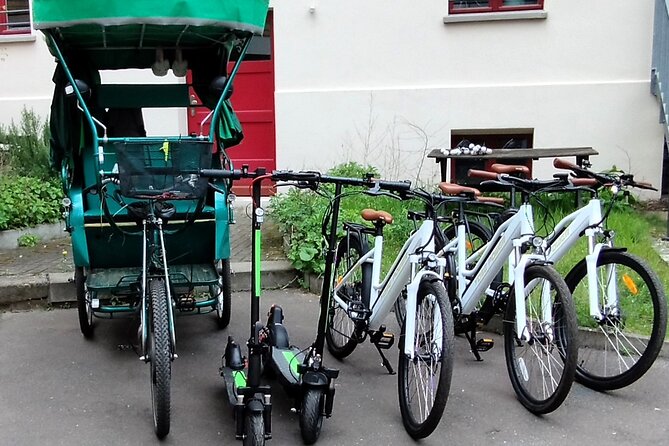
Private Up to 12 Guests-ONE RICKSHAW, E-Bikes, E-Scooters
Berlin becomes much easier to understand when you connect its grand squares, Nazi-era sites, Berlin Wall landmarks, and government buildings in one moving route. This private, mixed-transport tour lets some of your group ride bikes or scooters while others sit in the rickshaw, making it a practical choice for families with different ages and energy levels.
I like the close access to major sights, especially the way the route uses parks, paths along the River Spree, and quieter streets instead of sticking only to busy roads. I also like the built-in flexibility for photo stops and the option to bring along a less mobile family member without leaving that person behind.
The main consideration is price: $752.44 per group is a serious cost for a three-hour outing, though it can make sense when divided among a large private group. The vehicle mix also needs careful planning, since the standard arrangement includes one rickshaw and up to five standard bikes rather than a separate bicycle for every participant.
Key points to know before booking
- One rickshaw makes the tour workable for mixed-mobility groups: A less mobile participant can ride close to the sights while others use bikes or scooters.
- The route covers 11 major Berlin stops: You see Alexanderplatz, Museum Island, Bebelplatz, Gendarmenmarkt, Checkpoint Charlie, Potsdamer Platz, the Holocaust Memorial, Brandenburg Gate, and the Reichstag area.
- The tour is private for up to 12 people: Your group does not share the outing with strangers.
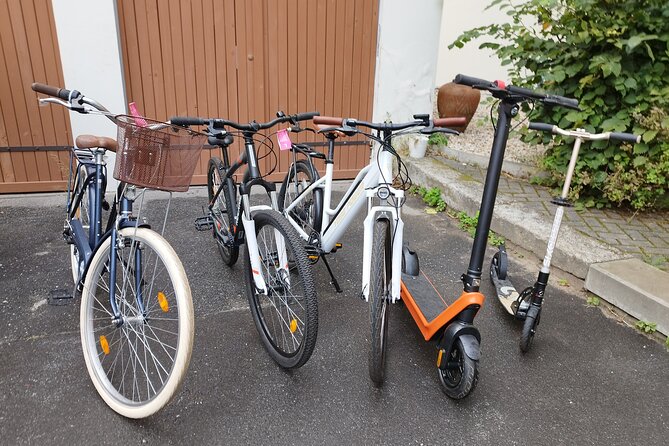
- The transport is part of the fun: The experience may combine a rickshaw, e-bikes, e-scooters, and up to five standard bikes.
- You get unusually close to central sights: The route uses paths and streets that bring you near monuments and allow stops for pictures.
- The timing is tight but useful: Three hours gives you a strong first look at Berlin-Mitte, not long museum visits or a slow study of each memorial.
Why the mixed transport works for a family group
The clever idea here is not simply adding wheels to a city tour. It is solving a common Berlin problem: a group may want to see the same sights but have very different abilities.
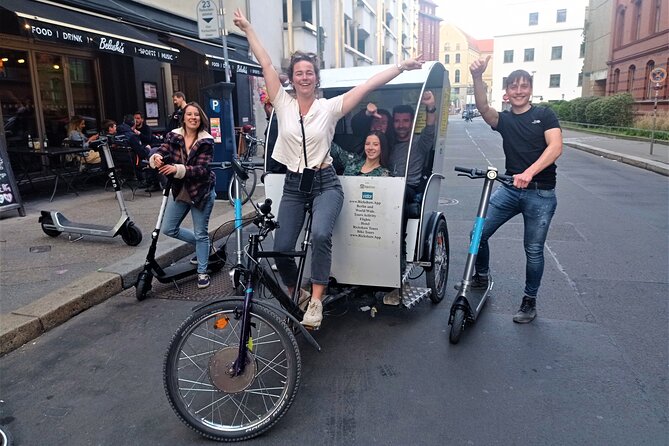
The youngest riders can pedal or use an e-scooter. Active adults can cover ground quickly on e-bikes. A grandparent or anyone who tires easily can sit in the rickshaw and still move with the group. The supplied arrangement includes one rickshaw and up to five standard bikes, with e-bikes and e-scooters also part of the experience. If you need more vehicles, you are advised to contact Berlin-Rickshaw or Berlin-Excursions before booking.
This is especially useful for a group of nine to 12 people. A large walking party can lose time at crossings and corners, while a bike group can cover more of Berlin-Mitte in the same period. The private format also means the guide can stop for your pictures instead of following a fixed schedule for strangers.
One account describes a group ranging from five to 59 years old using several types of transport. That age spread tells you what the tour is trying to do well: keep the whole family involved. Another group used the rickshaw, e-bikes, and an e-scooter, with equipment described as new and good quality. Those details matter because an awkward or poorly matched vehicle could spoil the central idea.
Do not book this as a quiet, detailed museum tour. It is a moving overview. You will spend time outside, change your view often, and hear short explanations at many stops. For a first day in Berlin, that can be a smart way to get your bearings fast.
More Private Tuk Tuk Tours in Germany
- Berlin: Private Guided E-Rickshaw Tour
★ 4.9 · 157 reviews - Berlin Express: Private 1-Hour E-Rickshaw Ride
★ 5.0 · 116 reviews - Berlin: Private Sightseeing Tour in an E-Rickshaw
★ 4.9 · 44 reviews
Starting at Alexanderplatz and the red heart of old Berlin
The meeting point is Weinbergsweg 6, and the route begins at Alexanderplatz near the Berliner Fernsehturm, Berlin’s famous television tower and the tallest structure in Germany. The tower is easy to recognize, so it gives the group a clear reference point before the ride starts.
Alexanderplatz itself is not the prettiest square on the route, but it is a useful place to begin. It shows the scale and feel of former East Berlin, while the nearby monuments lead you toward older parts of the city.
You pass the Red Town Hall, or Rotes Rathaus, Berlin’s city hall. The building’s red brick makes it easy to identify, and the stop helps connect modern Berlin with the city’s civic center. Nearby are St. Mary’s Church and Neptune Fountain. These are brief viewing stops, not extended visits, so keep your camera ready.
The guide then takes you toward Museum Island. The short pauses at the beginning help you understand where Berlin’s old center fits within the larger city. If you are using the rickshaw, this section should feel easy, since you can stay close to the group without needing to walk between each point.
Museum Island and Unter den Linden in five-minute views
Museum Island is one of Berlin’s most important cultural areas and a UNESCO World Heritage Site. The route does not include museum admission, and the stop is listed at about five minutes, so you should think of this as an exterior introduction.
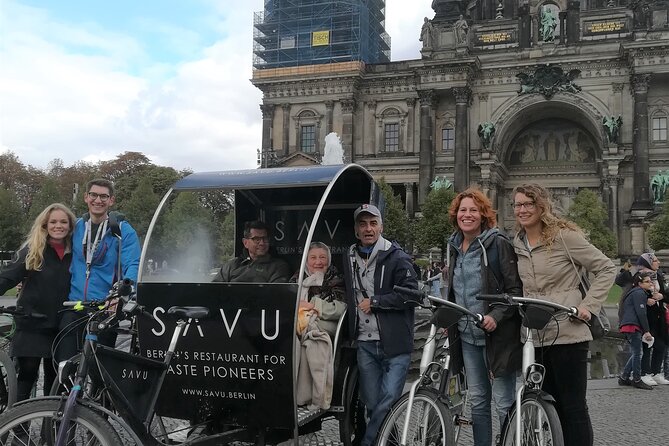
From the route, you can see the Berlin Cathedral, the reconstructed Berlin City Palace, the Old Museum, the Old National Gallery, the Pergamon Museum, and the Bode Museum. Each building has its own shape and character, but the real value of a short stop is seeing them together. Berlin’s old center was built to impress, and the line of grand buildings makes that clear.
You also travel along Unter den Linden, the historic boulevard linking the area with major civic and royal sites. This is a good place to let the guide provide context, since the buildings are easier to understand when you know how the boulevard connects them.
The limitation is time. Five minutes is enough for orientation and photographs, not enough to explore the museums or read every sign. If Museum Island is a major reason for your visit, plan a separate museum visit on another day.
Bebelplatz and the memory of Nazi book burning
Bebelplatz brings the tour into one of Berlin’s most important memorial spaces. It forms part of the Forum Fridericianum, alongside the State Opera, Humboldt University, the State Library, and St. Hedwig’s Cathedral, Berlin’s first Catholic church.
The square is known for the Nazi book burning on May 10, 1933, when about 25,000 books were burned. A memorial recalls that event. This is a brief stop, but it carries more weight than the quick sightseeing pause might suggest.
I value the way this route places grand architecture beside difficult history. Berlin is not only about palaces and photogenic squares. The city asks you to look at how public spaces were used, misused, and later marked with memorials.
The short visit can feel too quick if you want a careful explanation of the memorial. Listen closely, and consider returning on foot later if this subject matters to you.
More Rickshaw Tours in Germany
- Individual City Tour – Rickshaw Sightseeing in Berlin
★ 5.0 · 120 reviews - Rickshaw Tours Berlin – Groups of up to 16 people with several rickshaws
★ 4.0 · 97 reviews - Rickshaw Sightseeing City Tours Berlin – Rikscha Tours
★ 4.0 · 55 reviews - One Up to 3 Rickshaws(6 GUESTS)-Taylor Made Rickshaw Berlin Tour
★ 5.0 · 20 reviews
Gendarmenmarkt and the elegant center of Berlin
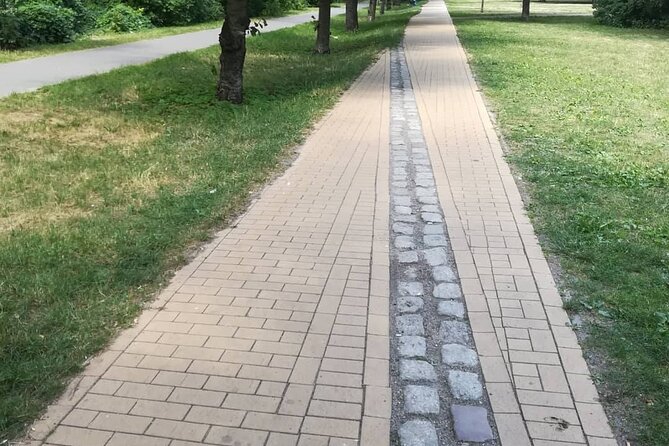
Gendarmenmarkt is one of the most impressive squares on the route. The former Royal Concert Hall sits between the German Cathedral and the French Cathedral, creating a formal composition that feels very different from Alexanderplatz.
The stop lasts about 10 minutes, which gives you more room for photographs and a look around. The square is also a useful place to compare Berlin’s architectural styles. You move from the broad spaces of former East Berlin to a more polished historic setting.
This is one of the stops where the rickshaw can be helpful. You can get close to the buildings without a long walk, then step out if you want pictures. The tour information specifically notes that the guide can stop where you would like for memorable photographs.
Checkpoint Charlie and the former Berlin Wall border
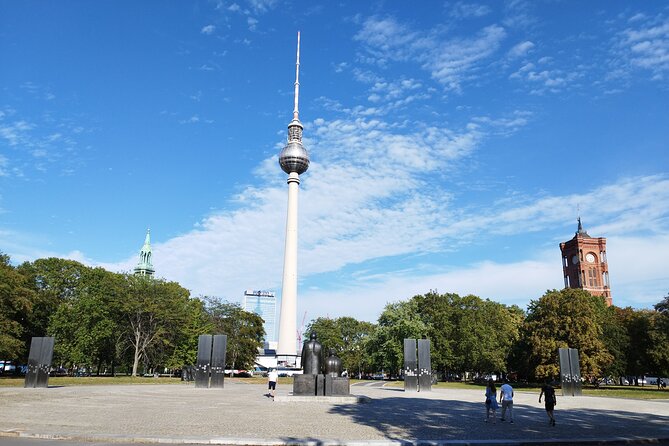
Checkpoint Charlie is one of Berlin’s best-known Cold War sites. It was a major crossing point between East and West Berlin, and the route presents it as a place where a local confrontation nearly turned into a much larger international crisis.
The stop is brief, around five minutes. That is enough to see the site and hear its basic importance, but not enough to study the full story of the Berlin Wall. The area is also one of the more heavily visited points on the route, so the experience is more about seeing the location than finding a quiet moment.
From here, the route follows the former border strip toward the Topography of Terror. This transition is valuable because you see how the Nazi period and the Cold War overlap in central Berlin. The city’s twentieth-century story is not divided into neat zones. Different layers appear within a few minutes of one another.
Topography of Terror and original Berlin Wall remains
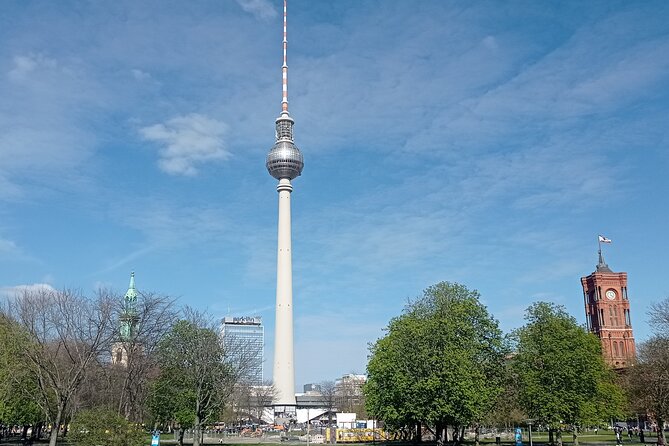
At the Topography of Terror, you see original sections of the Berlin Wall and the site of the former SS and Gestapo headquarters. The documentation center is one of Berlin’s major places for learning about National Socialism.
The stop also brings you past Martin-Gropius-Bau, known for major exhibitions, and the former Prussian Parliament in front of it. The emphasis here is on location and context. You are seeing the ground where powerful Nazi institutions operated, not just a detached museum display.
The listed stop is about five minutes, so you should not expect to study the full documentation center during the tour. If you want a serious look at the material, plan time to return. Still, the guide’s explanation can give you a useful reason to come back instead of passing the building without understanding its importance.
Potsdamer Platz, Berlin’s rebuilt modern face
Potsdamer Platz offers one of the sharpest changes in scenery. Once divided by the Berlin Wall, it became one of Europe’s largest construction sites after reunification. Today, its skyscrapers and futuristic buildings, including the Sony Center, show Berlin’s modern commercial side.
The stop lasts about 15 minutes, the longest pause on the route. That extra time makes sense. You need a moment to look up, compare the buildings, and understand how radically the area changed.
This part of the tour is less about old monuments and more about urban transformation. Berlin can move from nineteenth-century squares to Cold War traces to modern towers within a short ride. The mixed transport makes that contrast easier to cover without exhausting the group.
The Holocaust Memorial and a necessary quiet pause
The Memorial to the Murdered Jews of Europe, commonly called the Holocaust Memorial, is made up of concrete blocks arranged across a large open site. The memorial commemorates the murder of more than six million Jews under National Socialism.
The tour allows about 10 minutes here. That gives you time to enter the field of blocks and experience the changing scale of the space. I would treat this as a quiet stop rather than another quick photo opportunity.
The memorial can feel different from one person to the next, and the short schedule may not suit anyone who wants to reflect at length. Still, its position in the route is effective. It follows the Nazi-era sites and comes before the Brandenburg Gate, placing remembrance directly alongside Berlin’s best-known symbol.
Brandenburg Gate and the government district
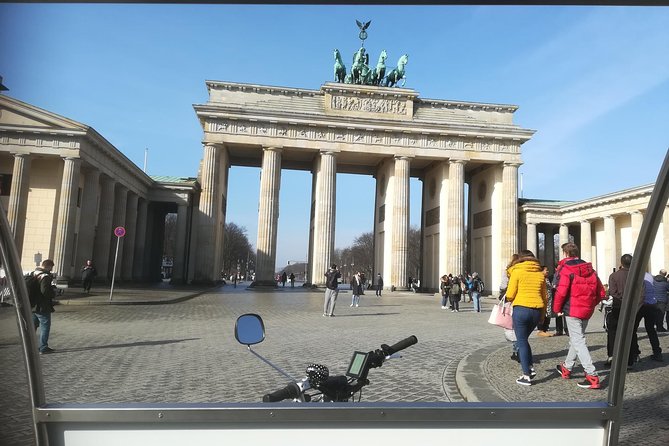
Brandenburg Gate is the classic Berlin stop. Once a city gate, it later became a symbol of division and then of reunification. You receive about 10 minutes here, enough to see the structure, take pictures, and hear why it matters.
From the gate, the route continues toward the Memorial to the Murdered Sinti and Roma and the government district. The inclusion of the Sinti and Roma memorial is important. It prevents the tour from presenting Nazi persecution as a story affecting only one group.
The final major sight is the Reichstag Building, home of the Bundestag, alongside the Chancellery and other government buildings. The listed stop is about five minutes, so this is an exterior look rather than a parliamentary visit. No admission to the Reichstag is included in the tour details.
Price, group size, and what the three hours deliver
The cost is $752.44 per group of up to 12 people. At the full group limit, that works out to about $63 per person. For four people, the same booking works out to roughly $188 per person, so the value changes sharply with group size.
For a large family or reunion, the price can be reasonable. You are paying for a private guide, several transport types, and a route that covers much more ground than a normal walking tour. You also avoid forcing the least mobile person to keep up on foot.
For a small group, the cost is harder to defend unless the transport mix is a major priority. A group of two or three may find a standard walking or bicycle tour less expensive. The strongest value appears when you have many people and need a private format.
The advertised duration is about three hours. One account describes an outing of approximately four hours, so you may want to keep some flexibility in your schedule. The route lists 11 stops, but most are short. You are buying breadth, not long visits inside museums or memorial centers.
The activity ends back at Weinbergsweg 6. Confirmation is provided at booking, and free cancellation is available up to 24 hours before the start time. Changes or cancellations inside that 24-hour window are not refundable.
Who should book this Berlin tour?
I would choose this for a family group with children, older adults, and different comfort levels around cycling. It is also a good fit if one person has limited mobility but still wants to stay part of the main outing.
The tour suits first-time visitors who want to see many central sights before deciding where to return. The guide can explain the route in your language, and the private setup gives your group more control over pauses and pictures.
I would be more cautious if your main goal is museum time, detailed memorial interpretation, or a slow architectural study. Five-minute stops move fast. You will see a lot, but you will need separate visits for the Pergamon Museum, the Topography of Terror, or any other indoor attraction.
Should you book it?
Book this tour if your group values coverage, flexibility, and shared family time more than the lowest price. The rickshaw solves a real mobility problem, while the bikes and scooters keep younger and more active participants involved.
Skip it if you have only a few people, want a long visit at each site, or prefer to explore Berlin at a slow walking pace. For a full group of up to 12, the private price becomes easier to justify. For a small group, the transport concept needs to be the main reason you choose it.
FAQ
Where does the tour start?
The tour starts at Weinbergsweg 6, 10119 Berlin, Germany.
Where does the tour end?
The activity ends back at the meeting point on Weinbergsweg 6.
How long does the tour last?
The listed duration is approximately three hours. One account describes the experience as lasting about four hours, so keeping some schedule flexibility is sensible.
How many people can join?
The private tour is for up to 12 people.
Is this a shared tour?
No. Only your own group participates.
What types of transport are included?
The experience includes one rickshaw, e-bikes, e-scooters, and up to five standard bikes. You can contact the provider about ordering additional rickshaws, bikes, or e-scooters.
Is the tour suitable for people with limited mobility?
Yes. The tour is specifically described as suitable for less mobile participants, who can enter the rickshaw in a few steps and remain close to the monuments.
Are admission tickets included?
The tour passes the listed sights from outside, and admission tickets are not included. The Berliner Fernsehturm stop specifically lists admission as not included.
Can service animals participate?
Yes. Service animals are allowed.
What is the cancellation policy?
You can cancel at least 24 hours before the local start time for a full refund. Cancellations or changes made less than 24 hours before the start time are not accepted for a refund.
More Rickshaw Tours in Berlin
- Berlin Rickshaw Tours Historical & Photo City Tour 120min – Sightseeing
★ 4.5 · 11 reviews - Daily First Rickshaw promotion in Combi Vehicle public Group 90€
★ 5.0 · 11 reviews - Romantic Berlin Rickshaw City and Photo Tour – incl. pick-up
★ 4.0 · 9 reviews - Rickshaw Tour-Cruise Ship guests arrive 9.30 upto 11.30 am Berlin
★ 5.0 · 7 reviews
More Private Tuk Tuk Tours in Berlin
- Private (Multi) Rickshaws with Pick-up Hotel
★ 5.0 · 4 reviews - Private Guide Up to Group 6 – ONE Rickshaw, (E)Bikes, E-Scooters
★ 5.0 · 3 reviews - Private Rickshaw Taylor Made By Night Tour
★ 5.0 · 3 reviews - True 4Hour Private Tuk Tuk Tour: Discover Lisbon with a Local!
★ 5.0 · 8,008 reviews
Just added around Berlin
- Rickshaw Tour-Cruise Ship guests arrive 9.30 upto 11.30 am Berlin★ 5.0 · 7 reviews
- Romantic Berlin Rickshaw City and Photo Tour – incl. pick-up★ 4.0 · 9 reviews
- Rickshaw Sightseeing Tours Berlin – Highlights Berlin – Rickshaw city tour★ 3.5 · 3 reviews
- Berlin Rickshaw Tours Historical & Photo City Tour 120min – Sightseeing★ 4.5 · 11 reviews
- Rickshaw Sightseeing City Tours Berlin – Rikscha Tours★ 4.0 · 55 reviews
- One Up to 3 Rickshaws(6 GUESTS)-Taylor Made Rickshaw Berlin Tour★ 5.0 · 20 reviews
- Daily First Rickshaw promotion in Combi Vehicle public Group 90€★ 5.0 · 11 reviews
- Private Guide Up to Group 6 – ONE Rickshaw, (E)Bikes, E-Scooters★ 5.0 · 3 reviews
Rickshaw Tours, compared.


Old Delhi Food, Heritage&Cultural Walk with Rickshaw ride to Masterji Kee Haveli
Read our review →
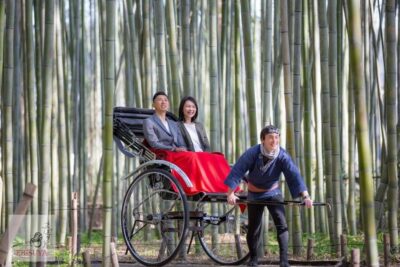
Arashiyama Customized Rickshaw Tour & Bamboo Forest
Read our review →
Split by Private Electric Rickshaw – Palace & Hidden Gems
Read our review →
Where else this ride shows up