
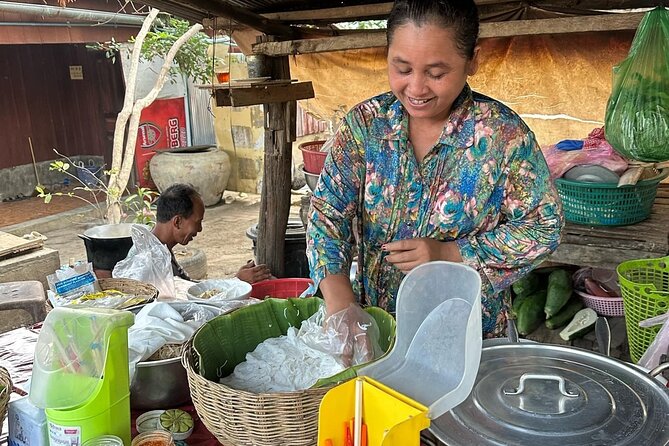
REVIEW · TUK TUK FOOD TOURS
Morning Tuk Tuk Food Tour: Taste Iconic Dishes of Battambang
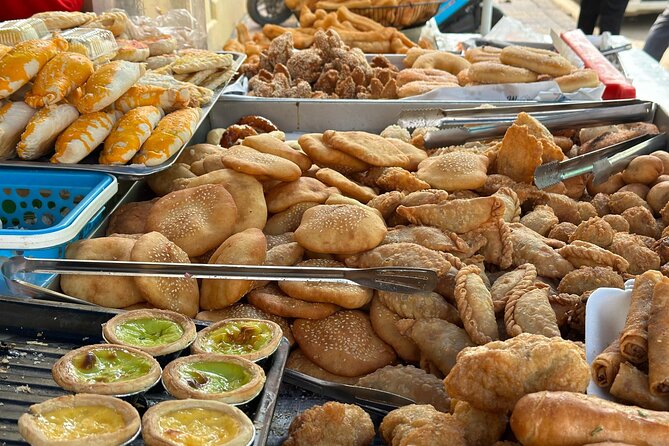
Battambang’s morning food scene is best understood one small plate at a time. This three-and-a-half-hour tuk tuk tour links coffee, pastries, breakfast pork, fish amok, old-style noodles, market food, desserts, and rice wine into one lively route through town and nearby communities.
I like the way the tour connects food with people and place, especially the family making fish amok by traditional methods and the third-generation cook serving nom banh chok beside her stilted home. I also like the generous range of tastes, from Cambodian iced coffee to smoky pork and rice, with a surprise dish saved for the end.
The main thing to consider is the early start and the amount of food. You begin at 8:00 am and make eight food-related stops, so this suits you best if you want a full breakfast and tasting session rather than a light snack outing. The route also depends on good weather and a minimum number of bookings.
Key points at a glance
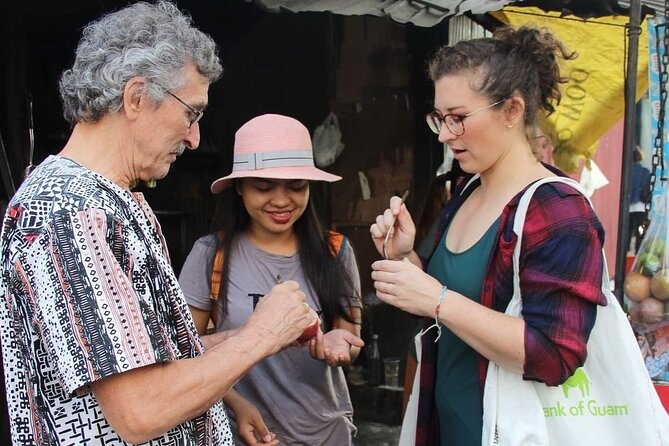
- Eight stops in about three and a half hours: The morning moves quickly, with roughly 15 to 30 minutes at each food stop.
- Grandpa Hai’s coffee since 1979: Begin with Cambodian iced coffee at a long-running local spot.
- Traditional fish amok: See a family prepare Cambodia’s national dish in banana leaves, using ingredients linked to Tonle Sap Lake.
- Nom banh chok beside a stilted home: Meet a third-generation cook serving one of Cambodia’s oldest noodle dishes.
- Food and local context: Psar Sophy fish market and Beoung Chhuk Market add ingredients, cooking methods, and farm-to-table context.
- Small-group format: The maximum group size is 12, which should make the food demonstrations easier to follow.
Why this morning works so well in Battambang
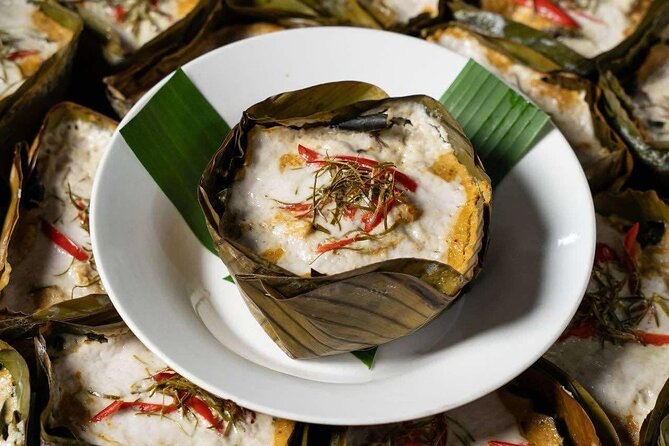
Battambang is a good place for a food tour because the city’s food culture is not limited to restaurants. Breakfast stalls, family kitchens, markets, bakeries, and roadside vendors all play a part. This tour gives you a practical way to see those settings in a single morning.
You are not simply handed finished dishes. The route includes food preparation, ingredients, cooking traditions, and the stories attached to particular dishes. That matters in Cambodia, where a bowl of noodles or a banana-leaf parcel can say as much about family life and local agriculture as it does about flavor.
The tour is also well timed. Starting at 8:00 am lets you catch the breakfast trade, when bai sach chruk and noodle dishes make the most sense. By the end, you have sampled both savory and sweet foods, and you have seen how rice, fish, pork, herbs, coconut, and fermented ingredients fit into everyday meals.
The published rating is 5 out of 5, based on two ratings, and the strongest praise centers on the quantity of food, the stories at each stop, seeing dishes made, and the final surprise. That is a useful guide to the tour’s character: this is as much about food knowledge and local contact as it is about eating.
More Tuk Tuk Food Tours in Cambodia
- Battambang: Morning Tuk Tuk Food Tour of Our Iconic Dishes
★ 5.0 · 2 reviews - Ultimate Phnom Penh Food Tour by Tuk Tuk: 20 Tastings and Drinks
★ 5.0 · 409 reviews - Old Siem Reap Sunset Food Tour by Tuk-tuk
★ 5.0 · 311 reviews
Coffee at Grandpa Hai’s, the right start at 8:00 am
The first stop is coffee at Grandpa Hai’s, where coffee has been served since 1979. You have about 15 minutes here, so expect a quick opening taste rather than a long café visit.
Cambodian iced coffee is a strong way to start the morning. It gives you a clear sense of the local preference for bold coffee with sweetness and plenty of ice. Since this stop is short, you will want to arrive ready to begin rather than treating the meeting point as a place to linger.
The meeting point is the Posts and Telecommunications Provincial Office of Battambang Province at 35VX+C83, Krong Battambang. Pickup is offered, but the published meeting point is still worth noting. If you are arranging pickup, confirm the details when booking so you know where the tuk tuk will collect you.
French-influenced pastries and Battambang’s mixed food traditions
The second stop visits a Khmer bakery serving pastries that reflect the period of French rule in Cambodia. You spend around 15 minutes here, sampling treats rather than sitting down for a full bakery meal.
This is a useful reminder that Cambodian food is not made up only of dishes that predate outside influence. French-style baking became part of local food culture, and pastries remain a familiar part of morning eating in Cambodia. Placing the bakery near the coffee stop also gives the opening of the tour a natural rhythm: drink first, then something sweet or buttery to eat.
The bakery stop may be less exciting if you are looking only for unusual Cambodian dishes. Still, it adds needed range. A good food tour should show how local cooking changes over time, not pretend that every plate comes from one fixed tradition.
Psar Sophy and the fish behind Battambang cooking
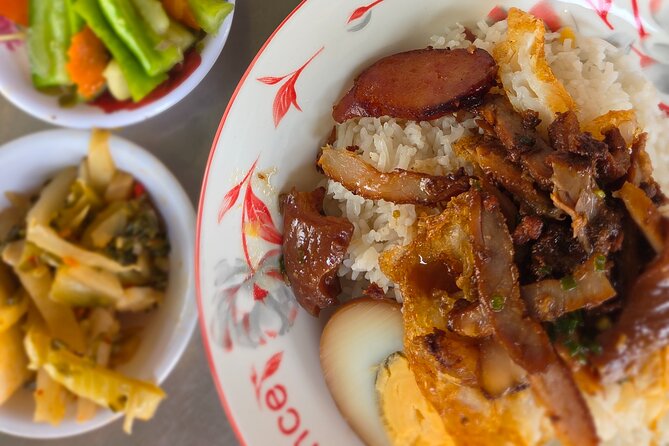
Next comes Psar Sophy, described as Battambang’s best-known local fish market. You have around 30 minutes to learn about fish associated with the area.
This is one of the more useful stops for understanding the dishes that follow. Fish is central to Cambodian cooking, and the tour connects market ingredients with preparations such as fish amok. The market setting should also help you see food before it reaches the plate, including the basic products that support local meals.
Market visits are not polished sightseeing stops. They can be busy, practical, and strongly focused on everyday trade. That is part of their value, though it means you should expect a working food market rather than a quiet tasting room.
The tour summary also includes Beoung Chhuk Market, where you learn about local ingredients, food customs, and Cambodia’s farm-to-table culture. The supplied schedule names Psar Sophy separately, so the exact flow between the two market experiences may vary. Either way, the market portion gives the morning an important ingredient-level view.
More Tuk Tuk Food Tours in Battambang:
- Bangkok: Midnight Food Tour by Tuk-Tuk
★ 4.9 · 2,054 reviews - Bangkok: Michelin Guide Street Food Tour by Tuk Tuk
★ 4.4 · 1,274 reviews - Xi’an Evening Food Tour by TukTuk
★ 5.0 · 715 reviews - Bangkok Tuk-Tuk Tour by Night with Chinatown Street Food Meal
★ 5.0 · 635 reviews
Bai sach chruk, Cambodia’s smoky breakfast classic
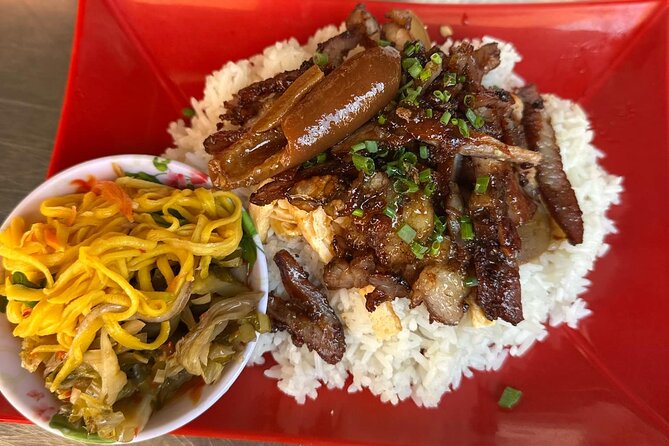
The next food stop focuses on bai sach chruk, a popular Cambodian breakfast of sticky rice and smoky pork. The Battambang version is presented in a local style, with about 30 minutes set aside for the stop.
This is the sort of dish that makes a morning food tour worthwhile. Bai sach chruk is simple in structure, but the appeal comes from the pork, the smoke, the rice, and the way it is eaten early in the day. It is filling, familiar, and firmly tied to the country’s breakfast habits.
You should pace yourself here. This is only the fourth stop, and you still have noodles, dessert, fish amok, grilled foods, and possibly rice wine ahead. The portions are not stated, but the food list is long enough that you should avoid arriving after a large breakfast.
Nom banh chok beside a family home
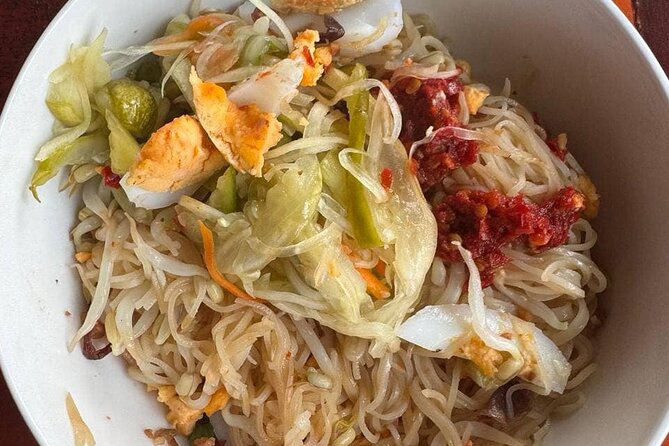
One of the most memorable parts of the route is the chance to try nom banh chok, described as Cambodia’s oldest noodle dish. It is served by a third-generation cook next to her stilted home.
That setting gives the dish more meaning than a restaurant bowl would. You can connect the noodles to a family tradition and see how food remains part of domestic life, not just a commercial product. The stilted home also places the meal in a distinctly Cambodian setting, rather than separating the dish from the way people live.
Nom banh chok is often associated with a fresh, herb-filled style of eating, though the supplied information does not specify every ingredient in the bowl. The important point here is the continuity of the recipe and the family role in keeping it in use.
This stop is especially good for you if you value food stories. It is less suited to anyone who wants a fast list of famous dishes with no explanation. The tour gives you time to connect the recipe with the cook and the home beside which it is served.
Desserts made with old methods
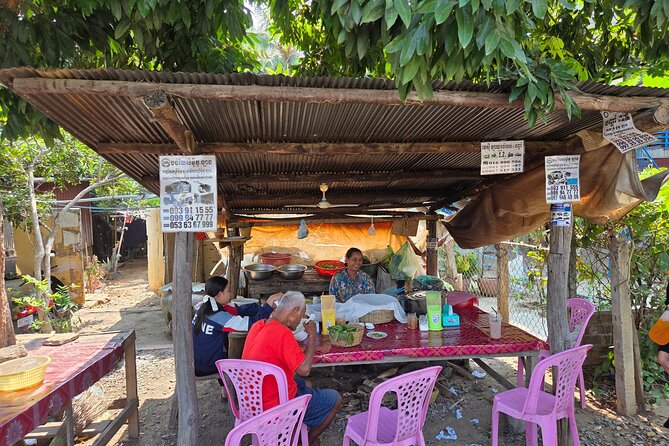
The itinerary includes about 30 minutes devoted to traditional Khmer desserts, with the added benefit of seeing how they are made. The methods are described as dating back centuries.
This is a welcome change of pace after the savory breakfast dishes. Cambodian desserts often depend on rice, coconut, palm sugar, and careful preparation, so watching the process can help you understand why a sweet may have a particular texture or shape.
Because the exact dessert is not named, you should approach this stop as a small discovery rather than a guaranteed chance to try one specific Cambodian sweet. That uncertainty is part of the fun, but it may disappoint you if you are booking the tour mainly to taste one particular dessert.
Fish amok, prepared in banana leaves
Fish amok is the tour’s major food highlight. You visit a family making Cambodia’s national dish with traditional methods, including steaming it in banana leaves. The dish uses ingredients connected with Tonle Sap Lake, and the stop lasts about 30 minutes.
Fish amok is often served as a soft, fragrant fish preparation with a coconut-based texture and aromatic seasoning. Here, the focus is not only on the finished dish. You get to see the preparation and understand how the banana leaf works as both a cooking vessel and a serving form.
I especially like this part of the tour because it brings together several ideas from the morning: local fish, family cooking, traditional technique, and food linked to Cambodia’s waterways. You also get a better sense of why a national dish is more than a restaurant favorite. It grows out of ingredients and methods that people have used at home.
The dish may be unfamiliar in texture if you expect grilled or fried fish. That is not a flaw, but it is worth knowing. Fish amok is a gentle, steamed preparation, and its appeal comes from aroma, seasoning, and softness rather than crispness.
Grilled foods, spring rolls, tea, and Beoung Chhuk Market
The morning also includes grilled meats, spring rolls, and tea with local people, along with a visit to Beoung Chhuk Market. This portion broadens the tasting beyond the named signature dishes.
Grilled meats give you a more direct street-food experience, while spring rolls offer a familiar point of comparison for anyone new to Cambodian food. Tea helps slow the pace and gives you a chance to take stock before the final stops.
At Beoung Chhuk Market, the focus is on ingredients, customs, and Cambodia’s farm-to-table food culture. I find this kind of stop more useful than a market visit that only points out unusual items. You learn how food connects the farm, the market, the home kitchen, and the finished meal.
The schedule does not give an exact time for every market activity, and the overall tour remains limited to about three and a half hours. Expect an active morning with short visits rather than a long market study.
Mikola and a final surprise
Mikola is described as a Battambang specialty with a powerful story. It appears late in the food sequence, after the market foods and tea, and gives the tour a dish associated specifically with the city.
The supplied information does not explain exactly what Mikola contains or how it is prepared. That makes it hard to judge in advance, but it also preserves some of the discovery built into the route. You can ask your guide about its ingredients, local importance, and story when you reach the stop.
The final stop is a surprise culinary experience. The details are deliberately withheld, but the tour describes it as worth the wait. For you, this means the ending is not a predictable final plate, and you should leave room for one more taste.
The surprise format works best if you enjoy trying food without knowing every detail beforehand. If you have strict dietary limits, ask for information before booking, since the exact final dish is not disclosed in the supplied details.
Rice wine and the last taste of the morning
The final listed stop looks at traditional rice wine production. You can see how it is made and try some if you choose.
This is a fitting end to a food route built around local methods. Rice appears in several forms during the morning, from sticky rice to noodles and desserts, and here it becomes a drink. The tasting is optional in tone, so you do not have to drink it if you prefer not to.
You should keep the time of day in mind. Rice wine comes after a substantial series of tastings, so moderation makes sense. This is a food-and-culture stop, not a drinking tour.
What $45 buys you
At $45 per person, the tour is not the cheapest way to grab breakfast in Battambang. You could certainly spend less by choosing one or two local dishes on your own.
The value comes from the range and the access. In roughly three and a half hours, you visit food stalls, a bakery, markets, and family food makers. You also get explanations, preparation demonstrations, transport in a tuk tuk format, and a route that would take more planning to recreate independently.
The published group limit is 12 people. That is small enough to keep the food demonstrations manageable, though the quality of the experience will still depend on the guide and the movement of the group between stops. Mobile tickets are available, confirmation is sent at booking, and the tour ends back at the starting point.
Pickup is offered, but the meeting point is listed at the Posts and Telecommunications Provincial Office. The activity is near public transportation, and most people can participate. No separate accessibility details are provided, so ask ahead if you have mobility needs or require a particular pickup arrangement.
Free cancellation is available up to 24 hours before the start time for a full refund. The tour can be changed or refunded if poor weather causes cancellation, and the same applies if the minimum number of bookings is not reached.
Who should book this Battambang food tour?
I would choose this tour if you want to understand Battambang through breakfast, family recipes, markets, and local production. It is especially useful early in your stay because it introduces many dishes you may want to seek out again.
You should also book it if you enjoy hearing the story behind food. The family fish amok preparation, the third-generation noodle cook, Grandpa Hai’s long-running coffee stop, and the rice wine method all add human detail to the tasting.
I would hesitate if you have a very small appetite, dislike eating early, or want a slow sit-down meal. Eight stops in a short morning is a lot, and the route is designed for variety rather than long meals.
For food lovers, curious first-time visitors to Battambang, and anyone who wants more than a restaurant checklist, the $45 price is reasonable. You get a broad introduction to local dishes and food customs, with the added pleasure of not knowing exactly what the last surprise will be.
FAQ
How long does the Morning Tuk Tuk Food Tour last?
The tour lasts approximately 3 hours and 30 minutes.
What time does the tour start?
It starts at 8:00 am.
Where does the tour begin?
The meeting point is the Posts and Telecommunications Provincial Office of Battambang Province, 35VX+C83, Krong Battambang, Cambodia.
Where does the tour end?
The activity ends back at the meeting point.
Is pickup available?
Yes. Pickup is offered, although the listed meeting point is the Posts and Telecommunications Provincial Office.
How many people can join the tour?
The maximum group size is 12 people.
What foods are included?
The route includes coffee, French-influenced pastries, bai sach chruk, nom banh chok, traditional Khmer desserts, fish amok, grilled meats, spring rolls, tea, Mikola, a surprise culinary stop, and rice wine.
Will I see food being prepared?
Yes. You can see traditional fish amok being made, learn how Khmer desserts are prepared, and see how traditional rice wine is produced.
Is the tour suitable for most people?
Most people can participate, according to the activity information. No separate accessibility details are provided.
Can I cancel for a refund?
Yes. You can cancel at least 24 hours before the start time for a full refund. Cancellations or changes made less than 24 hours before the start time are not accepted for a refund.
Just added around Battambang
- Private Half-Day Tuk Tuk Tour in Battambang★ 5.0 · 2 reviews
- half day morning tour by Tuk-Tuk★ 5.0 · 20 reviews
- Tuk Tuk Tour (Full-Day)★ 5.0 · 7 reviews
- Private Full Day Tuk Tuk Tour in Battambang★ 5.0 · 12 reviews
- Full-Day Battambang with a local Tuk Tuk Tours★ 5.0 · 2 reviews
- Full/Half Day Tuk TuK: Handicrafts Bambootrain Killing&Bat Caves★ 5.0 · 14 reviews
- Morning Tuk tuk: City, Handicrafts, Killing field, Temples★ 4.9 · 13 reviews
- Battambang: Morning Tuk Tuk Food Tour of Our Iconic Dishes★ 5.0 · 2 reviews
Tuk Tuk Food Tours, compared.

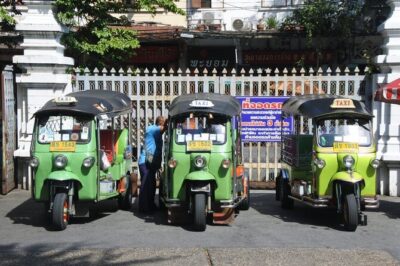
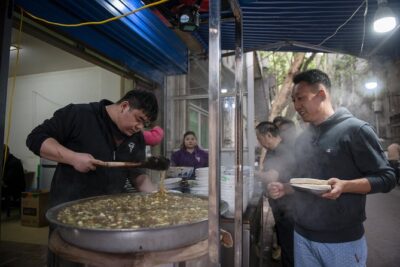

Bangkok Tuk-Tuk Tour by Night with Chinatown Street Food Meal
Read our review →
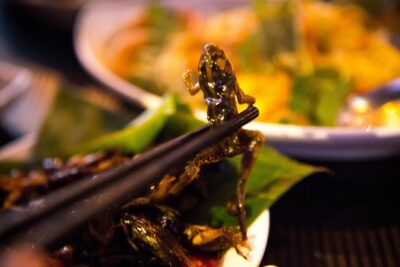
Ultimate Phnom Penh Food Tour by Tuk Tuk: 20 Tastings and Drinks
Read our review →
Where else this ride shows up