

REVIEW · BATTAMBANG TUK TUK TOURS
Tuk Tuk Tour (Full-Day)
Battambang’s best sights are spread across the countryside, and this full-day tuk tuk tour ties them together without asking you to arrange separate rides. You move from Khmer Rouge history to sticky rice, fish paste, rice paper, temples, the Bamboo Train, and Phnom Sampov’s sunset and bat cave.
I like the small group limit of four, which should make village stops easier and keep the ride from feeling like a parade. I also like the mix of hands-on local businesses and major sights. The main drawback is the long day in an open tuk tuk, with lunch and every admission fee paid separately.
Key points at a glance
- A full Battambang circuit: The route covers the countryside, Ek Phnom, the Bamboo Train, Banan Temple, and Phnom Sampov in roughly eight hours.
- Local production in plain view: You see sticky rice, fish paste, rice paper, and rice wine being made through small village businesses.
- A serious historical stop: The morning includes a Khmer Rouge killing field, identified in the tour details and guest accounts as Samrong Knong.
- Guide quality matters: Sothea is named repeatedly in the feedback, while Lim is also praised for being caring and informative.
- Budget-friendly pricing: At $35 per person, the tour includes transport, guiding, water, fruit, snacks, and local business donations, but not lunch or entry tickets.
- A memorable finish: Phnom Sampov combines a sunset stop with a bat cave visit, giving the day a strong final scene.
Why this tour works for seeing Battambang
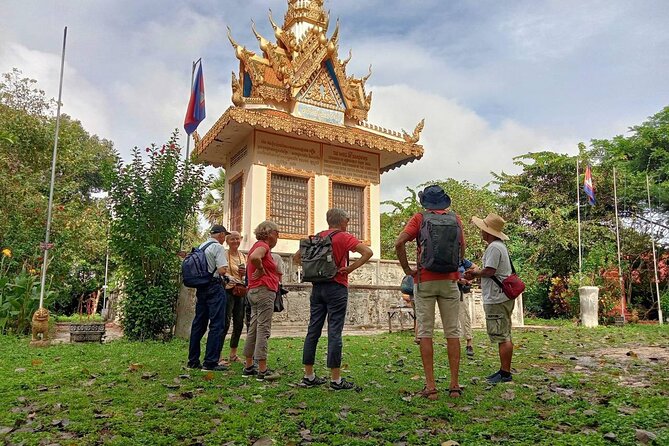
Battambang is easier to understand when you leave the town center. The countryside is where the food-making traditions, small workshops, temples, and rural roads come together. A tuk tuk is a practical way to cover the distance, especially if you want to see several places in one day.
This is not a slow, single-site outing. It is a broad introduction to the area. You get history in the morning, local food production before lunch, and the biggest sightseeing stops in the afternoon.
The tour lasts about seven to nine hours, with the planned day described as eight hours. That is enough time for a substantial look at Battambang, but you should expect a fairly full schedule. Some stops will be short, and the amount of time at each place can depend on road conditions, the pace of your group, and how much explanation you want.
The small group size is useful here. With a maximum of four people, you can ask questions without competing with a busload of strangers. The tour is also described as suitable for most people, with service animals allowed and pickup available.
More Full-Day Trips in Battambang:
- Explore Battambang full day tour by Tuk Tuk (start from 9am-6:30pm)
★ 5.0 · 240 reviews - Full day tour by bicycle & tuk tuk,bamboo train,bat cave,villages
★ 5.0 · 27 reviews - Private Full Day Tuk Tuk Tour in Battambang
★ 5.0 · 12 reviews
Morning history at Samrong Knong
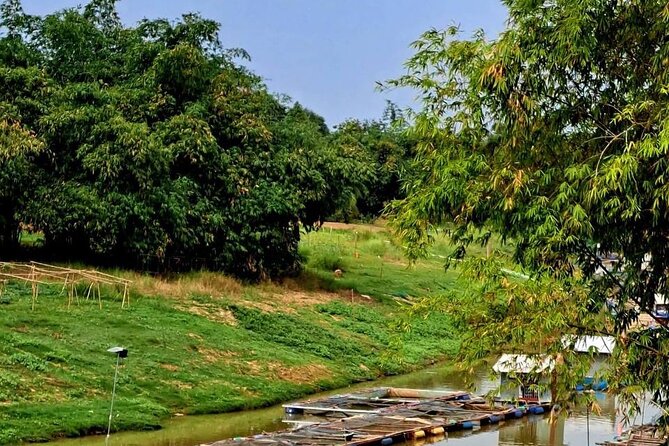
The day begins with a Khmer Rouge history stop at a killing field. Guest accounts identify this as Samrong Knong Killing Fields, an important detail if you want to know which part of Cambodia’s recent past the tour addresses.
This is a serious opening to the day. You are not simply checking off a monument before moving on to lunch. The stop gives your guide a chance to explain the local effects of the Khmer Rouge period, and the feedback repeatedly points to the guides’ ability to discuss this history clearly.
Sothea receives especially strong praise for explaining the past in understandable English. That matters at a site like this, where context helps you understand what you are seeing and why it matters. The tour description does not give a fixed length for the stop, so plan to listen, ask questions, and allow the guide to set the pace.
I appreciate that this subject appears alongside ordinary village life. Cambodia’s history is not separate from its present-day communities. Moving from the killing field to food production and family businesses creates a more grounded picture of the area.
Sticky rice and the small businesses of rural Cambodia
After the history stop, the tour turns to local food and household industries. The first listed activity is bamboo sticky rice, a traditional business that uses bamboo as part of the cooking and presentation process.
This is the sort of stop that gives the tour its local character. Instead of seeing only temples, you get a look at how a familiar Cambodian food is prepared and sold. The exact demonstration can vary, but the point is the same: you see food as part of everyday work, not just as something served in a restaurant.
The fish market stop focuses on making fish paste. This may be a stronger experience for curious eaters than for anyone sensitive to strong smells. Fish paste is an important part of Cambodian cooking, and seeing its preparation helps explain flavors you may encounter elsewhere in the country.
The guide’s role is important at each of these stops. A short visit can otherwise become a quick look and a photo. With an English-speaking local guide, you can ask what the product is used for, how it is made, and how the business fits into village life.
The tour includes donations to the local businesses where you stop. That is a modest but meaningful feature. You are not promised a large formal workshop or an elaborate performance. Instead, part of the tour price supports the small businesses you visit.
Rice paper and rice wine workshops
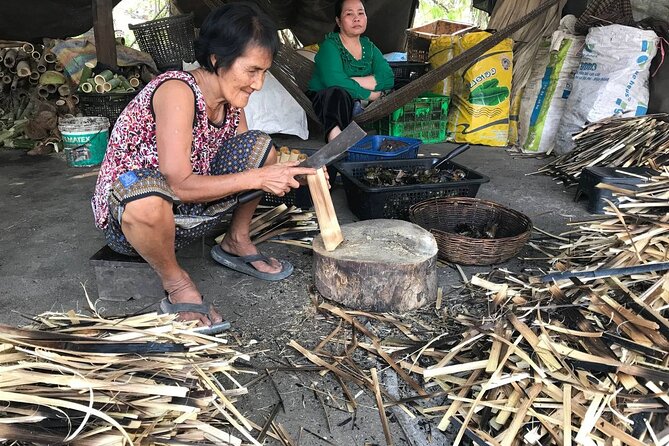
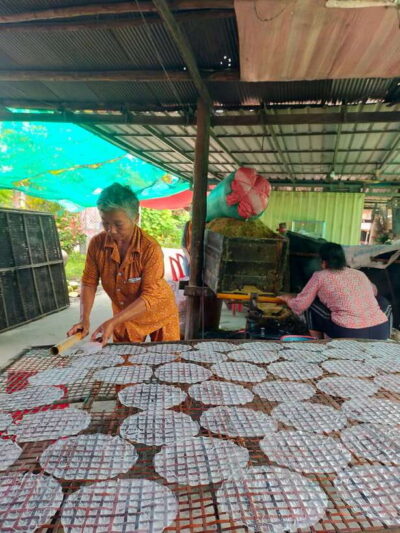
The rice paper stop adds another useful look at local production. You see handmade rice paper, an everyday food item that takes time and skill to prepare. The experience is likely to appeal to you if you enjoy seeing the process behind familiar dishes rather than simply tasting the final product.
Rice wine is also listed as handmade. This stop gives the morning a different flavor, with a traditional drink replacing the focus on food wrapping or fish preparation. As with the other businesses, the tour description does not specify a tasting arrangement, so you should not assume that sampling or purchasing is included.
These stops are also where a personal guide can make a real difference. Sothea is repeatedly singled out for explaining food and culture, and another account describes him staying with the group and explaining each place along the way. Lim is praised for being attentive and checking that the group remained comfortable.
Those comments suggest the service is strongest when the guide is actively involved, rather than simply driving from point to point. When you book, it is sensible to confirm who will guide you and whether your driver will also provide the commentary.
More Tuk Tuk Tours in Battambang:
- Battambang: Tuk-Tuk, Bamboo Train, Killing/Bat Caves, Sunset
★ 4.9 · 1,436 reviews - Battambang Tuk Tuk tour: Bambootrain, Killing & Bat Caves,Sunset
★ 5.0 · 799 reviews - Afternoon tour by tuk tuk to bamboo train,bat cave,killing cave,countryside.
★ 5.0 · 344 reviews - Battambang: Bamboo Train, Bat Cave, Killing Cave by Tuk Tuk
★ 5.0 · 182 reviews
Ek Phnom, a temple stop before lunch
The morning finishes at Ek Phnom, one of Battambang’s main temple sights. It gives the day a change of pace after the food workshops and historical stop.
The supplied information does not provide details about the temple’s architecture, opening hours, or admission cost. The tour specifically states that tourist-place entrance fees are not included, so you should budget for the ticket here if one is charged on the day.
Ek Phnom is a good fit in the schedule because it breaks up the village visits. You get a formal cultural site after seeing working businesses and rural communities. Your guide can also help connect the temple to the wider Battambang area, though the depth of that explanation may depend on the person assigned to your tour.
The morning can feel information-heavy. You will be covering history, food production, and a temple before lunch. If you like variety, that is a strength. If you prefer to spend a long time at one place, this tour may feel too quick.
Lunch is not part of the $35 price
The tour pauses for lunch, but lunch is not included. That is worth planning for because the day continues into the afternoon and you will want a proper break.
The supplied details do not name a restaurant or give a lunch budget. Ask the guide at the start of the morning where lunch will happen and how much time you will have. You can also clarify whether your preferred food needs to be arranged in advance.
This is one of the few practical gaps in the tour information. The $35 price looks reasonable, but the final cost will be higher once you add lunch and admission tickets. Bring enough Cambodian riel or other accepted payment for those extras, though the exact payment options are not stated.
The Bamboo Train in the afternoon
The afternoon begins with the Bamboo Train, listed as a newer spot in the tour details. It is one of Battambang’s signature attractions and gives the day a lighter, more playful change after the morning’s serious history.
The description does not state the ride length, ticket price, or exact operating arrangements. Admission tickets are not included, so confirm the current cost with your guide. Since the tour schedule is broad rather than minute-by-minute, the amount of time here may depend on the day’s pace.
This stop is likely to be most enjoyable if you treat it as part of the whole day rather than the sole reason for booking. You get the railway attraction alongside temples, countryside, and local production. If you are mainly interested in the Bamboo Train, a shorter dedicated visit might offer more time there, but this tour gives you far more range.
The tuk tuk transport is especially useful on this section of the day. You are not tied to a large vehicle, and a group of four or fewer can move between stops with less fuss. The tradeoff is exposure to sun, dust, and road noise. Wear practical clothing and carry any personal items you need during a long day out.
Banan Temple and the final hilltop views
Banan Temple follows the Bamboo Train. The tour information names the site but does not describe the climb, the number of steps, or the admission charge. Because the tour is designed for most participants, it is presented as broadly accessible, but you should still ask about the physical demands if stairs or steep ground are a concern.
This is another place where timing matters. Banan is part of an afternoon sequence that also includes Phnom Sampov and sunset. You may have less time here than you would on a temple-only tour.
I like having Banan included because it prevents the day from becoming only a food and railway outing. The temples give you a stronger sense of Battambang’s cultural setting, while the surrounding stops show how people live and work now.
Sunset and the bat cave at Phnom Sampov
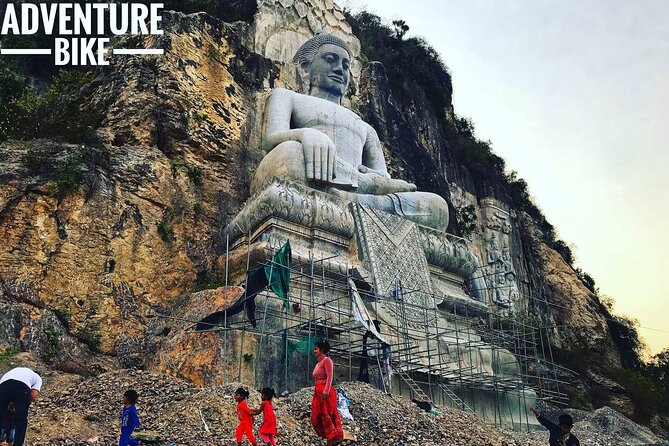
The tour saves Phnom Sampov for sunset, followed by the bat cave. This is the day’s most atmospheric finish and one of its clearest selling points.
You should expect the schedule to be shaped around daylight. The exact sunset time changes through the year, and the tour description does not state how long you remain at the site. Your guide will need to balance the earlier stops with the timing at Phnom Sampov, especially if the afternoon runs late.
The bat cave is listed as part of the visit, but the description does not explain the viewing setup or how long the emergence lasts. Do not assume that a particular viewing platform, show, or fixed departure time is included. The key value is the chance to end a long day with a natural spectacle rather than another indoor attraction.
Phnom Sampov also gives you a final chance to ask your guide about the area and the day’s history. A guide who has stayed involved throughout the route can help bring the separate pieces together: the Khmer Rouge memorial, the rural businesses, the temples, and the countryside around Battambang.
What the guide service adds
The guide is central to this experience. The tour includes an experienced tuk tuk driver and a local English-speaking guide. In the feedback, Sothea is named several times, and Lim is praised for being informative, caring, and attentive to comfort.
Sothea’s strongest reported qualities are his English, his explanations of Cambodian history, and his habit of remaining with the group at each stop. That is particularly valuable at the killing field and food workshops, where a quick translation would not be enough.
The information does not guarantee that Sothea or Lim will lead every departure. Treat those names as examples of guides connected with the experience, not as a promise of a specific assignment. If having a particular guide matters to you, ask before booking.
The driver is also described in one account as serving as both driver and guide. That arrangement can work well for a small group, but it is worth confirming whether your booking includes a separate guide or one person handling both roles.
Is $35 good value?
At $35 per person, the tour offers a lot of coverage for one day. You receive pickup, tuk tuk transport, a driver, a local English-speaking guide, water, fruit, snacks, and donations to local businesses. A maximum of four people makes the price more attractive for couples, families, or a small group that wants a private-feeling outing.
The price does not cover entrance fees, lunch, personal expenses, or insurance. You should add those costs before comparing it with a private driver hire or a series of separate visits.
The value comes from the range. You would be paying for a full day of transport and coordination, not just admission to one attraction. The food-making stops and historical explanation also add experiences that can be difficult to arrange on your own.
The main question is pace. If you want a relaxed day with long meals and extended temple visits, this may feel packed. If you want to cover Battambang’s main sights and sample several kinds of local life in one outing, $35 is a sensible starting price.
Who should book this Battambang day tour?
I would choose this tour if you have limited time in Battambang and want a broad first look at the area. It suits couples, families, and small groups who value local explanation as much as sightseeing.
It is also a good match for you if you like food traditions, recent history, and rural workshops. The route is not built only around postcard views. It includes a killing field, fish paste, rice paper, rice wine, and sticky rice, which gives the day more substance.
You may want another option if you dislike open-air transport, have difficulty with a long day, or prefer to set your own pace. The schedule covers many stops, and you will need to pay for lunch and entry fees on top of the advertised rate.
Book with realistic expectations about comfort and timing. Confirm the guide, ask about the lunch stop, and check the current entrance costs. Those small questions will help you get more from the day.
Should you book it?
Book this tour if you want one efficient day covering Battambang’s history, food culture, temples, Bamboo Train, sunset, and bat cave. The small group size, local guide, and broad route make it a useful introduction, especially when Sothea or another attentive guide is available.
Skip it if you want a slow temple day or a tightly scheduled luxury outing. For most people with only a short stay, though, the mix is strong and the $35 base price is fair once you have allowed for lunch and entrance fees.
Free cancellation is available when you cancel at least 24 hours before the start time. Changes or cancellations made later are not accepted for a refund.
FAQ
How long does the Tuk Tuk Tour last?
The tour lasts approximately seven to nine hours. The planned duration is listed as about eight hours.
What places are included on the tour?
The route includes a Khmer Rouge killing field, bamboo sticky rice production, a fish market where fish paste is made, handmade rice paper, handmade rice wine, Ek Phnom, the Bamboo Train, Banan Temple, and Phnom Sampov for sunset and the bat cave.
Is hotel pickup available?
Pickup is offered as part of the experience. The supplied details do not specify the exact pickup area or time.
Are entrance fees included?
No. Entrance fees for tourist places are not included in the tour price.
Is lunch included?
No. Lunch is not included, so you should budget separately for your midday meal.
How many people can join the tour?
The tour has a maximum of four participants. It includes an experienced tuk tuk driver and a local English-speaking guide, along with water, fruit, and snacks.
Just added around Battambang
- Private Half-Day Tuk Tuk Tour in Battambang★ 5.0 · 2 reviews
- half day morning tour by Tuk-Tuk★ 5.0 · 20 reviews
- Morning Tuk Tuk Food Tour: Taste Iconic Dishes of Battambang★ 5.0 · 2 reviews
- Full/Half Day Tuk TuK: Handicrafts Bambootrain Killing&Bat Caves★ 5.0 · 14 reviews
- Private Full Day Tuk Tuk Tour in Battambang★ 5.0 · 12 reviews
- Full-Day Battambang with a local Tuk Tuk Tours★ 5.0 · 2 reviews
- Morning Tuk tuk: City, Handicrafts, Killing field, Temples★ 4.9 · 13 reviews
- Battambang: Morning Tuk Tuk Food Tour of Our Iconic Dishes★ 5.0 · 2 reviews
Battambang Tuk Tuk Tours, compared.
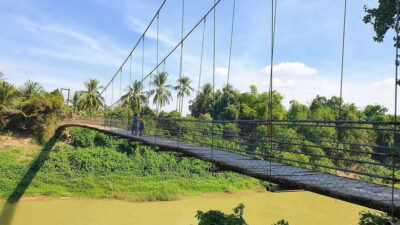
Tuk-Tuk, Bamboo Train, Killing/Bat Caves, Sunset
Read our review →
Battambang Tuk Tuk tour: Bambootrain, Killing & Bat Caves,Sunset
Read our review →
Afternoon tour by tuk tuk to bamboo train,bat cave,killing cave,countryside.
Read our review →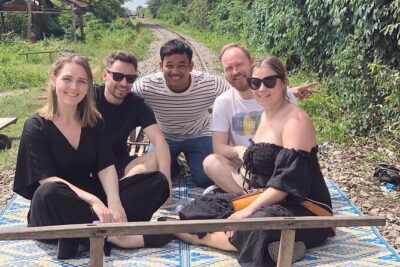
Explore Battambang full day tour by Tuk Tuk (start from 9am-6:30pm)
Read our review →
A Day TukTuk Handicrafts Bambootrain Killing&BatCaves,Sunset
Read our review →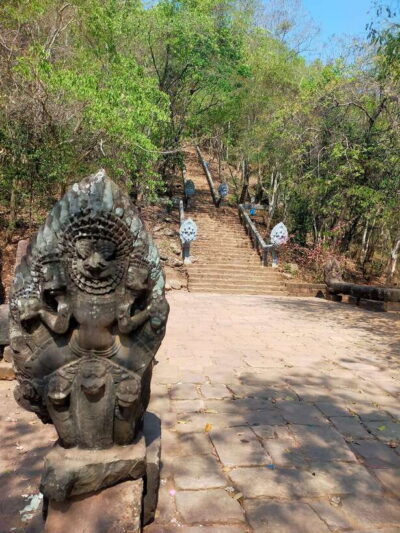
A Day TukTuk Bambootrain, Banan, Killing & Bat Caves, Sunset
Read our review →
Full day tour by bicycle & tuk tuk,bamboo train,bat cave,villages
Read our review →Where else this ride shows up