
REVIEW · RICKSHAW TOURS
Rickshaw for 2 and Driver-Shared Guide (Combo Vehicle Group)
Berlin’s historic center is made for a rolling tour. It is too spread out for a pleasant walk in one stretch, yet too close-packed for a car to show you much. This shared rickshaw, e-bike, and e-scooter tour connects the major sights of Mitte in three and a half hours, with a guide supplying the stories between stops.
I like two things right away: the mixed-vehicle setup, which lets a cyclist and a less-mobile companion tour together, and the wide sweep of the route. You can see the TV Tower, Museum Island, Brandenburg Gate, the Wall, Checkpoint Charlie, and several Nazi-era memorials without arranging separate visits.
The main caution is that this is an overview, not a long stop at every sight. With so many landmarks packed into 210 minutes, you will usually get a guided explanation and photo stop rather than an interior visit. Also confirm the meeting point before setting out, since the details name both Weinbergsweg 6 and Torstrasse 85.
Key points to know before booking
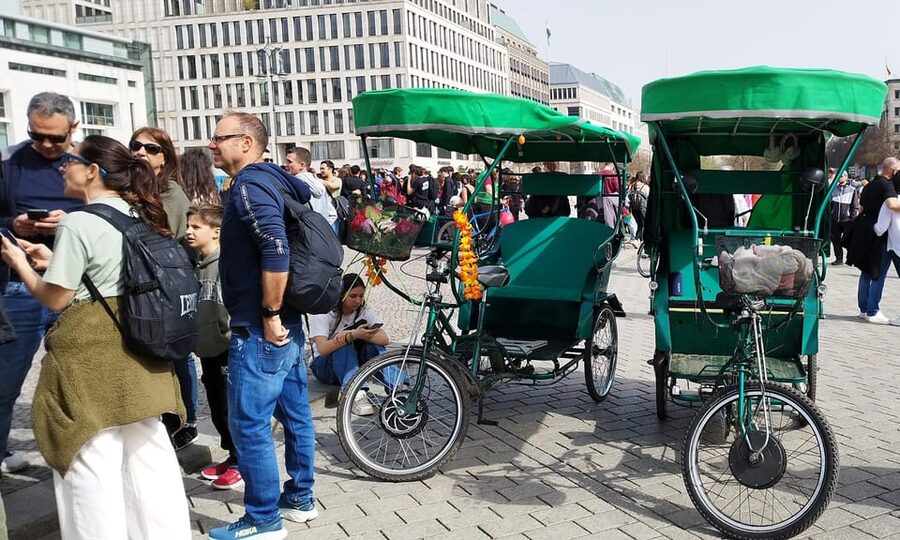
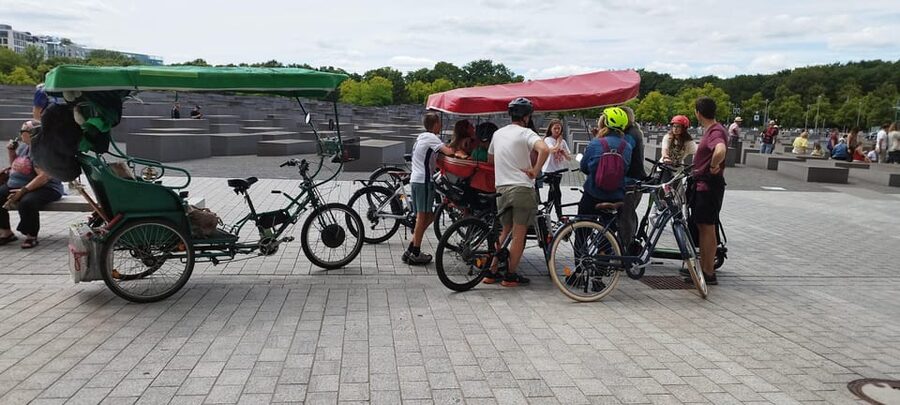
- A practical choice for mixed abilities: A rickshaw lets a non-cyclist, older relative, or young child stay with riders using bikes or scooters.
- Mitte’s major sights in one route: The tour links the TV Tower, Museum Island, Brandenburg Gate, Holocaust Memorial, Berlin Wall, and Checkpoint Charlie.
- Small shared group: The group is limited to eight participants, though the exact vehicle mix may vary.
- A guide-led history tour: Expect context on Berlin’s politics, monarchy, Nazi period, Cold War, arts, and present-day culture.
- Three languages plus Turkish: Live guiding is offered in English, German, Dutch, and Turkish.
- Good value for two: The $235 price is per group of up to two, not per person, making the cost easier to justify for a private pair even though the guide experience is shared.
Why a rickshaw works so well in Berlin Mitte
Berlin Mitte is compact on a map but tiring on foot. The route takes you from Alexanderplatz and the TV Tower through the government quarter, Museum Island, the old royal center, former Nazi sites, and the Cold War border zone. That is a lot of ground for one day, especially for anyone who prefers not to walk several miles.
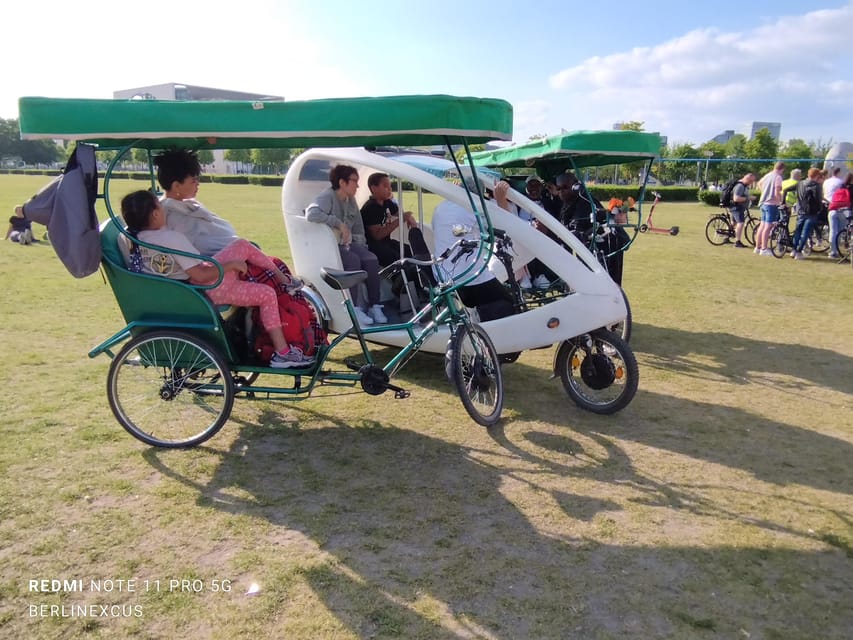
The rickshaw is the most distinctive option. You sit while the driver handles the movement through the city, so you can focus on buildings, memorials, and the guide’s commentary. This suits grandparents, young children, couples with different fitness levels, and anyone who wants a gentler outing.
If you choose an e-bike or e-scooter, you drive your own vehicle as part of the group. That gives you a more active view of Berlin, but it also means you need to feel comfortable riding in an urban setting. The tour is not only for cyclists, though. The rickshaw option is specifically designed so a non-bike companion can remain part of the same outing.
The shared format matters. You are not booking a separate private guide for each vehicle. Instead, the group forms at the meeting point and travels together, with a maximum of eight participants. That keeps the experience social and helps the guide maintain one route, but it also means the pace is not fully yours.
More Rickshaw Tours in Germany
- Berlin: Private Guided E-Rickshaw Tour
★ 4.9 · 157 reviews - Individual City Tour – Rickshaw Sightseeing in Berlin
★ 5.0 · 120 reviews - Berlin Express: Private 1-Hour E-Rickshaw Ride
★ 5.0 · 116 reviews
Starting near Rosenthaler Platz
The stated meeting point is Weinbergsweg 6, near Rosenthaler Platz and the Rosenthaler Platz U-Bahn station. This is a useful starting area, with cafes, shops, public transport, and Weinbergspark nearby. If you arrive early, the park gives you a calm place to wait.
One set of tour details also names Torstrasse 85 as the daily meeting location at 10:00 AM. Since both addresses appear in the information, I would check the current confirmation carefully before leaving your hotel. This is a small but important practical point, especially if you are trying to arrive on time for a shared departure.
The route returns to Weinbergsweg 6. From there, you remain close to the Mitte transport network, so continuing to Museum Island, Alexanderplatz, or another central sight should be straightforward, though the exact onward arrangements are not specified.
Alexanderplatz, the TV Tower, and Rotes Rathaus
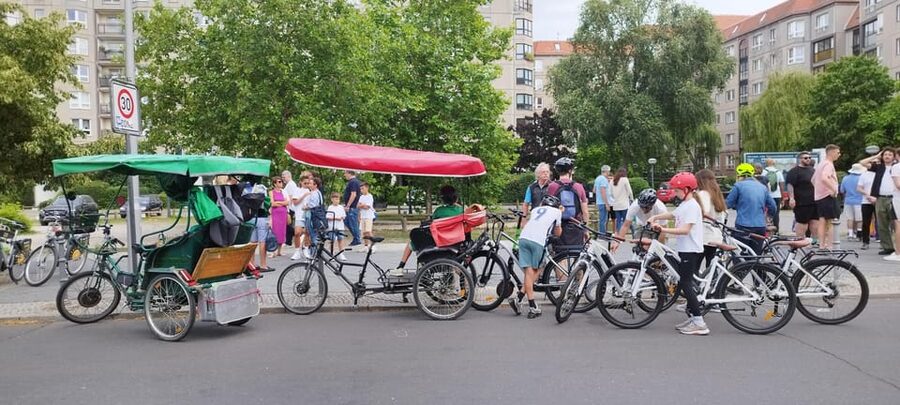
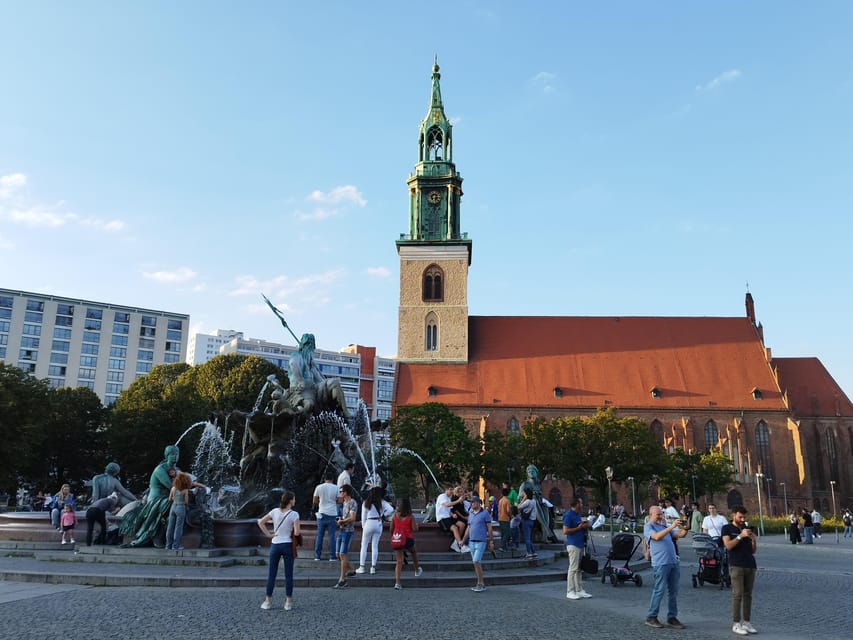
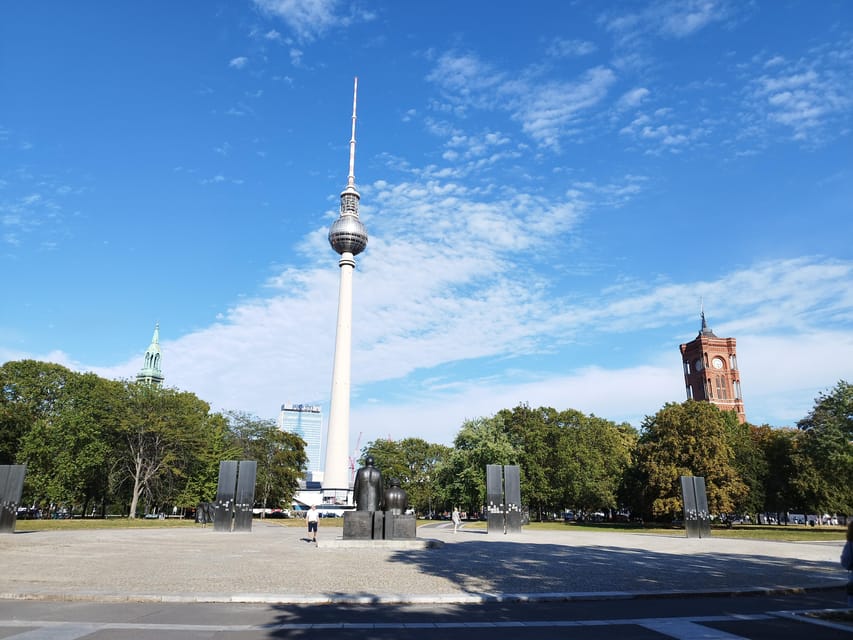
The route begins around Alexanderplatz, Berlin’s best-known eastern city center, with the TV Tower rising above it. The tower is one of the clearest orientation points in Berlin. From the ground, you get a strong sense of how the old East Berlin center was planned around broad public spaces and major civic buildings.
The TV Tower stop is listed as a photo stop and guided sightseeing point, not a visit to the observation deck. That distinction matters. You should expect to see and discuss the tower from outside rather than ride up it as part of this tour.
Nearby, Rotes Rathaus, or Red City Hall, adds another piece of Berlin’s civic story. Its red brick exterior gives the stop a different character from the grand neoclassical buildings farther west. The guide can connect this eastern section of the route with Berlin’s political development, though the precise amount of time at each place depends on the group.
Museum Island, Berlin Cathedral, and Unter den Linden
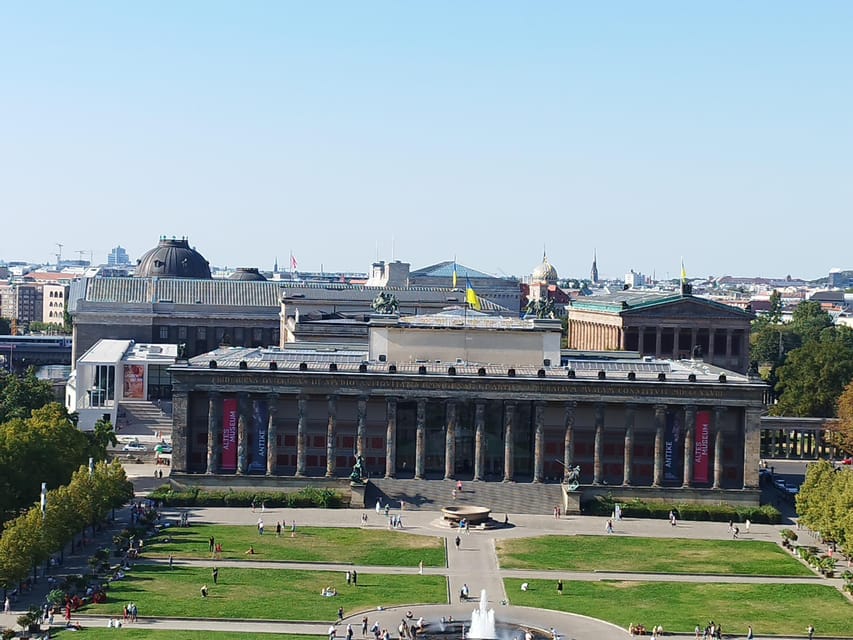
From the eastern center, the tour heads toward Museum Island. This river island gathers several major museums in one historic district, making it one of Berlin’s most important cultural areas. You will see the setting and hear about its role, but museum entry is not included.
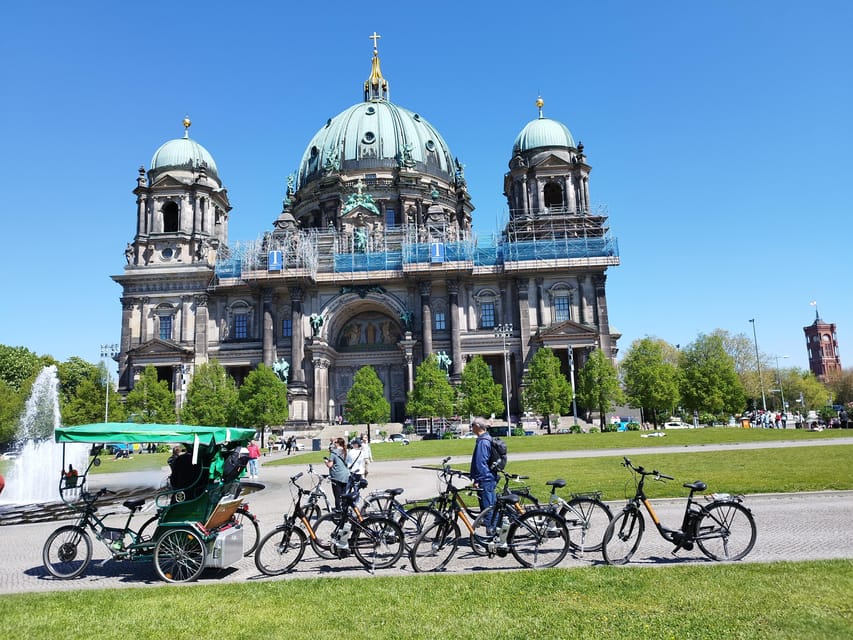
Berlin Cathedral is one of the route’s strongest visual stops. Its large dome and formal riverside position make it easy to recognize, and the nearby open spaces give you good opportunities for photographs. The itinerary also includes Lustgarten, Schlossbrücke, and Schlossplatz, a group of places tied to Berlin’s royal and public past.
Unter den Linden then carries you west along the city’s grand ceremonial boulevard. The route includes the Opera House, Neue Wache, Bebelplatz, and other major buildings along or near the avenue. This section works best as a moving history lesson. You see how the city’s political, royal, artistic, and military institutions were gathered along one central axis.
Bebelplatz is especially important because of the memorial to the Nazi book burning of May 10, 1933. The stop is brief in the overall schedule, but it gives the guide a chance to explain how public culture and state power were used during the Nazi period.
More Rickshaw Tours in Berlin:
- Rickshaw Tours Berlin – Groups of up to 16 people with several rickshaws
★ 4.0 · 97 reviews - Rickshaw Sightseeing City Tours Berlin – Rikscha Tours
★ 4.0 · 55 reviews - Berlin: Private Sightseeing Tour in an E-Rickshaw
★ 4.9 · 44 reviews - One Up to 3 Rickshaws(6 GUESTS)-Taylor Made Rickshaw Berlin Tour
★ 5.0 · 20 reviews
Brandenburg Gate and the government quarter
The Brandenburg Gate is likely to be one of the tour’s most familiar sights, but seeing it in relation to the surrounding city adds useful context. It is not simply a decorative arch. It has served as a symbol of power, division, and reunification, and its position at the end of Unter den Linden helps explain its importance.
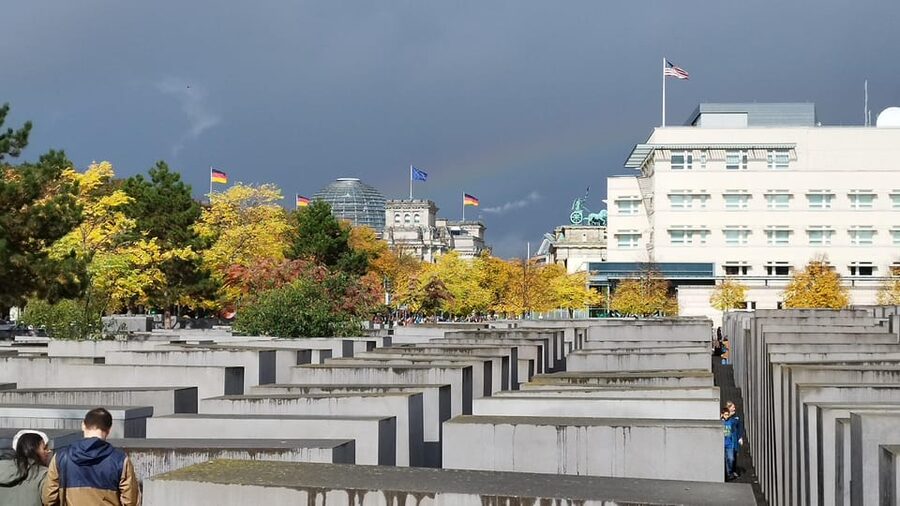
The route continues toward the Reichstag and Bundestag, the center of German federal politics. You will also pass the embassies of the United States and France and the Ministerial Gardens. This section gives the tour a modern political focus after the royal and museum districts farther east.
The Reichstag stop is for guided sightseeing and photographs. The tour does not include entry to the building or its glass dome. If you want to go inside, arrange that separately and do not assume the 210-minute route leaves time for it.
This is also a point where the rickshaw has a practical advantage. You can take in the broad government quarter without spending your energy on a long walk between the gate, parliament, memorials, and Potsdamer Platz area.
The Holocaust Memorial and Hitler’s Bunker site
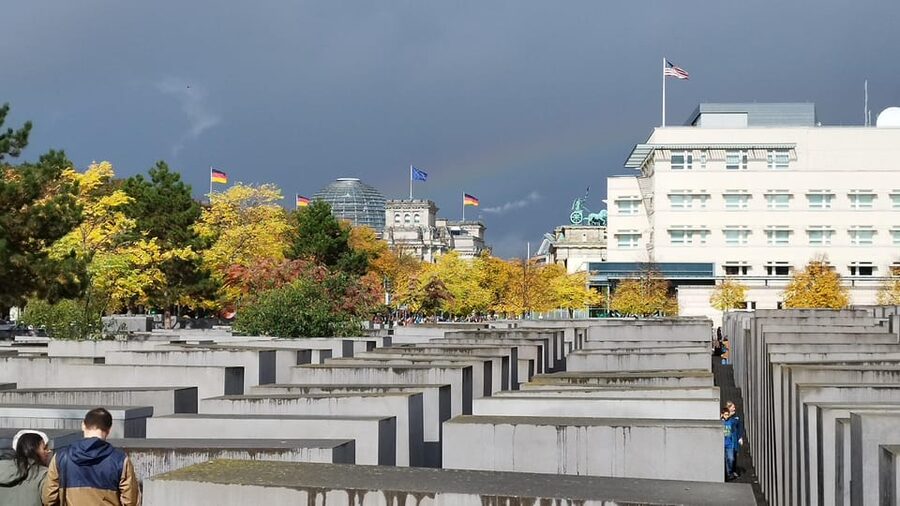
The Holocaust Memorial is one of Berlin’s most difficult and important places. Its field of concrete blocks creates a setting that feels different as you move through it, even though the tour itself may allow only a short pause. The guide’s explanation helps place the memorial within Berlin’s effort to confront the murder of Europe’s Jews.
Nearby, the route identifies the site of Hitler’s Bunker. There is no surviving bunker attraction to tour here, and the itinerary lists the location as a photo and guided explanation stop. Expect an understated site marker and historical context rather than a dramatic ruin or underground visit.
These stops deserve a respectful pace. The vehicle format makes it easy to cover them, but the compressed schedule may not suit you if your main goal is extended reflection at memorials. For a first orientation to Berlin’s twentieth-century history, though, the pairing is useful.
Topography of Terror, the Berlin Wall, and Checkpoint Charlie
The Topography of Terror documents the institutions of Nazi persecution. The route includes the site for a guided stop, but museum entry is not listed. I would treat this as an introduction that can help you decide if you want to return for a longer visit.
The next section turns to the Cold War. Berlin Wall remains and Checkpoint Charlie tell a different story from the Nazi sites. Here, the focus shifts to a divided city, escape attempts, border control, and the political struggle that made Berlin a front line of the twentieth century.
Checkpoint Charlie is one of Berlin’s most recognizable Cold War addresses. It is also a place where the modern tourist setting can feel more commercial than solemn. That is not a reason to skip it, but it is worth knowing that the historical value lies in the location and explanation, not only in the current checkpoint booth or photo opportunity.
The Berlin Wall stop gives the guide room to connect the physical remnants with the larger story of division and reunification. Since the route combines several sites, you get a useful sequence: Nazi dictatorship, postwar division, and the city’s later return to unity.
Gendarmenmarkt and the final eastern return
Gendarmenmarkt provides a change of mood. It is one of Berlin’s grandest squares, framed by major historic buildings and open public space. After the heavier memorial stops, the square helps show Berlin as a city of architecture, music, civic life, and daily use, not only a place of political tragedy.
The route then returns toward the eastern center and Weinbergsweg 6. Along the way, the guide can tie together the different eras you have seen: medieval and royal Berlin, nineteenth-century state power, Nazi rule, Cold War division, reunification, and the city’s current role as a cultural capital.
The itinerary includes a long list of places, so the exact rhythm will matter. You should expect frequent movement, short explanations, and photo stops. That is ideal if you want a broad first look and a list of places to revisit. It is less suitable if you prefer to spend an hour at one museum or memorial.
What the guide adds
The guide is described as local, certified under DIN EN 15565, and able to lead in English, German, Dutch, or Turkish. That certification relates to professional tourist guiding, while the most important quality for this route is the ability to make many separate sites connect into one clear story.
A verified French-language booking from March 2024 praised the guide’s spontaneous style and many anecdotes, noting that the visit felt lively. That is useful here because a route this packed can otherwise become a string of building names. The best version of this tour will be one where the guide explains why each place matters, not simply points at it.
You can also ask questions in the languages offered, which is helpful when a group includes people with different language preferences. Since the group is small, the setting should be more personal than a large coach tour, though the experience remains shared rather than private.
Price, drinks, and the real value
The listed price is $235 for a group of up to two. For a pair, that works out to $117.50 per person, assuming two people book together. That is not a budget sightseeing ride, but it includes a 210-minute guided route, the vehicle choice, and a broad sweep of central Berlin.
The value improves if one person cannot or does not want to cycle. A standard bike tour may force a couple to split up or leave one person behind. Here, a rickshaw can solve that problem while keeping both people on the same route.
Water and soft drinks are included. Riders on the e-bikes and e-scooters may not drink alcohol during the tour for safety reasons. People seated in the rickshaw may have a beer or sparkling wine during the ride, while cyclists and scooter riders can do so after the tour. If that sounds unusual, it is. I would still treat the drinks as a small extra, not a reason to choose the tour.
Free cancellation up to 24 hours before departure and the option to reserve now and pay later add flexibility. The more important booking decision is vehicle choice. If you want a relaxed sightseeing experience, select the rickshaw. If you want to take an active role in the route, choose an e-bike or e-scooter.
Who should book this tour?
I would recommend it to a couple with different mobility levels, a family with a child, grandparents traveling with relatives, or anyone who wants to cover central Berlin without a long day on foot. It also works well as an opening tour because it introduces many districts and landmarks you can later explore at greater length.
It is less suitable if you want deep museum time, a private guide, or a slow visit to each memorial. The group format and long route require some flexibility. You will see many places, but you will not fully tour every one.
The main strength is the combination of access and range. A person in a rickshaw can share the same experience with someone on a bike or scooter, and the guide provides the links between Berlin’s major chapters. That is a useful service for a city where the distances are manageable, but not always comfortable on foot.
Final call: a smart overview with one key check
Book this tour if you want Berlin Mitte explained as one connected story and need a vehicle that works for different ages and abilities. The rickshaw option, small group, multilingual guide, and route through both famous sights and serious memorials give it real practical value.
Before paying, confirm the exact meeting address and decide if you want a rickshaw, e-bike, or e-scooter. Choose it for coverage and convenience, not for lengthy visits inside museums or monuments. For a first look at central Berlin, especially with a mixed-mobility group, it is a strong choice.
FAQ
How long does the Berlin rickshaw and bike tour last?
The tour lasts 210 minutes, or three and a half hours.
What sights are included on the route?
The route includes the TV Tower, Rotes Rathaus, Museum Island, Unter den Linden, Berlin Cathedral, Brandenburg Gate, Reichstag, Holocaust Memorial, Hitler’s Bunker site, Topography of Terror, Berlin Wall, Checkpoint Charlie, Gendarmenmarkt, and the memorial to the May 10, 1933 Nazi book burning.
Can someone who does not ride a bike join the tour?
Yes. The traditional rickshaw option is designed for people who do not cycle or who prefer not to ride. It allows them to tour alongside companions using an e-bike or e-scooter.
What languages are available?
Live guiding is available in Dutch, English, German, and Turkish.
Where does the tour meet?
The meeting information gives Weinbergsweg 6 near Rosenthaler Platz as the meeting point. Another description names Torstrasse 85, so confirm the current address before departure.
How many people can join?
The tour is limited to eight participants. The price of $235 covers a group of up to two people.
Just added around Berlin
- Rickshaw Tour-Cruise Ship guests arrive 9.30 upto 11.30 am Berlin★ 5.0 · 7 reviews
- Romantic Berlin Rickshaw City and Photo Tour – incl. pick-up★ 4.0 · 9 reviews
- Rickshaw Sightseeing Tours Berlin – Highlights Berlin – Rickshaw city tour★ 3.5 · 3 reviews
- Berlin Rickshaw Tours Historical & Photo City Tour 120min – Sightseeing★ 4.5 · 11 reviews
- Rickshaw Sightseeing City Tours Berlin – Rikscha Tours★ 4.0 · 55 reviews
- Private Up to 12 Guests-ONE RICKSHAW, E-Bikes, E-Scooters★ 5.0 · 2 reviews
- One Up to 3 Rickshaws(6 GUESTS)-Taylor Made Rickshaw Berlin Tour★ 5.0 · 20 reviews
- Private Guide Up to Group 6 – ONE Rickshaw, (E)Bikes, E-Scooters★ 5.0 · 3 reviews
Rickshaw Tours, compared.


Old Delhi Food, Heritage&Cultural Walk with Rickshaw ride to Masterji Kee Haveli
Read our review →
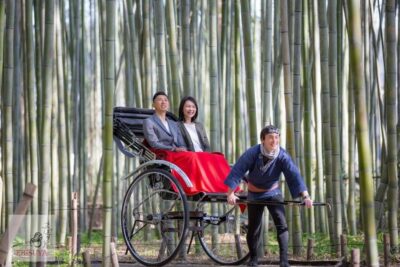
Arashiyama Customized Rickshaw Tour & Bamboo Forest
Read our review →
Split by Private Electric Rickshaw – Palace & Hidden Gems
Read our review →
Where else this ride shows up