
REVIEW · RICKSHAW TOURS
Münster: Private Guided Sculptures Tour on a Rickshaw
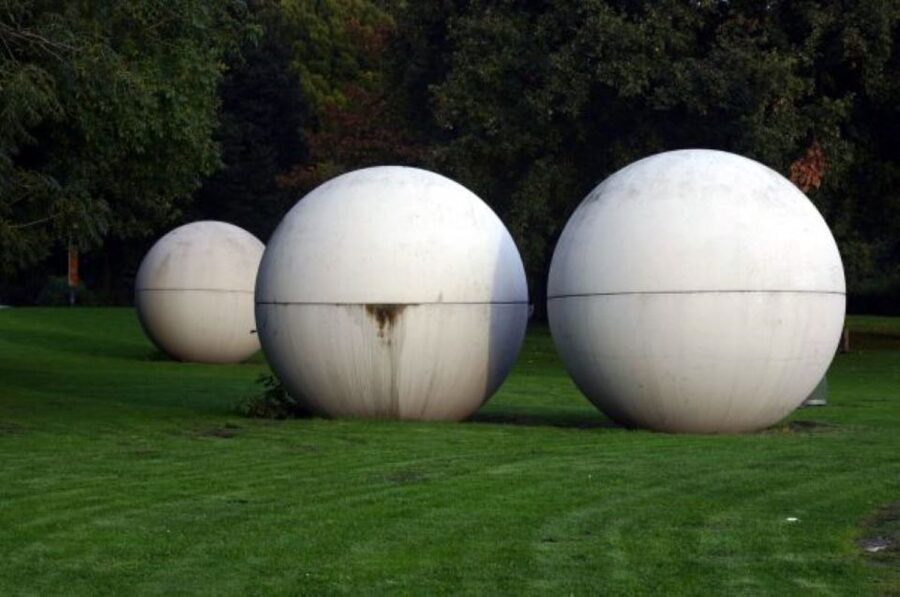
Münster’s best art is not behind museum walls. It sits in parks, courtyards, and along ordinary city streets, where a sculpture by Donald Judd or Claes Oldenburg can surprise you between everyday errands. This 90-minute private rickshaw tour gives you a comfortable way to connect those works with the city around them.
I like two things here: the guide adds the missing context, explaining not only what each artist made but why the work matters in Münster, and the rickshaw covers more ground than a walking tour without turning the outing into a rushed sightseeing drive. The tour has been led by guides including Barbara and Beate, both praised for friendly, clear presentations.
The main limitation is time. Münster has many works from the Sculpture Projects, but 90 minutes can only introduce a selection. One past participant wished for more time on the rickshaw, so book this as a smart overview rather than a complete survey of every installation.
Key points at a glance
- Münster’s sculpture tradition began in 1977: The city’s Sculpture Projects return every 10 years, and works from each edition remain in Münster.
- The tour begins at Old City Hall: Meet your guide in front of the historic building, next to the rickshaw.
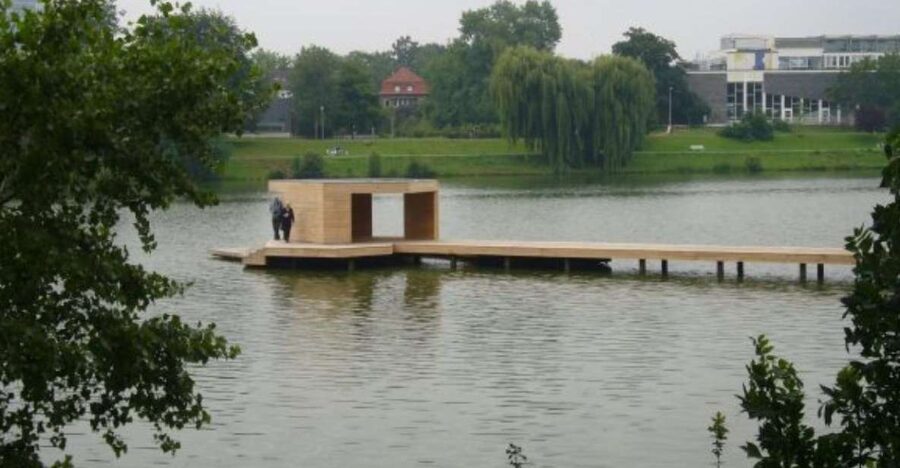
- You see art in its actual setting: The route includes public parks, streets, and courtyards rather than only formal galleries.
- The group is private: You can explore with your own party and ask questions in English or German.
- Major names are included: Expect works connected with Bruce Naumann, Rosemarie Trockel, Claes Oldenburg, Donald Judd, Jorge Pado, Per Kirkeby, Ilya Kabakov, Thomas Schütte, Martha Rosler, and Daniel Buren.
- The price is $58 per person: That is reasonable if you value a personal guide and easy transport between scattered works, but less attractive if you only want a quick look at public art.
Why Münster’s public art works so well by rickshaw
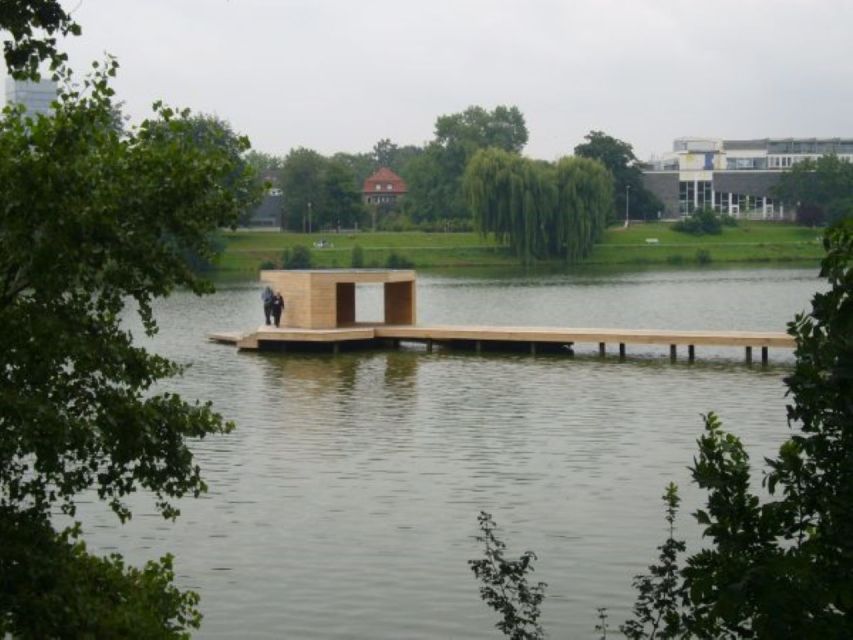
The Münster Sculpture Projects have an unusual rule of sorts: the city does not simply host a temporary art festival and then pack everything away. The projects began in 1977, take place every 10 years, and works from the various editions have remained in Münster.
That gives the city an art collection without museum hours or entrance queues. The pieces live beside normal city life. You see them in open spaces and built-up areas, with the surrounding streets and buildings forming part of the experience.
That setting also makes the art easier to discuss. A sculpture can change how you look at a square, a park, or a courtyard. Your guide can point out the connection between the piece and its location, then explain the historical setting of the project. You are not left trying to identify an abstract object from a plaque.
The rickshaw suits this type of sightseeing. The works are spread across town, and walking between every one would take more energy and time. A bicycle might cover the distance, but it would leave you trying to listen while riding and finding your own way. Here, the guide handles the movement while you watch the city pass by.
More Private Tuk Tuk Tours in Germany
- Berlin: Private Guided E-Rickshaw Tour
★ 4.9 · 157 reviews - Erfurt: Private Guided Classic Old Town E-Rickshaw Tour
★ 4.9 · 153 reviews - Berlin Express: Private 1-Hour E-Rickshaw Ride
★ 5.0 · 116 reviews
Starting beside the Old City Hall
The meeting point is simple: go to the front of the historic City Hall and look for the guide standing beside the rickshaw. This is useful for first-time visitors because you do not need to search for a hidden office or a tour kiosk.
The Old City Hall also gives the tour a strong opening point. Before the art begins, your guide introduces Münster’s past and places the city’s public works in that setting. The tour is not only a catalogue of artists. It connects the art to the city itself.
You should arrive dressed for the weather. This is an outdoor experience, and the rickshaw does not turn a cool or wet day into an indoor one. Weather-appropriate clothing is the one specific item advised for the tour, so check the forecast before you leave your hotel.
What the 90-minute route feels like
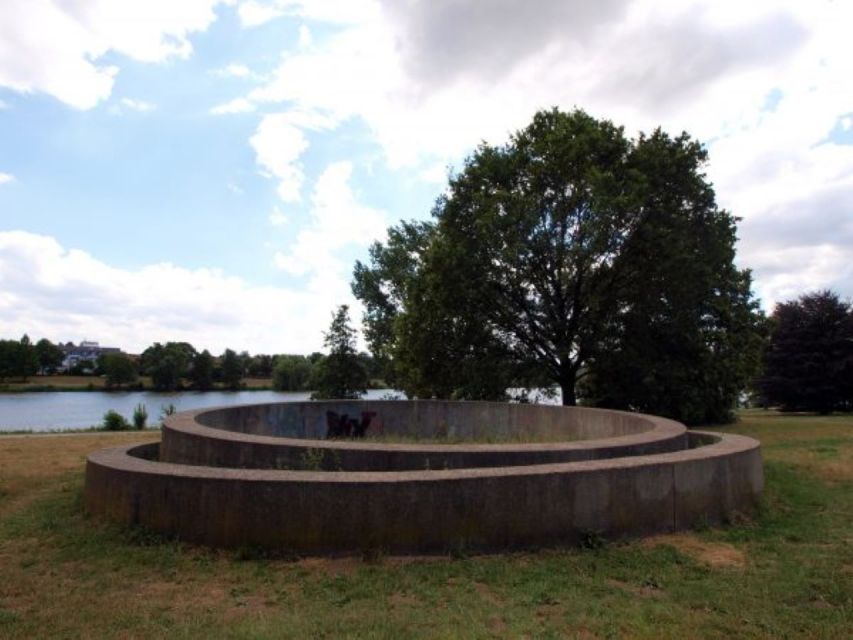
After meeting your guide, you climb aboard the rickshaw and begin moving through Münster. The route takes in works in public parks, streets, and courtyards. Those locations matter because the art is meant to be encountered as part of the city, not viewed in isolation.
You can expect the guide to combine riding with stops or slower passes where the works need explanation. The central subject is the Sculpture Projects and the way they have developed since 1977. Along the way, the guide also shares stories about Münster’s past and the historical setting of particular pieces.
The exact order of the works is not provided, so you should not expect a fixed checklist that is identical on every departure. The important point is the range of artists. The tour may include work associated with Bruce Naumann, Rosemarie Trockel, Claes Oldenburg, Donald Judd, Jorge Pado, Per Kirkeby, Ilya Kabakov, Thomas Schütte, Martha Rosler, and Daniel Buren.
That list covers very different approaches to public art. Some works may catch you through shape or scale. Others may make more sense once the guide explains the idea behind them or the reason they were placed at that particular point in the city. This is where a live guide earns the fee.
Meeting Donald Judd, Oldenburg, and other major artists
Donald Judd and Claes Oldenburg give the tour recognizable names, but the appeal is broader than checking famous artists off a list. You are seeing how international modern art operates in a German city, where people pass the pieces as part of daily life.
Rosemarie Trockel and Martha Rosler add another useful layer to the route. Their presence helps show that Münster’s project is not limited to one style or one generation. Your guide can place each work within the larger program and explain how the city has hosted different artistic voices over time.
The range also makes the tour suitable for mixed groups. If one person in your party already follows contemporary art and another normally prefers city history, both subjects are built into the experience. The guide discusses the works while also explaining Münster’s streets and past.
Do not expect a traditional museum tour with long, quiet stops beside every object. You are moving through town in a rickshaw, and the 90-minute limit calls for selection. If one particular artist matters most to you, ask about that work when you meet the guide. A private format gives you a better chance to shape the conversation than a large group tour would.
More Rickshaw Tours in Germany
- Münster-Highlights-Tour with Rickshaw-Guide
★ 4.8 · 244 reviews - Cologne: Rickshaw Sightseeing Tour
★ 4.8 · 180 reviews - Munich: City Highlights Rickshaw Tour
★ 4.9 · 150 reviews - Individual City Tour – Rickshaw Sightseeing in Berlin
★ 5.0 · 120 reviews
Why the private format matters
This is a private group experience, not a shared ride with strangers. That changes the pace and the tone. You can ask why a work was placed in a certain location, request more background on an artist, or tell the guide which parts of Münster interest your group most.
The private setup is especially helpful with contemporary art. A large group often leads to a short explanation designed for everyone at once. With your own guide, you can ask for a simpler explanation, more historical context, or extra detail about the meaning of a piece.
Past guides Barbara and Beate have been praised for warmth, strong background knowledge, and an easy manner with families. Children have also enjoyed the experience, which is useful if you are planning an art outing with young people who might not want a long museum visit.
Guide availability is not specified, so do not assume you can choose Barbara or Beate. Their names do indicate the kind of personal, conversational guiding associated with the tour, but the guide assigned to your departure may differ.
Is $58 per person a fair price?
At $58 per person, this is not the cheapest way to see Münster. The city’s outdoor sculptures can be viewed without paying an admission fee, at least as public objects. The price here pays for the guide, the private group format, and the rickshaw ride between sites.
I see the value most clearly if you have limited time or want help making sense of contemporary art. The guide gives you a usable framework for understanding the Sculpture Projects, while the rickshaw reduces the effort of getting from one area to another. A private ride is also a practical choice for a small family or group that wants to stay together.
The value is weaker if you already know Münster well, prefer to explore at your own pace, or want to spend a long time studying each work. Ninety minutes is enough for an introduction, not an exhaustive art tour.
The perfect comparison is not with a free self-guided walk alone. Compare it with the time and research needed to find the works, understand their background, and work out a route between them. If that sounds like a chore, $58 can be a fair price for a clear, efficient introduction.
Who should book this tour
I would recommend this tour to first-time visitors who want to see more than Münster’s standard sights. It is also a good fit for anyone curious about modern sculpture but unsure how to approach it.
Families may find the rickshaw more appealing than a long walking tour. The short duration helps, and the private format lets the guide adjust explanations to the group. The positive family feedback suggests that children can enjoy the unusual vehicle and the variety of locations.
Art students, architecture fans, and repeat visitors have another reason to book. The Sculpture Projects are part of Münster’s identity, and seeing the works in their actual surroundings gives you a different experience from viewing photographs or reading about them.
I would think twice if your main goal is a fast sightseeing loop with no art discussion. The guide’s explanations are the point. Likewise, if bad weather is forecast, remember that this is an outdoor tour and bring suitable clothing.
Practical planning for your Münster day
The meeting point in front of City Hall makes the tour easy to place within a day of sightseeing. You can use it as an introduction early in your stay, then return to a favorite work later on foot. Or schedule it after seeing Münster’s central sights, when the guide’s city context can add another layer.
English and German are available. Check the starting times when you book, since the tour runs for 90 minutes and departure times vary by availability.
The booking terms are useful for uncertain plans. You can reserve now and pay later, and cancellation is free up to 24 hours in advance for a full refund. Those policies do not change the experience itself, but they make it easier to fit the tour around weather and other plans.
Bring clothing suited to the conditions, and keep your expectations focused. You are signing up for a guided introduction to selected works, not a full record of every Sculpture Project installation.
My verdict: a smart first look at Münster’s art
I would book this tour if you want Münster’s public sculpture explained by a local guide rather than simply spotted from a map. The rickshaw makes the city easier to cover, and the private group gives you room to ask questions. The strongest part is the link between artwork, city setting, and the Sculpture Projects’ long-running story.
I would skip it if you want a slow, detailed study of individual pieces or prefer to wander without a set time limit. For everyone else, $58 buys a useful orientation, a distinctive ride, and a better understanding of why Münster’s outdoor art belongs to the city rather than merely sitting in it.
FAQ
Where does the Münster rickshaw tour begin?
Meet your guide in front of City Hall. The guide will be standing next to the rickshaw.
How long does the tour last?
The tour lasts 90 minutes.
Is this a private tour?
Yes. The experience is offered for a private group.
Which languages are available?
The live guide is available in German and English.
What is included in the price?
The price includes the rickshaw tour and a guide.
Which artists can I see?
The tour can include works by Bruce Naumann, Rosemarie Trockel, Claes Oldenburg, Donald Judd, Jorge Pado, Per Kirkeby, Ilya Kabakov, Thomas Schütte, Martha Rosler, and Daniel Buren.
What are the Münster Sculpture Projects?
They are recurring sculpture projects that began in 1977 and take place every 10 years. Works from the projects have remained in Münster.
What should I bring?
Bring weather-appropriate clothing.
Can I cancel or pay later?
You can cancel up to 24 hours in advance for a full refund. You can also reserve your place and pay later.
Just added around Germany
- Private Munich Rickshaw City Tour and English Garden★ 5.0 · 49 reviews
- Münster Unpacked Tour : Rickshaw City Tour with Guide★ 5.0 · 28 reviews
- Private and full rickshaw tour in the English Garden★ 4.5 · 10 reviews
- Private Hamburg rickshaw tour for 2 people★ 5.0 · 3 reviews
- Rickshaw Tour-Cruise Ship guests arrive 9.30 upto 11.30 am Berlin★ 5.0 · 7 reviews
- Romantic Berlin Rickshaw City and Photo Tour – incl. pick-up★ 4.0 · 9 reviews
- Rickshaw Sightseeing Tours Berlin – Highlights Berlin – Rickshaw city tour★ 3.5 · 3 reviews
- Berlin Rickshaw Tours Historical & Photo City Tour 120min – Sightseeing★ 4.5 · 11 reviews
Rickshaw Tours, compared.

Old Delhi Food, Heritage&Cultural Walk with Rickshaw ride to Masterji Kee Haveli
Read our review →
Arashiyama Customized Rickshaw Tour & Bamboo Forest
Read our review →
Split by Private Electric Rickshaw – Palace & Hidden Gems
Read our review →
Where else this ride shows up