REVIEW · RICKSHAW TOURS
Private Munich Rickshaw City Tour and English Garden
Munich’s best introduction may come on three wheels. This private rickshaw ride links the old town with the huge English Garden, letting you see a lot without spending the first day of your trip marching from square to square. Guides including Andre, Andreas, Andy, and Michael bring local stories, humor, and a human scale to the route.
I like the small private format, which gives you room to ask questions and request a little extra time at places that catch your eye. I also like the practical comfort: riders have received blankets and hot-water bottles in bitter cold, and the rickshaw can be a smart choice if walking is difficult.
The main caution is reliability. Most feedback is highly favorable, but there have been reports of last-minute cancellation, a long wait at the meeting point, and one flat tire that shortened the ride. The tour also depends on good weather, so keep that in mind when planning a tight Munich schedule.
Key points at a glance
- Private ride for up to two people: You get your own rickshaw rather than joining a large group.
- Old town plus English Garden: The route connects major central sights with Munich’s famous urban park.
- A strong first-day orientation: In 90 minutes, you see the city’s main royal squares, markets, churches, and historic streets.
- Helpful for limited mobility: You can cover ground while seated, with far less effort than a walking tour.
- Local guides with personality: Andre, Andreas, Andy, and Michael are named in the feedback, with humor and personal stories often part of the ride.
- Weather matters: Poor weather can lead to a new date or a full refund, and cold days call for warm layers.
A fast, personal way to meet Munich
The ride begins at Marienplatz, Munich’s central stage. From here, the rickshaw gives you a close view of the old town while keeping your feet out of the traffic of pedestrians, bicycles, and busy streets.
This is not a museum tour with long indoor visits. Admission is not included because the experience is built around seeing the city from the street and hearing the guide explain what you pass. That makes the tour especially useful at the start of a short stay. You get the basic map of Munich first, then you can return later to the Residenz, the market, or the English Garden with a better sense of where everything fits.
The pace also makes a difference. A walking tour can spend much of its time moving between sights. Here, the ride itself becomes the link between them. You may still want to take photos or ask for a short pause, but the private format gives the guide more freedom than a fixed-size group normally allows.
The route lasts about 90 minutes. That is long enough to cover the principal stops, but not long enough for full visits inside the Residenz, the National Theater, or the Hofbräuhaus. Think of this as a well-paced introduction, not a substitute for Munich’s indoor attractions.
More Private Tuk Tuk Tours in Germany
- Berlin: Private Guided E-Rickshaw Tour
★ 4.9 · 157 reviews - Erfurt: Private Guided Classic Old Town E-Rickshaw Tour
★ 4.9 · 153 reviews - Berlin Express: Private 1-Hour E-Rickshaw Ride
★ 5.0 · 116 reviews
Marienplatz and the old town’s grand opening
Marienplatz is the natural place to begin. It is Munich’s central square, where medieval roots meet the modern city. The tour allows about five minutes here, so expect an orientation and an explanation rather than a long architectural study.
This first stop helps you get your bearings. Munich’s old town can feel compact on a map but confusing on foot, especially when you are trying to fit in the market, royal buildings, churches, and beer halls. Starting at Marienplatz gives you a clear reference point for the rest of your stay.
The short time here is also a limitation. If your priority is detailed sightseeing in the square, you will want to return on your own. The value comes from using Marienplatz as the opening chapter before the rickshaw carries you onward.
The English Garden, Munich’s surprising center
The English Garden receives about 30 minutes, making it the longest stop. That is the right call. This enormous city park is not just a patch of grass beside the old town. It includes the Eisbach surf wave, the Chinese Tower, and Kleinhesseloher See, along with open spaces where Munich’s relaxed side comes into view.
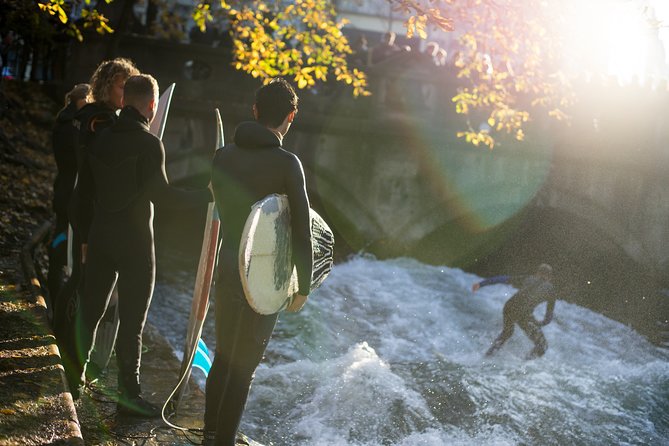
The Eisbach wave is the park’s most famous sight. Surfers ride the standing river wave even though the water is flowing through the city. The sight is quick, lively, and easy to remember, especially when you realize you are watching it near the center of Munich.
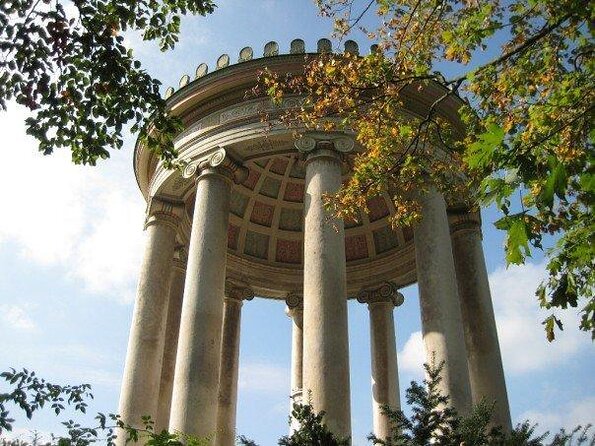
The Chinese Tower offers a very different mood. It is one of the park’s recognizable landmarks, while the lake gives the ride a calmer stretch of scenery. Depending on the route and conditions, you may also see people sunbathing or swimming. The contrast between formal old-town buildings and casual park life is one of the strongest reasons to choose this tour.
I would give the English Garden special weight when comparing tours. Several riders considered it the highlight, and one account described the rickshaw as especially useful because it could reach parts of the park without requiring a long walk. That matters because the garden is vast. You can spend hours there, but getting from the old town to its main sights takes energy and time on foot.
The tradeoff is that 30 minutes only provides a taste. You will see key areas, but you will not explore the entire park. If you want a long picnic, a full walk around the lake, or time to watch surfers at length, plan a separate visit.
Max-Joseph-Platz and Munich’s royal face
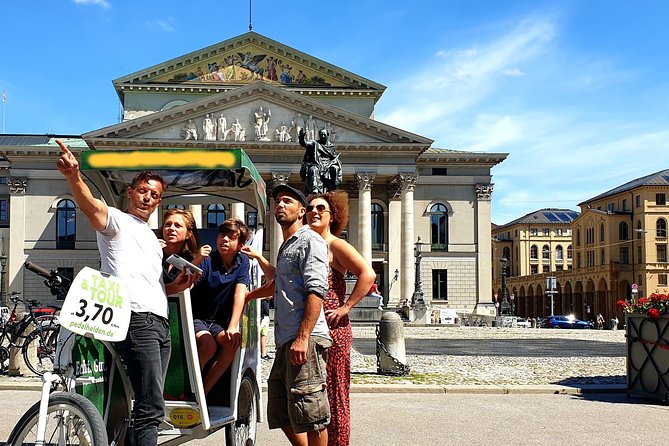
Max-Joseph-Platz gets about 10 minutes. Here the city takes on its grand, southern look. Maximilianstrasse, the National Theater, and the royal buildings of the Residenz create a formal axis that explains why Munich is sometimes called the northernmost city in Italy.
This is a good place to notice the city’s mix of power and style. The architecture is not only practical. It was designed to project royal ambition, cultural importance, and a taste for the south.
The guide’s commentary is important here because the square can seem like a quick photo stop if you do not know what you are seeing. Ask about the National Theater or the Residenz if those buildings interest you. The rickshaw cannot turn this brief visit into a full architectural tour, but it can help you decide where to spend more time later.
More Rickshaw Tours in Germany
- Münster-Highlights-Tour with Rickshaw-Guide
★ 4.8 · 244 reviews - Cologne: Rickshaw Sightseeing Tour
★ 4.8 · 180 reviews - Munich: City Highlights Rickshaw Tour
★ 4.9 · 150 reviews - Individual City Tour – Rickshaw Sightseeing in Berlin
★ 5.0 · 120 reviews
Hofbräuhaus and Platzl in three minutes
The Hofbräuhaus stop lasts about three minutes. That may sound brief, but it works as a quick introduction to one of Munich’s best-known beer halls and to Platzl, the lively square around it.
You should not expect a meal or a reserved table as part of this experience. The stop is a look at the location, plus a reminder that food and beer are central to Munich’s public life. If you plan to eat at Hofbräuhaus, return separately when you can give it proper time.
This short pause also keeps the route moving. The tour tries to show you many sides of Munich rather than settle in at one venue.
Viktualienmarkt, where the city goes shopping
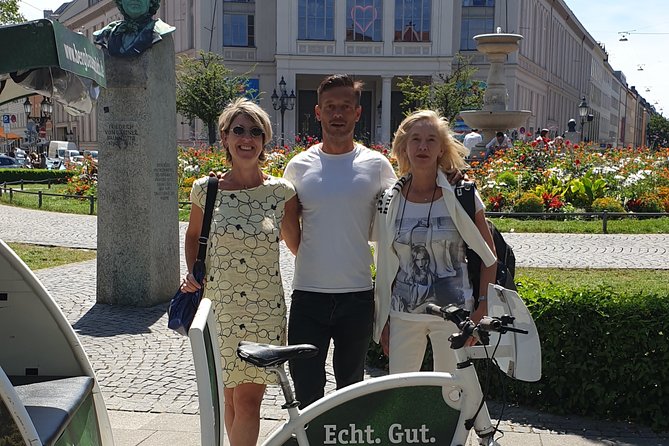
Viktualienmarkt receives about five minutes. It is a compact but useful stop, with more than 149 regional and international stalls, a familiar butcher section, and a beer garden that has become part of the market’s identity.
The market is one of the best places to return after the tour. Five minutes lets you understand its layout and atmosphere, but not browse properly, eat, or compare the stalls. If you like food markets, make this one of your independent stops.
The market also adds social history to the route. The site once held a large city hospital during the Middle Ages. That detail helps you see Munich as a working city that changed over time, not simply a collection of pretty façades.
The Residenz and the Wittelsbach story
The Residenz is allotted about 10 minutes, enough for an exterior look and an explanation of why the complex matters. It is described as the largest Renaissance building in a German city, with nine courtyards, the Cuvilliés Theatre, and the Brunnenhof with its Wittelsbach Fountain.
This is one of the stops where the rickshaw tour’s limits are clear. The Residenz rewards a proper indoor visit, and you could easily spend several hours with a guided tour. The rickshaw gives you the context and lets you see the complex without spending your limited first morning inside.
If you are choosing between a quick city overview and a dedicated palace visit, know that this experience only handles the first job. I like seeing the Residenz in the route because it tells you where Munich’s rulers lived and how much power was concentrated in the old center. I would then return on another day for the rooms, theater, and courtyards.
Odeonsplatz and a complicated past
Odeonsplatz receives about 15 minutes, the second-longest stop after the English Garden. It is one of Munich’s most important squares, with Ludwigstrasse, the Theatine Church, the Feldherrnhalle, and Brienner Strasse all nearby.
This is also where the guide can add real depth. The square has an intense and complicated past, and the route touches Munich’s political and royal story rather than sticking to postcard views. Sissi, the future Empress Elisabeth of Austria-Hungary, was born in this part of the city, another detail that connects the square to European royal history.
The Theatine Church and Feldherrnhalle give the stop visual focus, while Ludwigstrasse shows the scale of Munich’s grand planning. Fifteen minutes gives the guide room to explain the area and answer questions, though you will still need an independent visit if you want to go inside the church.
Hofgarten and the Bavarian State Chancellery
The final two stops complete the royal and governmental picture. Hofgarten, beside the Residenz, has existed as a royal garden since the 16th century. Its fountains, flowers, hedges, and central Diana Temple make it a calmer counterpoint to the ceremonial squares.
The rickshaw spends about six minutes here. That is enough to understand the garden’s layout and take a few photographs, but not enough for an unhurried stroll. If you enjoy formal gardens, return when you can slow down.
The Bayerische Staatskanzlei receives another six minutes. The building once housed the Army Museum and now serves as the official representation of the Bavarian government. Its position between Hofgarten, the Max Planck Institute, and Prinzregentenstrasse helps tie together Munich’s royal, scientific, and political sides.
After this, the ride returns to Marienplatz. The end point is useful because you finish where you began, with the old town and public transport nearby.
What the ride feels like in cold weather
Munich can be unpleasantly cold, particularly when you are sitting outdoors rather than walking. This is one area where the operator has shown practical care. Several accounts describe blankets and hot-water bottles being supplied on cold days, and the guides were praised for keeping the ride comfortable.
Still, you should dress for the weather rather than depend on extra supplies. Wear warm layers, protect your hands, and check the forecast before choosing a morning or afternoon slot. The experience requires good weather, and poor conditions can lead to a different date or a full refund.
The ride is also a reasonable option for people with mobility limits. You remain seated while covering a large part of central Munich and the English Garden. It is not presented as a fully accessible vehicle service, so you should confirm any specific needs before booking, but the seated format has helped people who would struggle with a long walking route. Service animals are allowed.
Private value at $130.96 for two
The listed price is $130.96 per group of up to two people. That works out to about $65.48 per person when two people share the rickshaw.
That is not the cheapest way to see Munich. A public transport ticket or self-guided walk will cost less, and a standard group walking tour may offer more minutes of detailed commentary. The rickshaw earns its price through privacy, comfort, and coverage. You are paying to connect the old town and a very large park without repeatedly checking a map or tiring your legs.
For a couple on a first visit, the value is strongest when time is short. It is also strong for people with mobility issues, anyone arriving in Munich with only one day, or anyone who wants a friendly orientation before exploring alone.
The value is weaker if you want long indoor visits, a full meal stop, or a slow walk through the English Garden. In that case, use this ride as an overview and budget for separate visits.
Guides, flexibility, and service concerns
The most praised part of the experience is the guide. Andre, also referred to as Andreas or Andy in the feedback, is described as funny, warm, and full of city stories. Michael is also singled out for a strong ride, including a coffee pause. The best guides appear to adjust the route, explain local life, and point out details you might pass without noticing.
A private tour gives you a better chance to ask questions about Munich, Germany, or the stops in front of you. One ride was extended slightly to include the English Garden, and another was adjusted with extra stops. Do not assume every booking will run over time, but it is reasonable to ask at the start what matters most to you.
There are also service risks that you should take seriously. One booking was canceled at the last minute, and another report described waiting more than an hour at the meeting point after arriving early. A separate ride ended about 15 minutes early after a flat tire, leaving the riders to find a train back and pay for it. These incidents appear to be exceptions rather than the normal pattern, but they matter if you have a train, flight, or timed museum booking afterward.
The activity is listed as a private tour, with only your group participating. Confirmation arrives at booking, and the meeting point is Marienplatz in Munich’s old town. It is near public transportation, and the ride ends back at the same meeting point.
Cancellation and weather planning
You can cancel for a full refund up to 24 hours before the start time. Changes or cancellations made within 24 hours are not accepted for a refund.
Because the tour depends on good weather, the operator can cancel in poor conditions. In that case, you are offered a different date or a full refund. I would avoid placing this tour on the final morning of a short trip, especially if you have a flight or long-distance train to catch.
Who should book this Munich rickshaw ride?
I would choose this tour if you want a quick, private orientation and prefer sitting to walking. It suits couples, families who can divide into two rickshaws, first-time visitors, and anyone with limited mobility. It is also a good choice when you arrive in Munich with only a day and want to see the central sights before deciding where to return.
I would skip it if you want a full museum visit, a long food tasting, or a detailed walking tour of one neighborhood. The route shows many places, but most stops are brief. You get the city’s outline, not every room and courtyard.
At $130.96 for two, it is a comfort-and-coverage purchase. The warm blankets, personal guide, flexible feel, and English Garden access can make the cost worthwhile. Just allow extra time around the booking, dress for the weather, and treat the ride as your Munich introduction rather than the entire city experience.
FAQ
Where does the Munich rickshaw tour start and finish?
It starts at Marienplatz in Munich’s old town and ends back at the same meeting point.
How long does the tour last?
The experience lasts approximately 1 hour and 30 minutes.
How many people can join one booking?
The listed price covers one private group of up to two people. Larger family groups may use two rickshaws.
Is the tour offered in English?
Yes. The activity is offered in English.
Does the tour go into the Residenz or Hofbräuhaus?
The route stops at the Residenz and Hofbräuhaus, but the listed experience is a sightseeing ride. It does not include an indoor guided visit or a meal.
What happens if the weather is poor?
The tour requires good weather. If the operator cancels because of poor conditions, you can choose another date or receive a full refund. You can also cancel up to 24 hours before the start time for a full refund.
More Tuk Tuk City Tours in Germany
- Crime show city tour by rickshaw including guide
★ 4.8 · 105 reviews - Rickshaw Sightseeing City Tours Berlin – Rikscha Tours
★ 4.0 · 55 reviews - Berlin: Private Sightseeing Tour in an E-Rickshaw
★ 4.9 · 44 reviews - Cologne Sightseeing rickshaw tour
★ 4.5 · 35 reviews
Just added around Germany
- Münster Unpacked Tour : Rickshaw City Tour with Guide★ 5.0 · 28 reviews
- Private and full rickshaw tour in the English Garden★ 4.5 · 10 reviews
- Private Hamburg rickshaw tour for 2 people★ 5.0 · 3 reviews
- Rickshaw Tour-Cruise Ship guests arrive 9.30 upto 11.30 am Berlin★ 5.0 · 7 reviews
- Romantic Berlin Rickshaw City and Photo Tour – incl. pick-up★ 4.0 · 9 reviews
- Rickshaw Sightseeing Tours Berlin – Highlights Berlin – Rickshaw city tour★ 3.5 · 3 reviews
- Berlin Rickshaw Tours Historical & Photo City Tour 120min – Sightseeing★ 4.5 · 11 reviews
- Rickshaw Sightseeing City Tours Berlin – Rikscha Tours★ 4.0 · 55 reviews
Rickshaw Tours, compared.

Old Delhi Food, Heritage&Cultural Walk with Rickshaw ride to Masterji Kee Haveli
Read our review →
Arashiyama Customized Rickshaw Tour & Bamboo Forest
Read our review →
Split by Private Electric Rickshaw – Palace & Hidden Gems
Read our review →