REVIEW · ELECTRIC AND ECO TUK TUK TOURS
Madrid Expert Tour with Local Guide in Eco Tuk Tuk Private
Madrid is a city made for wandering, but its major sights are spread across a wide area. This private electric tuk-tuk tour gives you a quick, comfortable survey, from Atocha and the Prado to the Royal Palace, Salamanca, and the Santiago Bernabéu. It is especially useful on your first day, when you want to understand the city before choosing where to spend more time.
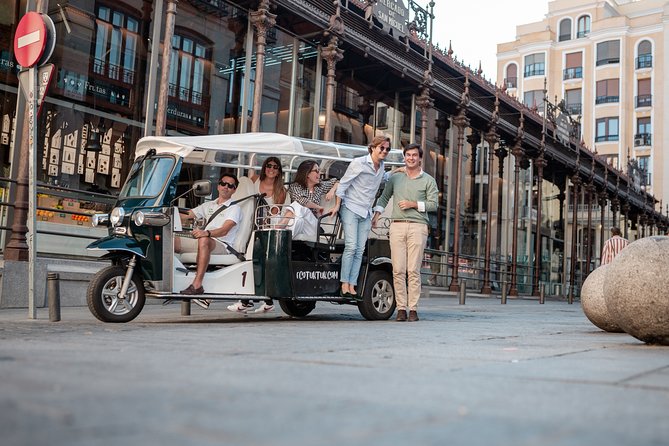
I like the way the tour combines short photo stops with plenty of riding, so you cover far more ground than you would on foot. I also like the personal feel: guides such as Carlos, Lucia, Gustavo, Jaime, and Manuel are described as warm, clear, and full of useful local suggestions. The trade-off is space. Each tuk-tuk holds no more than four people, and seating comfort can vary.
Key points at a glance
- A three-hour city sampler: Cover royal Madrid, the Art Triangle, Salamanca, and the Bernabéu without committing to a full-day tour.
- A genuinely private ride: Your group has its own tuk-tuk and guide, with up to four passengers per vehicle.
- Strong first-day value: Use the route to get your bearings, then return later to the Prado, cathedral, palace, or neighborhood you like best.
- Planned stops, not a custom route: Photo breaks are included at prearranged places, but the route cannot be changed during the tour.
- Weather protection is included: Blankets, rain ponchos, and protective layers are available, though the tours operate in rain and heat.
- A vehicle with limits: The tuk-tuk is easy for older people to board with help, but pets are not allowed and babies cannot participate.
Why this tuk-tuk is a smart first look at Madrid
The appeal is simple: you see a large slice of Madrid while sitting close to the street. A bus can feel removed from the city, while a walking tour usually stays within one district. The tuk-tuk threads between both options, carrying you from the old center to grand boulevards and newer districts.
The tour lasts about two to four hours, with roughly three hours being the usual duration. That is enough time to see major landmarks and hear their basic story, but not enough to explore the Prado, Royal Palace, or cathedral properly. I would treat this as an orientation ride, not a replacement for Madrid’s museums and historic interiors.
The private format matters. Your guide can explain a building, answer a question, or adjust the pace of a short walk without managing a large group. Guides named in the feedback include Carlos, Lucia, Gustavo, Jaime, Manuel, David, Arturo, Alex, Christian, and Mariona. The repeated strengths are friendly delivery, strong English, humor, and practical suggestions for the rest of your stay.
More Electric Tuk Tuk Tours in Madrid
- Madrid: Private City Tour by Eco Tuk Tuk
★ 4.9 · 3,465 reviews - Madrid Welcome Tour with Local Guide in Eco Tuk Tuk Private
★ 5.0 · 2,936 reviews - Madrid Historical Tour with Local Guide in Eco Tuk Tuk Private
★ 5.0 · 876 reviews
Starting beside the Royal Palace
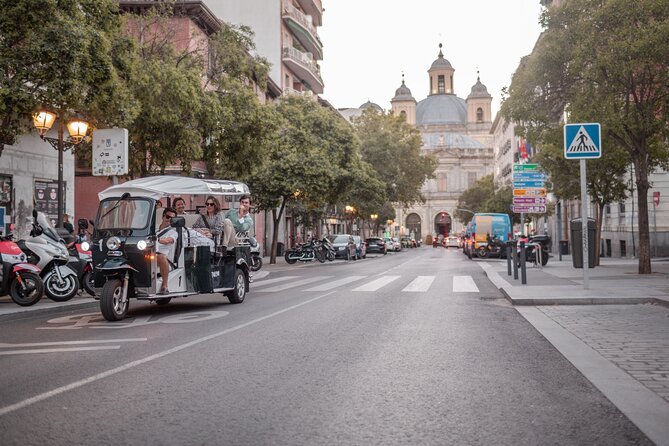
The meeting point is at C. de Bailén 4, beside the Plaza de Oriente bus station and near the Royal Palace. This location can be confusing because there is no obvious number 4 on Calle Bailén. Search for Calle Bailén 4 or Puerta del Príncipe on Google Maps, then look opposite the Prince’s Gate for the stairs leading down to the station.
If stairs are difficult, contact the operator by phone or WhatsApp before the ride. An elevator can be arranged to help you reach the meeting point. This is a small but useful detail, especially for older people or anyone traveling with limited mobility.
The tour ends back at the same meeting point. Hotel pickup and drop-off are not included and are not permitted under the stated operating rules, so allow time to reach the starting place independently.
Food, railways, and Madrid’s southern side
One early stop is a covered market dating from around 1916. It offers local food and delicatessen goods in an elegant setting, with events held there as well. The market gives you a quick look at Madrid’s everyday food culture rather than only its grand monuments.
The route also passes Atocha station, Madrid’s busiest railway complex and one of Europe’s major rail hubs. Its location near Plaza del Emperador Carlos V makes it an important link between central Madrid and the rest of Spain. You may not have time to explore the station fully, but seeing it helps place Madrid on the map.
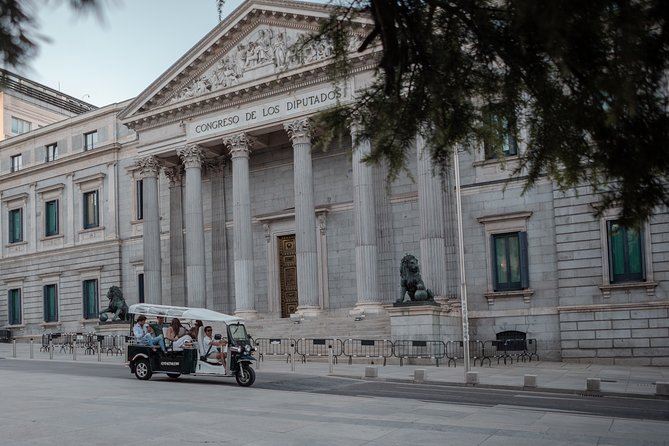
From there, the route moves toward the area around the Spanish Parliament. The Palace of the Spanish Courts was built on the site of a former convent and later became the seat of Congress. Its neoclassical facade has six Corinthian columns, a triangular pediment, and the famous bronze lions cast from cannons captured in the war in Africa.
This is a good example of what the tour does well. You get enough context to recognize the building later, then continue on instead of spending twenty minutes standing in one spot. The limitation is equally clear: architectural details pass quickly from a moving vehicle, so keep your camera ready.
Neptune, the Prado, and Los Jerónimos
The Fountain of Neptune occupies the center of the roundabout at Plaza de Cánovas del Castillo. Built between 1782 and 1786, it is one of Madrid’s grand neoclassical fountains. Neptune is a fitting marker for the Prado area, where the city’s great art museum sits nearby.
The Prado Museum is one of the main reasons to visit Madrid. Its collection covers European painting from the 16th through the 19th centuries, with major works by Velázquez, El Greco, Goya, Titian, Rubens, and Bosch. Goya is especially well represented.
The tuk-tuk can show you where the museum is and help you decide when to return, but it cannot give you the museum experience itself. Plan a separate visit if you care about art. One guide, John, pointed out that the Prado offers free entry after 6 p.m., though you should check current museum rules before relying on that timing.
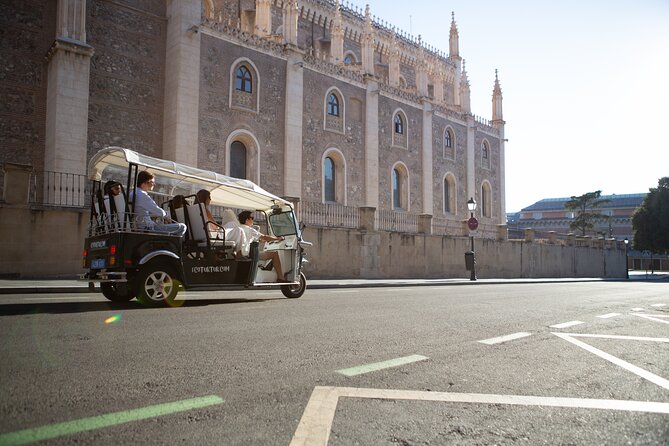
Next to the Prado is the Church of San Jerónimo el Real, commonly called Los Jerónimos. It is a late Gothic church with Renaissance touches and a long connection to Spain’s monarchy. Its present form reflects repeated rebuilding, and the broad stairway was made for the wedding of Alfonso XIII in 1906.
The church and the Prado make a useful pair. One shows royal and religious Madrid through architecture, the other through painting. If your guide allows a short walk here, take it. The quick look from the tuk-tuk is helpful, but the details reward a closer visit.
More Electric Tuk Tuk Tours in Spain
- Madrid Express Tour with Local Guide in Eco Tuk Tuk Private
★ 5.0 · 413 reviews - Madrid: Highlights City Tour by Electric Tuk Tuk
★ 4.7 · 346 reviews - Madrid Expert Plus Tour with Local Guide in Eco Tuk Tuk Private
★ 5.0 · 162 reviews - Tour Madrid: Secrets in a Electric Tuk Tuk
★ 4.6 · 155 reviews
Puerta de Alcalá and the Salamanca streets
Puerta de Alcalá was built for Carlos III and opened in 1778. Designed by Francesco Sabatini, it is a granite neoclassical triumphal arch with five openings, an unusual feature that separates it from many similar monuments.
The two sides are decorated differently. One side includes the four virtues of Prudence, Justice, Temperance, and Fortitude, while the other carries a more elaborate royal design. Its name comes from the road leading toward Alcalá de Henares.
The tuk-tuk then travels through Salamanca along streets such as Velázquez, Ortega y Gasset, and Serrano. This is the polished, wide-boulevard side of Madrid, known for elegant buildings, shopping, and a different rhythm from the old center.
You will not have time to explore the district’s shops during the tour. Still, passing through Salamanca helps you see how quickly Madrid changes from medieval lanes to formal avenues. It also makes the route feel broader than a simple old-town circuit.
Bernabéu and the Paseo de la Castellana
The tour passes the Santiago Bernabéu stadium, home of Real Madrid. It opened in 1947 and currently holds 81,044 spectators. The stadium is reached from Salamanca along the Paseo de la Castellana, one of Madrid’s major north-south arteries.
For football fans, this may be the highlight. One guide added a stadium stop as a surprise, while the advertised route itself includes the journey along Castellana. Do not assume a stadium visit or match-day access is part of the experience. This is a passing sight and photo opportunity, not a stadium tour.
The ride through this part of Madrid also gives you a sense of distance. On foot, reaching the Bernabéu from the royal center would take serious time. In the tuk-tuk, you can connect the two areas in one outing and decide later which district deserves a longer visit.
Columbus, the National Library, and Cibeles
The Christopher Columbus monument presides over its namesake square. The neo-Gothic marble sculpture and carved stone pedestal reach about 17 meters and date from 1885. Nearby, the Gardens of Discovery include sculptures linked to the exploration of the Americas, with the Fernán Gómez cultural center below ground.
The route continues past the National Library of Spain. The institution preserves around thirty million publications produced in Spain since the early 18th century, including books, maps, prints, drawings, music, magazines, and pamphlets.
You will likely see the building from outside rather than visit its collections. That is still worthwhile because it places Madrid’s cultural institutions along the same grand central corridor as the Prado and the city’s major public buildings.
At Plaza de Cibeles, the fountain shows the Roman goddess Cybele riding a chariot pulled by two lions. The surrounding buildings include the Buenavista Palace, Linares Palace, the former Post Office Palace, and the Bank of Spain.
Cibeles is also closely tied to Real Madrid. Football celebrations take place here, so the fountain connects Madrid’s civic identity with its football culture. It is one of the more memorable stops for photographs, especially if you want a single image that captures the city’s monumental side.
The Bank of Spain is another ornate landmark on the route. Its interior is not generally open for ordinary sightseeing. Visits are limited mainly to educational groups, universities, and certain nonprofit cultural organizations, so treat this as an exterior stop.
Santa Ana, San Francisco, and the Almudena Cathedral
Plaza de Santa Ana sits in Madrid’s Cortes neighborhood. The open square dates from 1810 and has changed through several rounds of urban work. It is a good place to notice the contrast between formal monuments and Madrid’s social public spaces.
The route then reaches the Royal Basilica of San Francisco el Grande in the historic center. Its official name is the Basilica of Our Lady of the Angels, and it is one of the city’s major religious buildings. The basilica is frequently singled out as a worthwhile interior stop, so ask your guide how much time is available if the route permits entry.
The Almudena Cathedral is Madrid’s main religious building. Pope John Paul II consecrated it in 1993, making it the first cathedral consecrated by him outside Rome. Its museum holds objects connected with the Madrid diocese, including mosaics, episcopal shields, and church ornaments.
The cathedral is easy to appreciate from the tuk-tuk, but I would not rush past the inside. A short visit can add much to what you see from the street. At the same time, the tour cannot guarantee extended interior time because stops are fixed and the route may change with closures or demonstrations.
Royal Palace, Campo del Moro, and Debod Temple
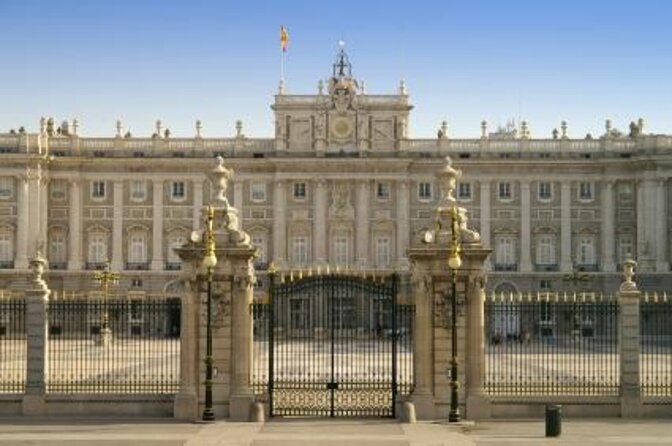
The Royal Palace, also called the Palacio de Oriente, was built between 1738 and 1755 after the earlier Habsburg palace was destroyed by fire. Carlos III moved in during 1764. Today the palace is used for receptions, ceremonies, and official events, while the royal family lives at the Palacio de la Zarzuela.
The building is surrounded by the Campo del Moro and Sabatini Gardens. Campo del Moro extends west from the palace toward the Paseo de la Virgen del Puerto and covers about twenty hectares. It was declared a site of historical and artistic interest in 1931.
The gardens are one reason this tour can feel more personal than a standard monument circuit. Several guides have included a rose garden or garden stop, but the exact route can change. Do not assume every ride will offer the same amount of walking or garden time.
The final stop is the Temple of Debod, a genuine ancient Egyptian temple now located beside the Paseo del Pintor Rosales. It sits on a hill near Plaza de España, on the former site of the Mountain Barracks. The visit includes about 15 minutes and no admission charge.
Debod is a fitting ending because it gives you a view of Madrid beyond its Spanish royal and Catholic identity. The temple, the open hill, and the city views create a quieter finish than the traffic-heavy avenues earlier in the ride.
What the private format really means
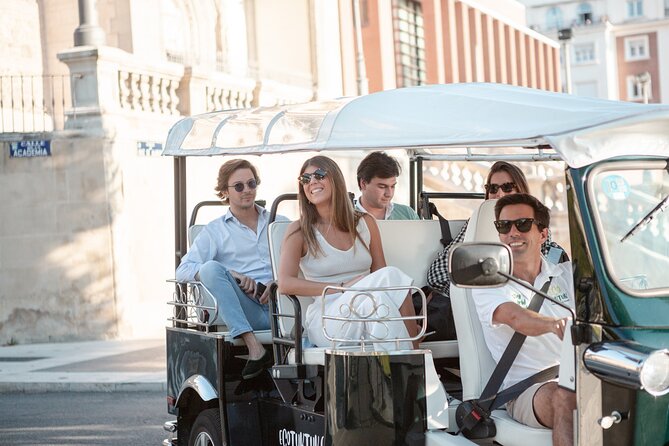
The tuk-tuks are reserved privately, with a legal maximum of four passengers per vehicle. If your party is larger, the price is based on the number of tuk-tuks required. This keeps the ride personal, but it also means you should not assume the quoted per-person price applies in exactly the same way to every group size.
The cost is listed at about $28.67 per person. For a three-hour private ride in a central European capital, that is a reasonable price if you want orientation, transport between districts, and a guide in one package. It is less convincing if you expect long museum visits, flexible stops, or a fully custom itinerary.
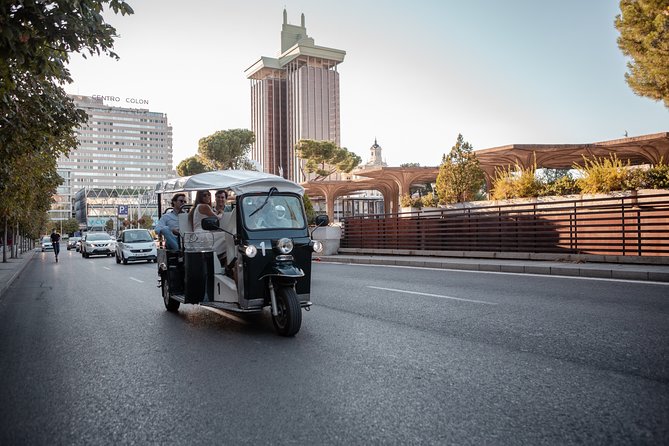
The environmental angle is practical rather than flashy. The vehicle is 100 percent electric, and its small size helps it move through streets that feel awkward in a full-size bus. You still spend much of the tour seated, so wear comfortable clothing and bring water, a hat, and sunscreen in warm weather.
In winter, blankets are available. Rain ponchos and other protective layers are also provided, but the tour operates in rain and heat and is canceled only under extreme conditions. That makes weather planning important. Madrid can feel cold in an open vehicle even when the temperature looks mild.
Limits you should know before booking
The route is prearranged. You cannot add a favorite restaurant, make an unscheduled hotel transfer, or request extra photo stops during the ride. The operator can change the itinerary because of closed streets or demonstrations, but this is not a hop-on, hop-off service.
Arrive on time. A delay reduces your tour time, may force a route change, and a delay longer than 15 minutes can lead to cancellation without a refund. Free cancellation is available up to 24 hours before the start time, but late cancellations and late changes are not refunded or accepted.
Most people can participate, and the vehicles suit older people with boarding help. The minimum age is two, babies are not allowed, and a minimum weight of 9 kilograms applies. Pets cannot ride, including service animals under the stated rules, so check carefully if that affects your plans.
One comfort point deserves attention: seating can differ between vehicles. Some rides use more comfortable seats, while another vehicle may have simple bench seating. If comfort is important, ask the operator about seating when booking rather than assuming every tuk-tuk is identical.
Who should book this Madrid ride?
I would choose this tour for a first morning or afternoon in Madrid, especially if you have only a few days. It is also a good match for families with older children, couples, small groups, and older adults who want brief walks instead of a long walking route.
It works well after an early arrival, when you have luggage stored and your hotel room is not ready. The ride can help you decide how to organize the Prado, palace, cathedral, markets, and neighborhoods over the next several days.
I would skip it if your main goal is deep museum time, a food-focused outing, or complete control over the route. The tour is broad rather than detailed. You see the front of many major sights, then choose which ones deserve a return visit.
Should you book the Eco Tuk Tuk tour?
Book it if you want a fast, private introduction to Madrid with an English-speaking guide and minimal walking. The combination of electric transport, fixed photo stops, and a route covering both old and modern districts gives you a useful city map in about three hours.
Book early if your schedule is tight, since the experience is often reserved about 30 days ahead. If you do book, choose it near the start of your stay, arrive early at the Plaza de Oriente meeting point, and keep the rest of the day open for one interior visit, perhaps the Prado, cathedral, or Royal Palace.
At roughly $28.67 per person, the value is strongest when you see it as a private orientation ride, not as a substitute for Madrid’s major attractions. For that purpose, it is a cheerful and efficient way to get your bearings fast.
FAQ
How long does the Madrid Eco Tuk Tuk tour last?
The tour lasts approximately two to four hours, with about three hours being typical.
How many people can ride in one tuk-tuk?
Each tuk-tuk has a legal maximum of four passengers.
Is the tour private?
Yes. The vehicle is reserved for your group only.
What language is the tour offered in?
The experience is offered in English.
Where does the tour start?
It starts at C. de Bailén 4 near the Plaza de Oriente bus station and the Royal Palace.
Where does the tour end?
The tour ends back at the meeting point.
Is hotel pickup included?
No. Hotel pickup and drop-off are not included.
Is the Temple of Debod included?
Yes. The route includes a stop at the Temple of Debod for about 15 minutes, with free admission.
Can babies or pets join the tour?
Babies are not allowed, and pets are not allowed for security reasons. The minimum age is two years, with a minimum weight of 9 kilograms.
What happens if it rains or the weather is cold?
Tours operate in rain and heat except under extreme conditions. Blankets are available in winter, and protective layers for rain and wind are provided.
More Private Tuk Tuk Tours in Madrid
- Madrid: City Tours – 6 seats private ecological tuk tuk
★ 4.6 · 230 reviews - “See Madrid Differently: A Premium Private Tuk Tuk Ride”
★ 4.7 · 159 reviews - Christmas Lights Tour of Madrid in Eco Tuk Tuk Private
★ 5.0 · 125 reviews - Madrid: Eco-Friendly, Private, and Unique Tuk Tuk Experience
★ 4.9 · 105 reviews
More Guided Tuk Tuk Tours in Spain
- Madrid in Tuk Tuk with Local Guide Included
★ 5.0 · 5 reviews - Tour Welcome Barcelona with Local Guide in Eco Tuk Tuk Private
★ 5.0 · 1,882 reviews - Tour Welcome Seville with Local Guide in Eco Tuk Tuk Private
★ 5.0 · 786 reviews - Malaga Expert Tour with Local Guide in Eco Tuk Tuk Private
★ 5.0 · 533 reviews
Just added around Madrid
- Tuk-tuk tour of downtown Madrid★ 5.0 · 2 reviews
- Discover Madrid in a Fun & Eco-Friendly Tuk-Tuk – Private Tour★ 4.0 · 4 reviews
- Eco Friendly Tuk Tuk Experience with the Local in Madrid★ 5.0 · 4 reviews
- Tour Madrid: Royals, Plazas & Secrets 3H★ 4.5 · 14 reviews
- Tour en tuk-tuk electrico por MADRID MODERNO★ 4.5 · 60 reviews
- Tuk Tuk Tour of the Best of Madrid (booking only)★ 5.0 · 2 reviews
- Madrid Tuk Tuk & Olé Experience – Private 1.5h Cultural Tour★ 5.0 · 7 reviews
- Madrid in Tuk Tuk with Local Guide Included★ 5.0 · 5 reviews
Electric and Eco Tuk Tuk Tours, compared.
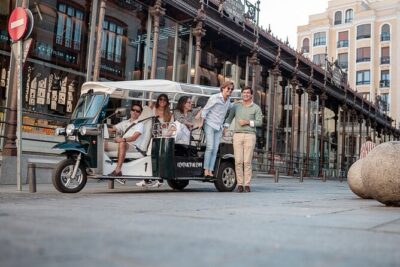
Madrid Welcome Tour with Local Guide in Eco Tuk Tuk Private
Read our review →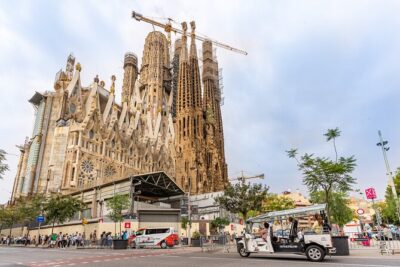
Tour Welcome Barcelona with Local Guide in Eco Tuk Tuk Private
Read our review →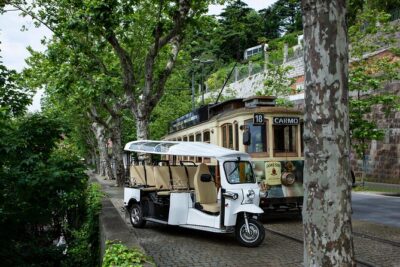
Discover Porto’s Highlights on a 2-Hour Private Electric Tuk Tuk
Read our review →
Welcome Lisbon Tour with Local Guide in Private Eco Tuk Tuk
Read our review →