REVIEW · TUK TUK FOOD TOURS
Guided Morning E-Rickshaw Ride with Food Tasting at Jaipur
Jaipur is at its best before the heat and traffic take over. This early-morning e-rickshaw ride takes you through the Pink City while shops open, flowers arrive, temple bells sound, and food vendors prepare old Jaipur favorites. It is less about checking off monuments and more about seeing the city begin its day.
I like two things right away: the e-rickshaw saves your legs while still letting you move slowly enough to notice painted walls and old doorways, and the route reaches working markets and craft streets that many first-time visitors miss. The food stops, temple visit, and flower market also give the morning a clear local rhythm.
The main trade-off is time. Three hours covers a lot, but most stops are short, and Hawa Mahal and Albert Hall Museum are viewed from outside. The ride begins and ends at Raj Mandir Cinema, so you will need to arrange your own transport to the meeting point.
Key points at a glance
- Jaipur before the crowds: Ride through the walled city in the cooler morning hours, when traffic restrictions make parts of the route calmer.
- Food with a sense of place: Taste traditional snacks and drinks at established Jaipur food outlets, including places described as operating for more than a century.
- Markets in motion: Visit the flower and vegetable markets, with many types of produce arriving as the city wakes.
- A working craft street: At Thatheron ka Rasta, watch brass utensils being made by hand and try the process if you wish.
- Temple and city views: Attend the Govind Dev Ji aarti and look across toward the City Palace from the temple area.
- Small-group format: The maximum group size is 10, useful in narrow streets and at food stalls.
Why sunrise is the right time for Jaipur
Jaipur can feel crowded and hot later in the day. This tour uses the morning to its advantage, beginning around sunrise and moving through roads that are quieter than they become later.
The early start also changes what you see. Instead of only finding finished sights, you see preparation: flowers being sorted, vegetables arranged, food being cooked, and craft workers beginning their day. I find that this gives Jaipur more character than a quick run between palace gates.
The route passes through the old walled city, often called the Chardiwari. Its outer walls once protected the palace city, and the pink-terracotta color was used to welcome Queen Victoria. The shade now helps define Jaipur, appearing on major roads, side streets, shopfronts, and gateways.
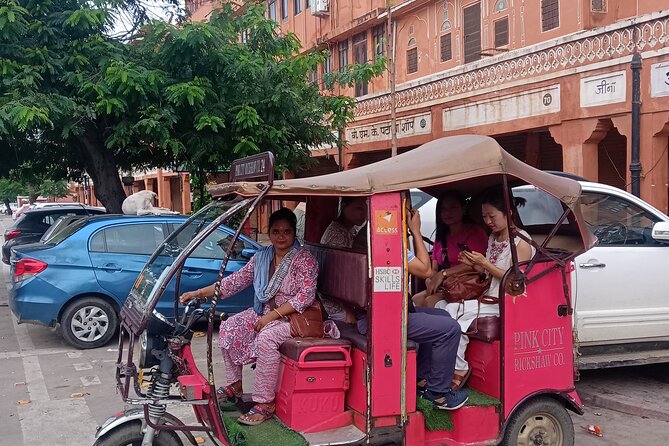
An e-rickshaw is a practical match for this setting. You are not sealed inside a car, so you can see and hear the streets around you. At the same time, you are not walking the whole route, which helps if heat, distance, or a back problem limits your energy. One account specifically describes the experience working well for people aged 72 and 80, including a traveler recovering from a back injury.
More Rickshaw Tours in India
- Jaipur Heritage Walk with Rickshaw Ride
★ 5.0 · 105 reviews - Private Full Day Jaipur Sightseeing Tour By Tuk-Tuk (Rickshaw)
★ 5.0 · 30 reviews - Jaipur Rickshaw Tour Jantar Mantar City Palace
★ 5.0 · 18 reviews
Raj Mandir Cinema and the first look at Jaipur
The meeting point is Raj Mandir Cinema on Bhagwan Das Road in the C Scheme area. The cinema is known for its grand, decorative interior and is described as Jaipur’s oldest movie theater. The stop lasts about 10 minutes, and admission is not included.
You may only see the exterior or have a brief look around, so do not treat this as a full cinema visit. Its value is as a starting point. From here, the ride moves toward the old city and gives you a quick contrast between modern Jaipur and the historic walled center.
The meeting point is near public transportation, but the experience returns to the same place at the end. That is helpful if you have plans afterward, though you should allow time to reach the start on your own.
Ajmeri Gate and the painted streets
Ajmeri Gate marks the approach to the old walled city. Here, the ride slows down enough for you to see wall paintings, large gateways, and the entrances that once controlled access to Jaipur’s neighborhoods.
This is one of the better parts of the tour for understanding how Jaipur was organized. The city was planned around broad roads and crossing routes, with markets and neighborhoods arranged inside the walls. You will not get a long lecture at every corner, but the guide can connect the gateways, roads, and palace city in a way that is hard to grasp from a passing taxi.
The 10-minute stop is brief. Think of it as a visual introduction rather than a full architectural visit. Keep your camera ready, but also look above shop level. The painted walls and older doorways are easy to miss when traffic picks up.
Ram Niwas Garden and Albert Hall Museum
At Ram Niwas Garden, the tour pauses for about 20 minutes. The garden contains Albert Hall Museum, an Anglo-Indian building with European-inspired design. The morning view gives you a chance to see the museum from outside without spending time on an interior visit.
A useful detail here is the timing. Traffic is not allowed on the garden roads in the morning, so riding through this section is calmer than it would be later. That makes the e-rickshaw feel less like a transfer and more like a gentle city tour.
Admission to Albert Hall Museum is not included, and the schedule does not provide time for a museum visit. If the museum is a priority, plan a separate visit. This tour is better for getting an outside view and understanding how the garden fits into Jaipur’s older civic design.
More Rickshaw Tours in Jaipur
- Jaipur Half-Day Heritage Tour by Women-Driven E-Rickshaw
★ 5.0 · 15 reviews - Jaipur Private City Tour with a Women-Driven E-Rickshaw Ride
★ 5.0 · 12 reviews - Jaipur Half-Day City Tour By E-Rickshaw with Female Driver
★ 4.8 · 9 reviews - Jaipur City Tour by Women-Driven E-Rickshaw
★ 5.0 · 2 reviews
The Pink City and Hawa Mahal
The ride continues through the Pink City, where the rows of pink buildings are the main attraction. The slow pace is useful here. You can take in the repeated facades, market roads, old arches, and the different ways daily commerce has been fitted into the historic plan.
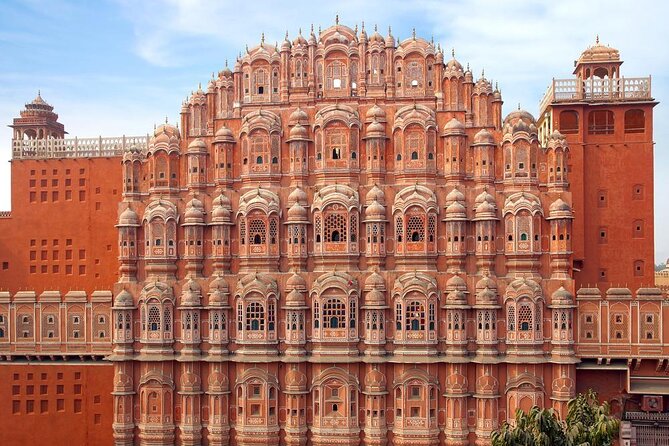
Hawa Mahal receives about 20 minutes. Its five floors and 953 small windows, called jharokhas, form the famous honeycomb front. Lal Chand Ustad designed the building, and the lattice windows allowed women of the royal household to watch street life without being seen.
This is a photo stop, not a full palace tour. Admission is not included, and the supplied schedule does not promise entry. That is not necessarily a weakness. The outside facade is what most people come to photograph, and a short stop leaves room for the markets, temple, food, and craft work that make this experience different from a standard palace circuit.
Still, set your expectations correctly. If you want detailed interior rooms and a long historical explanation, you will need a separate Hawa Mahal visit.
Govind Dev Ji Temple and the morning markets
The longest section, about one hour, centers on Govind Dev Ji Temple and the nearby markets. This is where the tour shifts from Jaipur’s famous facades to its daily routines.
You may attend the aarti, the temple prayer ceremony, at Govind Dev Ji Temple. The experience also includes a far view of City Palace, the home of Jaipur’s Maharaja family, from the temple area. The temple garden is part of the stop, and the schedule also mentions laughing yoga there.
Temple customs can move quickly, so follow your guide’s instructions and dress and act respectfully. The value here is not only the building. It is the sound, movement, flowers, chanting, and shared morning activity around the temple.
The surrounding flower and vegetable markets add another layer. You can see flowers and produce being sold as the day begins, with more than 100 varieties described across the markets. This is a good place to pay attention to smell and color, not just photographs. Marigold petals may be part of the temple setting, and one morning account describes being showered with them.
The tour also mentions feeding cows. Since the exact arrangements can vary, follow the guide rather than approaching animals on your own. The important point is that this part of the route brings you close to ordinary religious and market life, not just Jaipur’s grand buildings.
Thatheron ka Rasta and brass work by hand
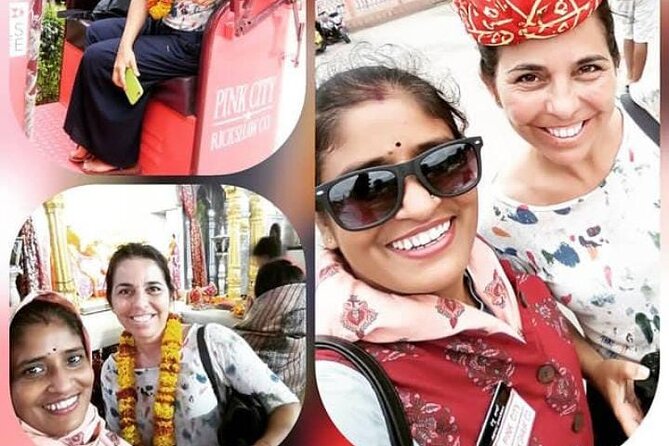
Thatheron ka Rasta is a narrow craft street where artisans make brass utensils without modern machines. This may be the most revealing stop for anyone curious about how traditional goods are produced.
You can watch the makers shape metal by hand and, if you like, try making one yourself. Even a brief attempt can show how much force, timing, and skill the work requires. It turns a craft display into a short lesson in labor.
The stop lasts about 20 minutes, so you will not see every stage of production. You may also find the street noisy or tight, as working craft areas are not arranged for sightseeing comfort. That is part of its value. The setting feels practical rather than polished.
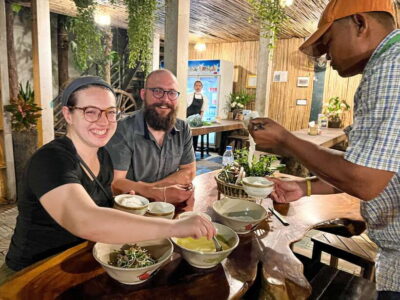
This section also includes food stops at well-known Jaipur outlets that have operated for more than 100 years. The information does not name every dish, so expect a selection of traditional snacks rather than a fixed restaurant meal. Chai is specifically part of the morning food experience, and the route includes several chances to taste local treats.
The food is a major reason to choose this tour. You are not simply being told where to eat. You are taken to places tied to Jaipur’s long food traditions, with the guide helping you understand what you are trying. If you have allergies, dietary limits, or strong dislikes, raise them before ordering. The available information does not specify substitutions.
How the guides shape the morning
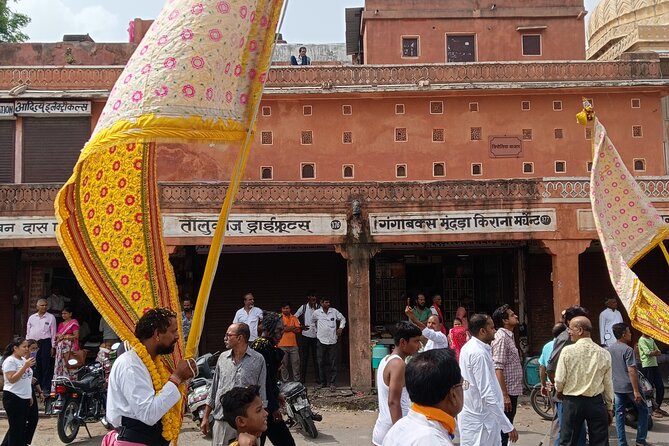
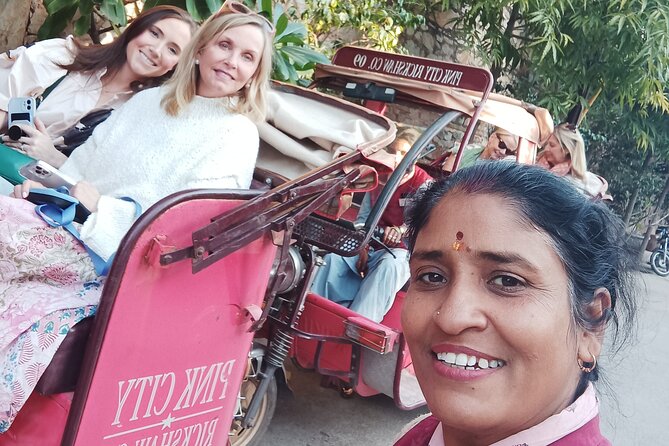
The experience is associated with guides named Umesh and KumKum. Their roles appear to include more than driving. The morning depends on small decisions: when to stop, how to enter the temple area, which food stall is open, and how to make room for an unexpected market or craft moment.
Umesh is described as warm, energetic, and good at finding side streets and less obvious places. KumKum is described as punctual at sunrise and skilled at keeping the morning moving while making room for spontaneous stops. Because the booking information does not guarantee a particular guide, treat these names as useful examples rather than a promise.
The guide matters more here than on a simple sightseeing transfer. The monuments are easy to locate, but the food, markets, temple customs, and craft street benefit from local judgment. The maximum group size is 10, which should help the guide keep the group together without turning the ride into a large procession.
What the $30.09 price buys you
At $30.09 per person, the value depends on what you want from Jaipur. You are paying for about three hours of transport, guiding, food tasting, market visits, a temple stop, and access to a route that would be difficult to organize efficiently on your own in one morning.
The price does not include admission to Raj Mandir Cinema or Albert Hall Museum, and Hawa Mahal entry is not included either. The schedule presents those places mainly as outside views, so this is not a good substitute for a full monument ticket tour.
I think the price is reasonable if you value local food and street-level access. It is less compelling if your only goal is entering Jaipur’s major palaces. For that, use this as a morning orientation, then return to the monuments independently.
The tour is highly recommended in its current rating record, with a 5 rating from 28 ratings and 100 percent recommendation. That is a strong signal, though you should still match the format to your interests. The ride is active and varied, but it is not a deep museum or palace tour.
Who should book this Jaipur ride
I would choose this experience for a first morning in Jaipur, especially if you want to get your bearings before tackling larger sights. It suits couples, families, older visitors, and anyone who prefers sitting transport to a long heritage walk.
It is also a good fit for food-minded visitors. The tastings are not an extra detail tacked onto a sightseeing route. They help connect the old markets, temple area, and craft streets to the way Jaipur functions now.
You should think twice if you dislike early starts, short stops, or street food. You may also prefer a longer private tour if you want extensive time inside Hawa Mahal, Albert Hall Museum, or the City Palace. This experience gives you views and context, not full visits to each major monument.
The tour requires good weather and a minimum number of participants. If poor weather or low enrollment cancels it, you can choose another date or experience, or receive a full refund. You can cancel for a full refund up to 24 hours before the start time. Changes or cancellations inside 24 hours are not accepted or refunded.
Should you book it?
Book this ride if you want Jaipur before breakfast crowds, traditional snacks, temple activity, working markets, and a glimpse of hand-made brass work. Its strongest feature is the mix: famous sights provide the frame, while food, flowers, prayers, and artisans supply the substance.
Skip it if you want long interior visits or a slow, single-subject tour. For most first-time visitors, though, this is a smart three-hour introduction, especially when walking in the heat is not appealing. Start early, wear comfortable clothes, keep your schedule flexible, and let the morning streets do much of the teaching.
FAQ
How long does the e-rickshaw experience last?
The experience lasts approximately three hours.
Where does the tour start?
It starts at Raj Mandir Cinema, C-16 Bhagwan Das Road, Panch Batti, C Scheme, Ashok Nagar, Jaipur.
Where does the tour finish?
The activity ends back at the meeting point at Raj Mandir Cinema.
Is food included?
Yes. The experience includes food tasting at famous Jaipur food outlets, along with traditional snacks and chai as part of the morning route.
Does the tour include entry to Hawa Mahal?
No admission is included for Hawa Mahal. The stop is primarily for viewing and photographing the exterior.
Is entry to Albert Hall Museum included?
No. The tour provides a morning outside view of Albert Hall Museum from Ram Niwas Garden.
How many people can join the tour?
The maximum group size is 10 travelers.
Can I cancel for a full refund?
Yes. You can cancel at least 24 hours before the local start time for a full refund. Cancellations or changes made within 24 hours are not refunded or accepted.
More Tuk Tuk Food Tours in Jaipur
- Bangkok: Midnight Food Tour by Tuk-Tuk
★ 4.9 · 2,054 reviews - Bangkok: Michelin Guide Street Food Tour by Tuk Tuk
★ 4.4 · 1,274 reviews - Xi’an Evening Food Tour by TukTuk
★ 5.0 · 715 reviews - Bangkok Tuk-Tuk Tour by Night with Chinatown Street Food Meal
★ 5.0 · 635 reviews
More Tuk Tuk Food Tours in India
- Jaipur: Discover Pink City on TukTuk (Guided Tour & Food Tasting)
★ 5.0 · 2 reviews - Agra: Street Food Walking Tour, Spice Market, & Tuk-tuk Ride
★ 4.9 · 102 reviews - Delhi: Old Delhi City Tour with Tuk-Tuk Ride & Street Food
★ 4.8 · 88 reviews - Delhi: Private Chandni Chowk, Food Tasting, & Tuk-Tuk Tour
★ 4.8 · 68 reviews
Just added around Jaipur
- Travel Through the Streets of Jaipur by Tuktuk with a Local★ 5.0 · 36 reviews
- Jaipur Tour by Tuk-Tuk★ 5.0 · 91 reviews
- Jaipur Full Day Tour by Ac Car or Tuk-Tuk with Hotel Pickup★ 5.0 · 91 reviews
- Private Tour: Jaipur Sightseeing by Tuk-Tuk★ 3.0 · 2 reviews
- Private Tuk-Tuk Tour of Jaipur with Guide★ 5.0 · 29 reviews
- Ultimate Jaipur Tuk Tuk Tour with Pickup★ 5.0 · 21 reviews
- Jaipur Tuk-Tuk Sightseeing Tour★ 5.0 · 69 reviews
- Jaipur Private Tuk Tuk Tour – Full-Day jaipur City Sightseeing★ 5.0 · 48 reviews
Tuk Tuk Food Tours, compared.

Bangkok Tuk-Tuk Tour by Night with Chinatown Street Food Meal
Read our review →

Ultimate Phnom Penh Food Tour by Tuk Tuk: 20 Tastings and Drinks
Read our review →