
REVIEW · TEMPLE TUK TUK TOURS
Chiang Rai: Half-Day Tuk-Tuk Temple Tour
Chiang Rai’s best temple tour may be the one that lets you choose. This private four-hour tuk-tuk outing gives you a list of 14 temples and leaves the final decision in your hands, from the sacred Wat Phra Kaew to the hilltop Wat Doi Ngam Muang and the towering Guan Yin statue at Wat Huay Pla Kang.
I like the no-guide freedom, since you can linger at a quiet shrine or move on without following a group schedule. I also like the honest pricing: one booking covers up to eight people, with fuel, parking, pickup, and drop-off included. The catch is important: groups of five to eight ride in a songtaew, not a standard tuk-tuk, and you will need to manage your own temple visits.
Key points
- Choose four of 14 temples: Build your own route instead of accepting a fixed sightseeing list.
- Explore without a guide: You set the pace, but you also handle your own interpretation and temple etiquette.
- Private transport and hotel pickup: Fuel, parking, and return transport are included.
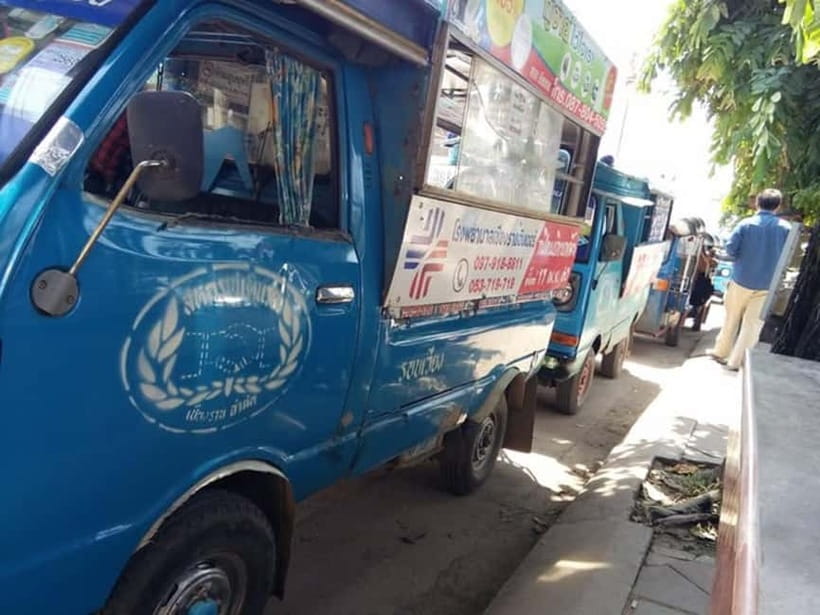
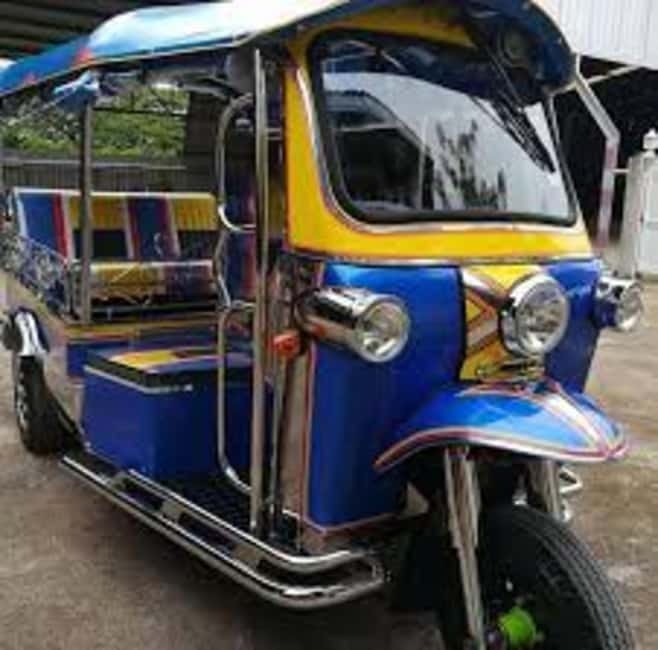
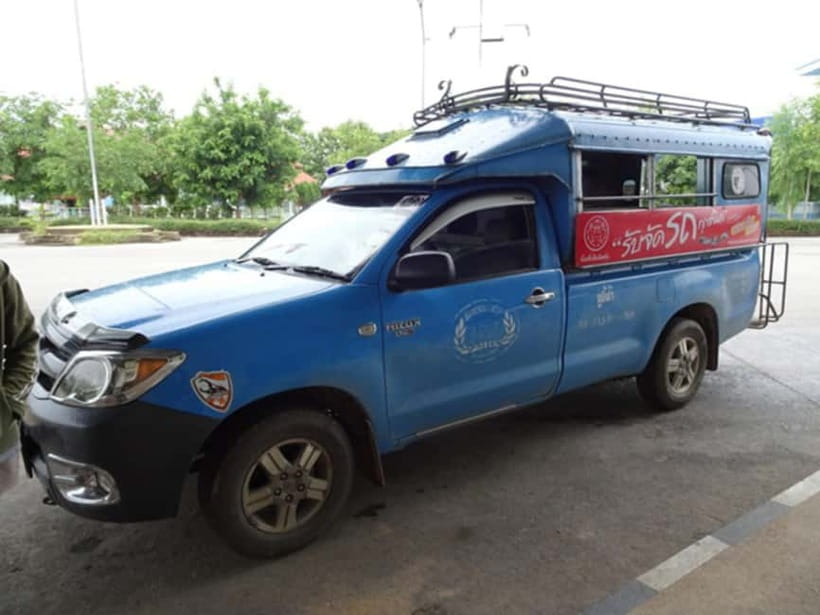
- Vehicle size changes with your group: One or two people use a standard tuk-tuk, three or four use a larger local-style tuk-tuk, and five to eight use a songtaew.
- No temple entry fees: Every listed stop is free to enter.
- Plan for modest clothing and cash: Long trousers, covered shoulders, water, sunscreen, and small cash make the outing easier.
Four temples, chosen your way
This is not a standard city tour with a fixed route. Before the outing, you send your four temple choices and your WhatsApp number so the operator can help arrange the visit. That small step matters. Chiang Rai’s temples are spread across the city and nearby hills, so your choices shape both the mood and the amount of driving.
You can build a route around historic city temples, hilltop views, unusual architecture, or quieter religious sites. If you want to see four major sights, choose accordingly. If you prefer a slower morning with less familiar places, the smaller temples on the list offer a better fit.
The tour does not include the Blue Temple or the White Temple. That is easy to miss, especially since both are among Chiang Rai’s best-known sights. If either one is a must-see, you will need to arrange a separate visit or choose a different tour.
More Temple Tuk Tuk Tours in Thailand
- Bangkok by Night: Temples, Markets and Food Tuk-Tuk Tour
★ 5.0 · 3,752 reviews - Bangkok: Markets, Temples and Food Night Tour by Tuk Tuk
★ 4.9 · 2,371 reviews - Bangkok: Tuk Tuk Adventure Chinatown Michelin Food & Temples
★ 4.3 · 725 reviews
Wat Khuakhrae and Wat Ched Yod
Wat Khuakhrae is the quiet choice. It is known for attractive architecture and a calm atmosphere, making it a sensible pick if you want a less-visited stop rather than another major city landmark. Since no guide accompanies you, take time to look carefully at the building details and notice how the temple feels when there is no packed schedule pressing you onward.
Wat Ched Yod offers a more distinctive architectural idea. Its name refers to seven chedis, with each one representing a day of the week. This gives the visit an easy theme to remember, even without a guide. If you are interested in how Buddhist sites use symbols and numbers, this is one of the stronger choices on the list.
The drawback is that neither stop is described as a sweeping viewpoint. If wide city views are your priority, trade one of these temples for a hilltop site.
Wat Chiang Yuen and Wat Doi Ngam Muang
Wat Chiang Yuen combines Lanna and Burmese influences. That mix gives you something different from a purely local style and makes it a good pick for anyone who likes comparing temple forms. You will need to pay attention to the details, since the tour provides transportation rather than a formal explanation of what you are seeing.
Wat Doi Ngam Muang sits on a hill and offers views over Chiang Rai. The setting adds a welcome change after city temples, but the hill location also makes this a less comfortable choice for anyone who has trouble walking or climbing. The tour is specifically not suitable for people with mobility impairments or wheelchair users.
I would choose Wat Doi Ngam Muang early in the planning process if scenery matters to you. Pair it with city temples such as Wat Phra Kaew or Wat Klang Wiang, and you get a better balance of views, architecture, and local religious sites.
Wat Mung Muang, Wat Ming Muang, and Wat Klang Wiang
Wat Mung Muang is described as a quiet, less-known site with detailed Lanna architecture. It suits you if you would rather see a smaller temple than spend the entire morning at major attractions. As with several choices here, the value comes from having room to look around at your own speed.
Wat Ming Muang has white structures that mix traditional Thai features with newer architectural touches. Its bright appearance gives your route some variety, especially if you choose darker woodwork or older-looking sites for the other stops.
Wat Klang Wiang is in the heart of Chiang Rai and is known for traditional Lanna design. Its central position may make it a practical choice when you want to reduce driving between stops. It also pairs well with Wat Phra Kaew, Wat Phra Sing, or Wat Chetawan for a city-focused half-day.
These three temples are a good group for someone who wants an urban route with less time spent on hills. The tradeoff is that you will not get the broad views offered by the higher sites.
Same place, a completely different ride:
- Bangkok Midnight Food Tuk Tuk Tour
★ 5.0 · 2,542 reviews - Bangkok: Midnight Food Tour by Tuk-Tuk
★ 4.9 · 2,054 reviews - Bangkok: Michelin Guide Street Food Tour by Tuk Tuk
★ 4.4 · 1,274 reviews - Bangkok: Guided Tour in a Typical Thai Tuk-Tuk
★ 4.7 · 830 reviews
Wat Phra Kaew and Wat Phra Sing
Wat Phra Kaew is one of the most important choices on the list. It houses the Emerald Buddha, one of Thailand’s most sacred religious images. The temple is a strong fit if you want a site with national religious importance rather than simply an attractive building.
Wat Phra Sing is another major cultural stop. It houses a sacred Buddha image and shows off Lanna architecture. Choosing both Wat Phra Kaew and Wat Phra Sing gives your route a clear focus on important Buddhist sites in the city.
Because this is a no-guide tour, you should prepare yourself to enter quietly, dress properly, and learn a little before you go if the religious background matters to you. The driver handles transport, but interpretation is your responsibility. That arrangement is freeing for independent visitors, though first-time temple visitors may miss useful context.
Wat Phra That Doi Chom Thong and Wat Huay Pla Kang
Wat Phra That Doi Chom Thong sits on a mountain slope and offers broad views. It is one of the better choices for combining a temple visit with a look across Chiang Rai. Like Wat Doi Ngam Muang, it may be less suitable if stairs, slopes, or uneven walking surfaces cause problems.
Wat Huay Pla Kang is known for its huge Guan Yin statue and city views. The scale of the statue gives this stop a different feel from the smaller Lanna temples. If you want one visually dramatic site, this is an obvious choice.
I would not automatically choose both hill or viewpoint temples unless scenery is your main goal. Four stops in four hours can pass quickly, and a route with several elevated sites may leave less time for quiet visits in the city.
Wat Chetawan, Wat Sri Boon Ruang, and Wat Sri Kerd
Wat Chetawan, also called Wat Phra Non, is known for its reclining Buddha. That familiar image makes it easy to distinguish from the other choices, and it adds variety to a route otherwise filled with standing Buddha figures, chedis, and temple halls.
Wat Sri Boon Ruang is a lesser-known temple with attractive architecture. It is a good option if you want to avoid a route made entirely of major landmarks. Wat Sri Kerd is noted for its peaceful surroundings, making it another choice for a slower, quieter visit.
These sites may appeal most to repeat visitors or independent-minded first-timers. You are not being rushed through a checklist, so the quieter stops have room to work. On the other hand, you should not expect a guide to point out every feature or explain each image. Bring curiosity, and accept that the visit is more about seeing than receiving a formal lesson.
What the tuk-tuk arrangement means for you
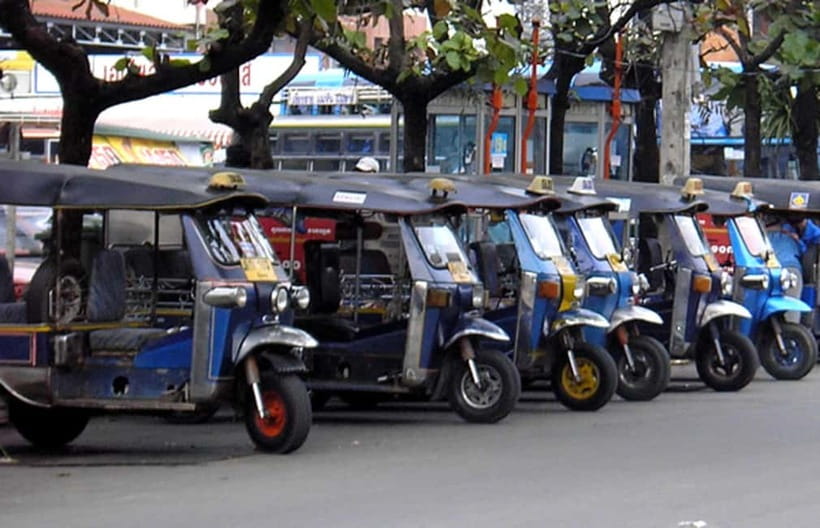
For one or two people, the price includes one standard tuk-tuk. This is the classic open-sided way to move through Chiang Rai, with more exposure to the street than you get in a sealed car. It is part of the appeal, but you should be ready for sun, dust, traffic noise, and changing weather.
For three or four people, a larger local-style tuk-tuk is provided. For five to eight people, transport changes to a songtaew. That is important if the tuk-tuk itself is central to your plans. A large group can still travel privately, but it will not have the same small-vehicle feel.
The price is $51 per group of up to eight, which can be excellent value when divided among several people. A group of eight pays little per person for four hours of private transport. A solo visitor pays more per person, but still receives pickup, drop-off, fuel, parking, and a route tailored to four selected temples.
The price does not include food, water, shopping, tips, or a guide. Temple entry is free, so your main extra costs are refreshments and anything you buy along the way. Bring cash because many places accept cash rather than cards.
A four-hour plan that rewards careful choices
The tour lasts four hours from pickup to return. That sounds generous, but it includes driving, getting in and out, walking, and visiting four different places. You should choose a realistic route instead of selecting four temples scattered in every direction.
A city-centered plan could include Wat Klang Wiang, Wat Ming Muang, Wat Phra Kaew, and Wat Phra Sing. This gives you traditional Lanna architecture, white temple structures, and two major religious sites without making the day all about hills.
A view-focused plan might include Wat Doi Ngam Muang, Wat Phra That Doi Chom Thong, Wat Huay Pla Kang, and one city temple. This gives you several elevated stops, but walking and transport time deserve attention.
A quieter plan could use Wat Khuakhrae, Wat Mung Muang, Wat Sri Boon Ruang, and Wat Sri Kerd. That combination favors calm settings and smaller sites. You will get less famous-name sightseeing, but the flexible format makes this kind of route possible.
Send your choices before the tour, along with your WhatsApp number. If you want a particular drop-off location rather than your accommodation, discuss it with the driver or the operator before or during the outing. The normal arrangement is pickup and return at your accommodation, with you waiting at the front or lobby.
Temple clothing and practical preparation
Temple dress rules are not a minor detail here. Wear long trousers or another garment that covers your knees, and choose a shirt that covers your shoulders. Shorts, short skirts, sleeveless shirts, and other revealing clothing are not suitable for the visits.
Bring water, personal medication, sunscreen, a hat, sunglasses, or an umbrella. Hand sanitizer and tissues are also useful because they may not be available at every stop. During smoke season, an N95 mask is recommended.
You must carry your passport or a copy. Keep it secure, and bring enough cash for drinks, food, or shopping. Food and alcoholic drinks are not allowed in the vehicle, and smoking and vaping are prohibited.
The tour is not suitable for wheelchair users, people with mobility impairments, or people who use walking frames. Walking sticks are allowed, but larger walking frames cannot fit. Children’s car seats are not available, so families should consider that before booking. Anyone with a medical condition should check with the operator first and carry needed medication.
The freedom and limits of a no-guide tour
The lack of a guide is the central feature of this experience, not a footnote. You can spend five minutes at one temple and much longer at another, take quiet breaks, or shape the route around your own interests.
That freedom works best if you are comfortable making decisions and exploring without a formal explanation. You will not have someone interpreting the symbolism, explaining the history of each Buddha image, or coordinating the timing inside every temple.
The driver provides transport rather than a guided lecture. One Spanish-language booking note gives special thanks to Noi, so if you are hoping to ride with that particular driver, ask about availability rather than assuming it. The useful point is that this is a local transport-led outing, not a traditional guided sightseeing tour.
Who should book this Chiang Rai temple tour?
I would recommend it to couples, families with older children, and small groups who want control over the day. It is especially useful if you already know which temples interest you or if you dislike being hurried through a fixed itinerary.
It also works well for a group of several people. At $51 for up to eight, the cost becomes attractive when shared. Just remember that larger groups move by songtaew, and the experience changes from a tiny tuk-tuk ride to a larger local vehicle.
I would hesitate to recommend it if you need detailed cultural explanations, step-free access, or a fully planned schedule. It is also a poor fit if your top priorities are the White Temple or Blue Temple, since neither is included.
The current rating is 5 out of 5 from three verified bookings, with special appreciation given to Noi and to the beauty of the route. That positive signal fits the tour’s strongest qualities: flexible temple selection, personal transport, and a simple four-hour format. Still, the no-guide setup means the experience depends heavily on your planning.
Should you book it?
Book this tour if you want to choose four temples, travel privately, and explore without a guide setting the pace. It offers strong value for a group, especially because temple entry, fuel, parking, pickup, and drop-off are included.
Before paying, settle three points: your four temple choices, the vehicle type for your group, and whether you are comfortable without a guide. Dress properly, bring cash and water, and do not assume the famous White and Blue Temples are part of the route. If those details suit your plans, this is a flexible and practical way to see Chiang Rai’s religious sites.
FAQ
How long does the Chiang Rai tuk-tuk temple tour last?
The tour lasts four hours from pickup to drop-off. A full-day program is available as a separate option.
How many temples can I visit?
You can choose four temples from the 14 available options.
Are the Blue Temple and White Temple included?
No. Wat Rong Suea Ten, known as the Blue Temple, and Wat Rong Khun, known as the White Temple, are not included.
Does the tour include a guide?
No. This is a no-guide tour, so you can explore each temple at your own pace.
What vehicle is used for different group sizes?
One or two people use a standard tuk-tuk. Groups of three or four use a larger local-style tuk-tuk. Groups of five to eight use a songtaew.
Are temple entry fees included?
There are no entry fees for any of the temples listed for this tour.
What should I wear and bring?
Wear long trousers and a shirt covering your shoulders. Bring water, cash, your passport or a copy, personal medication, sunscreen, and hand sanitizer or tissues.
More Half-Day Trips in Thailand
- Half-Day Private Night Tour by Tuk Tuk in Chiang Mai City
★ 4.0 · 19 reviews - Chiang Mai: Half-Day Private City Tour by Tuk Tuk
★ 5.0 · 4 reviews - Budapest Private Tuk Tuk Half-Day Tour
★ 5.0 · 606 reviews - Lisbon: Half-Day Private Guided Tuk-Tuk Tour
★ 4.9 · 532 reviews
Just added around Thailand
- Trang: City Tour By Tuk Tuk★ 5.0 · 2 reviews
- Hua Hin By Night Private Tour with TUK TUK★ 4.0 · 9 reviews
- Private Evening! Crisscross Chiang Mai’s Night by the classic Tuk Tuk★ 4.5 · 6 reviews
- Chiang Rai Night Tour by TUK TUK★ 4.5 · 3 reviews
- Full Day Chauffeur Driven Tuk Tuk Adventure in Chiang Mai including rafting★ 5.0 · 19 reviews
- Half Day Chiang Mai City and Cultural by TukTuk, Samlor & Red car (Private Tour)★ 5.0 · 6 reviews
- Sunlight or Moonlight: Chiang Mai City Tuk Tuk Tour★ 5.0 · 7 reviews
- Half day Best of Chiang Mai City by Tuk-Tuk Private tours★ 4.5 · 5 reviews
Temple Tuk Tuk Tours, compared.
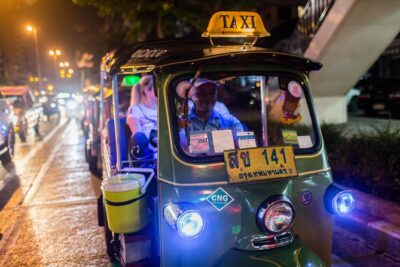
Bangkok by Night: Temples, Markets and Food Tuk-Tuk Tour
Read our review →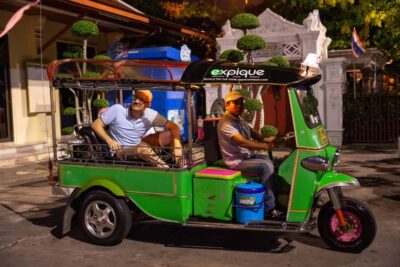
Markets, Temples and Food Night Tour by Tuk Tuk
Read our review →
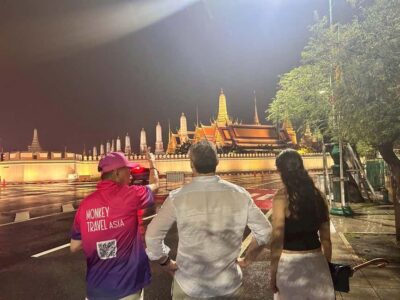
Tuk Tuk Adventure Chinatown Michelin Food & Temples
Read our review →
Evening Tour with Wat Arun, Wat Pho & Tuk Tuk Ride
Read our review →
Chiang Mai Temples and Market Tuk-Tuk Evening Night Tour
Read our review →
Angkor Wat Private Tour by Tuk-Tuk with English Speaking Driver
Read our review →Where else this ride shows up