
REVIEW · BANGKOK TUK TUK TOURS
Bangkok: Guided Tour in a Typical Thai Tuk-Tuk
Bangkok makes its first impression at street level, and this two-hour tuk-tuk tour gives you a quick blast of the old city without the usual fare bargaining. You ride between the Grand Palace, the Giant Swing, temple districts, the flower market, and Chinatown while a local guide fills in the stories.
I like the easy introduction to Bangkok and the way the route mixes grand monuments with ordinary city life. I also like the lotus-folding activity and the finish in Chinatown, where you can continue with dinner. The main drawback is clear: you see the major sights from outside, so this is a sampler, not a temple tour.
- Front-row Bangkok transport: Ride in a traditional tuk-tuk rather than a tour bus.
- Exterior landmark stops: See the Grand Palace, Wat Pho, Wat Ratchanatdaram, and the Giant Swing without entering.
- A flower-market visit: Stop at Pak Khlong Talat and fold a lotus flower.
- Chinatown finish: End on Yaowarat Road with food and evening options nearby.
- Short and focused: Two hours works well for a first look or a tight Bangkok schedule.
- English-speaking local guide: Guides such as Anna, Johan, Yohan, Ken, and Enjoy have led recent departures.
A Tuk-Tuk Shortcut Through Bangkok’s Old City
At $28 per person, this experience is best understood as a guided orientation rather than a full sightseeing day. You pay for the tuk-tuk ride, a licensed English-speaking guide, bottled water, and a route that would take more planning and bargaining on your own.
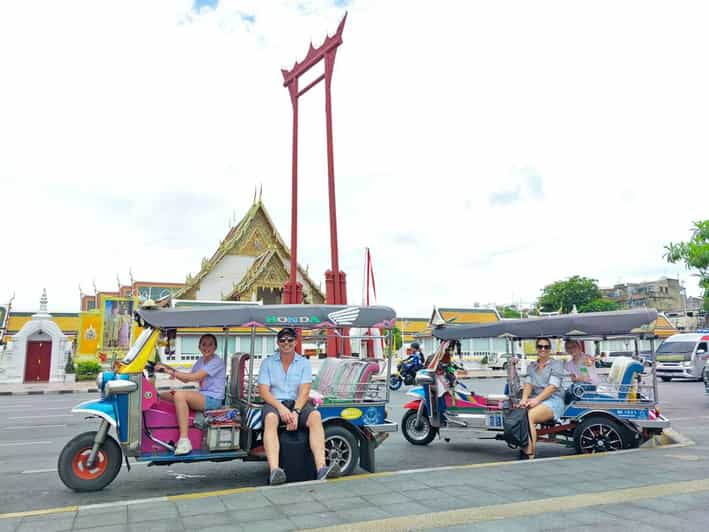
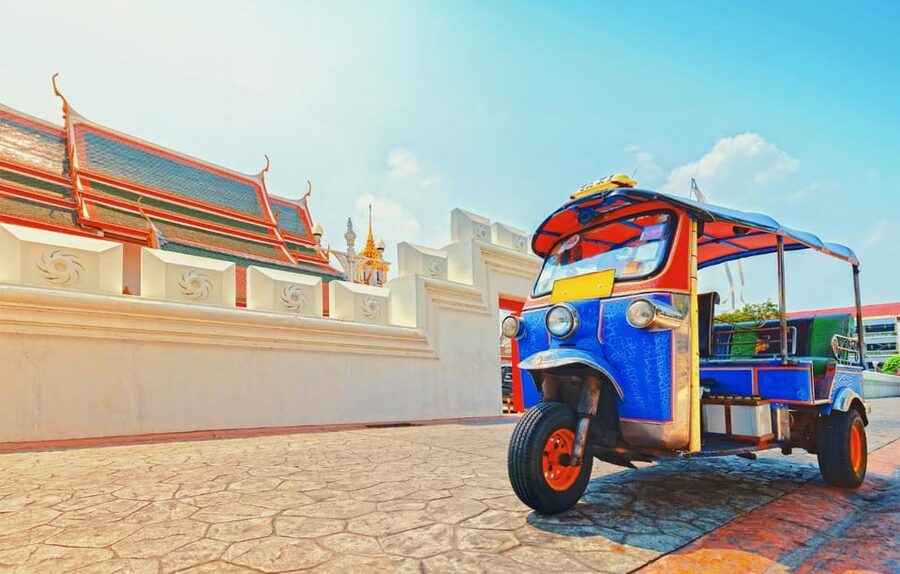
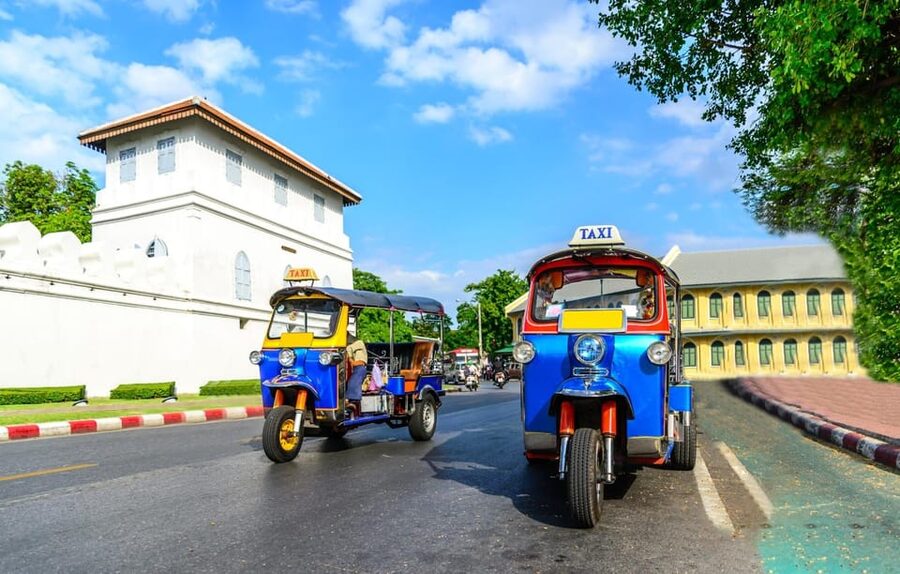
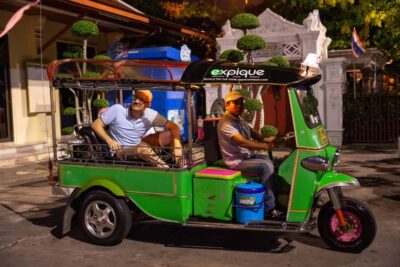
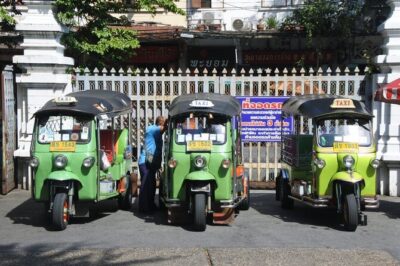
The tuk-tuk is part of the point. Its open sides put you close to Bangkok’s traffic, sounds, heat, and street scenes. You will hear the engine, feel the movement through crowded roads, and get a much stronger sense of the city than you would from behind a sealed tour-bus window.
The ride is not a wild stunt, but it can feel lively. Bangkok traffic shapes the experience, and the trip is designed around several short rides and brief stops. You are not sitting in one vehicle for two solid hours. The group moves from place to place, gathers at each stop, hears an explanation, takes photographs, and climbs back in.
The tour is also set up to remove some common tuk-tuk headaches. You do not need to negotiate a fare, explain a route, or worry about being taken somewhere unexpected to shop. That convenience matters, especially on your first day in Thailand.
Start at Museum Siam, Not the Wrong Exit
The meeting point is outside Museum Siam at Sanam Chai MRT Station. This is a practical starting point because the metro avoids much of Bangkok’s road traffic.
Pay close attention to the exit instructions. Museum Siam has two exits, and the useful one is the front exit facing the museum, not the back road exit. Your guide waits outside there. Arriving a little early gives you time to find the correct spot without adding stress before the ride begins.
From Museum Siam, you take a short initial tuk-tuk ride of about five minutes. The tour then settles into its sightseeing rhythm, with several stops around the historic center and a longer pause in Chinatown.
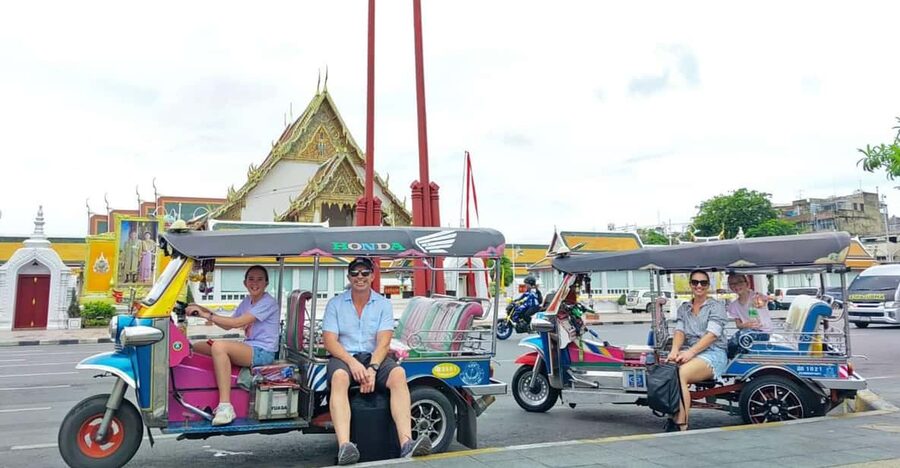
Group arrangements can vary. The tour may place two people in each tuk-tuk, with several tuk-tuks traveling together. Solo bookings may sometimes be paired with others, while a small booking could end up feeling more private. The guide normally gathers everyone at each sight, so you still receive the same explanations even when the vehicles are separate.
More Guided Tours in Bangkok:
- Bangkok: Michelin Guide Street Food Tour by Tuk Tuk
★ 4.4 · 1,274 reviews - Bangkok: Michelin Guide Street Food Tour by Tuk Tuk
★ 4.5 · 56 reviews - 4-Hour Hidden Bangkok TukTuk Street Food Guided Tour
★ 5.0 · 23 reviews
Grand Palace Views Without the Admission Line
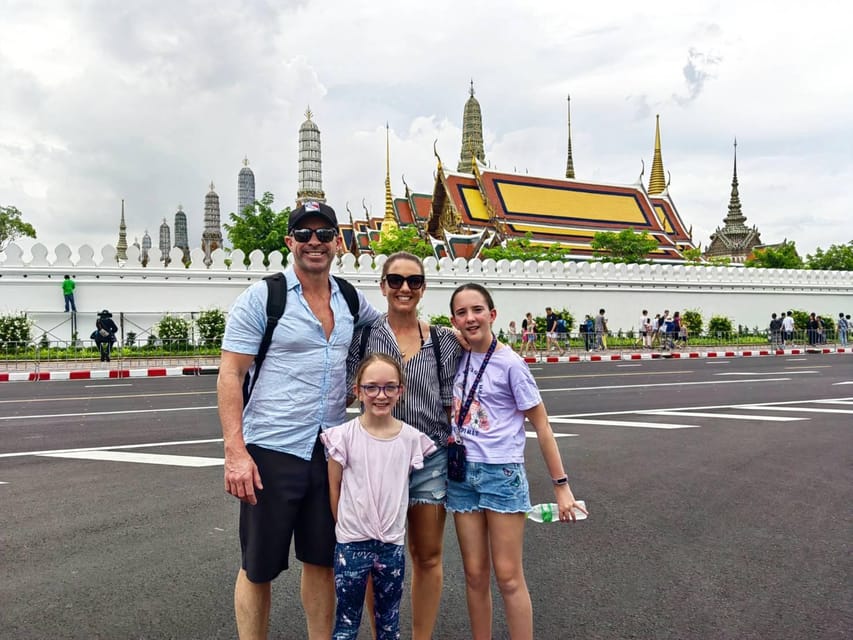
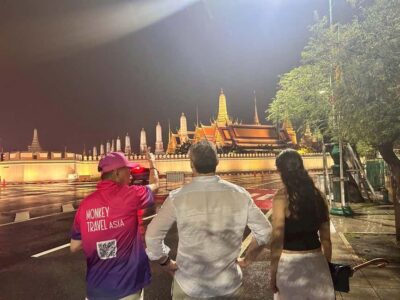
The Grand Palace is one of Bangkok’s essential sights, and it makes sense as an early photo stop. You get a chance to look at the palace complex from outside, hear context from the guide, and take pictures before moving on.
This stop is useful for orientation. The Grand Palace sits at the center of Bangkok’s historic core, and seeing it early helps you understand how close the old royal and religious landmarks are to one another.
Set your expectations correctly. You do not enter the Grand Palace on this tour. The ten-minute stop is enough for an outside view and a short explanation, but not enough to inspect the buildings at leisure or visit the interior temple areas.
If the Grand Palace is high on your list, use this stop to decide if you want to return later for a proper visit. This tour gives you the introduction, not the full experience.
The Giant Swing and Wat Suthat
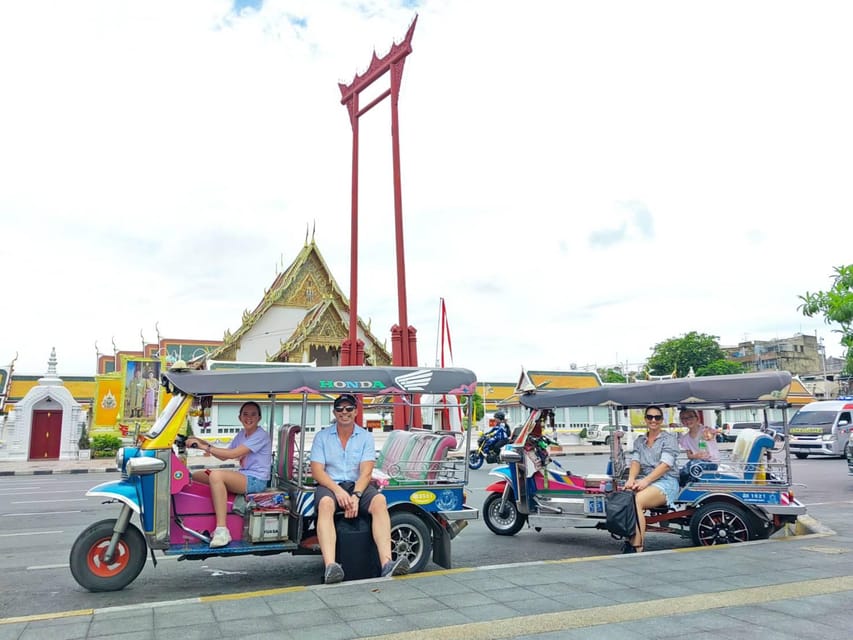
The next short stop is Wat Suthat and the Giant Swing. The Giant Swing is one of Bangkok’s most recognizable urban markers, and it makes a strong photograph against the surrounding old-city buildings.
The nearby temple adds useful context. Your guide can explain the religious and cultural setting, point out details you might miss from the road, and give you a sense of how the monument fits into the old quarter.
Again, the visit is external. You get around ten minutes for photographs and a talk. That is enough for a first look, though anyone who wants time inside Wat Suthat will need to return independently.
The short timing keeps the tour moving. I like that this route avoids trying to turn every sight into a long lecture, but the tradeoff is that you will not linger over architectural details.
Loha Prasat and Wat Ratchanatdaram
The itinerary includes Wat Ratchanatdaram, the temple complex associated with Loha Prasat. Its unusual metal-spired design gives the stop a different look from the palace and more familiar temple forms.
This is one of the more useful stops for a quick city survey because it adds variety. You are not seeing one grand complex after another with no change in style. The route gives you a series of distinct landmarks, each with its own shape and story.
The tour does not take you inside Loha Prasat. You see it from the outside, listen to the guide, and take photographs during another short stop. If you want a quiet, detailed look at the building, this pace may feel too brisk.
For a first afternoon or evening in Bangkok, though, the short visit works well. You can note the temple for a later return instead of spending half a day guessing which sights deserve your time.
More Tuk Tuk Tours in Bangkok:
- Bangkok by Night: Temples, Markets and Food Tuk-Tuk Tour
★ 5.0 · 3,752 reviews - Bangkok Midnight Food Tuk Tuk Tour
★ 5.0 · 2,542 reviews - Bangkok: Markets, Temples and Food Night Tour by Tuk Tuk
★ 4.9 · 2,371 reviews - Bangkok: Midnight Food Tour by Tuk-Tuk
★ 4.9 · 2,054 reviews
Wat Pho and the View Toward Wat Arun
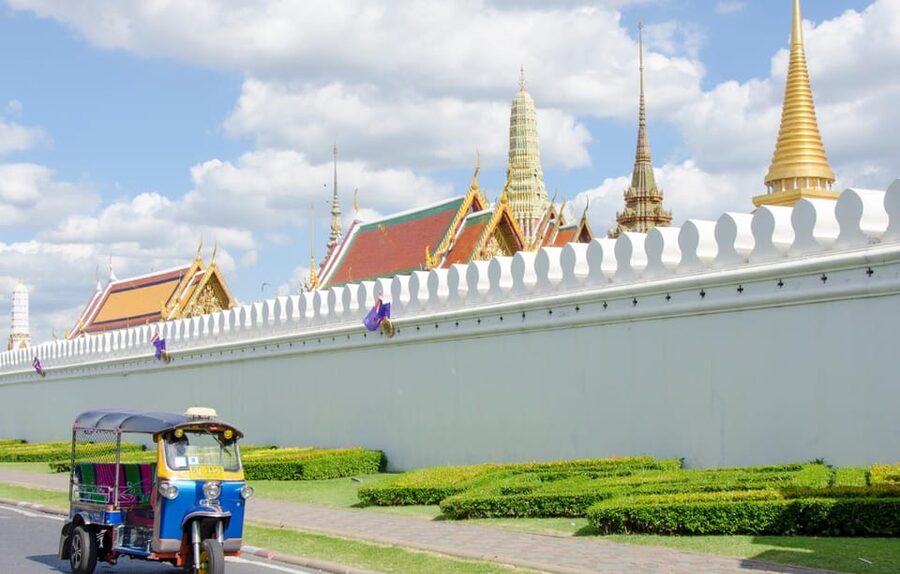
Wat Pho is another exterior photo stop, planned for about ten minutes. The temple is closely associated with Bangkok’s historic center, and the guide can explain its place in the city’s religious and cultural life.
You will not go inside Wat Pho. That means the tour does not include its interior halls or the famous reclining Buddha. One person specifically found it disappointing to pass by without seeing the Golden Buddha, so keep your camera ready and do not expect every famous object to receive a dedicated stop.
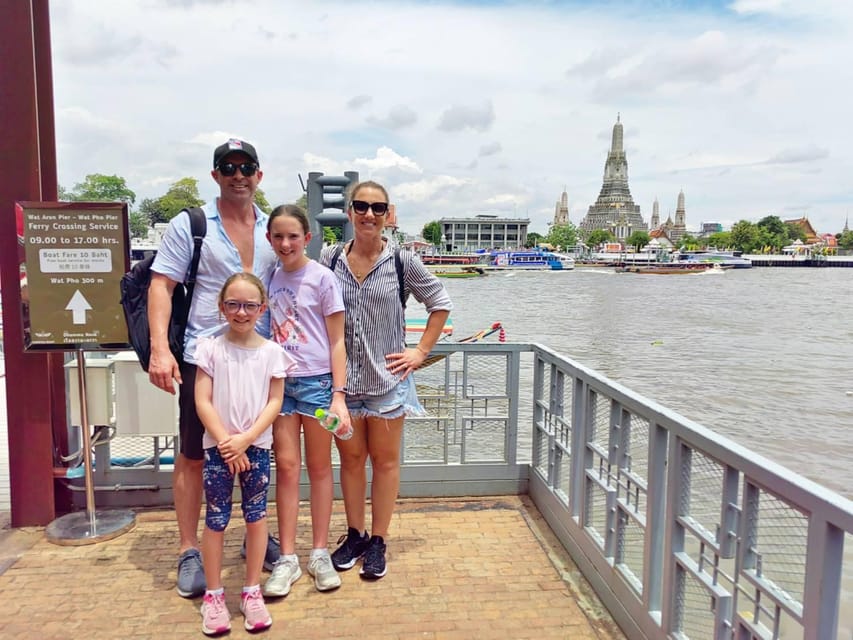
Wat Arun is seen from the opposite side of the river rather than visited directly. This is a view-only part of the route, but it gives you another of Bangkok’s classic riverfront sights without adding a long crossing or a separate ticket.
The value here is breadth. In a short period, you get a visual introduction to several major places. The cost is depth. You will leave with a list of sites to revisit rather than a complete understanding of any one temple.
Pak Khlong Talat and the Lotus Flower
The flower market, Pak Khlong Talat, adds the most everyday texture to the route. Instead of looking only at royal buildings and temples, you see a working market tied to Bangkok’s flower trade.
This is often the most memorable stop for visitors who want more than monuments. The colors, displays, and constant activity give you a sense of the city’s daily rhythm. You also take part in a simple folding lotus flower activity, which gives the stop a hands-on element.
The lotus is not just a random craft. It connects naturally with Thai religious practice and temple culture, so the activity helps link the market visit to the temples you have just seen.
The amount of time available is limited by the two-hour format. Think of it as a guided taste of the market, not an hour of free browsing. If you want to shop, take detailed photographs, or explore every aisle, return on your own with more time.
Finishing Along Yaowarat Road
The tour ends in Chinatown, around Yaowarat Road, after a roughly twenty-minute stop. This is a smart ending because you can continue into the neighborhood once the official tour finishes.
Chinatown gives the ride a different final note. After temples, palace walls, and flower stalls, you end among shops, signs, food vendors, and busy streets. The contrast helps you see Bangkok as a living city rather than a chain of historic attractions.
A late afternoon departure can work especially well. One four o’clock departure ended around six, giving the group an easy chance to stay in Chinatown for dinner. Evening departures also make use of the city lights, which can add atmosphere to the tuk-tuk ride.
Do not treat the Chinatown stop as a guided food tour. The advertised experience ends there, and personal expenses are not included. You will need to choose and pay for any meal or snack yourself.
Guides Make the Short Format Work
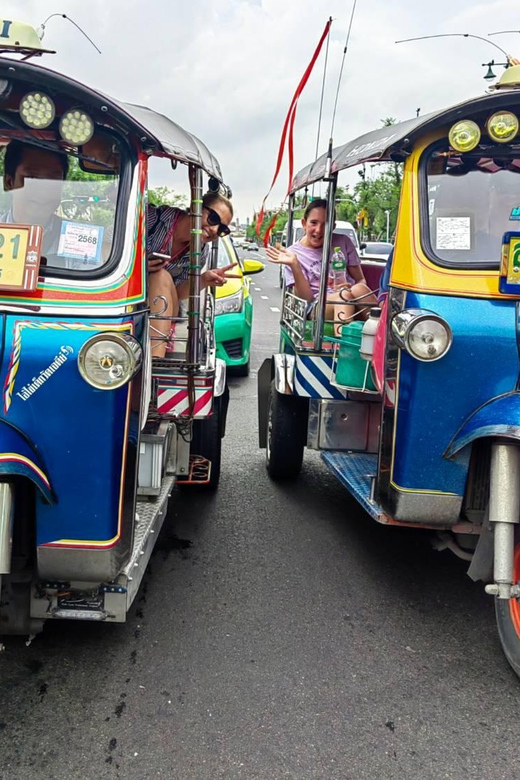
The guide is the key part of this experience. A two-hour route with several ten-minute stops could easily become a rushed checklist, but a good guide turns the movement into a connected story.
Named guides on recent departures include Anna, Ana, Johan, Yohan, Ken, Enjoy, and Annie. Anna is especially associated with warm explanations, clear English, humor, and attention to individual questions. Johan and Yohan have also been praised for friendly, well-spoken presentations, while Ken has led smaller, more personal rides.
You should expect stories about the places you pass, Thai life, local traditions, and Bangkok in general. The guide also explains what you are about to see before each tuk-tuk ride, which helps you stay oriented when the group separates between vehicles.
The tone appears friendly rather than academic. That suits this format. You get enough background to understand what you are seeing without a long lecture at every stop.
The tour has a very high overall rating of 4.7 from 830 reviews, with repeated praise for the guides’ warmth, humor, organization, and English. That does not change the fixed limits of the itinerary, but it does tell you where the tour’s strongest value lies: the human explanation between the stops.
What $28 Gets You
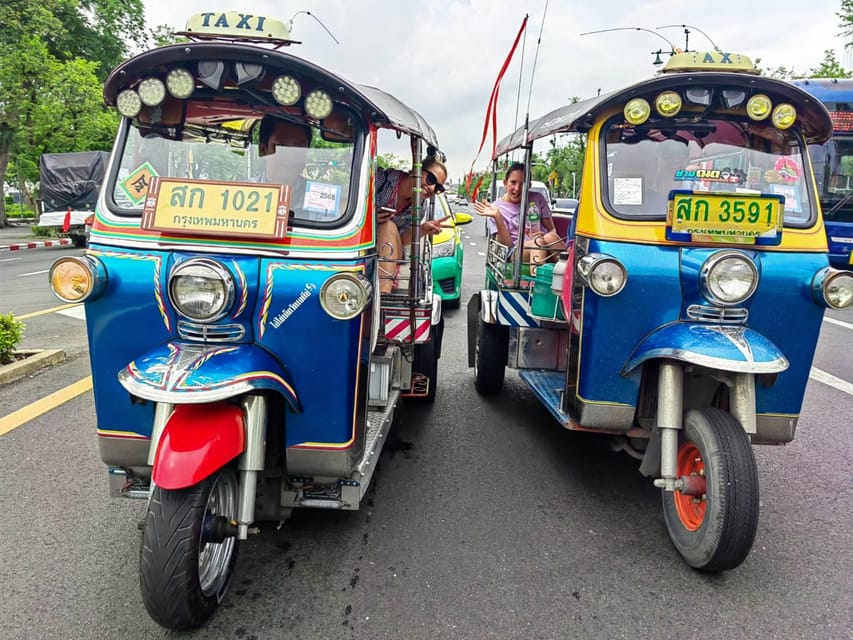
At $28 per person, the price is fair if you want transport, a guide, and a compact route handled for you. A self-guided tuk-tuk outing might cost less in theory, but you would need to arrange the vehicle, agree on the fare, manage the route, and learn the background yourself.
You also avoid the common uncertainty of street negotiations. That peace of mind is useful for first-time visitors, solo travelers, and anyone arriving tired after a long flight.
Still, the price is not a bargain if your goal is to enter the major sights. Admissions are not part of the tour because the tour does not go inside the Grand Palace, Loha Prasat, Wat Arun, or Wat Pho. You would need separate visits and tickets later.
I would call it good value for a short guided overview. It is less compelling for someone who already knows Bangkok well or wants a slow, detailed temple visit.
Who Should Book This Ride
This tour suits you best if you have only a day or two in Bangkok, want a quick introduction, or prefer a guide to explain the city as you move. It also works well on your first afternoon, when you want to see several areas before deciding where to return.
Families and small groups may enjoy the tuk-tuk format, though the open vehicle and short stops may not suit everyone. The tour can also work for solo visitors, since the group format may place you with other people and the guide helps with photos and orientation.
It is a good fit for anyone who wants Bangkok beyond a hotel, metro station, and shopping mall. The route includes major landmarks, but the tuk-tuk itself, the market, lotus folding, and Chinatown ending add local texture.
You should skip it if you want long temple visits, extensive free time, or a deep tour of the Grand Palace. You should also avoid booking it with the assumption that you will see every famous interior. The route is deliberately quick.
You can cancel up to 24 hours before the start for a full refund, and reserve now while paying later. Starting times vary, so check availability when choosing your date.
My Take: A Strong First Look, Not a Full Sightseeing Day
I would book this tour for a first look at Bangkok, especially if I had limited time or wanted an easy first evening. The tuk-tuk ride gives the city energy, the guide adds meaning to the landmarks, and Chinatown provides a useful place to continue after the formal route ends.
The best way to use it is as a preview. Pay attention to the places that catch your interest, then return later for the Grand Palace, Wat Pho, or Loha Prasat at a slower pace.
Book it if you value a friendly guide, quick orientation, and the fun of traditional transport. Skip it if entering the sights matters more than seeing many of them. For the right purpose, it is an efficient and enjoyable way to get your bearings in Bangkok.
FAQ
Where does the Bangkok tuk-tuk tour start?
It starts outside Museum Siam at Sanam Chai MRT Station. Meet the guide at the Museum Siam exit outside the front of the museum, not the back road exit.
How long does the tour last?
The tour lasts two hours. It includes several short sightseeing stops and a longer stop in Chinatown.
Does the tour enter the Grand Palace or the temples?
No. The tour views the Grand Palace, Loha Prasat, Wat Arun, and Wat Pho from outside. It also stops outside Wat Suthat and Wat Ratchanatdaram.
Is an English-speaking guide included?
Yes. A licensed English-speaking live guide is included.
What is included in the $28 price?
The price includes the typical Thai tuk-tuk ride, the licensed English-speaking guide, a bottle of water, and the folding lotus flower activity. Personal expenses are not included.
Where does the tour finish?
The tour finishes in Chinatown, at China Town on or near Yaowarat Road. You can continue there for food and further sightseeing after the tour.
Just added around Bangkok
- Tuk-tuk Private Tour in Bangkok by Night with Chinatown meal★ 4.5 · 5 reviews
- Bangkok 3-in-1 Tour: Longtail Boat,TukTuk & Street Food Adventure★ 5.0 · 73 reviews
- 4-Hour Hidden Bangkok TukTuk Street Food Guided Tour★ 5.0 · 23 reviews
- Tuk-tuk tour Bangkok by Night with Chinatown meal and hotel transfers★ 4.5 · 60 reviews
- Fun Tuk Tuk Dinner and Massage in Old Town Bangkok★ 5.0 · 7 reviews
- Tuk Tuk Bangkok Private Tour: WW2 Pad Thai, 360-Viewpoint, Chinatown (Pickup)★ 5.0 · 9 reviews
- Bangkok: Michelin Guide Street Food Tour by Tuk Tuk★ 4.5 · 56 reviews
- Rickshaw & Hike the Colors of Bangkok jungle★ 4.5 · 16 reviews
Bangkok Tuk Tuk Tours, compared.
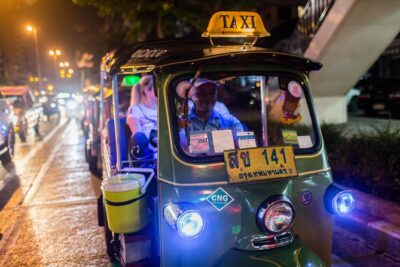
Bangkok by Night: Temples, Markets and Food Tuk-Tuk Tour
Read our review →
Markets, Temples and Food Night Tour by Tuk Tuk
Read our review →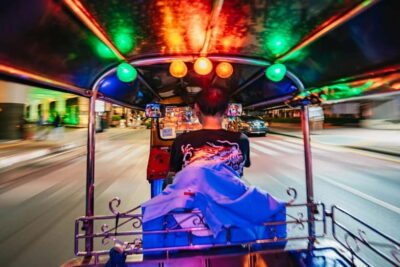
Tuk Tuk Adventure Chinatown Michelin Food & Temples
Read our review →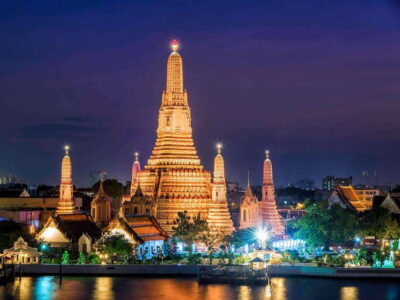
Evening Tour with Wat Arun, Wat Pho & Tuk Tuk Ride
Read our review →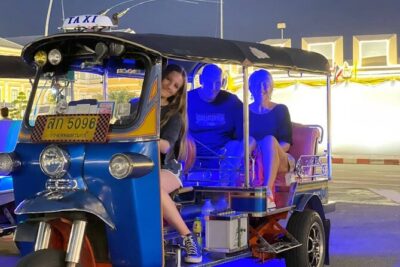
Bangkok Tuk-Tuk Tour by Night with Chinatown Street Food Meal
Read our review →Where else this ride shows up