REVIEW · ANGKOR WAT TUK TUK TOURS
Angkor Wat: Tuk Tuk and Walking Tour
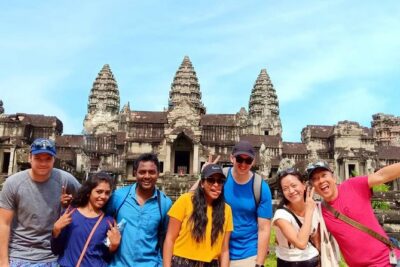
Angkor’s jungle temples make the strongest impression when you leave the tuk tuk behind and walk the old routes yourself. This tour combines a private ride with long stretches on foot through Angkor Thom, Bayon, the old city walls, and Ta Prohm, where tree roots push through the stone. I like the mix of major sights and quieter forest tracks, and I like having a local English-speaking guide to explain Khmer life as well as temple carvings. The main caution is the walking: one reported day reached about nine miles, so this is not a gentle sightseeing loop.
I also like the practical setup. Hotel pickup, cold water, soft drinks, and a private tuk tuk keep the day simple, while guides such as Monirom, Poleak, Bun, and Sam have been praised for clear English, good timing, and flexibility. You pay $49 per person, but the $37 one-day temple pass and lunch are extra, so budget for both.
Key points at a glance
- Walk through Angkor Thom from the eastern gate: Start away from the busiest central approach and hear the story of the Khmer capital on foot.
- See Bayon’s famous stone faces: This is the visual centerpiece of the morning, with a maze of towers and carved faces.
- Climb the Dead Gate and follow the old walls: The route adds physical effort and a better sense of Angkor Thom’s huge scale.
- Meet Ta Prohm at its most atmospheric: Tree roots and ruined galleries create the jungle-temple setting most people picture.
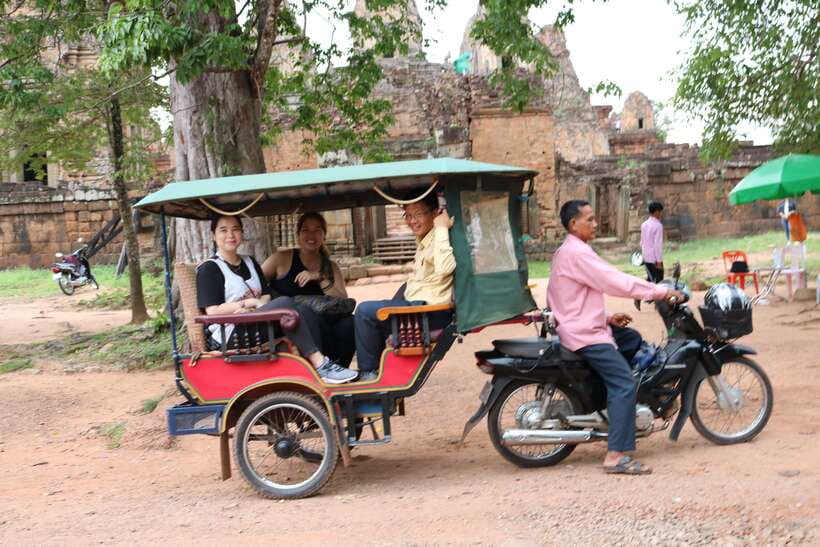
- Use a private tuk tuk all day: Your ride connects the walking sections and returns you to your Siem Reap hotel.
- Plan for a full day on your feet: Comfortable shoes and insect repellent are essential, and mobility limitations may make this outing unsuitable.
Starting at Angkor’s eastern gate
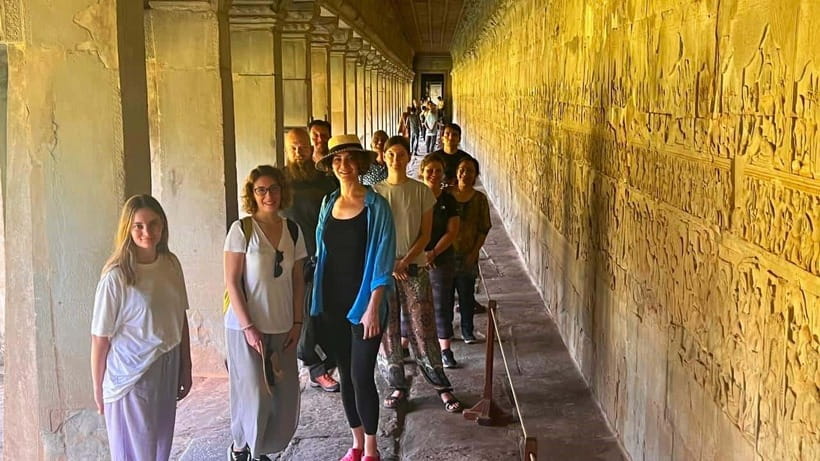
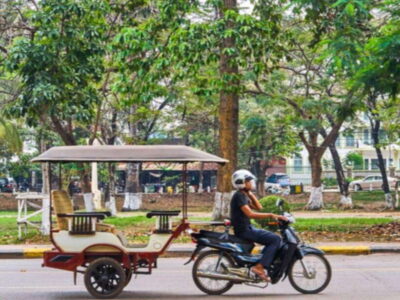
Your day begins with pickup at your Siem Reap hotel in a private tuk tuk. That matters more than it may sound. You are not waiting for a large coach to fill, and the open-sided ride gives you a direct feel for the road between town and the temple zone.
The route starts at Angkor’s eastern gate rather than rushing straight to the most famous central view. From there, you explore Angkor Thom on foot. This gives the ancient city a stronger sense of place. You are walking through an old capital, not simply stepping from one photo stop to another.
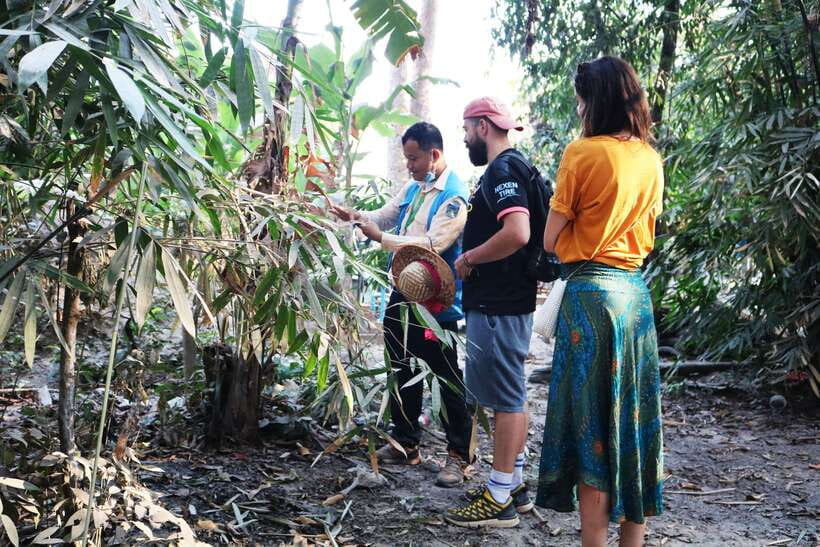
The guide’s role is important here. The best part of the morning is not only identifying stones and towers, but understanding how the Khmer Empire organized its capital and how people once moved through it. Monirom, one guide assigned to this route, was praised for explaining both the temples and everyday Khmer culture. That broader view makes the ruins easier to understand.
The walking begins early in the experience, so wear shoes that can handle uneven ground. Sandals may look appealing in Siem Reap’s heat, but they are a poor choice for a day that includes gates, walls, temple floors, and forest paths.
More Temple Tuk Tuk Tours in Cambodia
- Siem Reap: Angkor Wat Private Tuk-Tuk Tour
★ 4.9 · 2,222 reviews - Angkor Wat Private Tuk-Tuk Tour (sunrise Option) & more
★ 5.0 · 439 reviews - Angkor Wat Private Tour by Tuk-Tuk with English Speaking Driver
★ 5.0 · 142 reviews
Bayon and the faces of Angkor Thom
Bayon is the stop that most clearly rewards time with a guide. Its towers carry large carved faces, and the temple’s layout can feel confusing at first. Corridors turn, galleries narrow, and stone rises around you in layers.
I like Bayon because it is not just a distant monument viewed from a road. You move through it and look up at faces from different angles. Your guide can point out how the temple fits into Angkor Thom and explain what you are seeing instead of leaving you to guess among the carvings.
The maze-like design also explains why this tour is partly a walking experience. You need time to move through the interior, pause at the carvings, and get your bearings. A quick stop would show you the famous faces but miss much of the temple’s character.
Crowds can gather at the best-known viewpoints, especially around the faces. The route’s use of walking sections and less direct approaches may help you get away from the tightest clusters, but you should not expect an empty Bayon. Angkor is one of Cambodia’s major attractions, and popular sights remain popular.
The Dead Gate and Angkor Thom’s old walls
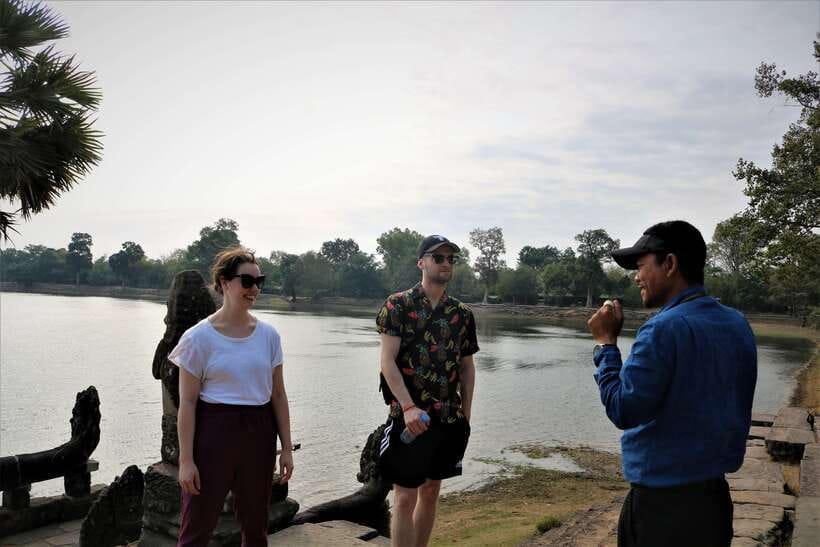
After Bayon, the route continues toward the Dead Gate and the old city walls. This section is one reason to choose the tour over a simple vehicle circuit. You are not only looking at Angkor Thom from ground level. You are moving along part of its defensive structure and seeing how the city was enclosed.
The Dead Gate adds a more unusual stop to the day. It is less familiar to many first-time visitors than Bayon or Ta Prohm, and reaching it involves a climb. That climb is worth noting before you book. The tour is not suitable for people with mobility impairments, and even fit visitors should expect heat, uneven surfaces, and steady walking.
Following the wall also changes your view of Angkor Thom. The scale becomes easier to grasp when the temple towers are no longer the only reference point. The route lets you connect the grand ceremonial center with the wider city that surrounded it.
You also pass the Victory Gate, where warriors once marched. The guide can give this passage meaning by explaining its place in the city’s story. It is a good example of why a local guide adds value here: without context, a gate can look like another weathered structure. With context, it becomes part of the movement and power of the old capital.
A private tuk tuk makes the long route workable
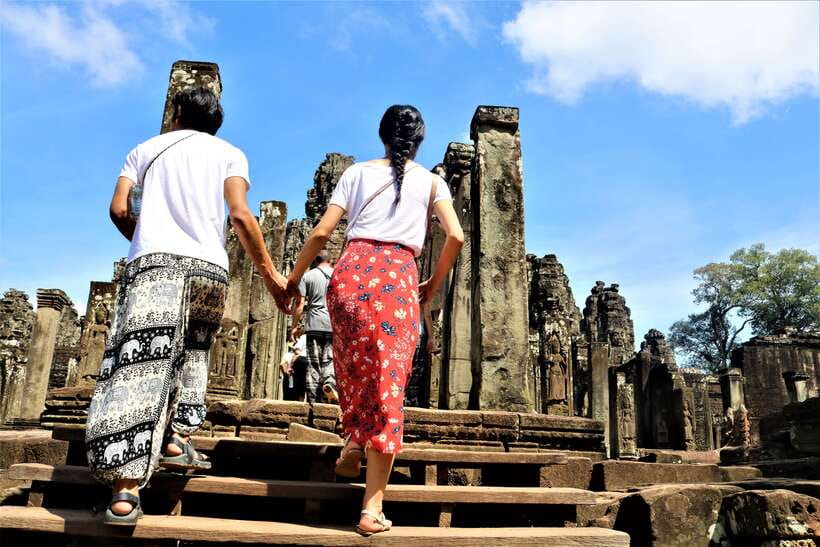
The private tuk tuk is more than a pleasant way to get around. It breaks up the walking and lets you cover separate temple areas without having to arrange transport at each stop. Your driver brings you from the hotel, waits while you explore, and returns you to Siem Reap at the end.
Bottled water and soft drinks are included, which is useful in Cambodia’s heat. Still, do not treat that as a reason to skip water planning. The walking can be extensive, and the open tuk tuk does not remove the physical demands of the route.
One account of the experience estimated roughly nine miles of walking, while another day lasted nine to ten hours rather than the stated seven. Those figures should not be treated as a fixed promise, but they offer a useful warning: the day can stretch when you stop for photos, lunch, or extra explanations. Ask your guide about the pace at the start if you want to keep the schedule close to seven hours.
The private format also gives you some room to adjust. Bun, one of the guides on this experience, was praised for arranging a quicker return to the tuk tuk when heavy rain made a village walk muddy. That kind of practical judgment is valuable in Cambodia, where weather can change the condition of forest paths quickly.
More Temple Tuk Tuk Tours in Siem Reap
- Siem Reap: Angkor Wat Private Tour by Tuk-Tuk
★ 4.5 · 117 reviews - Full-Day Private Tuk Tuk Tour of Angkor Wat Temples
★ 5.0 · 107 reviews - Private one-day tuktuk ‘small tour’ of the oldest Angkor temples
★ 5.0 · 104 reviews - Angkor Wat Private Tour in a Tuk Tuk
★ 5.0 · 69 reviews
Lunch is flexible, but it is not included
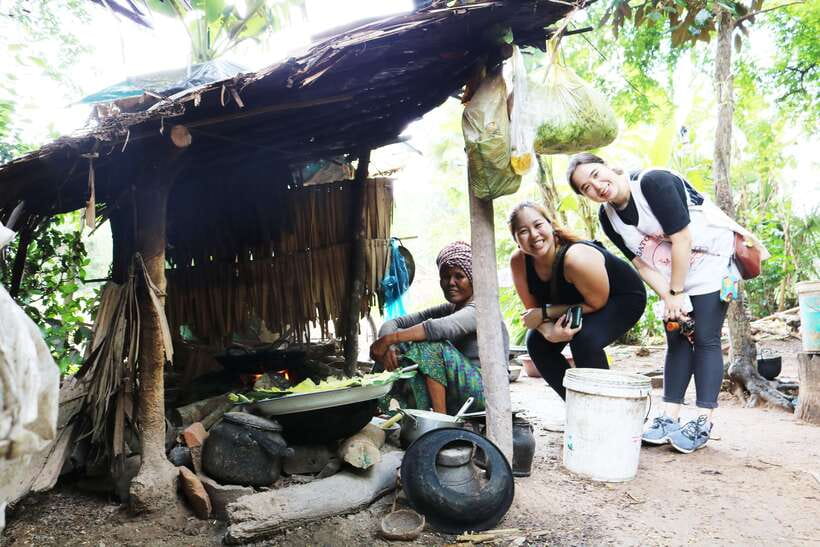
Lunch is not part of the $49 price, so bring money for a meal. The precise restaurant is not specified, but one day included a delicious meal at a local restaurant. The important point is that lunch is a break you pay for separately, not a hidden addition to the booking.
This arrangement can suit you if you prefer flexibility. You can ask your guide for help choosing a place and use the stop to rest before Ta Prohm. It is less convenient if you want every expense covered in advance.
Keep some time for lunch rather than eating in a hurry. The afternoon includes Ta Prohm and more walking, so a proper pause can make the second half more enjoyable. If rain arrives, muddy paths may also change the timing.
Ta Prohm and the jungle-temple effect
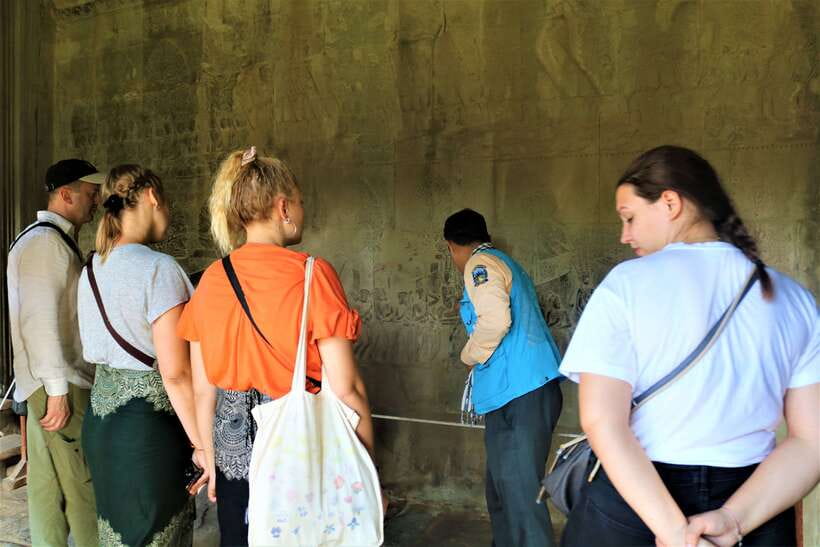
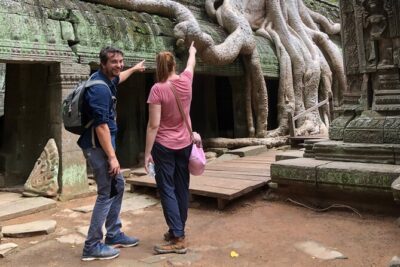
Ta Prohm is the afternoon highlight. Trees grow through the ruins, roots press against walls, and galleries disappear into a maze of stone and shadow. The temple has been left in a condition that preserves its famous jungle-covered appearance, giving you a vivid idea of how an explorer might have encountered it more than 150 years ago.
I like Ta Prohm because it feels less orderly than Angkor Thom. Bayon presents carved structure and repeating faces. Ta Prohm gives you broken corridors, roots, collapsed sections, and the constant sense that the forest is reclaiming the site.
The word maze-like is accurate. You should expect turns, narrow passages, and uneven surfaces rather than a smooth path through a single open courtyard. This is another place where comfortable shoes matter. In wet weather, mud can make the forest tracks much harder to manage.
Ta Prohm is also one of the busiest temple stops in the Angkor area. The tour aims to help you escape some crowds through its timing and walking route, but no guide can guarantee solitude. You may need patience at the most photographed tree roots and doorways.
What the guide adds to the experience
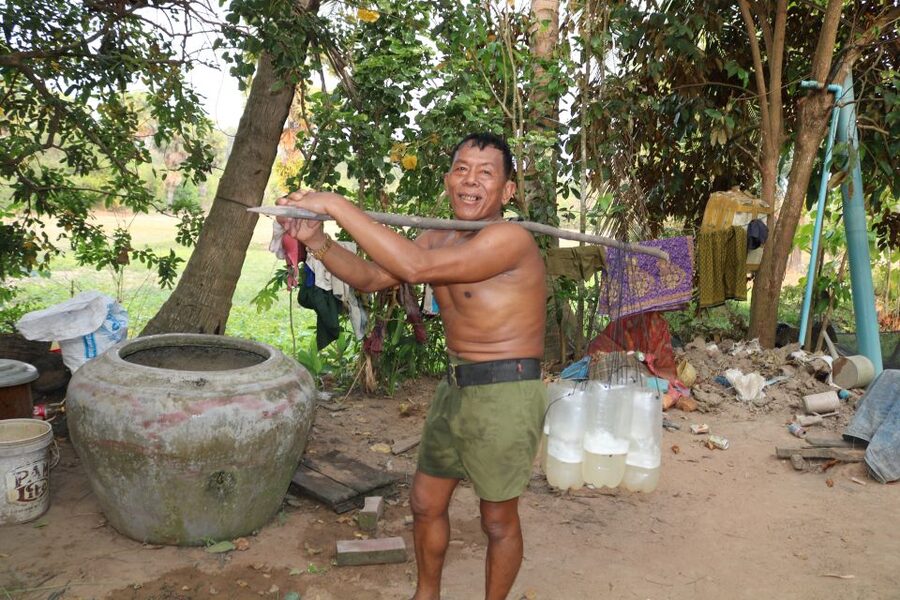
The strongest part of this tour is likely to be the guide rather than the transport. Several guides have led it, including Sam, Monirom, Poleak, Bun, and Bob. The consistently useful qualities are clear English, friendly conversation, temple knowledge, and the ability to respond to changing conditions.
Poleak was praised for very good English, a friendly manner, and strong explanations. Monirom was especially good at connecting temple history with daily Khmer culture. Bun handled rain and muddy conditions sensibly, while Bob was described as a great guide.
That does not mean you are guaranteed a particular guide when booking. It does mean the experience depends heavily on who is assigned and how well you communicate what you want. If photography matters to you, tell the guide early. One person specifically wished the guide had taken more pictures with the main Angkor Wat temple, so make your expectations clear instead of assuming the guide will know.
There is also an important scope question. Despite the Angkor Wat name, the described route focuses on Angkor Thom, Bayon, the Dead Gate, the city walls, Victory Gate, and Ta Prohm. If standing before the main Angkor Wat temple is essential to your plans, confirm that stop before booking. You should not assume this seven-hour route includes every major Angkor site.
Is $49 a fair price?
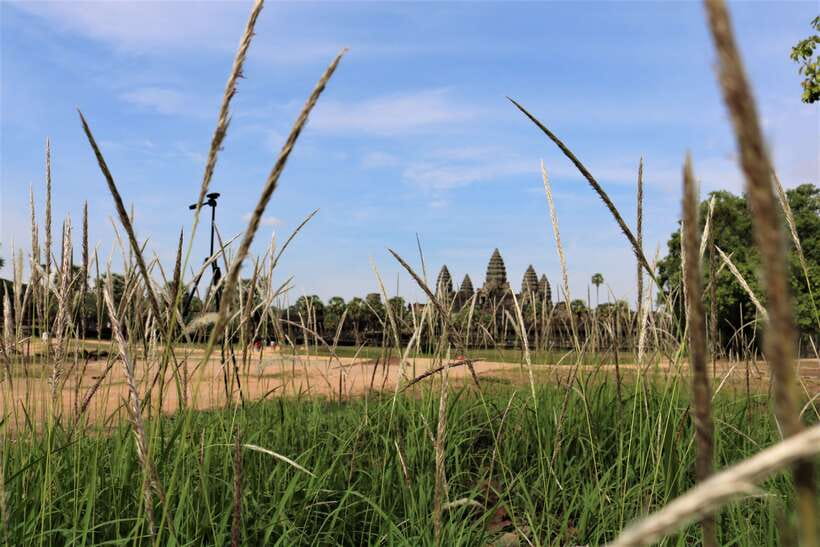
At $49 per person, the tour offers a private tuk tuk, hotel pickup and drop-off, an English-speaking local guide, bottled water, and soft drinks. The price does not include the $37 one-day temple pass or lunch, so the actual day costs more than the headline rate.
Even with those additions, I see value here if you want guidance and transport without building the day yourself. A private tuk tuk avoids the uncertainty of arranging several rides, and a guide gives the walls, gates, and temple carvings a clear story.
The value is weaker if you only want a short photo visit. This is a long walking day, and you are paying for interpretation and access to several connected areas. If you are comfortable exploring alone and already understand the Angkor sites, you may prefer arranging transport separately.
The included flexibility also helps. You can reserve now and pay later, and cancellation is free up to 24 hours before departure. Those terms are useful if your Siem Reap plans are still moving, but they do not change the need to buy the temple pass separately.
Who should book this walking tour?
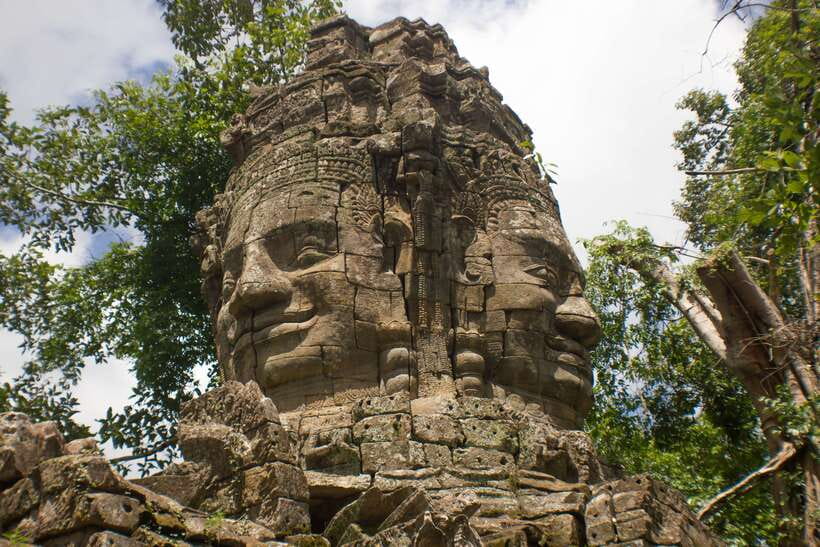
I would choose this experience if you want more than a vehicle loop and you enjoy hearing the story behind a place. It suits active visitors who can manage several hours of walking, stairs, uneven temple floors, and forest paths.
It is a good match for you if:
- You want a private tuk tuk rather than shared transport.
- You prefer a local English-speaking guide.
- You are interested in Angkor Thom’s gates and walls, not only the famous temples.
- You like Ta Prohm’s ruined, tree-covered setting.
- You want some help with timing, transport, and lunch planning.
- You can handle a possible walking total near nine miles.
Think twice if you have mobility limitations, dislike heat, or want a short and relaxed temple outing. Also confirm the main Angkor Wat temple stop if that is your top priority.
FAQ
How long does the tour last?
The stated duration is seven hours, though one reported day lasted around nine to ten hours and another involved about nine miles of walking. Allow extra time if you prefer a relaxed pace.
What temples and sites are included?
The route includes Angkor Thom, Bayon, the Dead Gate, the old city walls, Victory Gate, and Ta Prohm. The described route does not clearly confirm a visit inside the main Angkor Wat temple, so ask before booking if that stop is essential.
Is transportation included?
Yes. Hotel pickup and drop-off are included, along with transportation by private tuk tuk.
Is the temple entrance fee included?
No. The one-day temple pass costs $37 per person and must be paid separately.
Is lunch included?
No. Lunch is not included. A local restaurant meal may be arranged during the day, but you pay for it separately.
What should I bring?
Bring comfortable shoes and insect repellent. Bottled water and soft drinks are provided, but the day includes substantial walking.
Is the tour suitable for people with mobility impairments?
No. The tour is listed as unsuitable for people with mobility impairments because it includes extensive walking, uneven temple areas, and a climb at the Dead Gate.
Should you book it?
Book this tour if you want Angkor explained as an ancient city, not just photographed as a set of monuments. The private tuk tuk, strong local guides, old-wall walk, and atmospheric Ta Prohm visit make it a good choice for active visitors who value context.
Skip it if you want a quick tour, cannot manage long walks, or mainly want the central Angkor Wat temple and nothing else. For everyone else, the combination of Bayon’s faces, Angkor Thom’s defensive walls, and Ta Prohm’s tree-covered ruins gives you a full and memorable day, provided you budget for the temple pass and lunch.
More Angkor Wat Tuk Tuk Tours in Siem Reap
- Angkor Wat Tour by Tuk-Tuk with English Speaking Driver
★ 4.5 · 65 reviews - The Angkor Temples from Sunrise by Tuk Tuk
★ 5.0 · 44 reviews - Angkor Wat 1 Day with Sunrise Combined tour with (Tuk Tuk)
★ 5.0 · 43 reviews - Siem Reap Temple Tuktuk Tour: Explore Angkor Wat and beyond.
★ 5.0 · 42 reviews
Just added around Siem Reap
- Angkor Wat Sunset TUK TUK Tour★ 5.0 · 4 reviews
- Full-Day Angkor Temple Discovery with Banteay Srei by Tuk-Tuk★ 5.0 · 7 reviews
- 2 Days Tuk Tuk Private Tour of Angkor★ 5.0 · 11 reviews
- Full-Day Private Tuk Tuk Tour of Angkor Wat Temples★ 5.0 · 107 reviews
- Amazing full day TUKTUK tour★ 5.0 · 4 reviews
- Full Day Angkor Complex by Tuk Tuk – (Optional Sunrise)★ 5.0 · 6 reviews
- Personalised Angkor Wat Sunrise Tour by TukTuk★ 5.0 · 17 reviews
- Private must-visit Temples Tour with Guide & Tuk Tuk★ 5.0 · 5 reviews
Angkor Wat Tuk Tuk Tours, compared.

Angkor Wat Private Tour by Tuk-Tuk with English Speaking Driver
Read our review →
Private one-day tuktuk ‘small tour’ of the oldest Angkor temples
Read our review →