REVIEW · TEMPLE TUK TUK TOURS
Private must-visit Temples Tour with Guide & Tuk Tuk
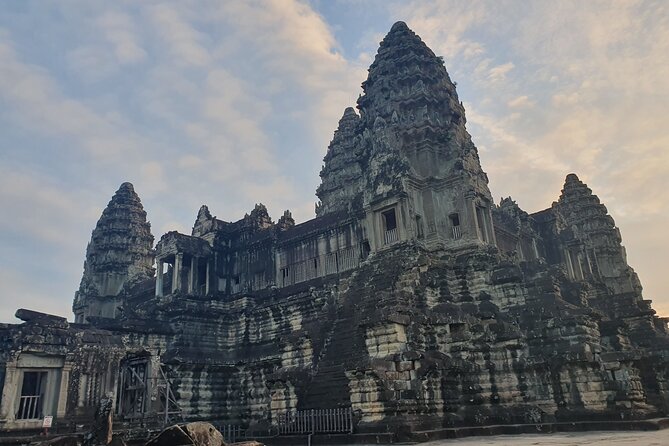
Angkor Wat at sunrise gives this private Siem Reap tour its big opening, but the better surprise is how much more you see afterward. You move through Ta Prohm, quiet Ta Nei, the old royal area, and Bayon without being tied to a large group’s schedule. I especially like the private tuk-tuk format and the option to start at 7 AM if sunrise is too early. The flexible route also lets you ask about nearby temples.
The main drawback is the extra $37 Angkor temple pass, which is not included in the $36 tour price. The day can also begin very early if you choose sunrise, and six to seven hours of temple walking is a lot in Cambodia’s heat.
Key points at a glance
- Sunrise at Angkor Wat is optional: Choose the early start, or begin at 7 AM for a less demanding morning.
- The route covers major and lesser-known temples: Angkor Wat, Ta Prohm, Ta Nei, Bayon, and several sites inside Angkor Thom.
- Your group stays private: Only your party joins the activity, with a tuk-tuk driver and English-speaking guide.
- The schedule can bend: You can take your time, ask for nearby temples, or adjust the day to suit your group.
- Several guides bring different strengths: Nak has a background in history and once lived as a monk, while Lux, Thea, and Nguni have also led successful tours.
- Budget carefully: The $36 price covers transport, guide service, and bottled water, but not the $37 temple pass or meals.
Why this is a strong first day in Siem Reap
This tour works well as an introduction to the Angkor complex because it combines the famous sights with smaller stops that help you understand the scale of the old Khmer capital. You are not simply driven to Angkor Wat, photographed, and sent back to town. The route continues into Angkor Thom and includes temples that are often skipped on a rushed circuit.
A private vehicle matters here. In a large group, you may spend time waiting for people to return to the tuk-tuk or follow a fixed pace. With your own driver and guide, you can linger at a carving, pause for water, or ask to move on when your attention starts to fade.
The tour is advertised as six to seven hours, so plan on giving it most of your morning and early afternoon. That is enough time for a solid first look at the main monuments, but not enough for every corner of the Angkor complex. Think of it as a well-filled introduction rather than a complete archaeological survey.
More Private Tuk Tuk Tours in Cambodia
- Siem Reap: Angkor Wat Private Tuk-Tuk Tour
★ 4.9 · 2,222 reviews - Angkor Wat Private Tuk-Tuk Tour (sunrise Option) & more
★ 5.0 · 439 reviews - Angkor Wat Private Tour by Tuk-Tuk with English Speaking Driver
★ 5.0 · 142 reviews
Choosing between sunrise and the 7 AM start
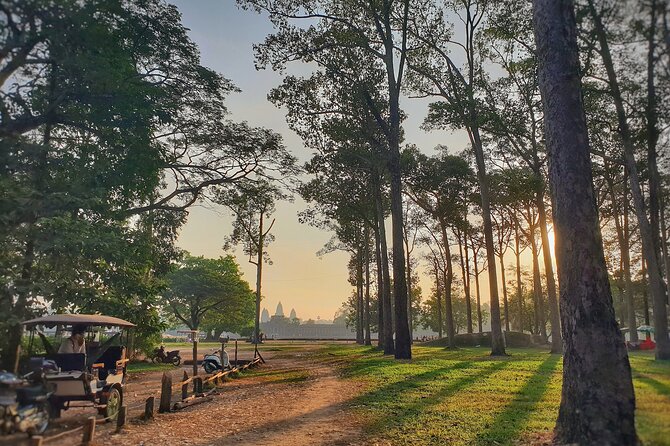
Sunrise at Angkor Wat is optional, which is useful because not everyone wants a pre-dawn alarm after arriving in Siem Reap. If you choose it, you will begin before the standard morning schedule and see the temple in the soft light of daybreak. The early start is the tour’s most popular-sounding feature, but it is also the part most likely to test your energy.
The 7 AM option is the sensible choice if you want a calmer morning. You still reach Angkor Wat early, and you avoid the most punishing start time. Ask about your preferred start when booking, since the tour is described as flexible but sunrise must be selected rather than assumed.
You should also keep breakfast in mind. Breakfast and lunch are not included. A sunrise departure may mean arranging food at your hotel beforehand, while a 7 AM start gives you a little more breathing room. The driver can drop you for lunch, as happened during one successful day with Nguni, but that meal is your own expense.
Angkor Wat: begin with the essential monument
Angkor Wat is the anchor of the day and the place where the tour’s broad purpose becomes clear. You will have time to see the enormous temple complex before continuing to the other sites. If you choose sunrise, the first view is especially atmospheric, with the temple’s towers forming the familiar outline across the reflecting pools.
Do not expect a quiet private visit simply because your transport is private. Angkor Wat is the best-known temple in Cambodia, and the grounds can be busy. The advantage here is not having the monument to yourself. It is having a guide who can explain what you are seeing and a driver waiting when you are ready for the next stop.
The temple requires walking, and the day becomes more demanding once you add several more sites. Wear practical shoes and use the bottled water provided. You may also want to carry sun protection, though the supplied information does not specify any additional equipment.
Ta Prohm and Ta Nei: famous ruins, then a quieter turn

Ta Prohm is one of the most memorable stops because large tree roots grow around parts of the stonework. It is visually different from Angkor Wat, and the combination of collapsed galleries, carved walls, and trees gives you a quick sense of how the temples looked before modern conservation work brought them back into regular use.
Ta Prohm is also one of the best-known Angkor stops, so do not mistake the private format for a guarantee of solitude. Your guide can help you make the most of the visit, but the temple’s popularity is beyond the control of the tour.
Ta Nei offers a change of pace. It is a smaller temple included in the route, and its presence gives the day more variety than a standard Angkor Wat and Bayon loop. The supplied details do not promise a specific walking route or condition at Ta Nei, so you should treat it as a quieter, less polished stop rather than expect a full-service attraction.
That contrast is part of the route’s appeal. You see a world-famous monument, then a less prominent site, and begin to understand that Angkor is not one temple but a broad network of sacred and royal places.
More Private Tuk Tuk Tours in Siem Reap
- Siem Reap: Angkor Wat Private Tour by Tuk-Tuk
★ 4.5 · 117 reviews - Full-Day Private Tuk Tuk Tour of Angkor Wat Temples
★ 5.0 · 107 reviews - Private one-day tuktuk ‘small tour’ of the oldest Angkor temples
★ 5.0 · 104 reviews - Angkor Wat Private Tour in a Tuk Tuk
★ 5.0 · 69 reviews
Angkor Thom through the north gate
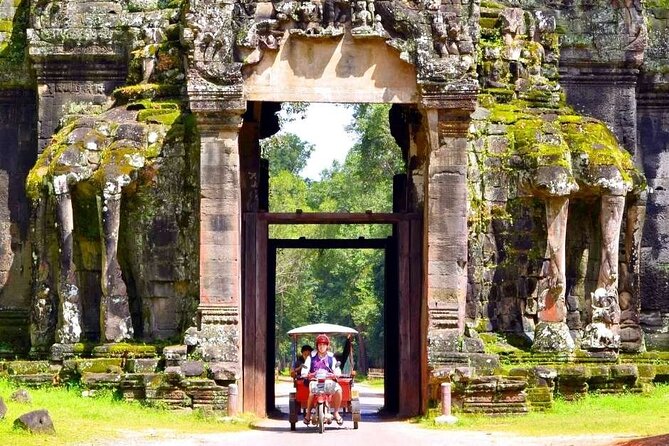
The north gate of Angkor Thom is one of the day’s transition points. It leads you into the old capital, where several important monuments sit within the same larger enclosure. Seeing the gate on the way in and the south gate on the way out gives the tour a clear shape instead of making each temple feel like an isolated stop.
Angkor Thom was the last and most enduring capital city of the Khmer Empire. That context helps explain why the route spends so much time here. You are not only visiting individual towers and courtyards. You are moving through the remains of a major center of power.
The gates are also useful for photographs, but the real value is orientation. A good guide can connect the gates, temples, and royal area so you understand how the complex fit together. Nguni, one of the guides associated with this experience, has been praised for his English and his ability to explain Cambodian history in an engaging way.
Pallilay and Phimeanakas: the less obvious stops
Pallilay is not as widely known as Angkor Wat, Ta Prohm, or Bayon. Including it gives you a break from the standard highlight reel and adds one more layer to the Angkor Thom visit. The available details do not provide a long description of the site, so your guide’s explanation will be especially useful here.
Phimeanakas sits inside the old Royal Palace area. That location matters. It shifts the focus from grand religious monuments to the royal center of Angkor Thom, giving you a better sense of how sacred and political spaces existed close together.
These smaller or less famous stops are where a private guide can earn the extra value of the tour. You can ask what the building was used for, how it relates to the surrounding enclosure, and why it deserves a place on the route. If your group is tiring, the flexible schedule also means you can discuss how long to stay.
Baphuon, Bayon, and the south gate
Baphuon is one of the major temples inside Angkor Thom and provides another large-scale monument after the smaller stops. It has a different feel from Angkor Wat, so seeing both helps you compare the design and purpose of the temples rather than treating every stone structure as the same.
Bayon is the dramatic finish inside the old capital. Its carved faces are the feature most people remember, and the temple rewards a slower look. The towers and galleries can feel confusing at first, so this is another point where an English-speaking guide can help you notice details you might otherwise walk past.
The route ends by leaving through the south gate. That makes practical sense: you complete the Angkor Thom circuit rather than doubling back through the same entrance. The south gate also gives you one last chance to see the monumental scale of the enclosure before returning toward Siem Reap.
The sequence is busy, but it is not random. Angkor Wat gives you the grand beginning, Ta Prohm supplies the tree-covered drama, Ta Nei and Pallilay add quieter stops, and Angkor Thom brings the day to a strong finish with Baphuon and Bayon.
What the private tuk-tuk adds
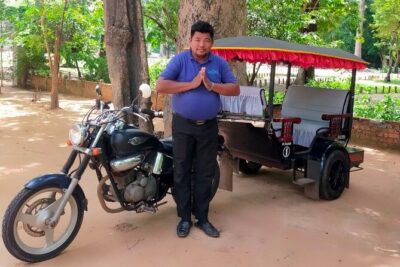
A tuk-tuk is a practical way to move between the temples. You get open-air transport, a driver familiar with the route, and a place to rest between walks. It is not luxury transport, but it suits the temple circuit and keeps the experience connected to the local setting.
The private arrangement is most useful for families, couples, and small groups with different energy levels. A family with a young toddler had the tour adjusted to suit its needs, which suggests the schedule can respond to real-life limits rather than forcing every group through the same pace.
Solo visitors can also benefit. One solo woman arranged her Angkor Wat ticket in advance with help from Lux and found Thea, the driver, pleasant and dependable. If you are traveling alone, confirm the pickup details and ask how the guide and driver roles will be arranged.
The tour description says the driver usually arrives at your hotel lobby five to ten minutes early. That is a small but useful detail. Be ready before the stated pickup time, especially for sunrise, since a late start can compress the rest of the morning.
Guides, local context, and the human side of the day
The experience includes an English-speaking guide as well as a tuk-tuk driver. Some people associated with past bookings include Nak, Lux, Thea, and Nguni. You should not assume a specific person unless the provider confirms it, but these names give you an idea of the kind of service available.
Nak brings a particularly unusual background. He has studied history and previously lived as a monk, so you may be able to ask about religious practice and daily life as well as temple dates and architectural features. That kind of personal context can make the monuments easier to understand.
Lux has been described as organized, friendly, and helpful with ticket arrangements. Thea has been noted as a pleasant driver, while Nguni combined historical explanation with a lunch stop. The useful lesson is to communicate what matters to you before the day begins. If you want more history, say so. If you need a slower family pace, say so. If you want to see local life beyond the temples, ask whether a market stop can fit.
One previous experience included a look at a live marketplace and discussion of Cambodian daily life and monks. That is not listed as a guaranteed stop on this route, so you should treat it as a possible request, not a promised inclusion.
The real cost and what you receive
The tour costs $36 per person. That includes petrol, the tuk-tuk, an English-speaking guide, the driver, and bottled water. For a private six to seven-hour outing, the price is reasonable if you value personal pacing and explanation rather than simply hiring transport.
The important extra cost is the Angkor temple pass at $37 per person. Add that to the tour price and the basic total becomes $73 per person before food and tips. The pass is nearly the same price as the tour itself, so include it when comparing this experience with other Angkor options.
Breakfast and lunch are separate, and tips are optional. The tour can help you arrange or reach lunch, but you pay for the meal. Group discounts are available, though no discount amount is given. If you are booking for several people, ask for the current group rate before making your budget.
The value is strongest for someone who wants a private guide, not just a vehicle. If you already know the temples well and only need transportation, a cheaper transport-only arrangement might suit you better. If this is your first Angkor visit, the guide’s explanations and the flexible route make the added cost easier to justify.
Who should book this temple day
I would point this tour toward first-time visitors to Siem Reap who want the major monuments in one well-organized day. It is also a good match for families, solo visitors, and small private groups that do not want to adjust their pace to strangers.
Choose it if you like having room to ask questions and change the timing. The driver is described as flexible, and nearby temples can be requested if they fit the route. That flexibility is more valuable than it may sound after several hours of walking.
Think twice if you dislike early starts, outdoor transport, or a full temple day. Sunrise is optional, but the route remains active even with a later start. The tour also does not include meals or the temple pass, so the headline price is not the final cost.
Free cancellation is available if you cancel at least 24 hours before the local start time. Changes or cancellations made inside that window are not accepted for a refund.
Should you book it?
Book this tour if you want Angkor Wat, Ta Prohm, Bayon, and the main Angkor Thom sights with a private driver and guide, while keeping the day adjustable. The combination of major temples, smaller stops such as Ta Nei and Pallilay, and the choice between sunrise and 7 AM gives you more control than a rigid group outing.
I would skip it only if you want a very short temple visit or have already seen these sites and need nothing beyond transport. For a first full day in Siem Reap, the route is broad, practical, and fairly priced once you understand the extra $37 temple pass.
FAQ
Is sunrise at Angkor Wat required?
No. Sunrise is optional. You can also choose a start time from 7 AM to 11 AM, according to the tour information.
How long does the tour last?
The tour lasts approximately six to seven hours.
What temples are included?
The route includes Angkor Wat, Ta Prohm, Ta Nei, the north gate of Angkor Thom, Pallilay, Phimeanakas, Baphuon, Bayon, and the south gate on the way out.
Is the temple pass included in the price?
No. The Angkor temple pass costs $37 per person and is paid separately.
Are breakfast and lunch included?
No. Breakfast and lunch are at your own expense. The driver may help you reach a lunch stop, but the meal is not included.
Is this a private tour?
Yes. Only your own group participates. The experience includes an English-speaking guide, a tuk-tuk driver, petrol, and bottled water.
More Temple Tuk Tuk Tours in Siem Reap
- Siem Reap: Personalized Angkor Wat Sunrise/Set by TukTuk/Car
★ 4.9 · 41 reviews - Angkor Wat Sunrise Private Tour by Tuk Tuk
★ 5.0 · 39 reviews - Siem Reap: Angkor Wat Sunrise Tour via Tuk Tuk & Breakfast
★ 5.0 · 29 reviews - Siem Reap: Angkor Wat Private Tour by Tuk Tuk
★ 4.8 · 24 reviews
More Temple Tuk Tuk Tours in Cambodia
- Angkor Wat Tour by Tuk-Tuk with English Speaking Driver
★ 4.5 · 65 reviews - The Angkor Temples from Sunrise by Tuk Tuk
★ 5.0 · 44 reviews - Angkor Wat 1 Day with Sunrise Combined tour with (Tuk Tuk)
★ 5.0 · 43 reviews - Siem Reap Temple Tuktuk Tour: Explore Angkor Wat and beyond.
★ 5.0 · 42 reviews
Just added around Siem Reap
- Angkor Wat Sunset TUK TUK Tour★ 5.0 · 4 reviews
- Full-Day Angkor Temple Discovery with Banteay Srei by Tuk-Tuk★ 5.0 · 7 reviews
- 2 Days Tuk Tuk Private Tour of Angkor★ 5.0 · 11 reviews
- Full-Day Private Tuk Tuk Tour of Angkor Wat Temples★ 5.0 · 107 reviews
- Amazing full day TUKTUK tour★ 5.0 · 4 reviews
- Full Day Angkor Complex by Tuk Tuk – (Optional Sunrise)★ 5.0 · 6 reviews
- Siem Reap Morning Market & Food Tour by Tuk Tuk★ 5.0 · 5 reviews
- Personalised Angkor Wat Sunrise Tour by TukTuk★ 5.0 · 17 reviews
Temple Tuk Tuk Tours, compared.
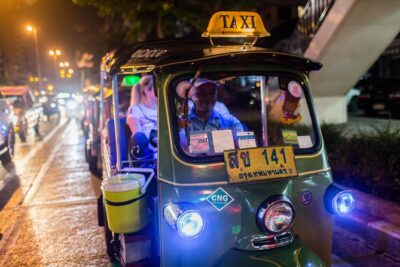
Bangkok by Night: Temples, Markets and Food Tuk-Tuk Tour
Read our review →
Markets, Temples and Food Night Tour by Tuk Tuk
Read our review →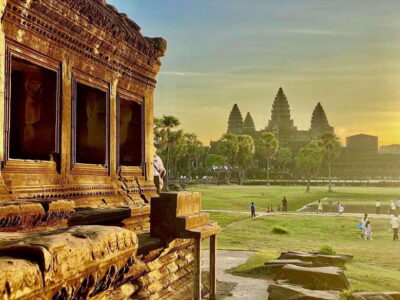
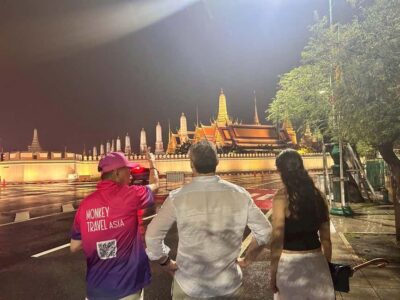
Tuk Tuk Adventure Chinatown Michelin Food & Temples
Read our review →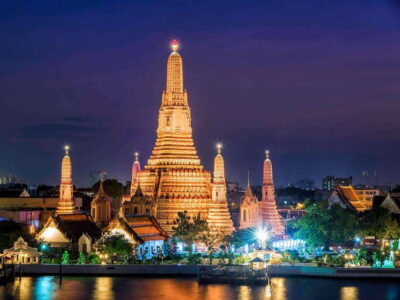
Evening Tour with Wat Arun, Wat Pho & Tuk Tuk Ride
Read our review →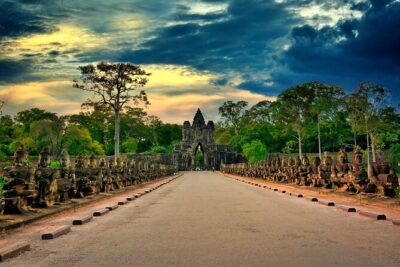
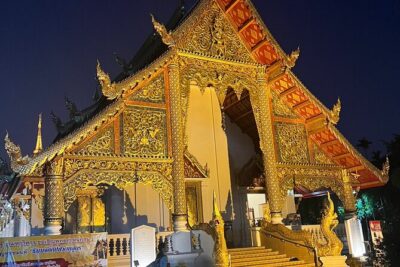
Chiang Mai Temples and Market Tuk-Tuk Evening Night Tour
Read our review →