REVIEW · ANGKOR WAT TUK TUK TOURS
The Angkor Temples from Sunrise by Tuk Tuk
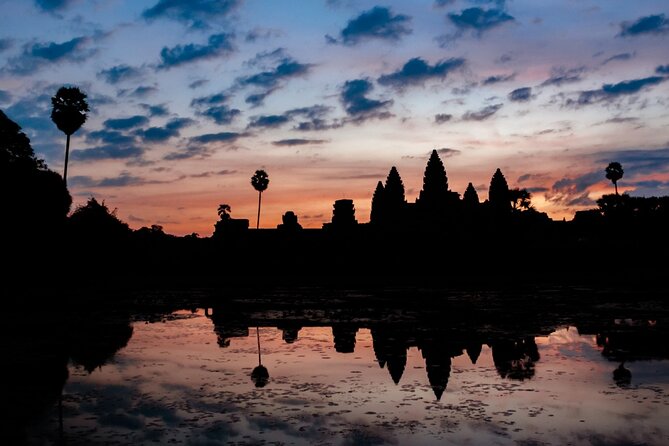
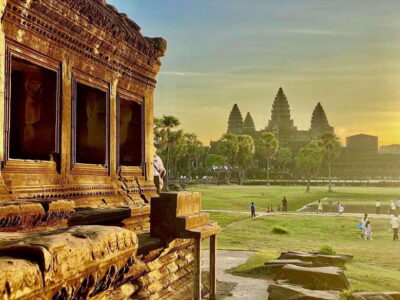
Angkor Wat at sunrise is the reason to set your alarm for 5:00 a.m. The temple’s towers rise behind the reflecting pond as the sky brightens, giving you a calm, memorable start before the heat takes over. Then the day keeps going, with Angkor Thom, Bayon, Ta Prohm, and several quieter ruins reached by open-air tuk-tuk.
I like the private format, since your guide can adjust the pace and help with photo spots. I also like the return to your hotel for breakfast, though you may save time by asking your hotel for a packed meal. The main drawback is simple: this is a long, walking-heavy day in heat and humidity, and the sunrise crowd can be large.
Key points to know before booking
- Sunrise begins around 5:00 a.m., with Angkor Wat as the first major stop.
- A private English-speaking guide and tuk-tuk driver accompany only your group.
- The one-day Angkor pass is included, which saves you a separate ticket cost.
- The route covers the famous temples and quieter ruins, including Ta Nei and Ta Keo.
- Breakfast and lunch are not included, although the plan allows time for breakfast at your hotel.
- Comfortable shoes and modest clothing are essential, especially for temple areas with dress rules.
Why the sunrise start is worth the lost sleep
The day begins before dawn at your Siem Reap hotel. Your guide and driver take you by tuk-tuk to the Angkor ticket office and then toward Angkor Wat. The open-air ride is part of the appeal, but bring a light layer for the early morning and protect phones and cameras from rain, dust, and humidity.
At Angkor Wat, you walk toward the reflecting pond and wait for the sky to change. The best-known view places the temple behind the water, but the exact scene depends on clouds, season, and your position. One useful tip is to try the left side of the main walkway, near the souvenir market, for a view of the sun rising between the towers.
The first stop is listed as one hour, but the actual pace can vary with the crowd and sunrise conditions. Some people spend most of this time watching the sky. Others begin walking into the temple soon after the light appears. Your guide can help you balance the photo stop with the need to see the temple itself.
Sunrise is not guaranteed to be dramatic. Rain or heavy cloud can soften the colors, but Angkor Wat remains impressive in low morning light. If the sky disappoints, the early start still puts you inside the park before the worst heat.
More Temple Tuk Tuk Tours in Cambodia
- Siem Reap: Angkor Wat Private Tuk-Tuk Tour
★ 4.9 · 2,222 reviews - Angkor Wat Private Tuk-Tuk Tour (sunrise Option) & more
★ 5.0 · 439 reviews - Angkor Wat Private Tour by Tuk-Tuk with English Speaking Driver
★ 5.0 · 142 reviews
Breakfast, then back into the Angkor park
After the sunrise visit, the planned route returns you to your hotel for breakfast. That break matters. A full day among the temples can drain you, and a proper meal gives you a chance to cool down, refill water, and use the facilities.
There is one practical wrinkle. Returning to the hotel takes time, and some people prefer to keep moving. If your hotel can prepare a packed breakfast, you can eat near Angkor Wat or at a small cafe by the temple area. This may give you more time for the ruins and reduce the back-and-forth ride.
Lunch is not included, so plan for your own arrangement. The tour information allows for local restaurant stops, but it does not include meals or drinks. Carry water and some small snacks, especially if you do not want to wait for a restaurant during the hottest part of the day.
Angkor Thom: entering an ancient royal city
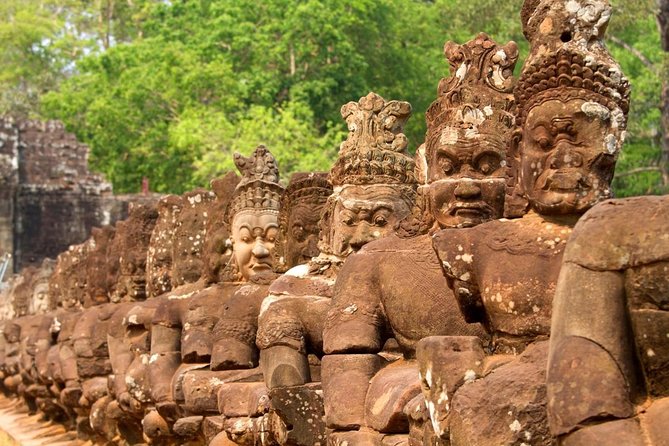
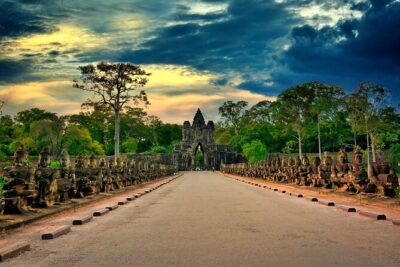
After breakfast, the route returns to the temples and reaches Angkor Thom. This was not simply another temple. It was a large royal city, and its monumental gates give you a sense of the scale of the Angkor complex.
Your guide can explain how the city fits into the wider Khmer period and point out details you might miss from the tuk-tuk. The approach itself is part of the visit, with broad entrances, stone figures, and the remains of a once-important urban center.
The stop is listed at about one hour, but you should expect walking on uneven ground and through open areas. The sun can be strong by this point. A hat, sunglasses, and high-SPF sunscreen are not optional extras here, even on a cloudy day.
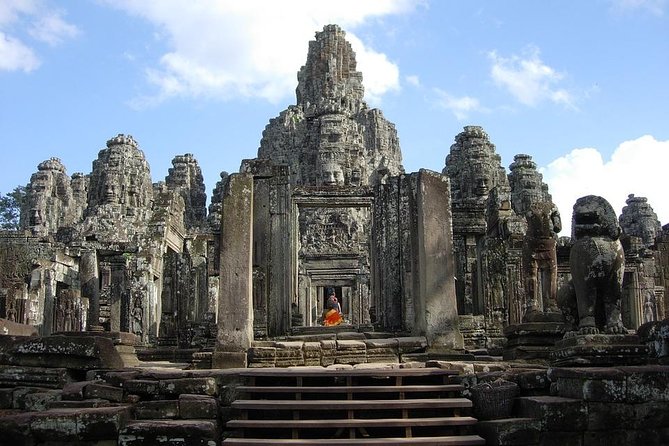
Bayon Temple and its stone faces
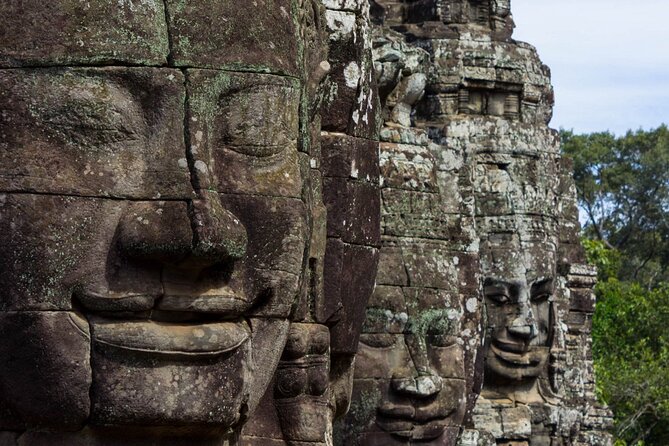
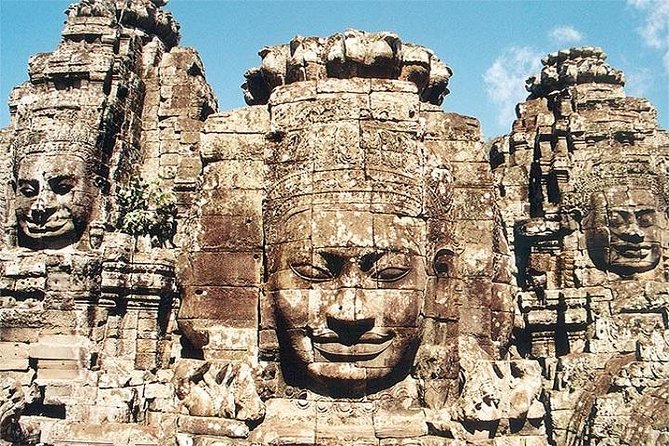
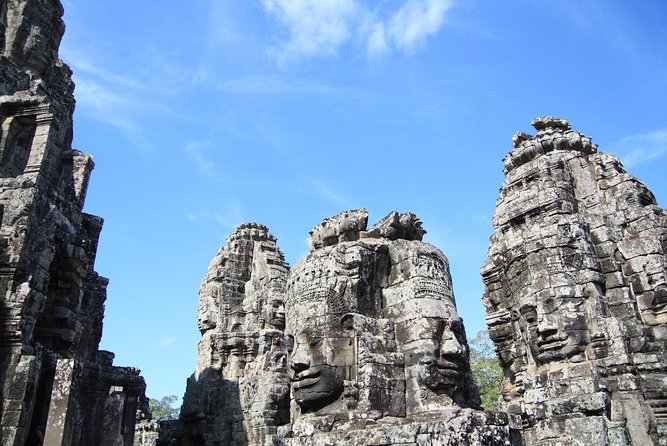
Inside Angkor Thom, Bayon is the visual surprise. Its towers carry large carved faces that look out over the temple from different angles. The building is compact and layered, so the best experience comes from moving slowly rather than treating it as one quick photo stop.
The visit is planned for about 45 minutes. That is enough for a guided look at the main structure, but you may want longer if you enjoy carvings and architectural details. Several people who have taken this route particularly valued the explanations of the carvings and the meaning behind them.
A good guide makes a real difference at Bayon. Without context, the stone faces can blur into a series of striking images. With clear explanations, you begin to understand how the temple connects to both Buddhist and Hindu traditions, and why its central position in Angkor Thom matters.
English ability can vary by guide. Guides such as Nob, Duong, Savery, Savin, and Sorin Mut were specifically praised for their clear explanations, patience, flexibility, or local help. Individual guide assignments are not guaranteed, but the private setup gives you a chance to ask questions and request a slower or faster pace.
More Temple Tuk Tuk Tours in Siem Reap
- Siem Reap: Angkor Wat Private Tour by Tuk-Tuk
★ 4.5 · 117 reviews - Full-Day Private Tuk Tuk Tour of Angkor Wat Temples
★ 5.0 · 107 reviews - Private one-day tuktuk ‘small tour’ of the oldest Angkor temples
★ 5.0 · 104 reviews - Angkor Wat Private Tour in a Tuk Tuk
★ 5.0 · 69 reviews
Preah Khan, a broad complex with room to wander
Preah Khan means Sacred Sword, and the site is much larger than a quick temple photo stop suggests. It was built by King Jayavarman VII as a monastery and teaching complex, covering more than 56 hectares.
The planned visit lasts about 30 minutes, which is fairly short for such an extensive site. Your guide will likely focus on the most important sections and explain the layout, carvings, and religious role. If you are especially interested in ruins and stonework, tell your guide early that you would like time for details.
Preah Khan can feel less compressed than the best-known parts of Angkor Wat. You still walk over uneven surfaces, but the broad complex gives you a chance to look beyond the famous postcard views. It is one of the stops that helps you understand Angkor as a functioning center of religion, learning, and royal power.
Ta Nei and Ta Keo for a quieter change of pace
The route then takes you by tuk-tuk to Ta Nei and Ta Keo. These are lesser-known ruins, and that makes them useful additions to a day already filled with major names.
Ta Nei offers a smaller, more remote-feeling temple stop. Ta Keo, near the Eastern Baray, gives you another look at Khmer temple design without repeating exactly the same experience as Bayon or Ta Prohm. The combined stop lasts about 45 minutes.
These temples are important to the tour’s balance. Angkor can become a parade of famous names if you only move from one headline site to the next. Adding lesser-visited ruins gives your guide room to explain how the complex worked as a whole, not just why each place looks good in a photograph.
Do not expect the same level of restoration, facilities, or easy walking at every site. Some paths can be rough, and the shade may be limited. Good shoes will help more than fashionable sandals.
Ta Prohm and the power of the forest
Ta Prohm is the final major stop, with about 90 minutes planned. It is famous for the way trees and roots remain part of the ruins, creating the image many people associate with Angkor beyond Angkor Wat.
The temple was built by Jayavarman VII as a shrine to his mother. During conservation work, some of the forest was left in place so the site would retain a sense of how the ruins were found and how nature had taken hold.
Ta Prohm is visually powerful, but it can also be crowded. The narrow passages and popular photo areas slow the pace. Your guide may know less congested corners and better places to frame the towers, roots, and doorways. Still, you should expect other people at the most famous sections.
The 90-minute stop gives you time to see more than one viewpoint, but it is also late in a long day. If you are tiring, tell your guide. The private arrangement is most useful when you use it to set a sensible pace rather than trying to prove you can visit every corner.
What the private tuk-tuk format adds
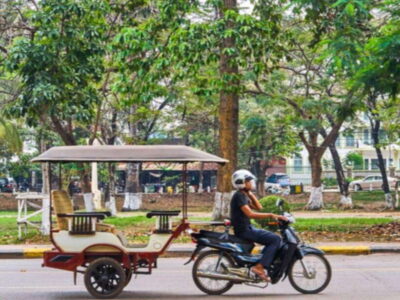
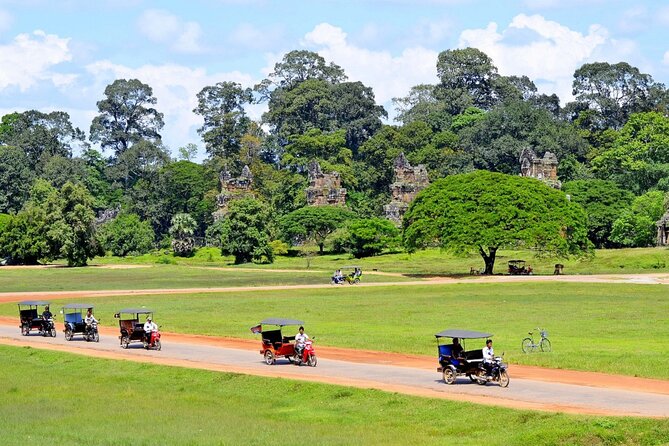
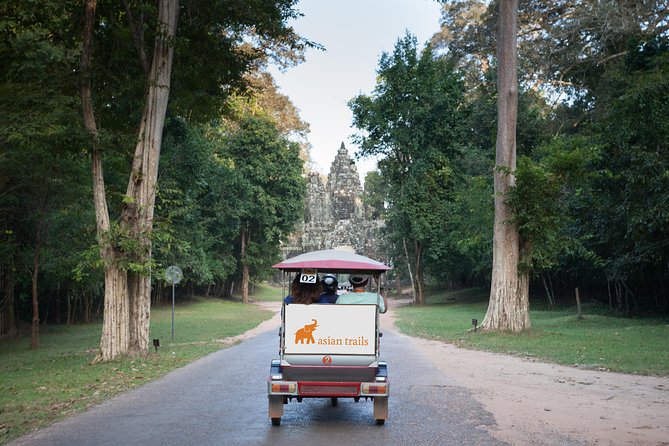
The open-air tuk-tuk is practical for Angkor. You get fresh air between stops, avoid the confinement of a larger vehicle, and can watch the park pass by. The driver handles the route while your guide handles the explanations and walking visits.
This is a private tour, so only your group participates. That is a major benefit for couples, families, and small groups with different energy levels. You can ask for extra time at Bayon, move more quickly through a less interesting section, or pause when the heat becomes too much.
The tuk-tuk is not a luxury vehicle. Dust, rain, sun, and road movement are part of the deal. Wrap cameras and phones properly, and do not leave electronic equipment exposed to natural elements. The ride is best treated as an authentic local way to move around the park, not as climate-controlled transport.
Hotel pickup and drop-off are included for accommodations in Siem Reap and within the stated service area. Properties outside that area, including Tonle Sap, Koh Ker, Banteay Srei, and Siem Reap International Airport, require a supplement or separate arrangement.
The guide is central to the value
A temple circuit without a guide can become a long day of impressive stones with little sense of how they fit together. The best part of this experience is the chance to connect architecture, carvings, Buddhism, Hinduism, and Khmer royal history as you move from site to site.
Several guides received especially strong praise for being punctual, friendly, flexible, and good at photography. Savery was noted for adjusting the pace and helping with iPhone photos. Duong was praised for fluent English and taking the group to the temples they wanted to see. Sorin Mut was described as professional, articulate, kind, and courteous.
That does not mean every guide will communicate in exactly the same way. One guide was described as very helpful and well informed, though his English was sometimes difficult to understand. If a detail is unclear, ask again. The private format makes conversation easier than it would be in a large group.
The guide can also help with practical problems. One guide stepped in during a disagreement with a vendor and resolved it politely. That kind of local assistance is useful in a busy sightseeing area.
Is $104 a fair price?
At $104 per person, this is not the cheapest way to see Angkor. You are paying for a full private day, hotel transport, an English-speaking guide, a tuk-tuk driver, and the one-day Angkor pass.
The value improves if you are traveling as a couple or small group and want your own guide. You avoid arranging a vehicle, buying the pass separately, finding the main gates in the dark, and working out the order of the temples on your own. You also get explanations that are difficult to reproduce from signs or a guidebook.
The price is less attractive if you only want a quick sunrise photograph and one or two temples. This route lasts about 13 hours and covers a lot of ground. It suits you best if you want a full introduction to Angkor in one demanding day.
Group discounts are available, but the tour itself is operated on a private basis. Ask about the current discount structure before booking if you have a larger party.
Clothing, heat, and walking advice
Some temples and upper areas enforce a strict dress code. Wear clothing that covers your shoulders and falls below your knees. Avoid clothing with disrespectful or obscene images, and choose practical colors and fabrics rather than dressing for a single photograph.
Expect substantial walking. Paths can be uneven, stairs may be difficult, and the day becomes hot quickly. Bring comfortable shoes, a hat or cap, sunglasses, and strong sunscreen.
Most people can take part, but this is not a low-effort sightseeing ride. You should be comfortable walking between temple areas and spending many hours outdoors. Tell the guide if you need a slower pace.
The one-day Angkor pass is included. Confirmation is provided at booking, and the exact pickup time may be confirmed in advance or communicated the day before. Free cancellation is available up to 24 hours before the start time. Changes or cancellations inside 24 hours are not accepted for a refund.
Who should book this Angkor sunrise tour?
Book it if you want sunrise, the major temples, lesser-known ruins, and a private guide in one carefully arranged day. It is especially useful for first-time visitors who want historical context and do not want to manage transport or the ticket process before dawn.
Think twice if you dislike early starts, intense heat, long walking days, or open-air transport. You may also prefer a shorter private visit if Ta Prohm and Angkor Wat are your only priorities.
For most people with one full day in Siem Reap, this is a strong choice. Ask your hotel for a packed breakfast, bring water, dress for the temple rules, and use the private format to control the pace. The sunrise may be subtle, but the full day gives you far more than a single photograph.
FAQ
What time does the tour start?
The stated start time is 5:00 a.m. Hotel pickup is included for accommodations within Siem Reap and the stated pickup area.
Is the tour private?
Yes. Only your group participates, with a private English-speaking guide and driver.
Is the Angkor pass included?
Yes. A one-day Angkor pass is included in the tour price.
Is breakfast included?
No. The itinerary allows a return to your hotel for breakfast after sunrise, but meals are not included.
Is lunch included?
No. Lunch is excluded and is arranged at your own expense.
Which temples are included?
The route includes Angkor Wat, Angkor Thom, Bayon, Preah Khan, Ta Nei, Ta Keo, and Ta Prohm.
How long does the experience last?
The tour lasts approximately 13 hours, though the exact return time can vary.
What should I wear?
Wear clothing covering your shoulders and falling below your knees. Comfortable walking shoes are also advised.
Is transportation included?
Yes. Open-air tuk-tuk transportation with a professional driver, along with hotel pickup and drop-off within the included area, is provided.
Can I cancel for a full refund?
Yes, if you cancel at least 24 hours before the experience start time. Cancellations or changes made less than 24 hours in advance are not accepted for a refund.
More Angkor Wat Tuk Tuk Tours in Siem Reap
- Angkor Wat Tour by Tuk-Tuk with English Speaking Driver
★ 4.5 · 65 reviews - Angkor Wat 1 Day with Sunrise Combined tour with (Tuk Tuk)
★ 5.0 · 43 reviews - Siem Reap Temple Tuktuk Tour: Explore Angkor Wat and beyond.
★ 5.0 · 42 reviews - Siem Reap: Personalized Angkor Wat Sunrise/Set by TukTuk/Car
★ 4.9 · 41 reviews
Just added around Siem Reap
- Angkor Wat Sunset TUK TUK Tour★ 5.0 · 4 reviews
- Full-Day Angkor Temple Discovery with Banteay Srei by Tuk-Tuk★ 5.0 · 7 reviews
- 2 Days Tuk Tuk Private Tour of Angkor★ 5.0 · 11 reviews
- Full-Day Private Tuk Tuk Tour of Angkor Wat Temples★ 5.0 · 107 reviews
- Amazing full day TUKTUK tour★ 5.0 · 4 reviews
- Full Day Angkor Complex by Tuk Tuk – (Optional Sunrise)★ 5.0 · 6 reviews
- Private must-visit Temples Tour with Guide & Tuk Tuk★ 5.0 · 5 reviews
- Siem Reap Morning Market & Food Tour by Tuk Tuk★ 5.0 · 5 reviews
Angkor Wat Tuk Tuk Tours, compared.
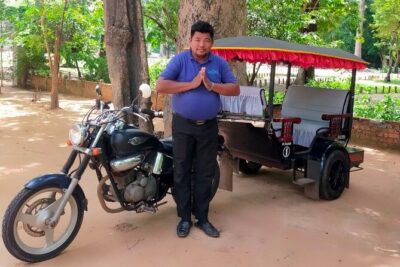
Angkor Wat Private Tour by Tuk-Tuk with English Speaking Driver
Read our review →
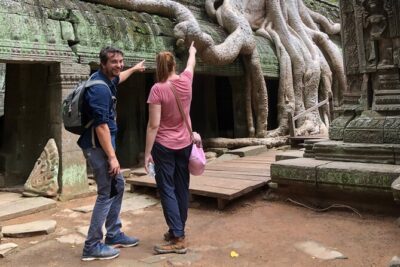
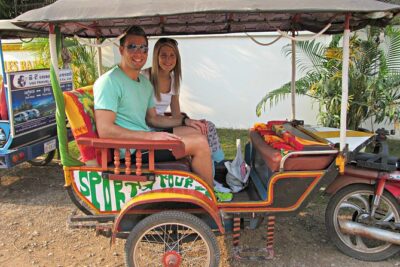
Private one-day tuktuk ‘small tour’ of the oldest Angkor temples
Read our review →