REVIEW · 3-HOUR EXPERIENCES
Tour TukTuk 3 hours Lisbon Free Pick-up
Lisbon’s hills can wear you out before you understand the city. This private tuk-tuk tour tackles the climbs for you, linking Alfama, Graça, Baixa, Chiado, and Bairro Alto in about three hours. You get frequent photo stops without spending the day on foot.
I like the way the route mixes famous sights with smaller details, from the Amália Rodrigues pavement portrait to Vila Berta and old public fountains. I also like the private format, since guides such as Rodrigo, Miguel, Fernanda, Thiago, and Alexandra have shown a real talent for adjusting the pace and explaining Lisbon’s past in clear English.
The main trade-off is time. With roughly 20 stops and brief visits, this is a fast city overview, not a series of long museum visits. Admission fees are not included, and the tour needs good weather, so keep another plan in mind if rain threatens.
Key points to know before booking
- Private tuk-tuk transport: Only your group takes part, making it easier to ask questions or request a little more time at a viewpoint.
- A smart answer to Lisbon’s hills: The vehicle reaches Graça, Senhora do Monte, São Roque, and other high points without requiring a long uphill walk.
- Three hours of broad coverage: The route moves from the Cathedral and Alfama to Praça do Comércio, Chiado, Bairro Alto, and the Carmo area.
- Strong English-speaking guides: Rodrigo, Miguel, Fernanda, Thiago, and Alexandra are named guides associated with the experience.
- Plenty of views, few included interiors: You see churches and monuments from outside unless you pay separately for entry.
- Not suitable for children under seven: Large suitcases, smoking, and alcohol are not allowed on board.
Why a Lisbon tuk-tuk makes sense
A tuk-tuk is useful in Lisbon for a simple reason: the old city rises and falls sharply. The route visits several viewpoints that would take effort to connect on foot, especially if you are still finding your way around or have only a short stay.
This is private transportation rather than a shared sightseeing bus. That matters when you want to stop for a photo, ask about a tile pattern, or hear more about a neighborhood instead of following a fixed group pace. The guide remains the driver, so the quality of the tour depends on both road skills and storytelling.
The tour is offered in English and lasts about three hours. It is booked, on average, 54 days ahead, which suggests you should not leave it until the final morning of a busy Lisbon visit. The published price is $48.12 per person. That is a fair price for private transport and a local guide, especially for two or more people who would otherwise pay for separate taxis between hilltop sights.
Still, the value depends on how you use it. If you want to enter the National Pantheon, Lisbon Cathedral, São Roque, or another monument, you will pay those entrance fees separately. If you mainly want an orientation ride, photographs, and local explanation, the price is easier to justify.
More Three-Hour Experiences in Lisbon:
- Lisbon: 3-Hour Sightseeing Tuk-Tuk Tour with Free Pickup
★ 4.7 · 128 reviews - 3 Hour Lisbon Private Guided Tour via Tuk Tuk
★ 5.0 · 116 reviews - Lisbon: 3-Hour Street Art Tuk Tuk Tour
★ 4.8 · 86 reviews
Starting at Lisbon Cathedral
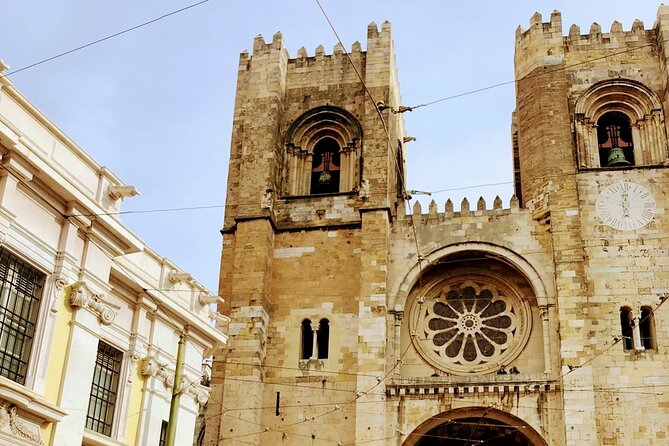
The route begins with Lisbon Cathedral, or Sé, whose construction began in 1147 after Afonso Henriques captured Lisbon from the Moors. It is considered the oldest church in the present capital, and its age gives this first stop real weight.
You have about 15 minutes here, with admission not included. That is enough for an exterior look and a short explanation, but not a leisurely visit through every part of the church. If the Cathedral is high on your personal list, return later with a separate ticket and more time.
From here, the tuk-tuk starts making the city’s steep geography clear. A short stop at a viewpoint over the Tagus introduces the main visual theme of the ride: Lisbon is best understood from above, then explored at street level.
Sun Gate, Graça, and Lisbon’s upper quarters
Miradouro das Portas do Sol is one of the route’s classic viewpoints. Its name comes from the old Gate of the Sun, once part of the Moorish wall. You can also see a section of the Cerca Velha, the old defensive wall.
The stop lasts about 10 minutes and is free. That is enough to take in the Tagus and the tiled roofs of the older city, though the area can feel brief if you want a long photo session. I would use this stop to get your bearings, then save detailed neighborhood wandering for later.
The route continues to Miradouro da Graça, officially linked with Sophia de Mello Breyner Andresen. The view reaches across Lisbon, and the nearby Convent of Grace adds a quieter historical layer. The convent belonged to the Augustinian order and occupies Monte de São Gens, where Afonso Henriques is said to have camped during the 1147 siege.
You get about 15 minutes here, with entry to the convent not included. The stop works well for people who want context, not only a photograph. Ask your guide about how the hilltop location shaped Lisbon’s development.
Nearby, the route calls at Vila Berta. This is a small residential area tied to Lisbon’s industrial past. Ironwork and stamped tiles give it a different look from the grand churches and royal squares, while its original purpose was to house factory workers and members of the lower middle class.
Vila Berta is a useful reminder that Lisbon is not only monuments. It also grew through workshops, factories, worker housing, and ordinary domestic streets. The provided timing does not assign a separate long visit here, so expect a short look from the vehicle or a brief stop.
Senhora do Monte and the Saint Vincent quarter
Miradouro da Senhora do Monte is one of the most rewarding high points on the route. From here, you can see Saint George’s Castle, downtown Lisbon, the Tagus estuary, Bairro Alto, Monsanto Forest Park, and the Avenida Almirante Reis valley.
The viewpoint is next to a small hermitage founded in 1147 and linked with Saint Gens. A stone chair inside is tied to a local birth legend, and tradition says pregnant women who sat there would have uncomplicated births. The story even involves Queen Maria Ana of Austria, who visited while pregnant with the future heir.
The stop lasts about 15 minutes and is free. I like this pause because it combines a wide city view with a very specific local story. It also shows why a tuk-tuk helps here: reaching several such viewpoints independently can mean repeated climbs on steep streets.
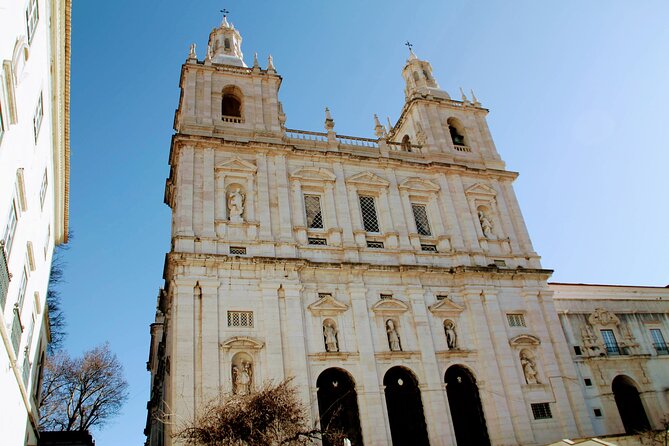
The next stop is the Church of Saint Vincent de Fora, seen from outside. Construction began in 1582 on a site where an earlier church had been ordered by Afonso Henriques. Its design includes Portuguese Mannerist features alongside Gothic and Baroque elements.
The church is also associated with the Pantheon of the Bragança dukes, where several Portuguese kings are buried. The visit lasts about 10 minutes, and entry is not included. If you want to see the interior and royal burial areas, plan a separate visit.
The ride then passes the Santa Clara market area. The market dates from the second half of the 19th century, while the nearby Feira da Ladra has roots reaching back to the 13th century. The flea market is held in Campo de Santa Clara on Tuesdays and Saturdays according to the supplied tour details, so check the day carefully before planning around it. The area includes craft shops and stalls selling old objects, second-hand goods, and handmade items.
More Tuk Tuk Tours in Lisbon:
- True 4Hour Private Tuk Tuk Tour: Discover Lisbon with a Local!
★ 5.0 · 8,008 reviews - Lisbon: Private Guided Tuk-Tuk Tour with Hotel Pickup
★ 4.9 · 4,552 reviews - Private Lisbon Sightseeing Tuk-Tuk Tour: Alfama, Belém & More
★ 5.0 · 4,277 reviews - Lisbon Highlights: Private Tuk Tuk Tour Adventure Sightseeing
★ 5.0 · 3,284 reviews
The National Pantheon and Alfama’s fountains
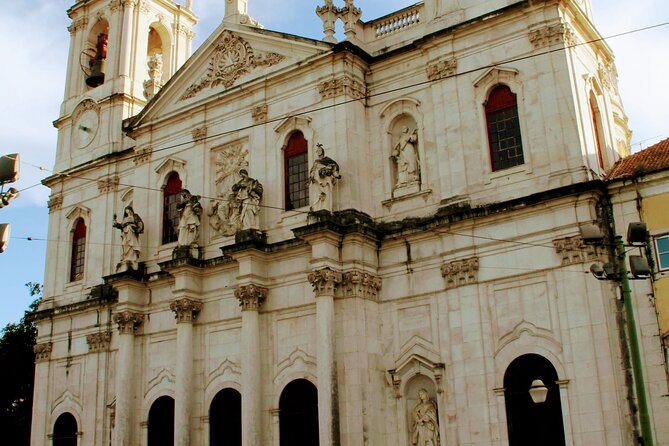
The National Pantheon occupies the Church of Santa Engrácia, a building begun in 1682 and completed only in 1966. That 284-year construction story is one of Lisbon’s best examples of a project that refused to hurry.
The interior honors citizens who served Portugal, and the building includes the graves of Amália Rodrigues, the great fado singer, and Eusébio, one of Portugal’s most famous football players. You have about 30 minutes here, but admission is extra. This is the longest scheduled stop, so it is the clearest opportunity to pay for entry if you want more than an exterior view.
Next comes Alfama, Lisbon’s oldest and one of its most characteristic neighborhoods. The name comes from the Arabic al-hamma, referring to fountains or hot baths. The supplied historical account describes springs ranging from 20 to 34 degrees Celsius, with mineral qualities linked to sodium or calcium bicarbonate.
You have about 10 minutes to begin seeing Alfama. That is not enough to explore its lanes fully, but it gives you a useful first look at the district’s steep streets and old fabric. I would treat this as an introduction and return later if you want to wander without a vehicle.
Chafariz de Dentro is one of Alfama’s historic fountains. Its earliest recorded name was the Fountain of Horses, dating to 1285. In the 14th century, the Castilians took its bronze heads as a reminder of the sack of Lisbon. From the 17th century, it was known as the Inside Fountain because it stood within the Fernandina wall.
The stop lasts about five minutes and is free. It is small, but it shows how basic water supply shaped city life. The route also refers to an older fountain that may have been Lisbon’s first public fountain, with water brought to taps outside the Moorish wall by 1487. Its spouts were once assigned according to social groups, a sharp reminder that public services were governed by strict class and racial divisions.
The House of Spouts, also called the House of Brás de Albuquerque, adds another unusual detail. Built in 1523, it has a diamond-patterned stone façade influenced by the Italian Renaissance. The building contains the José Saramago Museum, Roman-era salt tanks, a medieval tower, and Mudejar paving. The route gives you a look at the building, but museum admission is not part of the tour.
From Conceição Velha to Praça do Comércio
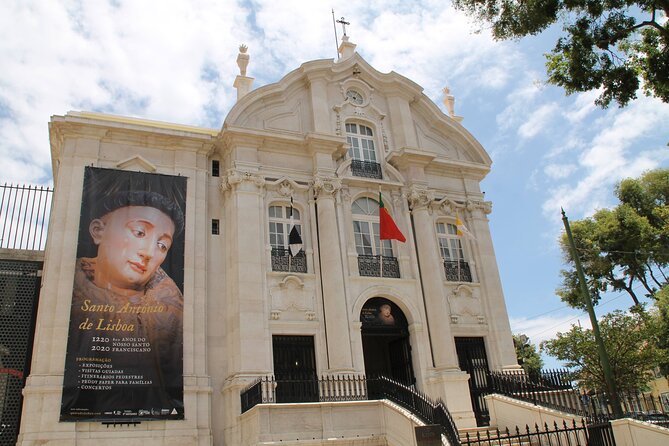
The Church of Our Lady of Old Conceição combines several styles because it was rebuilt after the 1755 earthquake. Its earlier predecessor, the Church of Our Lady of Mercy, was once the second-largest Manueline church in Lisbon after Jerónimos Monastery in Belém.
You spend about five minutes here, and entry is free. It is a quick stop, but it helps explain how the earthquake changed Lisbon’s churches and streets. The interior has a single nave and a Pombaline design, with the former Mercy chapel serving as the main altar.
Praça do Comércio gives the tour a grand change of scale. The square occupied the site of the royal palace for about two centuries and remains one of Europe’s largest public squares. On its north side, the Rua Augusta Triumphal Arch frames the entrance toward downtown.
The square also connects Lisbon to the river. The marble steps at Cais das Colunas once received kings, heads of state, and other public figures arriving by water. The historic Martinho da Arcada café is here too, linked with Fernando Pessoa.
You get about 15 minutes, and the square is free to enter. This is a good place to pause and absorb Lisbon’s reconstruction after the earthquake. It also gives you space for photos without the narrow lanes and steep slopes found earlier.
Cais do Sodré, Chiado, and Saint Roque
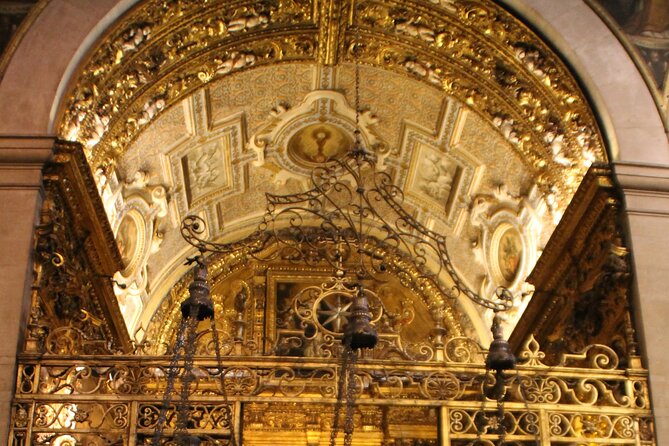
The route continues along the river toward Cais do Sodré, now known for nightlife and food. The old Ribeira Market is home to Time Out, with restaurants serving local and international dishes.
The tour also passes Pink Street, one of Lisbon’s best-known nightlife streets. Its painted surface and late-night bars make it a popular evening stop, though a three-hour daytime tour may give you only a quick look rather than the full after-dark atmosphere.
Chiado brings a more literary and artistic side of the city. It has long been associated with writers, artists, cafés, and public gatherings. At Brasileira, you can see the statue of Fernando Pessoa, while Largo Luís de Camões honors the poet who wrote Os Lusíadas.
The Church of Saint Roque is one of the important stops in this part of town. Built at the end of the 16th century, it belonged to the Jesuits and was one of the first Jesuit churches in the world. It survived the 1755 earthquake without serious damage.
Inside are several chapels, including the 17th-century Chapel of Saint John the Baptist, a major work of Italian art. The visit is scheduled for about 15 minutes and is free. The church is one of the places where a short stop can feel especially valuable, although you may want to return if you prefer to study the art at a slower pace.
São Pedro de Alcântara and the final old-city views
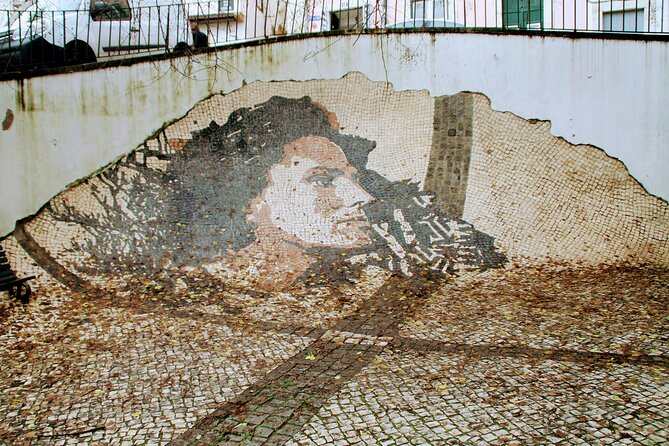
Miradouro de São Pedro de Alcântara offers a broad view toward eastern Lisbon and the downtown area. You have about 10 minutes here, and entry is free.
The nearby Convent of Saint Peter of Alcântara was founded in 1670 by the first Marquis of Marialva. Its funerary chapel for Cardinal Veríssimo de Lencastre survived the earthquake untouched. The route gives you the surrounding context, but it does not include a dedicated interior visit.
From here, you pass through Bairro Alto, a compact old quarter of narrow cobbled streets and old houses. Since the 1980s, it has been one of Lisbon’s best-known nightlife districts, with bars, restaurants, and fado clubs. Earlier, many press offices were located here.
The final historic area is the Carmo Convent. Founded in 1389 by Nuno Álvares Pereira, it was badly damaged in the 1755 earthquake. Its roofless remains were not rebuilt, leaving the structure open to the sky as a direct reminder of the disaster.
Across from the convent is the Pombaline do Carmo Fountain, built in 1786 to replace an earlier fountain. These last stops tie together several themes from the tour: medieval foundations, royal power, religious life, earthquake damage, and the city’s continuing daily use of old spaces.
How the guides affect the experience
The guide makes a real difference on a compact route like this. Rodrigo is described as engaging and well versed in Lisbon and Portuguese history. Miguel is noted for his passion for the city, while Fernanda is praised for making the ride friendly and easy to follow.
Thiago has been especially effective at fitting a lot of history into three hours and taking visitors to both expected sights and places they had specifically hoped to see. Alexandra is described as a careful driver with strong English and a helpful manner when road closures made the normal meeting point difficult to reach.
That flexibility matters. On one occasion, bad weather led the company to reschedule the tour without fuss. On another, streets were closed for 25 April commemorations, and Alexandra and company owner Tiago communicated so the group could find one another.
You should still remember that guide assignments can change. Book this for the route and private format, while treating the individual guide as an important bonus rather than a guarantee.
Practical details and who should book
The listed meeting point is Rua do Comércio, 1100 Lisbon, and the tour ends back there. The title refers to free pickup, but the supplied meeting information specifies this central start point, so confirm the pickup arrangement before you go.
The experience includes private transportation only. Food, drinks, and monument admission are extra. Smoking and alcohol are not allowed in the tuk-tuk, and large suitcases cannot be taken aboard.
Most people can take part, but children under seven are not allowed. Since the tour depends on good weather, poor conditions can lead to a different date or a full refund. You can cancel for a full refund up to 24 hours before the start time, but changes or cancellations inside that window are not accepted.
Should you book this Lisbon tuk-tuk tour?
I would book it for a first Lisbon visit, a short stay, or anyone who wants to understand the city before exploring it on foot. The route covers an unusually large slice of Lisbon, and the private tuk-tuk solves the hardest problem: connecting the hills without exhausting yourself.
I would not choose it as my only activity if I wanted long museum visits or a slow Alfama walk. The schedule moves quickly, entry fees are extra, and some stops last only five or ten minutes.
For the best value, use the ride as your orientation tour. Note the places you want to revisit, then return to the National Pantheon, São Roque, the Cathedral, or Alfama with more time. If you want broad coverage, strong local explanation, and a practical way up Lisbon’s hills, this is a sensible choice.
FAQ
How long is the Lisbon tuk-tuk tour?
The tour lasts approximately three hours.
Is the tour private?
Yes. Only your group participates, and private transportation is included.
What language is the tour offered in?
The tour is offered in English.
Are monument entrance fees included?
No. Entrances to monuments are not included. Meals and drinks are also excluded.
Where does the tour start and finish?
The supplied meeting point is Rua do Comércio, 1100 Lisbon, Portugal. The activity ends back at the meeting point.
Can children under seven join the tour?
No. Children under the age of seven are not allowed to participate.
Just added around Lisbon
- Lisbon: Private Tuk-Tuk Tour★ 5.0 · 56 reviews
- Half-Day Unforgettable Historical Lisbon on Tuk-Tuk★ 5.0 · 12 reviews
- Lisbon Tuktuk Tour With Pickup★ 4.0 · 24 reviews
- Unforgettable 3 Hours Lisbon City Tour with Tuk Tuk★ 4.0 · 3 reviews
- Two hour tuk tuk tour 7 hills★ 5.0 · 2 reviews
- Vintage Tuk Tuk Tour experience in Alfama, Chiado, and Baixa 2h★ 5.0 · 3 reviews
- 4 Hours Tuktuk City Tour in Lisbon★ 5.0 · 47 reviews
- All Lisbon History via TukTuk★ 4.5 · 7 reviews
3-Hour Experiences, compared.

Visiting 9 Places in 3 hours Share Tour by Tuk-Tuk
Read our review →
Tuk Tuk Athens Complete City Center Tour – 100% Electric (3 hour)
Read our review →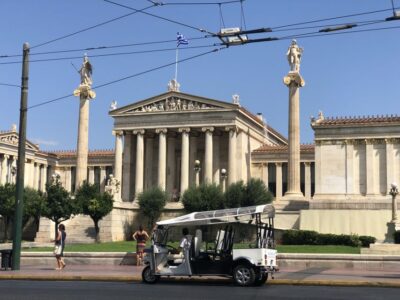
Private 3-Hour City Tour on Eco-Friendly Tuk Tuk
Read our review →
3-hour Old Delhi Heritage Walking tour with Rickshaw Ride
Read our review →
Small-group Saigon City Tour: 3-Hour Cyclo Ride to Hidden Stories
Read our review →3-Hour Old Delhi Heritage Walking tour with Rickshaw ride
Read our review →