
REVIEW · TUK TUK CITY TOURS
Tavira: Tuk-Tuk City Tour
Tavira’s salt pans, hilltop churches, old lanes, and castle are spread across town, and this one-hour electric tuk-tuk tour links them neatly. Guides such as João, Lori, Maria, and Laurie explain the city as you ride, adding folklore, local history, and tips for places to revisit later. I like the easy overview and the fresh air on hot days. The drawback is simple: one hour gives you a taste, not enough time to explore the churches or castle properly.
I especially like the short stops at the salt pans, São Sebastião Church, and Tavira Castle. You also get a useful first look at less obvious corners, from Alto de São Brás to the former prison and military barracks. The main trade-off is pace: you will see many sights, but most are viewed from the vehicle or during brief stops.
Key points at a glance

- Salt pans in Atalaia: Make a brief stop to see Tavira’s working salt area and, if time allows, arrange a closer look or a purchase nearby.
- A strong first-day tour: The route gives you a map of the city so you can return later to the churches, castle, and streets that catch your eye.
- Several major churches: São Brás, Nossa Senhora do Carmo, São Francisco, São José, Santiago, Santa Maria, and Misericórdia all appear along the route.
- Short, useful photo stops: You pause at São Sebastião Church and the castle for about five minutes each.
- Private and accessible: The tuk-tuk is 100% electric, the group is private, and the activity is wheelchair accessible.
- Multilingual local guidance: Tours are offered in English, French, Spanish, and Portuguese.
Why a tuk-tuk works well in Tavira
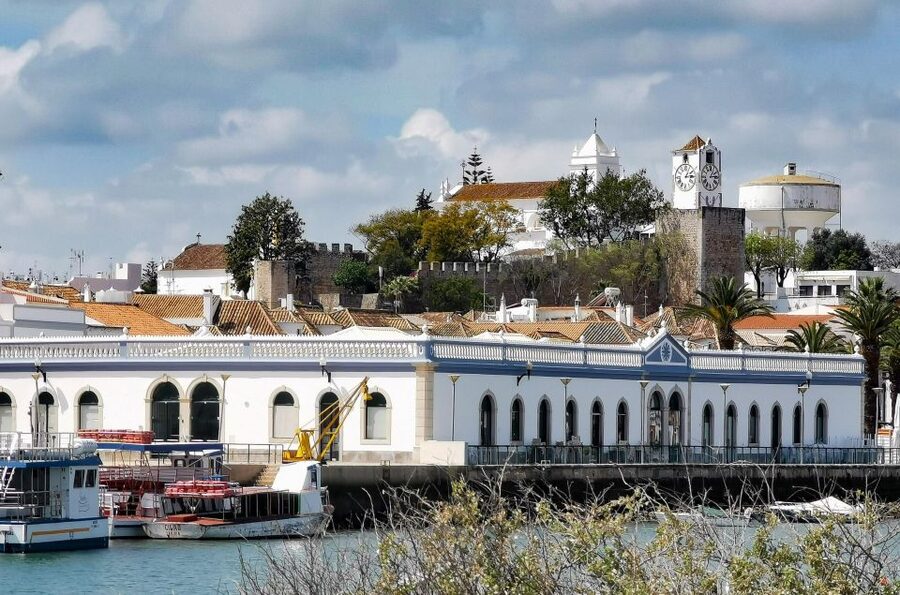
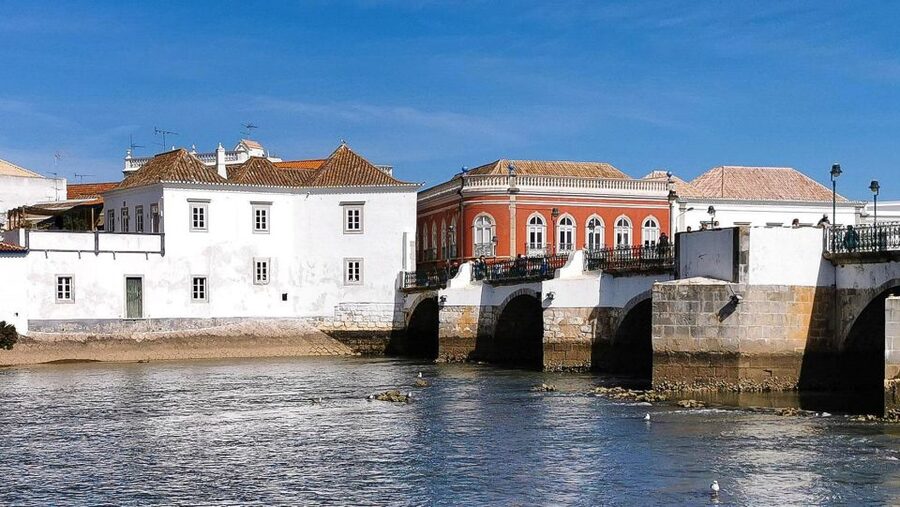
Tavira is pleasant to walk, but its sights are not packed into one compact square. The route moves through central streets, uphill areas, church districts, and the salt pans around Atalaia. In the summer heat, that matters.
The electric tuk-tuk gives you a breeze and saves your legs for later exploring. One guide even helped an older mother enjoy the town without facing every slope on foot. That is a real strength of this format. You can cover a lot without turning your first hour in Tavira into a workout.
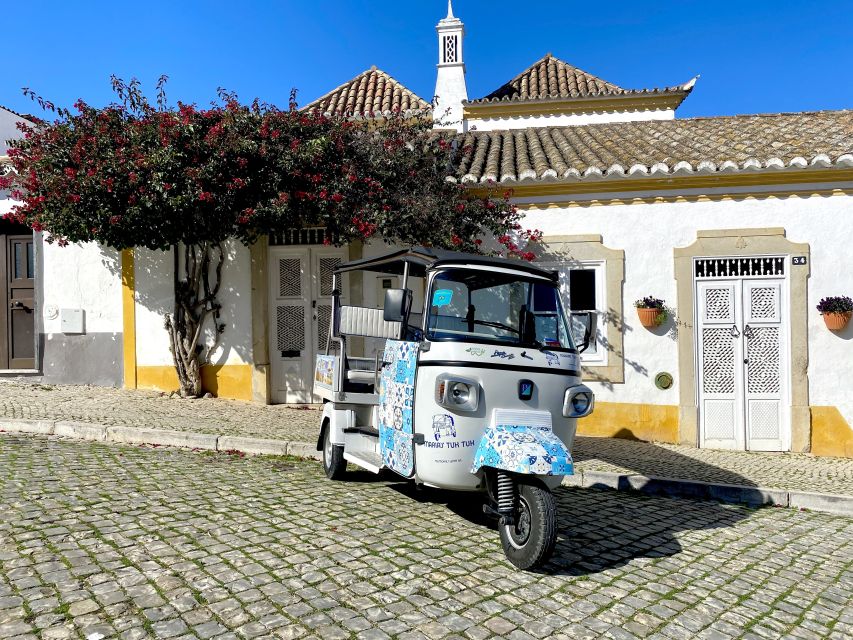
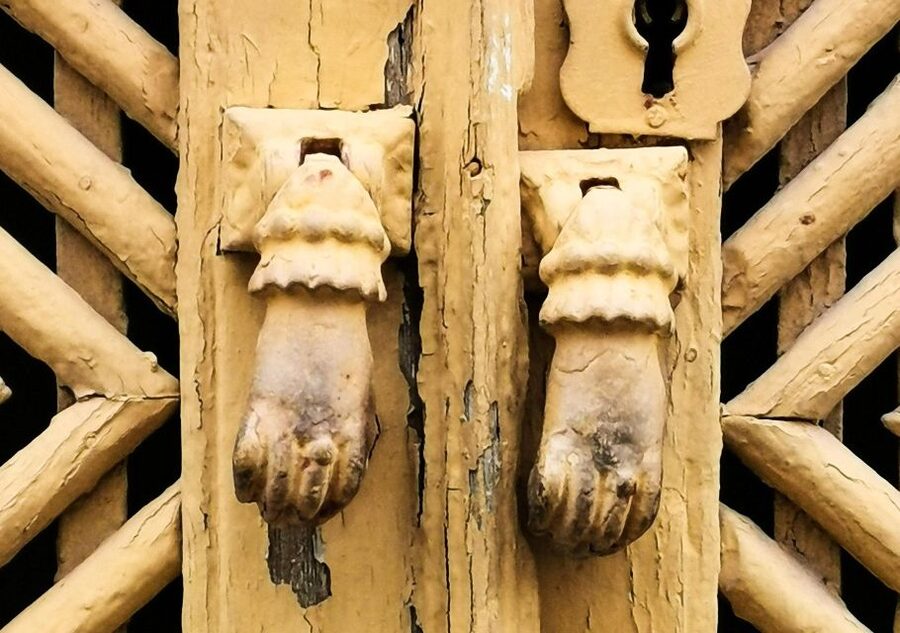
The vehicle also gives you a different view of the town. You pass houses, decorated doors, churches, gardens, and streets that are easy to miss when you are focused on a map. Guides have pointed out the meaning behind hand decorations on doors, local customs, and stories connected with the river and old buildings.
Still, do not book this expecting a long stop at every sight. The tour is designed as an introduction. You look, listen, take a few photographs, and note where you want to return. That is exactly why I would schedule it early in your stay.
More Tuk Tuk City Tours in Portugal
- Private Lisbon Sightseeing Tuk-Tuk Tour: Alfama, Belém & More
★ 5.0 · 4,277 reviews - Lisbon Highlights: Private Tuk Tuk Tour Adventure Sightseeing
★ 5.0 · 3,284 reviews - Discover Porto’s Highlights on a 2-Hour Private Electric Tuk Tuk
★ 4.5 · 1,860 reviews
Starting near Aguarela Café
The meeting point is at R. Gonçalo Velho 7, near Aguarela Café, where you should look for the Maria’s Tuk Tuk sign. The location puts you close to the town center and makes sense for a route that works outward before returning through the historic core.
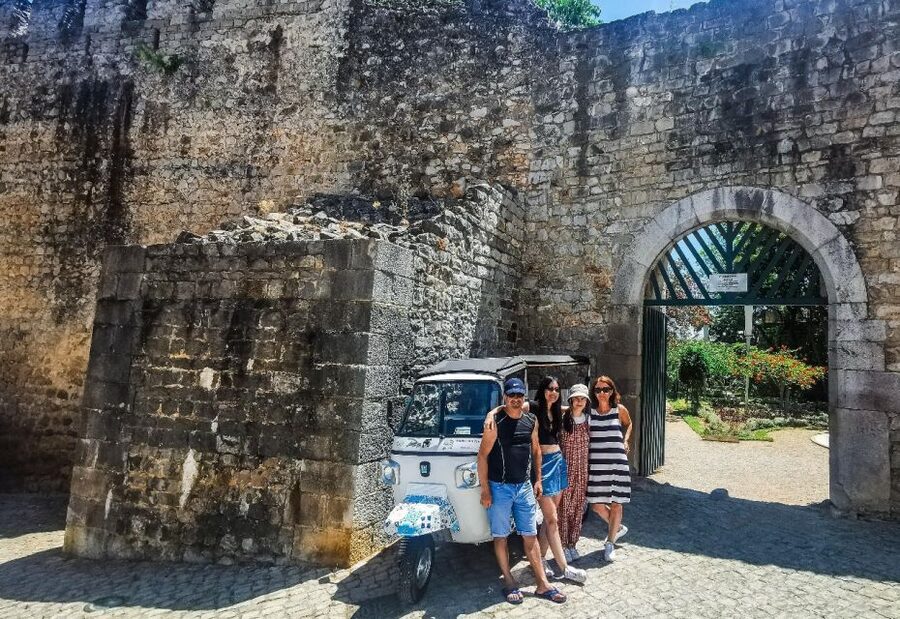
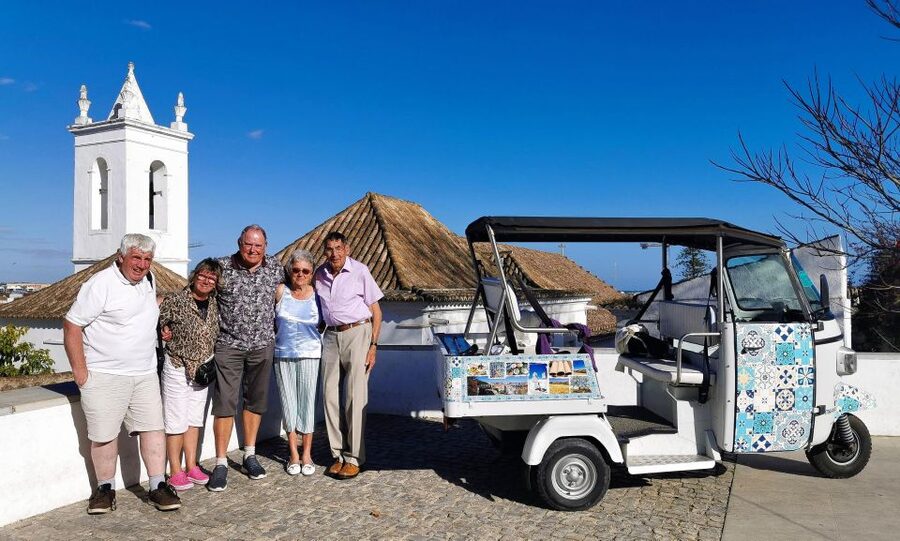
The group is private, which gives the ride a more personal feel than a large sightseeing vehicle. You can ask questions and, depending on the guide and timing, show interest in a particular stop. Several guides have been praised for answering questions, suggesting later visits, and taking photographs for solo passengers.
Your guide may be João, Joél, Lori, Laurie, Maria, or another member of the team. The strongest part of the guiding is the personal connection to Tavira. Explanations cover more than dates and building names. They can include how the town’s economy changed, how older peoples shaped the area, and how local stories help explain what you are seeing.
The vehicle is fully electric. That keeps the ride quieter and avoids the smell of a petrol engine. It also fits the low-key character of Tavira better than a large bus would.
Alto de São Brás and the city’s northern sights
The tour first reaches Alto de São Brás, where you see the Chapel of São Brás and the Church of Nossa Senhora do Carmo. The latter is described as the largest church in Tavira, making it an important landmark even if you only view it from outside during the ride.
This section helps you understand Tavira’s spread. You are not simply circling the postcard center. You are seeing how the city extends beyond the busiest historic streets, with religious buildings and local neighborhoods forming part of the town’s everyday character.
Your guide may point out details that are easy to pass without context. Several people have especially valued the explanations of architecture, local symbols, and small features on homes. That makes the ride more than transport between famous monuments.
The limitation is access. The tour does not promise extended interior visits to these first churches. If Nossa Senhora do Carmo or São Brás interests you, write it down and return on foot later.
Atalaia salt pans and the five-minute pause
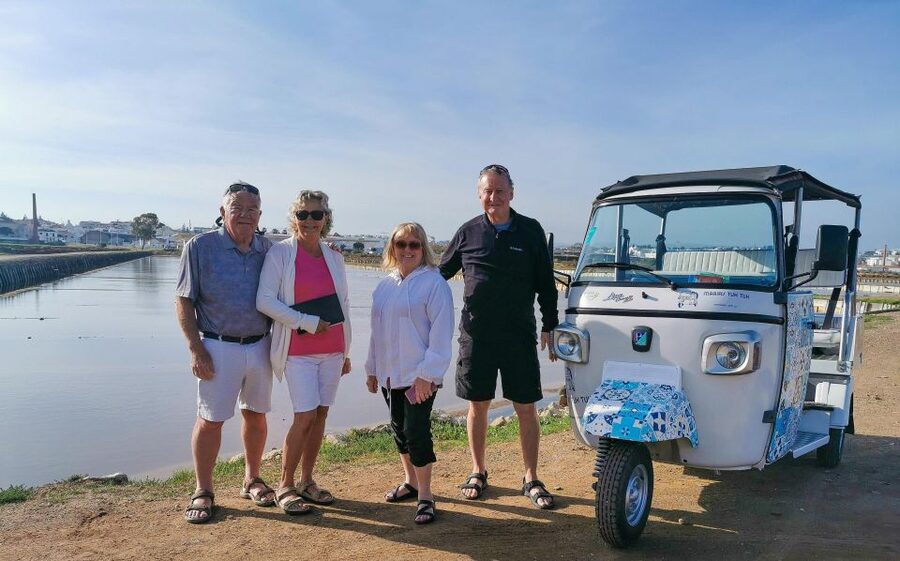
The salt pans are one of the most distinctive stops. They sit in the Atalaia area, away from the dense historic center, and give you a glimpse of an older local trade connected with the coastal setting.
The planned stop lasts about five minutes. That is enough for photographs and a quick explanation, but not a full visit. The salt pans are best treated as an introduction rather than a stand-alone excursion.
This is also where the tour can feel especially local. One guide helped arrange an impromptu stop near the fish market, where the group could buy salt. That kind of small adjustment depends on timing and the guide, so do not count on it as a guaranteed part of the itinerary. Still, it shows why a private group can be useful.
If you want more time at the salt pans, ask your guide early. Some people have been offered the option of getting out at the salt pans or castle, but the standard experience is a one-hour circuit. Any extra exploration will need to fit the schedule.
Same place, a completely different ride:
- True 4Hour Private Tuk Tuk Tour: Discover Lisbon with a Local!
★ 5.0 · 8,008 reviews - Porto: Guided Tour by Tuk-Tuk & Optional Douro River Cruise
★ 4.5 · 5,980 reviews - Lisbon: Private Guided Tuk-Tuk Tour with Hotel Pickup
★ 4.9 · 4,552 reviews - Welcome Lisbon Tour with Local Guide in Private Eco Tuk Tuk
★ 5.0 · 1,691 reviews
Atalaia’s convent and former prison
Near the salt pans, the route also passes the Convent of Bernardas and the former prison. These are not just names to tick off. Together, they show how Tavira’s buildings have served different purposes over time.
The convent adds another layer to the religious architecture you see across town. The former prison brings a more practical and institutional side of the city into view. You may not have time to study either building in detail, but hearing where they fit into Tavira’s past gives the ride more shape.
This is one of the tour’s best qualities: the route connects religious buildings, civic spaces, military sites, and working areas. You get a sense of a real town rather than a string of isolated monuments.
São Sebastião Church and the photo stop
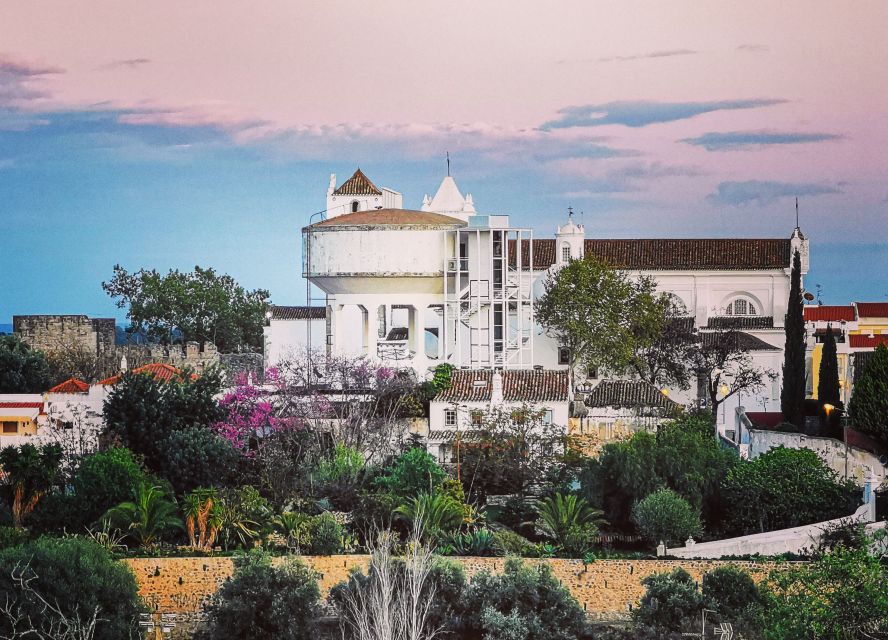
The tour stops at São Sebastião Church for about five minutes. This is a useful pause because you can get out, take photographs, and give your eyes a break from the moving view.
Five minutes is short, so have your camera ready. You may want to ask the guide what detail to look for before stepping out. The stop is less about a full church visit and more about placing the building in the wider story of Tavira.
The guides are good at using these brief pauses well. They encourage photographs and can explain why a site matters before moving on. If you prefer a slow visit with time to sit, study decoration, or attend to architectural details, plan to return later.
Barracks, churches, and central Tavira
After São Sebastião, the tuk-tuk continues past the military barracks, the Church of São Francisco, and the Church of São José. These stops keep the focus on Tavira’s built history, but the ride itself is just as useful. You see how the buildings fit into the streets around them.
The route then reaches Rua da Liberdade and Republic Square, the city center. This is where the town’s different threads come together: public life, historic buildings, shops, and the river area are easier to understand once you have seen the wider route.
I like this sequence because it gives you a gradual transition from outer areas into the heart of Tavira. You are not dropped straight into the central square with no sense of direction. By this point, you have a basic mental map.
You also have a chance to ask for practical advice. Guides such as João and Lori have suggested places to visit after the ride, and that is valuable when you have limited time. Make a note of any church, street, or market that catches your attention.
The historic center and Tavira Castle
The most important section of the ride is the historic area. Here you pass the Convent of Graça, Santiago Church, Santa Maria Church, and Misericórdia Church before stopping at the castle for about five minutes.
This is the part where the tour earns its price. Tavira’s story is not held in one monument. It appears in the churches, hilltop remains, old streets, and views between them. A guide can explain the links while you are still moving through the town, then point you toward the places worth revisiting.
The castle stop is brief, but it gives you a clear reason to return. If you choose to get out there, you can take photographs and continue exploring independently, subject to the timing agreed with your guide. The castle is also one of the spots where the height helps you understand Tavira’s layout.
Do not confuse this tour with a guided castle visit. You will not receive a long, room-by-room explanation in five minutes. Instead, you get an orientation and a strong prompt to come back with more time.
The same applies to Santa Maria, Santiago, and Misericórdia. Each church deserves more attention than the vehicle schedule allows. The tour helps you choose which ones deserve that attention.
Stories, folklore, and the human side of Tavira
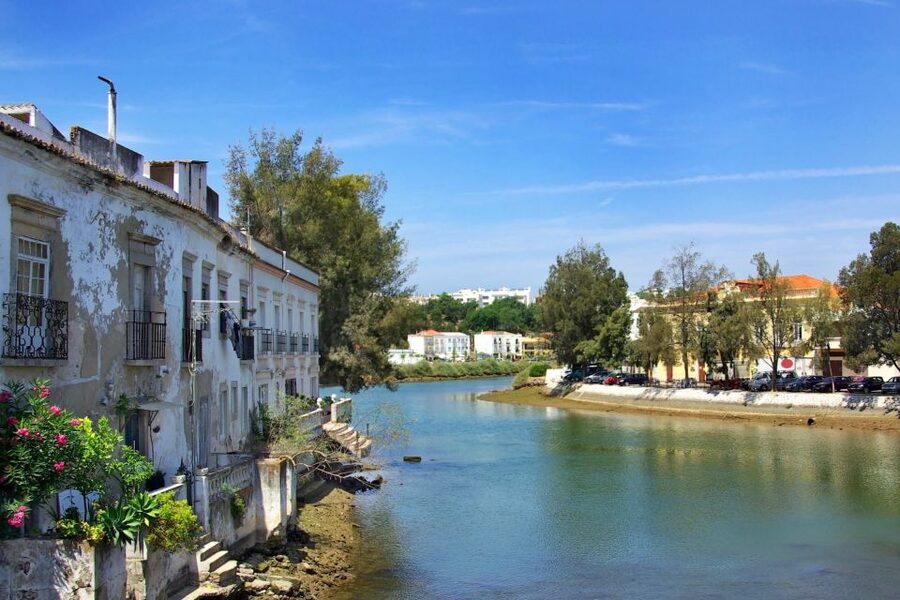
The best guiding here is not just a list of construction dates. Guides have shared folklore connected with Tavira’s Roman bridge, explained how older peoples influenced the town, and described changes in the local economy.
You may also hear about everyday clues, such as the hand decorations on doors. Details like this help you read the city after the tuk-tuk pulls away. Once you know what to look for, an ordinary doorway or street corner can become part of the story.
That is why I would not treat the ride as a simple sightseeing loop. It gives you questions to carry into the rest of your visit. You start noticing the relationship between the river, churches, old homes, military sites, and salt production.
The quality of the experience depends on your guide. The team has included guides who are funny, warm, and very well informed about both old and modern Tavira. English, French, Spanish, and Portuguese are available, so choose your preferred language when booking.
Is $45 per person good value?
At $45 per person, this is not the cheapest way to spend an hour in Tavira. You can walk through parts of the center for free. But the comparison is not quite fair, because the tuk-tuk covers the salt pans, outer neighborhoods, uphill areas, and central sights in one continuous trip.
The value is strongest when you are new to town, visiting for only a short time, or traveling in hot weather. It is also useful if walking hills is difficult, or if you want a private ride instead of joining a larger group.
For a couple, family, or small private party, the price buys more than transport. You get a guide, a route that would take planning to reproduce, and practical suggestions for the rest of the day. For a solo visitor, the price may feel higher, but the private setting and help with photographs can make it worthwhile.
The price does not include food or drinks. Bring what you need before setting off, and do not bring alcohol into the vehicle. Large bags and luggage are not allowed, so this is not a good activity to schedule between hotel checkout and a transfer.
Who should book this one-hour tour?
I would choose it on the first day in Tavira. You will see enough to decide where to spend your next few hours, and the guide can help you sort the major sights from the easy-to-miss ones.
It suits:
- First-time visitors with limited time
- Families who want an easy introduction
- Older visitors or anyone who prefers to avoid steep walking
- Solo visitors who want help with photographs and local direction
- People who enjoy history, churches, folklore, and town stories
- Anyone visiting during a hot spell
It may not suit you if you want long interior visits, a slow photographic tour, or a detailed examination of every church. The schedule is brisk, and the two five-minute stops are short by design.
Free cancellation is available up to 24 hours before the tour, and you can reserve now and pay later. The activity is wheelchair accessible, but because large bags are not allowed, check your personal arrangements before arriving.
Should you book Maria’s TukTuk?
Book it if you want a friendly, efficient introduction to Tavira rather than a deep visit to one monument. The electric vehicle, private group, multilingual guides, and wide route make it a smart way to get your bearings fast.
I would especially recommend it for your first morning or afternoon. Keep your camera ready at São Sebastião and the castle, ask about spending extra time at the salt pans, and note the churches you want to revisit.
Skip it if you already know Tavira well or plan to walk slowly through every historic building. For everyone else, $45 buys a useful hour, a local perspective, and a much better sense of how the city fits together.
FAQ
How long is the Tavira tuk-tuk tour?
The tour lasts one hour.
How much does the tour cost?
The price is $45 per person.
Where does the tour meet?
Meet at R. Gonçalo Velho 7, near Aguarela Café. Look for the Maria’s Tuk Tuk sign.
Which languages are available?
The live guide can conduct the tour in English, French, Spanish, or Portuguese.
Is the tour private?
Yes. The activity is operated as a private group experience.
Is the tuk-tuk wheelchair accessible?
Yes, the activity is listed as wheelchair accessible.
Are food and drinks included?
No. Food and drinks are not included. Alcoholic drinks are also not allowed in the vehicle, and luggage or large bags cannot be brought along.
Just added around Portugal
- Tuk Tuk Funchal City – Madeira Island★ 4.8 · 3 reviews
- Lisbon: Private Tuk-Tuk Tour★ 5.0 · 56 reviews
- Sintra Tuk Tuk Experience: Mountain, Monuments and Dream Beaches★ 5.0 · 64 reviews
- Full-Day Guided Tuk-Tuk Tour in Sintra★ 5.0 · 5 reviews
- Private Tuk Tuk Tour around Magical Sintra and Coastline★ 4.5 · 7 reviews
- Private Tuk Tuk Tour through Serra de Sintra★ 5.0 · 24 reviews
- Sintra Tuk Tuk (Electric) 4-5 hours tour★ 5.0 · 18 reviews
- Tuk-Tuk Tour in Sintra Palaces in Cabo da Roca★ 5.0 · 20 reviews
Tuk Tuk City Tours, compared.

Private Lisbon Sightseeing Tuk-Tuk Tour: Alfama, Belém & More
Read our review →

Lisbon Highlights: Private Tuk Tuk Tour Adventure Sightseeing
Read our review →
Private Tuk-Tuk City Tour with All Entry Fees
Read our review →
Discover Porto’s Highlights on a 2-Hour Private Electric Tuk Tuk
Read our review →

Where else this ride shows up