
REVIEW · RICKSHAW TOURS
Delhi Rickshaw Tour: Explore Old Delhi Hertiage by Cycle Rickshaw
Old Delhi is best understood at street level, and this tour gives you two good ways to see it: on foot through its narrow lanes and by e-rickshaw when the streets grow too crowded. You move from Mughal monuments to a Sikh shrine, a Jain temple, and Asia’s largest spice market in one long day.
I like the clear mix of grand sights and ordinary life. I also like the private format, since your group can set the pace and ask questions without being folded into a large crowd. The main drawback is the length and the noise: seven to eight hours in Old Delhi can be tiring, especially if heat, traffic, and narrow lanes wear you down.
Key points to know before booking
- Red Fort and Jama Masjid anchor the day: You see two major Mughal sites, though admission to both is extra.
- Khari Baoli brings real street life: The spice market is a working market, not a staged cultural display.
- Several faiths appear in one walk: The route includes a Sikh gurdwara and a centuries-old Jain temple.
- Bikram is one guide name to request: He is described as making the chaotic lanes feel safe while explaining shops and local life.
- The tour is private: Only your own group takes part, with pickup offered and drop-off at your preferred stay or departure point.
- Food is not included: Plan for breakfast, lunch, drinks, monument camera fees, and tips as separate costs.
Why this Old Delhi route works
The great strength of this experience is its range. In one day, you see the power of the Mughal court, the daily rhythm of Chandni Chowk, the quiet of a Sikh place of worship, the trade of Khari Baoli, and the careful details of Jain architecture.
That variety matters because Old Delhi is not just a collection of monuments. Its character comes from the way grand buildings sit beside food stalls, family shops, shrines, warehouses, and crowded lanes. A guide helps connect those pieces instead of leaving you to see only red sandstone walls and busy traffic.
The day begins at 8:30 a.m., a useful start for Old Delhi. The lanes can become much harder to manage later in the day, so an early beginning gives you a calmer first walk. The schedule still runs for about seven to eight hours, which makes this a major part of your Delhi sightseeing rather than a quick morning outing.
You get an air-conditioned vehicle for the road sections, along with local guiding and e-rickshaw rides. The combination is practical. A car gets you into the area in comfort, while a small rickshaw can handle lanes where a normal vehicle would be awkward.
More Rickshaw Tours in India
- Old Delhi Food, Heritage&Cultural Walk with Rickshaw ride to Masterji Kee Haveli
★ 5.0 · 742 reviews - 3-hour Old Delhi Heritage Walking tour with Rickshaw Ride
★ 5.0 · 240 reviews - 3-Hour Old Delhi Heritage Walking tour with Rickshaw ride
★ 4.6 · 158 reviews
Red Fort: Mughal power in red sandstone
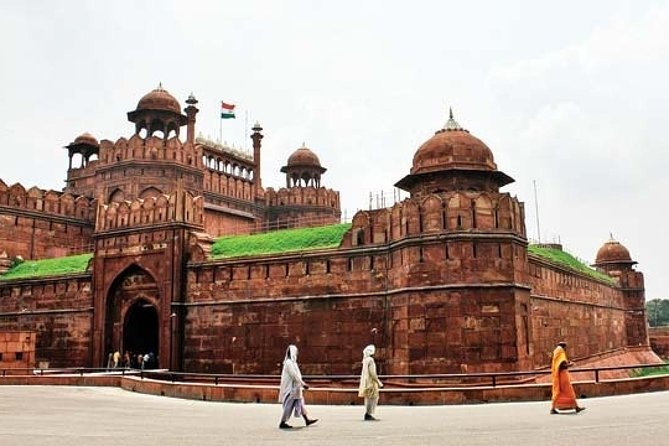
The Red Fort is the grand opening, and it sets the historical tone for the rest of the day. Built by Shah Jahan in 1639, the fort served as the Mughal residence in Delhi for nearly 200 years and is now a UNESCO World Heritage Site.
The scale is the first thing you notice. Its red sandstone walls and broad spaces can feel almost overwhelming, especially after entering from the tight streets of Old Delhi. The fort is not a single building. It is a large complex whose courts and halls show how the Mughal court organized power, ceremony, and private life.
The planned highlights include Rang Mahal, or the Color Palace, along with Diwan-e-Aam, the public audience hall, and Diwan-e-Khas, the private audience hall. These names matter because they show the division between the ruler’s public duties and the more restricted world of the court.
Your guide can also place the fort in the later Mughal story. During the revolt of 1857, the last Mughal emperor was tried here and later exiled to Yangon, then known as Rangoon. That detail gives the monument a second chapter beyond Shah Jahan’s period.
Admission to the Red Fort is not included, so keep that extra cost in mind. The stop is scheduled for about an hour, enough for an introduction and a focused visit, but not an exhaustive study of every corner.
Gurudwara Sis Ganj Sahib and a quieter side of Chandni Chowk
From the fort, you walk through Old Delhi toward Gurudwara Sis Ganj Sahib. The shift is striking. Instead of a royal complex, you enter a place marked by white walls, religious meaning, and a calmer mood.
The gurdwara honors Guru Teg Bahadur, the ninth Sikh guru, who was beheaded at this site. The word sis means head, which explains the name and gives the visit a direct link to the place’s religious story.
This stop is free to enter, according to the tour details. You should still follow the site’s rules and behave with the same care you would bring to any active place of worship.
I like this part of the route because it prevents the day from becoming a parade of monuments. You get a chance to pause, listen, and see how Old Delhi’s streets hold different religious traditions close together. The morning timing is also helpful, since the lanes are described as less crowded before the day’s traffic reaches its peak.
The walk itself is part of the attraction. You pass through lanes that can feel confusing when seen alone. A guide such as Bikram can help you read the area, point out shops, and keep your group together without making the walk feel like a formal march.
Fatehpuri Mosque and the approach to Khari Baoli
After the gurdwara, the route heads toward the spice market by e-rickshaw. Just before Khari Baoli, you pass Fatehpuri Mosque, another building connected with Shah Jahan’s era.
The mosque adds another architectural stop, but the real change comes through your senses. As you approach the market, the smell of spices begins to take over. You may notice the contrast between the careful lines of the mosque and the practical trade happening around it.
The e-rickshaw is a useful choice here. These small, battery-operated three-wheeled vehicles can move through Old Delhi’s narrow roads more easily than a full-size car. The ride is not simply transport between attractions. It gives you a close view of the street without requiring you to walk every section.
You should expect the road portions to be lively and crowded. That is part of the appeal, but it also means the tour is not suited to someone seeking a quiet, polished sightseeing route. The experience asks you to accept noise, traffic, and constant movement as part of the setting.
More Rickshaw Tours in New Delhi
- Old Delhi: 3-Hour Tuk-Tuk/Rickshaw Tour
★ 4.7 · 137 reviews - Luxury Rickshaw Tour of Old Delhi
★ 5.0 · 106 reviews - Old Delhi Heritage Walk with Rickshaw Ride
★ 5.0 · 68 reviews - Old Delhi – Hidden Gems Tour on Rickshaws with Guide & Audio Headsets
★ 5.0 · 54 reviews
Khari Baoli: spices, trade, and working Old Delhi
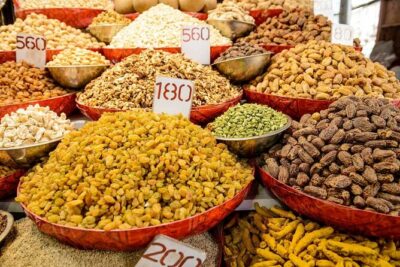
Khari Baoli is one of the most memorable stops because it remains a functioning commercial market. It is described as the largest spice market in Asia, and the strong aromas begin as soon as you enter.
You can see why India is so closely linked with spices here. Shops deal in the products used in homes and restaurants, and some trading families have operated their businesses for seven or eight generations. That gives the market a sense of continuity that a museum display cannot provide.
The scheduled visit lasts about an hour. Use that time to notice how each shop has its own stock, color, smell, and rhythm. A guide can explain what you are seeing and help you understand why this market has remained important.
This stop also shows why a walking and rickshaw tour can be more useful than sightseeing from a car. From a vehicle, Khari Baoli might look like a crowded street. On foot, you can take in the aromas and small details. The trade is close enough to observe, but the conditions can be intense if you dislike crowded places or strong smells.
There is no promise of a meal or tasting session, so do not book this expecting a food tour. Breakfast and lunch are not included. Treat the spice market as a cultural and commercial visit, then plan your meals separately.
Nau-Ghara and the old Jain quarter
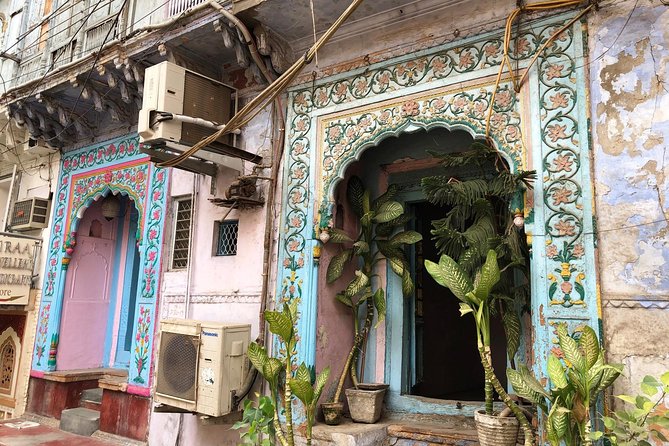
The route then moves by rickshaw through narrow lanes to Nau-Ghara, a name that translates as nine houses or nine mansions. These homes were built for royal Jain jewelers, and the lane once contained nine residences. Only two remain today.
The colorful fronts, carved windows, and small decorated doors give this stop a different look from the Mughal buildings. Here, the interest is in domestic architecture and the small scale of the lane. You are not looking at a vast fort or mosque. You are seeing how elite merchant families expressed status through their homes.
The area is described as a quiet pocket amid the busy streets of Chandni Chowk. That contrast is one of the route’s clever details. Old Delhi can change character within a few steps, from traffic and trade to a lane where ornate doors and old walls slow the pace.
You also visit a Jain temple said to be about 500 years old. Shah Jahan rebuilt the temple to honor his royal Jain jewelers, linking the site to the same courtly world seen at the Red Fort.
The Nau-Ghara stop is scheduled for about an hour and includes admission. Since this is a religious site, you should be ready to follow any instructions about dress, footwear, or photography. The tour information does not specify all temple rules, so listen to your guide rather than assuming cameras are welcome.
Jama Masjid: the final major monument
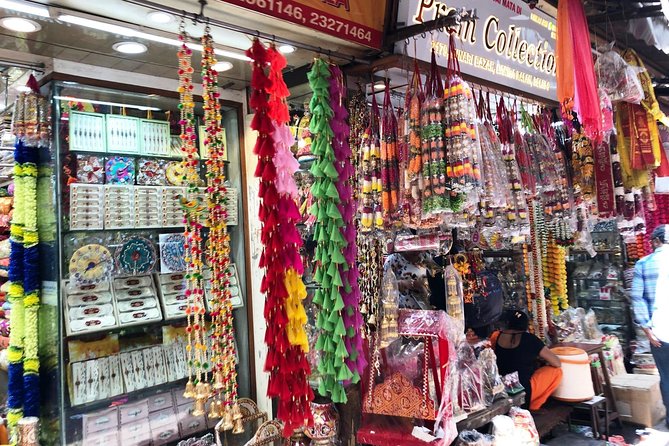
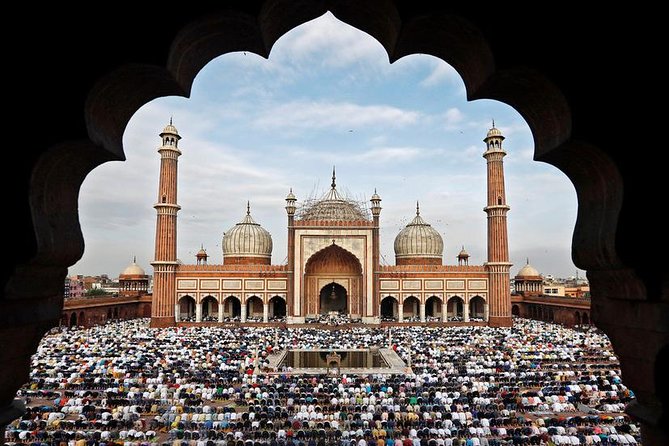
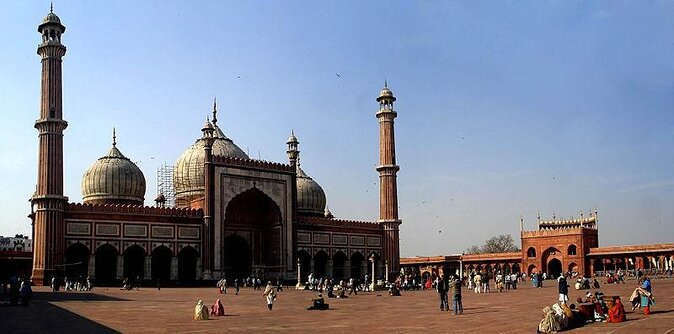
Jama Masjid is the last major stop and one of the day’s largest spaces. Shah Jahan built it between 1649 and 1656, and the mosque can accommodate about 25,000 people.
Its red sandstone and marble continue the architectural language seen at the Red Fort. The three domes, open courtyard, calligraphy, and tall minarets create a strong finish to the route. From the minarets, you can get a bird’s-eye view of Old Delhi, although the tour information does not guarantee access or specify any additional charge for that view.
The mosque is scheduled for about an hour. Admission is not included, so budget for that separately, along with any camera fee. Phone and camera rules can change by site, and the tour details specifically note that camera fees at monuments are extra.
Jama Masjid is an active place of worship, not just an old building. Dress and behavior matter. Your guide can help you handle the visit respectfully and explain the architectural details without reducing the site to a photo stop.
After Jama Masjid, the tour ends with drop-off at your preferred place of stay or departure point. That return transfer is useful after a full day on foot and in rickshaws.
What the $68.97 price really covers
At $68.97 per person, the price makes the most sense if you value private guiding and transport as much as the sights themselves. You are paying for an air-conditioned vehicle, a local guide, e-rickshaw rides, included taxes and fees, pickup, and drop-off.
You are not paying for a meal or every entry ticket. Red Fort and Jama Masjid admission are excluded, as are camera fees, drinks, phone calls, and tips for the guide and chauffeur. Add those costs when comparing this tour with a cheaper walking route.
The private format is the main value point. Your own group takes part, so you can ask for explanations at the spice market, slow down at the gurdwara, or spend less time at a stop that does not suit you. Group discounts may also be available, which could improve the per-person value for a larger party.
For a first visit to Old Delhi, I would see the cost as reasonable if you want help with navigation and local context. If you are comfortable finding your own way and only want a short look at the monuments, the full-day private price may feel high.
Who should book this Old Delhi experience
I would recommend it to first-time visitors who want a structured introduction to Old Delhi without giving up contact with daily street life. It suits families, couples, and small groups who prefer a private guide and pickup rather than managing local transport alone.
It also works well for anyone interested in how different communities share the same historic district. The route includes Mughal, Sikh, and Jain sites, plus a working market where family businesses have continued for generations.
I would think twice if you dislike crowds, strong spice smells, long days, or uneven walking conditions. The tour is described as suitable for most participants, but seven to eight hours is still a serious outing. Wear comfortable shoes, carry water, and keep some flexibility for the pace of Old Delhi.
The experience is also weather dependent. If poor weather cancels the tour, you are offered another date or a full refund. You can cancel for a full refund up to 24 hours before the start time, but changes made inside that window are not accepted.
Should you book it?
Book this tour if you want Old Delhi explained as a living district, not just a list of famous buildings. The strongest parts are the spice market, the quiet Nau-Ghara lane, the contrast between religious sites, and the guide’s help in making a confusing area feel manageable.
Bikram is a guide name worth requesting if available, especially if you want someone who can keep you comfortable in the crowds while explaining shops and local customs. Just budget for food, monument tickets, camera fees, and tips, and be ready for a long, noisy day.
If that sounds like your kind of sightseeing, this is a well-rounded way to meet Old Delhi on its own terms.
FAQ
What time does the tour start?
The tour starts at 8:30 a.m.
How long does the experience last?
The tour lasts approximately seven to eight hours.
Is pickup included?
Yes. Pickup is offered, and you are dropped off at your preferred place of stay or departure point.
Is this a private tour?
Yes. Only your own group takes part in the activity.
What transportation is included?
The tour includes an air-conditioned vehicle and e-rickshaw rides.
Are admission tickets included?
Admission to Nau-Ghara is included. Admission to the Red Fort and Jama Masjid is not included.
Are meals included?
No. Breakfast and lunch are not included, and drinks are also extra.
Can I cancel for a full refund?
Yes. You can cancel at least 24 hours before the local start time for a full refund. Cancellations or changes made less than 24 hours before the start time are not accepted.
Just added around New Delhi
- Old Delhi Chandi Chowk Food Tour with Rickshaw Ride – 4-5 Hours★ 5.0 · 8 reviews
- Taj Mahal Sunrise View With Tuk-Tuk★ 5.0 · 10 reviews
- Old Delhi Street Food Tour with TUK-TUK Adventures★ 5.0 · 4 reviews
- Tuk Tuk Delhi Experience★ 4.5 · 3 reviews
- Old Delhi Tour by Tuk-Tuk Street Food and Shopping Experience★ 5.0 · 12 reviews
- Private Rickshaw Tour of Old Delhi Heritage with Food Tasting★ 5.0 · 2 reviews
- Private Full-Day Tour visit Old and New Delhi with Rickshaw Ride★ 4.5 · 5 reviews
- Old Delhi Heritage Walk with Rickshaw Ride★ 5.0 · 68 reviews
Rickshaw Tours, compared.


Old Delhi Food, Heritage&Cultural Walk with Rickshaw ride to Masterji Kee Haveli
Read our review →

Arashiyama Customized Rickshaw Tour & Bamboo Forest
Read our review →
Split by Private Electric Rickshaw – Palace & Hidden Gems
Read our review →
Where else this ride shows up