
REVIEW · SRI LANKA TUK TUK TOURS
Anuradhapura: 14 Ancient City Sites Tuk Tuk Tour
Anuradhapura is far too spread out for a sensible half-day visit on foot, so this private tuk tuk tour tackles the city’s major monuments in one organized loop. I like the front-door pickup and drop-off, and I like having an audio guide ready for each stop instead of relying on scattered signs. You also get bottled water and parking fees included.
The trade-off is pace. Fourteen stops in 4 to 6 hours gives you a useful introduction, not a slow archaeological study. Many sites are stupas or monastery ruins, and some visits last only 10 minutes. Bring socks: bare feet on sun-heated sand and stone can be painful.
Key points to know before booking
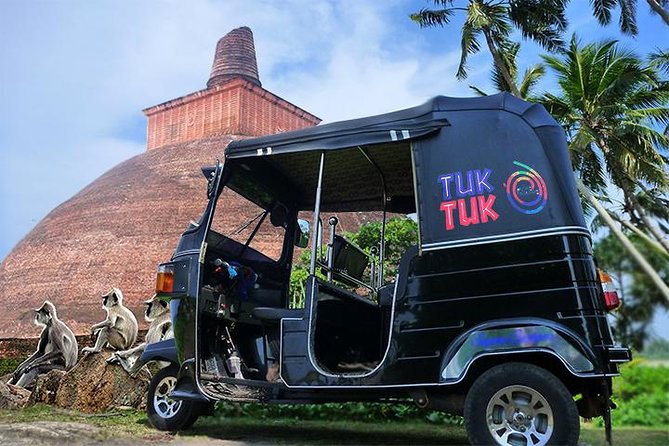
- Fourteen major sites in one private tuk tuk: Cover Anuradhapura’s main sacred monuments without arranging separate rides.
- A 4 to 6 hour route: Expect a brisk half-day, with longer pauses at Abhayagiri, Ranmasu Uyana, and Jetavanaramaya.
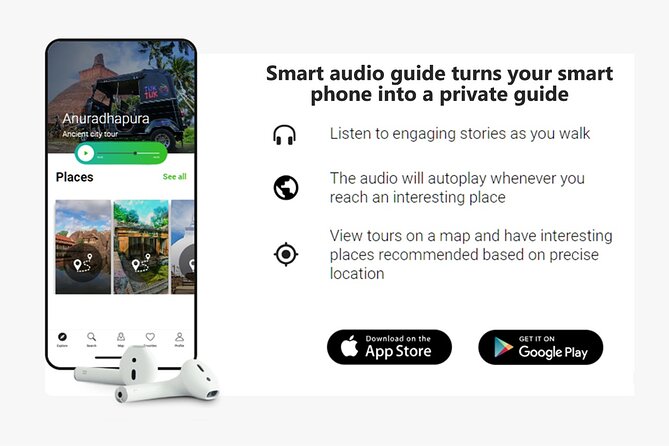
- Digital audio guide included: Use the app to add context at each monument while your driver handles the route.
- Hotel or railway station pickup: Start and finish at a convenient point around Anuradhapura.
- Tickets cost extra: Entry to the eight UNESCO World Heritage sites is listed at $30 per person.
- Best practical tip: Wear socks for temple visits, since shoes must be removed and the ground can become extremely hot.
Why a tuk tuk makes sense in Anuradhapura
Anuradhapura’s sacred city is a large collection of stupas, monasteries, ponds, trees, statues, and carved stones spread across a broad area. The sites are not arranged as a compact old town, and moving between them is the main challenge.
This is where the tuk tuk earns its keep. Instead of flagging down rides, explaining your destination repeatedly, and bargaining over each short journey, you have one private vehicle and one planned route. Pickup is offered from your hotel or the railway station, and drop-off is included at the end.
The private format matters for a group of up to three. You are not waiting for strangers, and you can ask the driver to pause briefly for photos or spend a little longer at a place that catches your interest. Still, the route has fourteen scheduled stops, so flexibility has limits.
The included digital audio guide fills an important gap. A driver can get you from one monument to the next, but the audio material gives you something to listen to while looking at a stupa, bathing pool, or carved guardstone. Treat it as an aid rather than a personal guide. The tour details do not identify a live guide by name.
More Tuk Tuk Tours in Sri Lanka:
- Colombo: Private Tuk-Tuk City Tour with All Entry Fees
★ 4.9 · 2,154 reviews - Kandy Private Guided City Tour by Tuk Tuk
★ 4.9 · 1,307 reviews - Colombo Tuk Tuk City Tour -Sightseeing Entry Fees & Food Included
★ 5.0 · 678 reviews
Isurumuniya Temple and Ranmasu Uyana
The first stop, Isurumuniya Temple, introduces you to the artistic side of Anuradhapura. The temple sits near Tissa Wewa and is known for four carvings of particular interest: the Isurumuniya Lovers, the Elephant Pond, and the Royal Family are among the features to look for.
You get about 20 minutes here. That is enough for a focused look, but not enough for a long, unhurried temple visit. Admission is not included, and temple etiquette matters. Remove your shoes where required, dress respectfully, and keep those socks handy.
Next comes Ranmasu Uyana, also called Magul Uyana, with about 40 minutes set aside. Located close to Isurumuniya and Tissa Wewa, this ancient park gives the route a welcome change from the large white stupas. The longer stop lets you look at the grounds and listen to the audio explanation without being rushed.
I would pay attention here to how water, gardens, and religious buildings fit together. The appeal is not one enormous monument. It is the sense of an organized ancient setting, with several parts working together.
Dutugamunu’s stupas and Sri Maha Bodhi
Mirisaveti Stupa receives a short 10-minute visit. It is linked with King Dutugamunu, who built the stupa after defeating King Elara. The account connected with the monument involves Buddha relics placed in a sceptre, giving the site a personal royal story rather than making it just another large mound.
Ten minutes is enough for a quick look and a few photographs. If stupas are your main interest, you may wish this stop were longer. The benefit of the compact visit is that it leaves time for larger sites later.
Sri Maha Bodhi is one of the most important stops. This sacred fig tree is described as the oldest tree known to have been planted by human hands, with an age of about 2,300 years. The tree is not simply a botanical curiosity. It is a living focus of Buddhist devotion.
You have about 20 minutes here. Expect a more active religious setting than at a quiet ruin, though the exact feel can vary. Be respectful around worshippers, follow local instructions, and avoid treating the area like a normal photo stop.
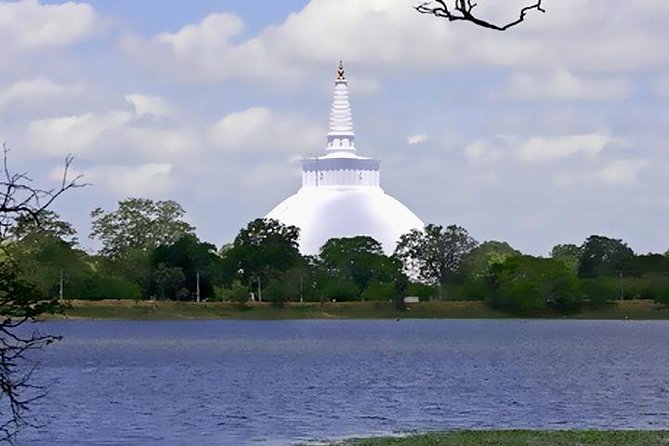
Ruwanwelisaya follows, with another 20 minutes. This great hemispherical stupa was built by King Dutugamunu around 140 BC and is regarded as sacred by Buddhists around the world. Its scale and ceremonial importance make it one of the route’s main highlights.
The tour does not give you an hour at each major monument, so use the audio guide before or during the visit. Listen for the basic story, take in the shape and setting, and note what you would return to if you had more time.
Thuparama, Lankarama, and the carved moonstone
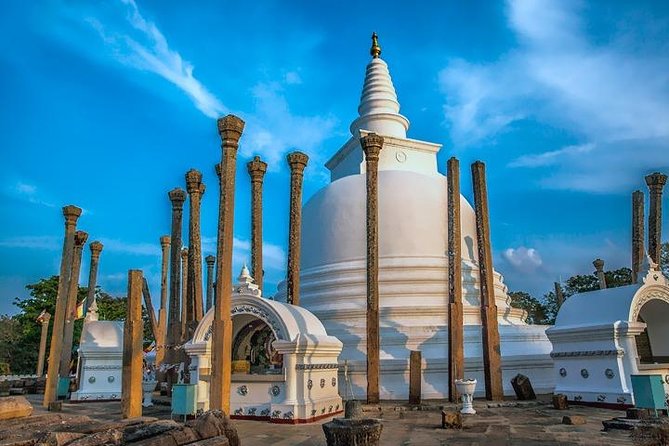
Thuparama Dagoba is allotted 10 minutes. Its bell shape makes it easy to identify, and its past includes repeated destruction and restoration. The current structure therefore reflects a long cycle of damage and repair rather than one untouched ancient building.
Lankarama Stupa also receives 10 minutes. It was built by King Valagamba at Galhebakada, but little is known about its original form. This is a good example of why the audio guide helps. A partially preserved monument can be hard to read without some historical framing.
The moonstone, or Sandakada Pahana, is another brief stop. These semi-circular stone slabs usually feature a half lotus in the center, surrounded by concentric carved bands. The design gives you a small, detailed object to study after the massive stupas.
I would not rush past the moonstone simply because it is low to the ground. Anuradhapura’s artistry is not limited to giant religious structures. Small architectural pieces reveal how much attention went into entrances, thresholds, and symbolic decoration.
Same place, a completely different ride:
- Colombo Private Tuk-Tuk City Tour with All Entry Fees Included
★ 5.0 · 524 reviews - Colombo: Private Tuk-Tuk City Tour with Guide & All Tickets
★ 4.9 · 471 reviews - Mr.TukTuk Nuwara Eliya
★ 5.0 · 322 reviews - Kandy to Ambuluwawa & Kandy City Guided Tuk Tuk Day Tour
★ 4.8 · 270 reviews
Guardstones and the Abhayagiri refectory
Rathna Prasadaya and its guardstone take about 10 minutes. Early guardstones were plain supports for heavy stone balustrades. Over time, they gained carved symbols linked with protection and prosperity.
This stop rewards close looking. The audio guide can help you understand why a seemingly minor stone deserves attention. It also breaks up the route, giving you a short architectural lesson between the larger religious monuments.
The Main Refectory of Abhayagiri Monastery receives 20 minutes. This ruined building was used as the monastery’s main alms hall, where daily food was provided. The practical function is what makes it especially useful to see. It reminds you that the ancient city was not only a collection of places for prayer. Monastic life required kitchens, dining spaces, water systems, and large buildings for daily routines.
The stop is still a ruin, so do not expect a fully restored interior. Look for the plan of the building and imagine how it served a large religious community. A longer pause would help here, but 20 minutes is enough to understand its purpose.
Abhayagiri Dagaba and the Samadhi Statue
Abhayagiri Dagaba gets about 30 minutes, one of the longest stops on the route. That extra time is justified. Abhayagiri was a major monastic center and royal capital area, with monasteries that once rose several stories and were covered with materials including gilt bronze and glazed tiles.
The surviving dagoba is only part of the story. The surrounding monastery complex helps you picture a major institution rather than an isolated shrine. This is one of the places where the tuk tuk format works best, since the area is too spread out to treat as a quick walk between two nearby sights.
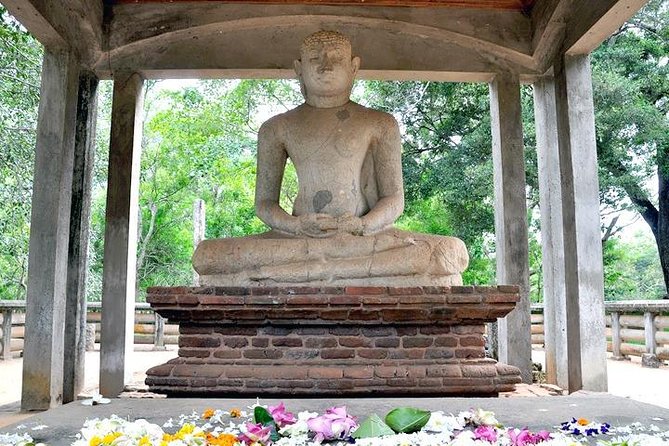
After Abhayagiri, the route reaches the Samadhi Statue for 10 minutes. The Buddha is shown in a meditative posture, with the hands in Dhyana Mudra. The statue offers a quieter, more focused stop after the broad scale of the monastery complex.
Ten minutes is brief, especially if you want to sit and look carefully. Still, the visit gives the route a change in mood. Instead of concentrating on size, age, or royal construction, you are looking at posture and expression.
Kuttam Pokuna and Jetavanaramaya
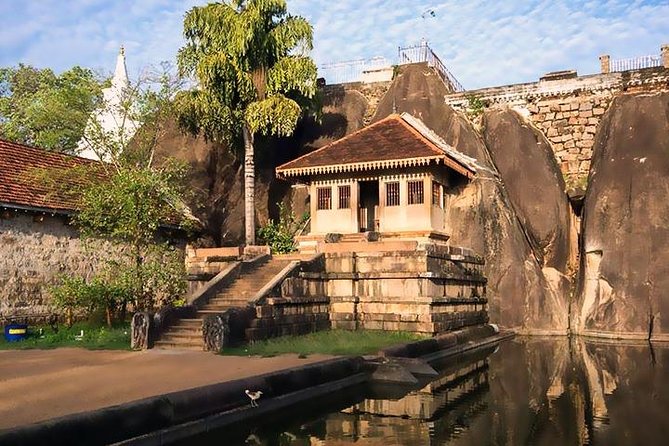
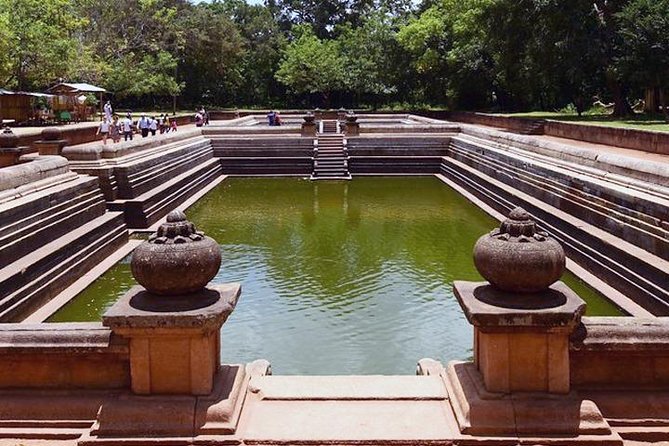
The Twin Baths, or Kuttam Pokuna, are among the route’s most appealing engineering sites. The paired pools are considered some of the best examples of ancient bathing tanks in Sri Lanka. You have about 20 minutes to study the two pools and their stone construction.
This stop helps you see the city as a place designed for daily use, not only ceremony. Water management and bathing facilities were essential to a large monastic community. The paired layout also makes the site easy to understand at a glance, even if you know little about ancient architecture.
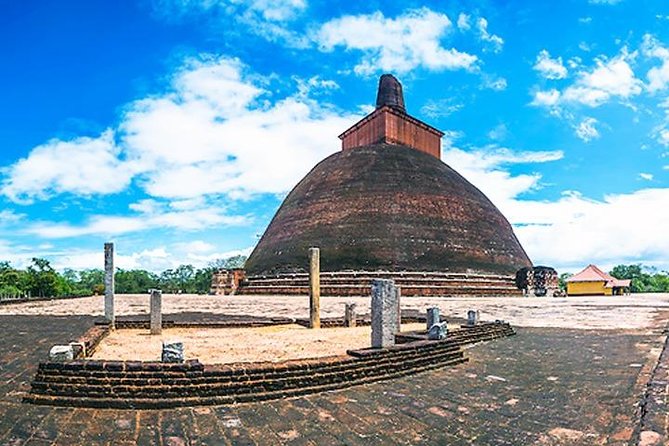
Jetavanaramaya is the final stop, with about 20 minutes. The stupa belongs to the ruins of Jetavana Monastery and reached about 122 meters, or 400 feet. At that height, it was once the tallest stupa in the world.
Its scale provides a strong finish. After seeing small carvings, bathing pools, monastery facilities, and several stupas, you end with one of Anuradhapura’s most imposing monuments. Again, twenty minutes will not cover every detail, but it is enough to appreciate the size and hear the basic story through the audio guide.
What the $46.40 group price really covers
The listed price is $46.40 per group of up to three people, not per person. That is a solid transport value if you have two or three people sharing the tuk tuk. For three people, the base cost works out to roughly $15.47 each before admissions.
The price includes the private vehicle, digital audio guide, bottled water, and parking fees. Hotel or railway station pickup and drop-off are also part of the appeal, since you are paying for convenience as well as transport.
The main extra cost is admission. Entry to the eight UNESCO World Heritage sites is listed at $30 per person. That means a group of three should budget another $90 for tickets, bringing the combined tour and admission cost to about $136.40 before any other personal spending.
There is a small point to clarify before booking: the route names fourteen stops, while the ticket note refers to eight UNESCO World Heritage sites. Do not assume every stop has a separate charge or that the $30 covers every possible monument in the area. Confirm the current ticket arrangement when you book.
Timing, comfort, and who should choose it
The tour lasts about 4 to 6 hours. That range likely reflects pickup location, traffic, time spent at each site, and the pace of your group. Plan for a half-day rather than an exact four-hour appointment.
The route is best for someone who wants broad coverage. You will see the major stupas and several smaller architectural features without having to organize transport. It also suits a first visit, a short stay in Anuradhapura, or a stop built around the railway station.
It is less suitable if you want long meditation time at Sri Maha Bodhi, detailed study of every carving, or extended photography at each monument. Fourteen sites create variety, but they also create a brisk rhythm.
Comfort deserves attention. Shoes may need to come off at sacred places, and the sand or stone can become extremely hot. Wear socks, carry water, and dress in a way that works for Buddhist religious sites. Bottled water is included, but I would still avoid relying on one bottle for a warm half-day.
Most people can take part, and service animals are allowed. The tour is near public transportation, although pickup means you do not need to depend on it for the main route.
Booking, cancellation, and final verdict
You receive confirmation at booking, and the experience offers free cancellation up to 24 hours before the start time. Canceling within 24 hours does not qualify for a refund, and changes inside that period are not accepted. The tour also depends on good weather. If poor weather forces cancellation, you are offered another date or a full refund.
I would book this tour if you want to see Anuradhapura’s main sites in one efficient half-day, especially if you are traveling with two other people. The private tuk tuk, pickup service, parking, water, and audio guide make the price reasonable before admissions, and the route includes both famous monuments and useful smaller stops.
I would choose a slower, longer visit instead if your priority is detailed archaeology or quiet time at each sacred place. For most first-time visitors with limited time, though, this is a practical way to get your bearings and see the city’s essential monuments without wasting half the day arranging rides.
FAQ
How long does the Anuradhapura tuk tuk tour last?
The tour takes approximately 4 to 6 hours, depending on pickup location, traffic, and how long your group spends at the stops.
How many people can join the private tour?
The price covers one private group of up to three people. Only your group participates.
What is included in the tour price?
The tour includes a digital audio guide for the sites, bottled water, parking fees, and pickup and drop-off from a surrounding hotel or the railway station.
Are entrance tickets included?
No. Entry tickets are not included. The tour information lists admission to the eight UNESCO World Heritage sites at $30 per person.
What should I wear or bring?
Wear respectful clothing for Buddhist religious sites and bring socks. You may need to remove your shoes, and bare feet on hot sand or tiles can be uncomfortable. Bottled water is provided.
Can I cancel for a refund?
Yes, if you cancel at least 24 hours before the experience start time. Cancellations within 24 hours are not refunded. If bad weather causes the provider to cancel, you are offered a different date or a full refund.
Just added around Sri Lanka
- Trincomalee: Tuk-Tuk city tour with a guide★ 5.0 · 4 reviews
- Rent a Tuk Tuk & Explore★ 5.0 · 2 reviews
- Sigiriya and Dambulla Private Day Tour by Tuk-Tuk or Car★ 5.0 · 28 reviews
- Tuk Tuk Rentals★ 5.0 · 15 reviews
- Tuk Tuk Nuwara Eliya Tea Falls Adventure★ 5.0 · 44 reviews
- Tuk Tuk Rental in Sri Lanka★ 5.0 · 2 reviews
- Negombo City Tour by TUK TUK with Rome★ 5.0 · 5 reviews
- Tuk Tuk Rent In Sri Lanka★ 5.0 · 2 reviews
Sri Lanka Tuk Tuk Tours, compared.
Private Tuk-Tuk City Tour with All Entry Fees
Read our review →
Colombo Tuk Tuk City Tour -Sightseeing Entry Fees & Food Included
Read our review →
Colombo Private Tuk-Tuk City Tour with All Entry Fees Included
Read our review →
Private Tuk-Tuk City Tour with Guide & All Tickets
Read our review →
Kandy to Ambuluwawa & Kandy City Guided Tuk Tuk Day Tour
Read our review →
Colombo Local Food Tour by Tuk Tuk – All Inclusive
Read our review →Where else this ride shows up