
REVIEW · RICKSHAW TOURS
4-Hour Private Tour to Beijing Drum Tower with Drum Performance and Rickshaw
Beijing’s old hutongs make the most sense when someone helps you read them. This private tour links the Drum Tower and its thundering performance with a rickshaw ride through narrow lanes, a local family visit, and a walk around Houhai Lake. I like the hotel pickup and private vehicle, and I like that your guide translates during the family visit. The main catch is that the tour ends in the Houhai area, so your ride back is your responsibility.
I also like the flexible departure times. You can start early or sleep in, then spend four hours seeing several nearby sights without figuring out Beijing’s traffic or alleyways alone. Keep expectations measured, though: the rickshaw ride and family visit are short parts of a packed half-day, and one recent visit missed the drum performance because a conference had closed it.
Key points at a glance

- Drum Tower views: Climb to the top for broad views over Beijing and watch the large drums being played when performances are running.
- Private transport: A vehicle and driver take you from your hotel to the sights, saving time in a city where short distances can take a while.
- Hutong rickshaw ride: Travel through old lanes and residential communities by rickshaw instead of only seeing the more polished shopping streets.
- Local family visit: Meet a Beijing family, drink tea, and ask about daily life with your guide translating.
- Houhai finish: Walk past Yinding Bridge, Lotus Lane, Yandai Xie Street, lakeside restaurants, and bars before arranging your own onward ride.
- Flexible timing: Several departure times are offered, and the tour operates in all weather, so comfortable shoes and suitable clothing matter.
Starting at Beijing’s Drum and Bell Towers
Your guide and private driver pick you up at your Beijing hotel and take you directly to the Drum and Bell Towers. This is a useful start because the towers are central to the old city, but reaching them efficiently can be less simple than the map suggests.
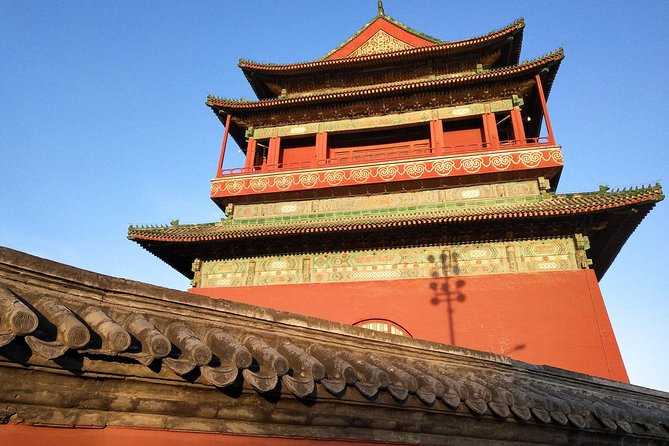
The Bell and Drum Towers once served as Beijing’s public timekeepers during the Ming and Qing periods. Bells marked the morning, while drums signaled the night. Their sounds carried across the city, giving residents a shared sense of time long before watches and phones became common.
The visit focuses on the Drum Tower, though you also see the Bell Tower. The Drum Tower climb is part of the appeal, and the stairs are very steep. Wear shoes with a firm grip and take your time. The climb is not a casual ground-level museum visit, but it rewards you with a high view over the surrounding city.
From above, you can take panoramic photos and get a clearer sense of how the old hutong districts fit into modern Beijing. The contrast is part of the fun: traditional low-rise neighborhoods sit within a huge capital city that continues far beyond them.
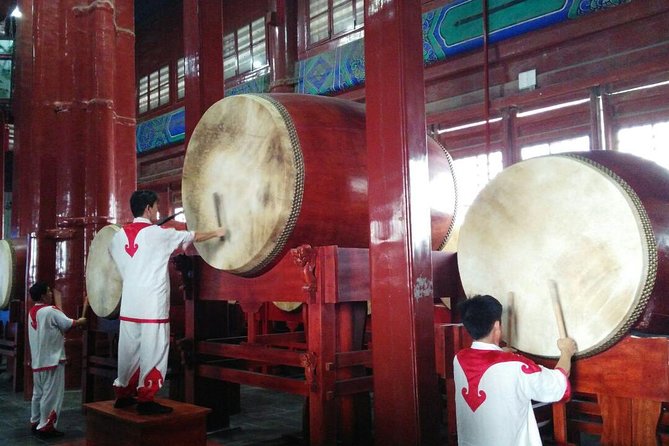
A drum performance is scheduled as part of the experience. When it runs, the players and large drums give the visit real energy and help explain why this building mattered. Performance schedules can change, though. One recent visit took place during a conference, so no performance was held. The tower visit still continued, with an explanation of the drums and the building’s past, but you should treat the performance as an important planned feature rather than an absolute guarantee.
Entrance is included, and the tour advertises skip-the-line access. That matters most during busy periods, when avoiding a separate ticket queue saves a little time for the hutongs.
More Private Tuk Tuk Tours in China:
- Private Xi’an Foodie Tour by Tuktuk
★ 5.0 · 34 reviews - Private Xi’an Night & Food Tour by Tuk Tuk and Public Transportation
★ 5.0 · 23 reviews - Beijing Private Tour to Summer Palace plus Drum Tower Performance and Rickshaw
★ 5.0 · 3 reviews
Riding through the hutongs near Nanluoguxiang
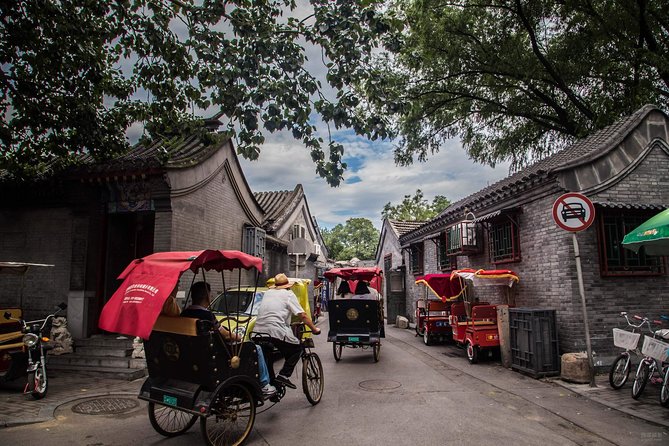
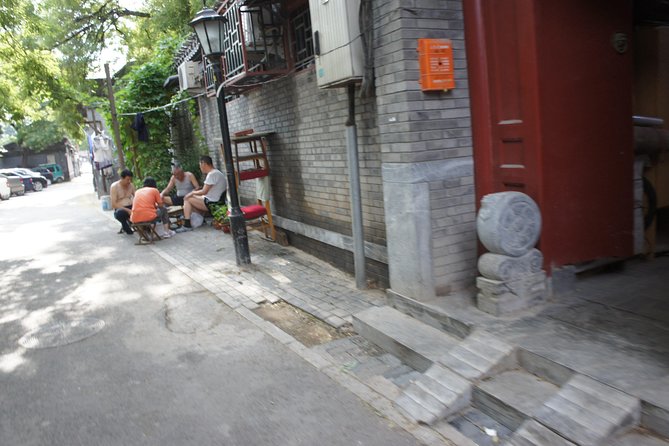
After the towers, you head toward the old hutong neighborhoods around Nanluoguxiang. Hutongs are more than scenic lanes. They are residential streets, routes to small shops, places where old courtyard homes sit beside cafés and restaurants, and neighborhoods where modern Beijing life continues in older surroundings.
The rickshaw ride gives you an easy introduction. Instead of walking every narrow lane, you sit back while the driver takes you through winding alleys and local communities. This is especially useful if you want to cover ground without turning the tour into a nonstop walk.
The ride is also the most visitor-focused part of the hutong visit. Some lanes around Nanluoguxiang have shops and food outlets aimed at people browsing the area. Your guide can help explain what you are seeing and can offer advice when you shop. The guide may also show you how to negotiate prices, a practical skill if you plan to buy small items in local markets or independent shops.
Do not expect every lane to feel untouched by tourism. Nanluoguxiang is a popular area, and its shops and restaurants make it an easy place to walk, eat, and browse. The value of having a private guide is that you can place these commercial streets beside quieter residential lanes and learn how the neighborhood works as a whole.
Tea and conversation in a local home
The local family visit is the most personal part of the afternoon. You go into a family home, drink tea, and talk about hutong life today. Your English-speaking guide translates, so you do not need to speak Mandarin to take part.
This stop gives you a chance to ask questions that a monument cannot answer. You can learn how residents use their homes, what has changed in the hutongs, and how daily life fits around the restaurants, shops, and tourist traffic nearby. The conversation is likely to be more useful if you arrive with a few questions ready.
Guides such as Susie and Lucy have handled this kind of visit in different ways. Susie has also helped with food orders, while Lucy has been praised for making the tour fun and explaining the local setting clearly. Guide assignments can change, so you should not book solely expecting one particular person, but an effective guide makes a real difference here.
This is also where the private format helps. You can ask follow-up questions without worrying about holding up a large group. If your interests lean toward food, family life, architecture, or neighborhood change, tell your guide early.
The stop is not presented as a long home stay. It is one part of a four-hour route, so expect a brief cultural exchange rather than a full meal or an extended household visit. The tea and conversation are valuable precisely because they break up the sightseeing and put a human face on the hutongs.
Walking Nanluoguxiang and the Houhai area
After the rickshaw ride and family visit, the route continues through Nanluoguxiang and toward Houhai Lake. This section is done on foot, so the tour shifts from vehicle-based sightseeing to a slower look at streets, shops, restaurants, bridges, and the water.
Nanluoguxiang is a good place to browse. You can look through small shops, stop for food, and practice the price-negotiation advice your guide has given you. The area can be more commercial than the residential lanes, but that makes it convenient if you want a snack or a quick look at Beijing’s current shop culture.
The route then reaches Houhai, where you walk around the lake and pass bars and restaurants. Yandai Xie Street, one of the named stops, is a short stroll through a food and shopping street. The listed time there is about 20 minutes, so think of it as a quick orientation rather than a serious shopping session.
You also pass Yinding Bridge, a useful photo stop with views over the surrounding area. From there, the walk continues along Lotus Lane, where the lake views can include the Drum and Bell Towers in the background. That final combination of water, old streets, and tower roofs makes a pleasing closing scene.
The Houhai section has a different mood from the earlier hutongs. It is better for a relaxed walk, a drink, or a meal after the guided portion. Bars and restaurants make the area lively later in the day, but the tour does not include your food or drinks. If you want to linger, plan to do so after the official four-hour route.
More Rickshaw Tours in China:
- Beijing Old Hutongs Tour by Rickshaw
★ 3.5 · 73 reviews - Beijing Half Day : Summer Palace Tour with Hutong Rickshaw Rides
★ 5.0 · 7 reviews - Houhai Hutong Tour: Rickshaw + Prince Gong & Soong Residences
★ 5.0 · 6 reviews - Summer Palace, Hutong Rickshaw, Lama and Confucius Temple Tour
★ 5.0 · 6 reviews
What the private format adds at $108 per person
At $108 per person, this is not the cheapest way to see the Drum Tower. You are paying for more than admission: the price includes a private guide, private vehicle and driver, rickshaw ride, entrance fee, hotel pickup, and the English-language help needed for the family visit.
The value improves if you are traveling with family or a small group and want direct attention. A private vehicle keeps the route simple, while the guide can adjust explanations and help with food orders, translation, and shopping questions. Group discounts are offered, though the exact reduction is not specified.
For a solo visitor, the price is harder to justify if you are comfortable using taxis or public transport and visiting the towers independently. You would lose the private translation and the organized family visit, but you could spend less. For two or more people, the convenience becomes easier to defend, especially on a first visit to Beijing.
The tour also saves planning time. You do not need to arrange separate tickets for the Drum Tower, find a rickshaw operator, locate a local home visit, and work out how to connect the towers with Houhai. The driver handles the transfers, while the guide keeps the half-day moving.
The tradeoff is that the tour does not include your return transportation. At the end, you can continue exploring Houhai, or your guide can help you find a taxi. You pay that fare yourself. This is not a major problem if you already want to spend time around the lake, but it is worth adding to your budget if you need to return directly to your hotel.
Timing, walking, and practical preparation
The experience lasts about four hours, with several departure times available. That flexibility suits different schedules, but the best time may depend on what matters most to you. An earlier departure can help you get moving before the day becomes tiring, while a later start may fit better after a long arrival or a late evening.
You should wear comfortable walking shoes. The Drum Tower stairs are steep, and the later route includes walking around the lake, through hutong lanes, along Yandai Xie Street, and beside Lotus Lane. This is not a strenuous hike, but it is more active than the rickshaw portion suggests.
The tour operates in all weather. Dress for the conditions, since part of the experience takes place outdoors and the final section is on foot. A rainy day may make the hutong lanes less comfortable, while hot or cold weather can affect how much you enjoy the lakeside walk.
Most people can participate, but the steep tower stairs and walking route are important considerations. If anyone in your group has trouble with stairs, ask before booking how much of the Drum Tower visit can be adapted. The available information does not promise an alternative route.
The experience is private, so only your group takes part. That gives you control over questions and pace, though the published route still has several stops to fit into a short afternoon. If you prefer long museum visits or slow photography, you may find the schedule tight.
What could go wrong, and how to plan around it
The most obvious risk is a missed drum performance. A conference prevented one scheduled performance, but the tower visit continued. If hearing the drums is the main reason you are booking, confirm the performance schedule as close to the tour date as possible.
Another consideration is the balance between old Beijing and visitor-oriented streets. The hutongs provide a look at local neighborhoods, but Nanluoguxiang and Yandai Xie Street also include shops, food outlets, and places built for visitors. The family visit and quieter lanes add a more personal side to the route.
The tour ends around Houhai rather than returning you to your hotel. That can be an advantage if you want dinner or drinks by the lake. It is less convenient if you have an evening train, a fixed restaurant booking, or luggage waiting at your hotel.
Cancellation is flexible up to 24 hours before the local start time for a full refund. Changes or cancellations inside that window are not accepted for a refund. Confirmation arrives when you book, and mobile tickets are supported.
Who should book this Beijing half-day tour?
I would choose this tour if you want Beijing’s old neighborhoods explained, not just photographed. It suits first-time visitors, families, couples, and small groups who value a private guide, hotel pickup, translation, and a ready-made route.
It is particularly useful if you want several experiences in one outing: a historic tower, a drum performance, hutong transport, a family conversation, shopping streets, and a lakeside walk. The guide’s help with food orders and local customs can also make the day easier for visitors who do not speak Chinese.
I would think twice if your main goal is a long, quiet exploration of the hutongs. Four hours covers a lot, and the route includes several short stops. Independent visitors who prefer to set their own pace may want to visit the Drum Tower and Houhai separately.
Should you book it?
Book this tour if the private vehicle, English-speaking guide, rickshaw ride, and local family visit are worth paying for together. The strongest parts are the tower views, the translation during the home visit, and the way the route connects the Drum Tower with the hutongs and Houhai.
Before booking, accept two limits: the drum performance can be cancelled, and you arrange your own ride back. If those points work for your plans, this is a practical way to see an appealing slice of old Beijing without spending half the day navigating it yourself.
FAQ
How long does the tour last?
The tour lasts approximately four hours.
Is hotel pickup included?
Yes. Pickup from your Beijing hotel is included.
Is hotel drop-off included?
No. The tour ends in the Houhai area, and transportation back to your hotel is not included. Your guide can help you get a taxi, but you pay that fare yourself.
Is the Drum Tower entrance fee included?
Yes. The entrance fee is included in the tour price.
Does the tour include a rickshaw ride?
Yes. A rickshaw ride through the hutongs is included.
Will I meet a local family?
Yes. The route includes a visit to a local family home, with tea and conversation. Your English-speaking guide translates during the visit.
What happens if the weather is poor?
The tour operates in all weather conditions. You should dress appropriately and wear comfortable walking shoes.
Just added around China
- Xi’an Terracotta Warriors, City Wall and Tuktuk Food Tour★ 5.0 · 6 reviews
- Private Xi’an Night & Food Tour by Tuk Tuk and Public Transportation★ 5.0 · 23 reviews
- Private Xi’an Foodie Tour by Tuktuk★ 5.0 · 34 reviews
- Xi’an Morning Food & Market Tour by TukTuk★ 5.0 · 46 reviews
- Beijing Private Tour to Summer Palace plus Drum Tower Performance and Rickshaw★ 5.0 · 3 reviews
- Beijing: Hutong Private Tour – Rickshaw Ride & English Guide★ 5.0 · 2 reviews
- Beijing Half Day : Summer Palace Tour with Hutong Rickshaw Rides★ 5.0 · 7 reviews
- Houhai Hutong Tour: Rickshaw + Prince Gong & Soong Residences★ 5.0 · 6 reviews
Rickshaw Tours, compared.

Old Delhi Food, Heritage&Cultural Walk with Rickshaw ride to Masterji Kee Haveli
Read our review →
Arashiyama Customized Rickshaw Tour & Bamboo Forest
Read our review →
Split by Private Electric Rickshaw – Palace & Hidden Gems
Read our review →
Where else this ride shows up